

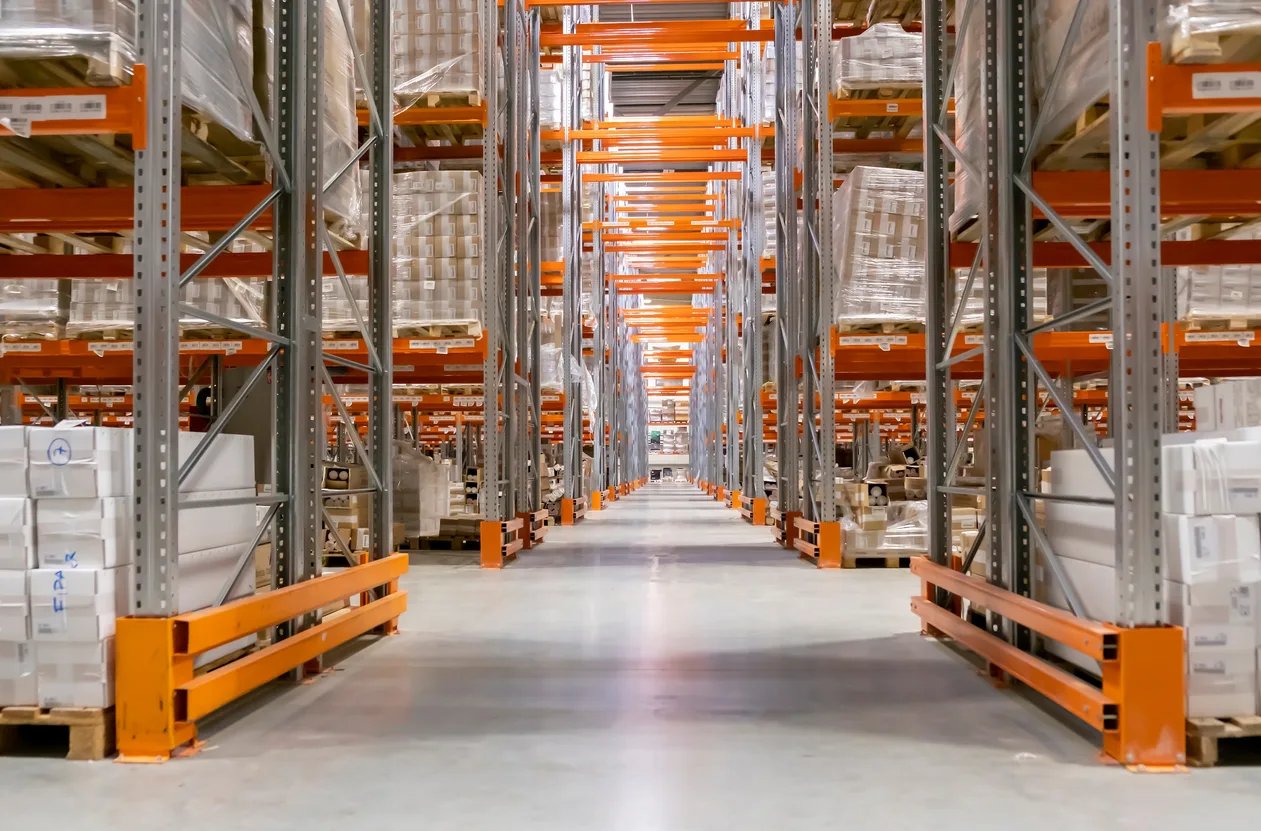
Here is the conversation that happens more often than it should, and it happens on the worst day of a warehouse owner’s year.
There has been a fire. Or a sprinkler head let go over a rack aisle, or a forklift put a fork through a pallet, or a load of somebody else’s electronics walked out of the yard. The owner calls, and they are not panicked, because they are insured. They have carried general liability since the day they opened. Then somebody explains that the general liability policy is not going to pay for the customer’s goods, and the phone goes very quiet.
This post is about why — not so you can argue with an insurer after a loss, but so you never have that call in the first place. The reason has a name, it is not hidden, and it is not a trick.
The exclusion, in plain terms
A standard general liability policy contains a provision that removes coverage for damage to personal property in your care, custody, or control.
That is it. That is the whole thing. It is a routine part of the form and it appears in most business liability policies in the country.
For a bakery or an accountant or a landscaping company, it is unremarkable and largely invisible — it almost never bites, because those businesses are not in the business of holding other people’s property. For a warehouse it is the center of the risk, because holding other people’s property is not an incidental part of the operation. It is the operation.
Look at what a public, third-party, contract, bonded, or cold-storage building actually contains tonight: other companies’ goods, in your building, in your care. Which is a precise, almost word-for-word description of the property the exclusion removes.
So the loss you worry about most — freight that is not yours, damaged while it was your responsibility — is carved out of your foundation policy by that policy’s own terms.
Why the exclusion exists (it is not an insurer being difficult)
It is tempting to read this as a loophole, and it is worth resisting that, because misreading it leads owners to the wrong fix.
General liability is built to answer for harm you cause to other people and to property out in the world — the third-party risk of operating. A visiting driver slips on your dock. A falling case injures a customer’s representative. Your forklift damages a vehicle, or freight staged by another company. That is the job, and general liability does it well.
What general liability is not is a property policy on things you happen to be holding. If it paid for every item in your care, it would be underwriting the entire contents of your building — inventory it never rated, never inspected, and never priced — as a side effect of a liability policy. No liability form is built that way, and one that tried would be priced like a property policy anyway.
So the exclusion is not a defect in your coverage. It is the boundary that defines what the coverage is for. And once you see it that way, the right response is obvious: not to argue with the boundary, but to buy the line that lives on the other side of it.
What your general liability is doing for you
Worth saying clearly, because owners sometimes over-correct in the other direction and decide the policy is useless. It is not.
Your general liability is answering the ordinary third-party risk of running a busy building where the public, drivers, and other companies’ people are constantly moving through: injuries on the dock and in the yard, the forklift that strikes someone who is not on your payroll, damage you do to property that is not in your care. It is also the policy your landlord wants on the certificate and the one your 3PL customers build their insurance requirements on top of.
It is a load-bearing policy. It is simply not the policy that answers when a customer’s pallets burn.
The line that is built to answer
That is warehouse legal liability — the bailee line, and the reason it exists at all.
When you take in a customer’s freight, you become a bailee: you are holding property that is not yours, and you answer for it while it is in your care. Warehouse legal liability is written precisely to answer the loss that the care, custody, or control exclusion removes — the fire, the water, the theft, the cold-chain failure in goods that belong to somebody else.
The relationship between the two policies is not a coincidence or a workaround. It is a design. General liability carves the goods out; warehouse legal liability is the line built to catch them. Read together, they cover the building; read separately, there is a hole in the middle exactly the size of your customers’ inventory.
There is an important distinction inside that line — a classic legal-liability form answers only for loss you are legally liable for, while a broader all-risk bailee form can respond to physical loss regardless of fault, within its terms. That difference is a decision rather than a detail, and it is one the warehouse legal liability page walks through properly. The point for today is narrower: something has to answer, and general liability is not it.
<rect x="200" y="22" width="300" height="56" rx="9" fill="#ffffff" stroke="#C3DEDE"/>
<text x="350" y="45" text-anchor="middle" font-family="Inter, sans-serif" font-size="14" font-weight="600" fill="#0F4C5C">A loss to a customer’s goods</text>
<text x="350" y="66" text-anchor="middle" font-family="Inter, sans-serif" font-size="12" fill="#3F5B64">Fire · water · theft · handling damage</text>

<path d="M350 78 L350 106" stroke="#0F4C5C" stroke-width="2" fill="none" marker-end="url(#ccc-arrow)"/>

<rect x="180" y="112" width="340" height="60" rx="9" fill="#ffffff" stroke="#C3DEDE"/>
<text x="350" y="136" text-anchor="middle" font-family="Inter, sans-serif" font-size="14" font-weight="600" fill="#0F4C5C">Your general liability policy</text>
<text x="350" y="158" text-anchor="middle" font-family="Inter, sans-serif" font-size="12" font-weight="600" fill="#0F4C5C">removes it — care, custody, or control</text>

<path d="M520 142 L586 142" stroke="#0F4C5C" stroke-width="2" fill="none" marker-end="url(#ccc-arrow)"/>
<rect x="590" y="112" width="94" height="60" rx="9" fill="#ffffff" stroke="#C3DEDE"/>
<text x="637" y="134" text-anchor="middle" font-family="Inter, sans-serif" font-size="11" fill="#3F5B64">it still answers</text>
<text x="637" y="150" text-anchor="middle" font-family="Inter, sans-serif" font-size="11" fill="#3F5B64">harm to third</text>
<text x="637" y="164" text-anchor="middle" font-family="Inter, sans-serif" font-size="11" fill="#3F5B64">parties</text>

<path d="M350 172 L350 200" stroke="#0F4C5C" stroke-width="2" fill="none" marker-end="url(#ccc-arrow)"/>

<rect x="40" y="206" width="620" height="66" rx="10" fill="#C8935A" stroke="#0F4C5C"/>
<text x="350" y="232" text-anchor="middle" font-family="Inter, sans-serif" font-size="15" font-weight="600" fill="#1A1A1A">The gap is exactly the size of the goods in your care</text>
<text x="350" y="256" text-anchor="middle" font-family="Inter, sans-serif" font-size="13" font-weight="600" fill="#1A1A1A">Not a defect. The boundary of what the policy is for.</text>

<path d="M350 272 L350 300" stroke="#0F4C5C" stroke-width="2" fill="none" marker-end="url(#ccc-arrow)"/>

<rect x="140" y="306" width="420" height="66" rx="9" fill="#ffffff" stroke="#C3DEDE"/>
<text x="350" y="331" text-anchor="middle" font-family="Inter, sans-serif" font-size="14" font-weight="600" fill="#0F4C5C">Warehouse legal liability</text>
<text x="350" y="353" text-anchor="middle" font-family="Inter, sans-serif" font-size="12" fill="#3F5B64">The bailee line, written to answer exactly this loss</text>When do the goods actually become “in your care”?
Owners ask this the moment the exclusion lands, and it is a fair question, because “care, custody, or control” sounds like a phrase with fuzzy edges.
In practice it is less mysterious than it sounds. The goods are in your care from the point you take responsibility for them — typically when they come off the truck and onto your dock and you sign for them — until the point you hand them back or ship them onward. The warehouse receipt is the document that usually marks that boundary, which is one of several reasons it is worth more attention than the average operator gives it.
The edges are where it gets interesting, and they are worth thinking about before a loss rather than during one:
- A trailer sitting in your yard, loaded, waiting for a door. Is that freight in your care? Frequently yes, and it is often stored in the least protected part of the site.
- Cross-dock freight that never touches a rack. It may be in your building for two hours. It is still in your care for those two hours, and a forklift does not know the difference.
- Goods you are holding for a customer whose account has gone quiet. Nobody has collected them, nobody is paying storage, and they are still your responsibility.
None of that changes the exclusion — general liability removes property in your care regardless of how briefly it was there. What it changes is your sense of how much is in your care on any given day, which is precisely the figure the bailee line has to be sized against.
How to check your own policy without becoming a coverage lawyer
You do not need to read the form yourself, and hunting for the clause is not the useful exercise anyway.
The general liability form most policies start from is commonly the occurrence-based ISO commercial general liability coverage form — the one the market refers to as CG 00 01 — though editions differ, some programs start from a claims-made version instead, and plenty of specialty policies are written on manuscript wording that departs from the standard form entirely. Which is exactly why “go and look for the exclusion” is bad advice: what matters is not the letter of a clause in a form you found online, but the wording actually attached to your policy.
So ask a better question, and ask it of somebody who reads bailee risks:
“If a customer’s pallets burn in my building tonight, which of my policies pays — and for how much?”
If the answer is confident and specific, you are in good shape. If it is vague, or if it takes a while, you have just learned something extremely valuable on a day when nothing is on fire.
The contract layer sitting behind all of this
One more piece, because it is where owners are most often exposed without knowing it.
Warehouse receipts and storage agreements commonly carry limitation-of-liability language — a released-value or per-package cap on what you owe a customer for a loss unless they declare a higher value and pay for it. That layer is real, and it matters.
But two cautions, and they are the ones that catch people. A contractual limit is not insurance. It may reduce what you owe; it does nothing whatsoever to pay what you still owe. And a limitation is only as good as the agreements you actually signed — a customer who negotiated it away, or a contract that quietly assumes you carry broader cover than you do, changes your exposure entirely.
Your storage terms and your coverage are one decision, read together. We read them side by side before anything binds, because the moment they disagree is always a claim.
The short version
Your general liability is not broken, and nobody is trying to get out of anything. The policy is doing exactly what it was built to do, and what it was built to do does not include acting as a property policy on your customers’ freight.
The goods in your care need their own line. That line is warehouse legal liability, and the whole warehouse insurance program is built around it — because for a business whose entire trade is holding what belongs to somebody else, it is not an add-on. It is the point.
If you are not certain which of your policies answers when a customer’s pallets burn, that is worth ten minutes and a phone call. Ask us — we will read what you actually have.