
Insurance by operating model
Wholesaler & Importer Insurance for Owned Inventory
Insurance for the merchant wholesaler, the importer, and the B2B buy-sell business — the operation that buys, holds, and resells its own product. The segment is defined by three things at once: the concentration of owned inventory, the products-liability chain of distribution a seller sits in, and the import and ocean exposure of the first U.S. seller of goods made overseas.
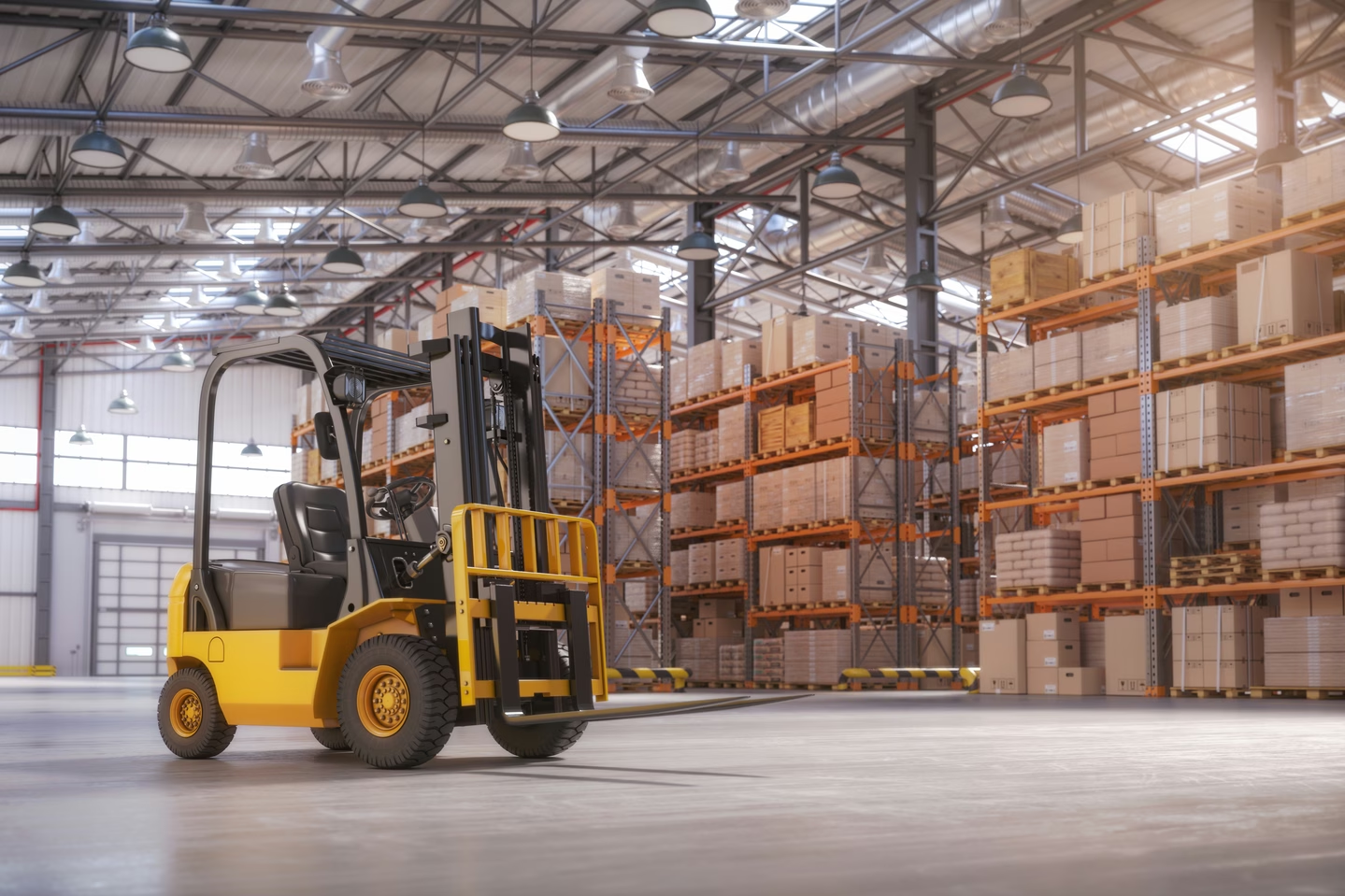

A wholesaler’s business is the inventory. A merchant wholesaler, an importer, or a B2B supplier buys product from the manufacturer, holds it, and resells it to retailers and other businesses down the line — and what defines the operation is not a building or a truck, it is the concentration of owned goods and the trade in them. The value on your shelves and in transit is your working capital, your product is constantly moving between the supplier and the customer, and — because you are a seller in the chain of distribution — the product you resell can reach back to you if it causes harm long after it has left your hands. That is a very different risk picture from a warehouse that merely holds someone else’s freight, and it is why wholesaling is written as its own segment.
Three exposures define it, and they all trace back to the fact that the goods are yours. The first is owned-inventory concentration: a wholesaler carries a great deal of value in product it owns, at rest in the warehouse and, just as often, in motion between legs of a journey. The second is the products-liability chain of distribution: a wholesaler is a seller, and a products claim can name any seller in the chain, not only the manufacturer who built the item. The third, for the wholesaler who imports, is the import and ocean exposure — the goods on the water, at the port, in a bonded warehouse, and the first-U.S.-seller position an importer holds when the overseas maker is out of reach. This page covers how a wholesaler program is built for those three at once: the work it covers, the coverage stack in the order this segment leans on it, the drivers that move cost, and how insurance carriers underwrite an owned-inventory, products-exposed, import-facing risk.
What makes wholesaler insurance different
Two features separate a wholesaler from every other operation this brand insures, and both point the program toward the same place: the product itself. The first is that the inventory is owned, and it is almost always moving. Unlike a bailee warehouse that holds other companies’ freight, a wholesaler owns what it stores and trades — so the value at risk is the wholesaler’s own capital, and it is exposed not only on the warehouse floor but across every leg between the supplier and the customer. A property policy for the building and a separate transit policy for the road leave seams exactly where the goods change hands, which is why a marine-family form that follows the owned product through the whole journey is the natural lead for this segment. The second is that a wholesaler is a seller in the chain of distribution, which places it inside the products-liability exposure — an exposure a warehouse that never takes title to the goods largely sits outside of.
There is a seam here that this brand draws deliberately, because two of its service pillars can blur together at a glance. Wholesaling is about trading product — buying, holding, and reselling inventory you own, the merchant and the importer whose operation is ownership and trade — while distribution is about moving product — routes, fleets, and direct-store-delivery, the operation whose work is logistics and delivery. A wholesaler’s risk concentrates in owned-inventory value, the products chain, and the import exposure; a Distribution operation’s risk concentrates in the fleet and the auto exposure of carrying product to the customer. Many companies are genuinely both — they buy and resell their own inventory and run their own delivery fleet — and when a business does both, both exposures apply and we write them together rather than forcing the operation into one box. This page is built for the ownership-and-trade side; the delivery-and-logistics side lives on its own pillar.
The work this covers
The wholesaling segment holds several kinds of business that share one risk profile — a company that takes title to product, holds it, and resells it into the chain of distribution. These are the operations that live within this pillar:
- Merchant wholesaling. The defining work of the segment — a business that buys goods from the manufacturer, holds inventory, and resells it to retailers and other businesses, the merchant-wholesale trade classified across the wholesale-trade sectors (NAICS 423 and 424).
- Importers and first U.S. sellers. Wholesalers that source goods made overseas and bring them into the country — the operation that carries the ocean and customs journey and the first-U.S.-seller products position when the overseas manufacturer is beyond the reach of a U.S. claim.
- Durable-goods wholesaling. Machinery, equipment, building products, auto parts, hardware, and other hard goods held and resold in quantity — inventory whose value and handling shape the stock-throughput and property picture.
- Nondurable-goods wholesaling. Food, beverage, apparel, paper, chemicals, and other consumable and perishable goods — where turnover, spoilage, temperature, and the products tail on consumable product drive the exposure.
- B2B and industrial supply. Distributors and suppliers selling to businesses rather than consumers — industrial, MRO, and trade supply houses that hold broad inventory and sell into other companies’ operations.
An operation whose defining work is delivering product on its own routes and fleet — direct-store-delivery, route delivery, final-mile — is not the center of this pillar; that logistics-and-delivery profile lives on the Distribution page. A pure bailee operation that stores and ships other companies’ goods is not it either — that is the warehouse profile on the Warehouse page. Where an operation runs more than one of these, each scope is underwritten on its own terms.
State and regulatory considerations
A wholesaler sits inside more than one regulatory world, and which ones apply depends entirely on what you trade. The one nearly every importer touches is customs and import: goods brought into the country clear through U.S. Customs and Border Protection, and duty, entry, and the value declared at import shape both the value at risk and how the goods are handled. Many importers hold product in bonded warehousing or inside a foreign-trade zone, where duty is deferred until the goods enter U.S. commerce — a real framework that changes where and when your inventory is exposed, and one we read into how the stock throughput and property are written rather than assuming a plain domestic policy fits.
Product-specific regimes add their own layer where they apply, and we name them honestly only where they are real. A food or beverage wholesaler may carry a federal food-facility registration and state handling rules; a pharmaceutical wholesale distributor operates under federal and state licensing — the controlled-substances registration and the state boards of pharmacy that govern wholesale drug distribution — that a general-merchandise wholesaler never touches; and a beverage-alcohol wholesaler sits inside the three-tier system that separates producers, wholesalers, and retailers, a genuine regulatory structure we describe in concept without inventing a statute or a registration code that does not apply to you. We do not manufacture a license or a filing that your trade does not carry; we read the rule that actually governs the product you sell.
The products-liability side has a regulatory shape of its own. The chain-of-distribution doctrine — the principle that a products claim can reach sellers in the chain, not only the manufacturer — is a real feature of how product claims work, and it is why a wholesaler’s and especially an importer’s products exposure has to be sized honestly; we describe it conceptually and never dress it up with a fabricated case or statute. Workers compensation rules also vary by state, including the four monopolistic states — North Dakota, Ohio, Washington, and Wyoming — where coverage comes only through the state fund, which matters for a crew that works across a state line. As our state pages come online we link the specifics for priority import and port markets such as California, Texas, New Jersey, Illinois, and New York; in the meantime we write across all 48 licensed states.
Coverage breakdown
Here is the stack a wholesaler or importer carries, in the order this segment leans on it. Each line links to its full page — and because the segment is defined by owned inventory in motion and the products chain, stock throughput and general liability lead the program, with property close behind for the goods at rest.
- Stock Throughput Insurance — the lead line. One marine-family form that follows your owned product everywhere it moves: from the supplier and the port, across the ocean and inland transit, into the warehouse, and out to the customer — transit and storage answered by a single policy rather than a property-plus-ocean-cargo patchwork with seams where the goods change hands. The signature line for an operation whose inventory is constantly in motion.
- General Liability Insurance — the products line. Third-party bodily injury and property damage from your operation, and — the piece that matters most for a wholesaler — the products-completed-operations exposure of a seller in the chain of distribution, including the importer’s first-U.S.-seller position on goods made overseas. The line that answers the harm your product causes others.
- Commercial Property Insurance — the goods-at-rest line. The building you own or occupy, the racking and material-handling systems, and the inventory you own while it sits at your location — your own property, split from the harm your product causes others by ownership, and from the goods in motion by where they are.
- Umbrella Liability Insurance — the excess layer. The higher limits large retail customers, national accounts, and vendor agreements demand of a wholesaler, sitting excess of general liability and commercial auto and answering the severity of a products claim that can run past a primary limit.
- Commercial Auto Insurance — the vehicle line. Any delivery, pickup, or yard vehicles a wholesaler runs to move product between the dock and the customer — the auto liability on the road and the physical damage that protects the vehicles. A wholesaler that runs a substantial delivery fleet is edging into the distribution model, where this line leads instead.
- Workers Compensation Insurance — the crew line. Medical and lost-wage coverage for the warehouse staff who receive, pick, and ship inventory, with employers liability and honest handling of the monopolistic states. The line that answers an injury to your own worker, which general liability never does.
- Warehouse Legal Liability Insurance — the exception line. A wholesaler generally owns what it holds, so bailee coverage is context, not the core — but where a wholesaler also stores other companies’ goods (a wholesaler that runs a public or contract warehouse on the side), this bailee line answers the customers’ goods in its care, and we add it for that mixed operation.
Three of those lines answer one question asked three ways — whose goods are at risk — and it is the map this whole brand is built on. Commercial property answers what is yours and stays put — your building, racking, and owned inventory at your location. Warehouse legal liability answers what is theirs but in your care — the exception line for a wholesaler that also holds other companies’ freight. Stock throughput answers what is yours anywhere it moves — your owned inventory from the supplier to the customer. A wholesaler or importer owns its inventory, so it lives firmly on the owner side of that map: yours-here and yours-anywhere are the two questions that matter most, and theirs-in-your-care is the exception rather than the rule.
What wholesaler insurance costs
Premium tracks the operation, not a sticker price. The drivers that move a wholesaler’s cost most are the value and turnover of the inventory you own — how much product is at risk, at rest and in transit; the mix of what you trade, because durable hard goods, perishable food and beverage, chemicals, and consumer products each carry their own products and property profile; whether you import, and the ocean, customs, and first-U.S.-seller exposure that comes with it; the depth of your products tail and the limits your customers and vendor agreements demand; whether you run any delivery fleet; your multi-state footprint; and your loss history on both the inventory and the products lines. We price to that real picture and stand behind any figure we give — verified ranges come from us directly, never a generic guess.
Claims scenarios
These are plausible wholesaler and importer claim categories, described qualitatively and with generic carrier language — every claim is handled by the insurance carrier that writes the coverage, never named here — and with no fabricated cost or frequency figures.
- Owned product damaged in the ocean and inland journey. A container of imported inventory is damaged in an ocean-transit event, at a transload, or on the inland leg into your warehouse — a loss to goods you own while they are moving, answered by stock throughput as one marine-family form following the product across every stage rather than argued between a cargo policy and a property policy.
- A products claim reaches you as a seller. A product you bought, held, and resold later causes injury or property damage, and the claim names you as a seller in the chain of distribution even though you never made the item — the products-completed-operations exposure answered under general liability.
- The importer stands in the maker’s shoes. A products claim on imported goods arrives when the overseas manufacturer is beyond the practical reach of a U.S. claim, and as the first U.S. seller you are the realistic target — the reason an importing wholesaler’s general liability limits are sized larger than a domestic-only wholesaler’s.
- Inventory loss at the warehouse. A fire, water, or theft loss damages the owned inventory and the building at your location — a property claim on your own goods at rest, distinct from the goods you had in motion and from any freight you were holding for others.
Underwriting realities
Insurers writing the wholesale class look at the inventory and the products exposure and the discipline around both: the value, mix, and turnover of the product you own; whether you import and how you manage the ocean, customs, and first-U.S.-seller exposure; the depth of your products tail and the customer and vendor limit demands that come with it; your inventory controls, security, and warehouse conditions; your multi-state footprint; and your loss history on the inventory and products lines. A wholesaler with clean inventory controls, a clear handle on its products exposure, and a good record opens more markets; a heavy uncontrolled products tail, a serious loss, or thin documentation narrows them. A wholesaler that also runs a delivery fleet or holds other companies’ freight gets that portion underwritten on its own terms, so the wholesale book is not subsidizing — or stranding — the rest. We position your operation to the insurance carriers most likely to want an owned-inventory, products-exposed, import-facing risk rather than sending one generic submission everywhere.
Why Warehouse Guard Insurance
We write one world — warehousing, distribution, and wholesaling — and within it we treat a wholesaler as the owned-inventory, products-exposed, import-facing business it is, not as a generic commercial account. We weight your stack toward the lines this segment actually leans on: stock throughput as one marine-family form following your owned product from the supplier through the ocean and inland transit into the warehouse and out to the customer; general liability for the products-completed-operations chain a seller sits in, sized for the importer’s first-U.S.-seller exposure where it applies; and commercial property for the inventory and building you own at rest. We know to ask whether you import, whether your products tail is deep, and whether you also move product on your own fleet or hold freight for others before we quote — and we disambiguate the insurance carrier that writes your coverage from the ocean, common, and motor carriers that haul your goods, because in this trade the word means two different things. When a customer’s vendor agreement lands on your desk with insurance requirements you do not recognize, that is a call we take. Start with a quote, or talk it through with us first.
Learn more
Wholesaling is one of three operating models we write, and the coverage stack shifts with the work. The lead lines for a wholesaler live on the stock throughput page (the marine-family form following your owned product anywhere it moves) and the general liability page (the products-completed-operations chain and the importer’s first-U.S.-seller exposure), with commercial property for the inventory at rest, umbrella liability for the excess limits customers demand, commercial auto for any vehicles, workers compensation for the crew, and warehouse legal liability for the exception where you also hold other companies’ goods. If your operation is defined by delivering product on its own routes and fleet, the Distribution Insurance page leads with the fleet-and-auto profile; if you store and ship other companies’ freight, the Warehouse Insurance page leads with the bailee profile.
Coverage for wholesalers and importers
- Warehouse Legal Liability Insurance
- Stock Throughput Insurance
- General Liability Insurance
- Commercial Property Insurance
- Workers Compensation Insurance
- Commercial Auto Insurance
- Umbrella Liability Insurance
Insurance by the operating model you run
Get covered
Primary sources
Frequently asked questions about Wholesaler Insurance
What insurance does a wholesaler or importer need?
A wholesaler’s program is built around the inventory you own and the chain of distribution you sell into. Stock throughput leads it — a single marine-family form that follows your owned product everywhere it moves, from the supplier and the port, across the ocean and inland transit, into the warehouse, and out to the customer, covering transit and storage in one policy. General liability sits close behind, because a wholesaler or importer is a seller in the chain of distribution and carries a products-completed-operations exposure a business that never touches product does not. Commercial property covers your building and the inventory you own while it sits at your location, umbrella adds the higher limits large customers and retail chains demand, commercial auto covers any delivery or yard vehicles you run, and workers compensation covers the crew in the warehouse. We weight the program toward stock throughput, general liability, and property, because that is where a buy-sell wholesaler’s exposure actually concentrates.
Why does stock throughput lead a wholesaler’s program instead of property plus cargo?
Because a wholesaler’s product is almost never sitting still, and the old way of insuring it — a commercial property policy for the goods in the warehouse plus a separate ocean cargo or inland marine policy for the goods in transit — leaves seams exactly where product changes hands. A gap can open at the port, at a transload, at a consolidator, or in the hand-off between one leg and the next, and a loss that falls in the seam gets argued between two policies. Stock throughput is one marine-family form that follows the same owned inventory through every stage — supplier to port to ocean to inland transit to warehouse to customer — so transit and storage answer to a single form on a single set of terms, with one valuation basis and no seam to fall through. For a wholesaler or importer whose inventory is constantly in motion, that continuity is the whole point.
As a wholesaler or importer, am I really in the chain of distribution?
Yes. A products-liability claim over a product that causes injury or property damage can reach any seller in the chain of distribution, not only the manufacturer who made it. A wholesaler who buys from the manufacturer, holds the product, and resells it to a retailer or another business is squarely in that chain, and can be named in a claim even though it never designed or assembled the item. That exposure is answered under the products-completed-operations hazard of a standard general liability policy — the part that reaches bodily injury and property damage arising out of your product after it has left your hands. How your limits and any downstream vendor requirements are set is what we read against the products you actually handle, rather than assuming a generic policy fits a real products tail.
What is the importer’s first-U.S.-seller exposure?
When a wholesaler imports goods made overseas, it is often the first U.S. seller of that product — and when the actual manufacturer sits beyond the practical reach of a U.S. products claim, the importer can effectively stand in the maker’s shoes as the party that brought the product into the country. That makes an importing wholesaler the realistic target for a products claim on goods it did not build, and it is the reason an importer’s general liability has to be sized for a products exposure a domestic-only wholesaler may carry more lightly. We describe this plainly and without predicting any one outcome; the point is that importing changes the shape of the products tail, and a program written for a first U.S. seller has to account for it before a loss, not during one.
What covers my goods on the water, at the port, and in bonded storage?
That is exactly the ground stock throughput is built for. As the owner of imported inventory, you carry the risk of loss to that product across the ocean voyage, through customs clearance, in a bonded warehouse or a foreign-trade zone, and along the inland transit into your own building — a marine-family exposure that a plain property policy is not written to follow. Stock throughput answers damage to your owned goods across all of it, on one form, rather than a patchwork of an ocean cargo policy for the water and a property policy for the shelf. One note on language: the ocean carrier or common carrier that hauls your container is a transportation company, and it is a different thing entirely from your insurance carrier — the company that writes your coverage — whose form is what answers a loss to your goods. Import duty, customs, and foreign-trade-zone status shape the value at risk and how the goods are handled, and we read those into how the stock throughput is written.
How is wholesaler insurance different from distribution insurance?
They describe two different businesses that often get blurred. Wholesaling is about trading product — buying, holding, and reselling inventory you own, where the operation is ownership and trade and the risk concentrates in owned-inventory value, the products-liability chain, and the import exposure. Distribution is about moving product — routes, fleets, and direct-store-delivery, where the operation is logistics and delivery and the fleet and the auto exposure lead the risk. So a wholesaler’s program leads with stock throughput and the products chain, while a distributor’s leads with commercial auto and the fleet. Many companies are genuinely both — they buy and resell their own inventory and run their own delivery fleet — and when a business does both, both exposures apply and we write them together. The distribution model lives on its own pillar page, and each scope is underwritten on its own terms.
Wholesaler insurance by state
We write wholesalers and importers in all 48 licensed states. At the state layer, a wholesaler is served by the shared Distributor & Wholesaler Business Insurance page for your state — the type-D state page both distributors and wholesalers land on, because the two share a state’s geography and the owned-product risk story. Priority import and port markets include California, Texas, New Jersey, Illinois, and New York. Pick your state for the customs and bonded-warehouse context, the product-specific registrations that apply to what you trade, and the workers-compensation rules that govern a wholesale crew where you operate.
Insure the inventory you own and the product you sold
Tell us what you trade, whether you import, and how deep your products tail runs, and we will market it to insurance carriers that write the wholesale class — with the stock-throughput lead and the products chain handled, not assumed.