
Coverage line
Stock Throughput Insurance for Distributors & Importers
One marine-family policy that follows a distributor’s or wholesaler’s owned product everywhere it goes — from the supplier and the port, through ocean and inland transit, into the warehouse, and out to the customer — replacing the property-plus-cargo patchwork with a single form.
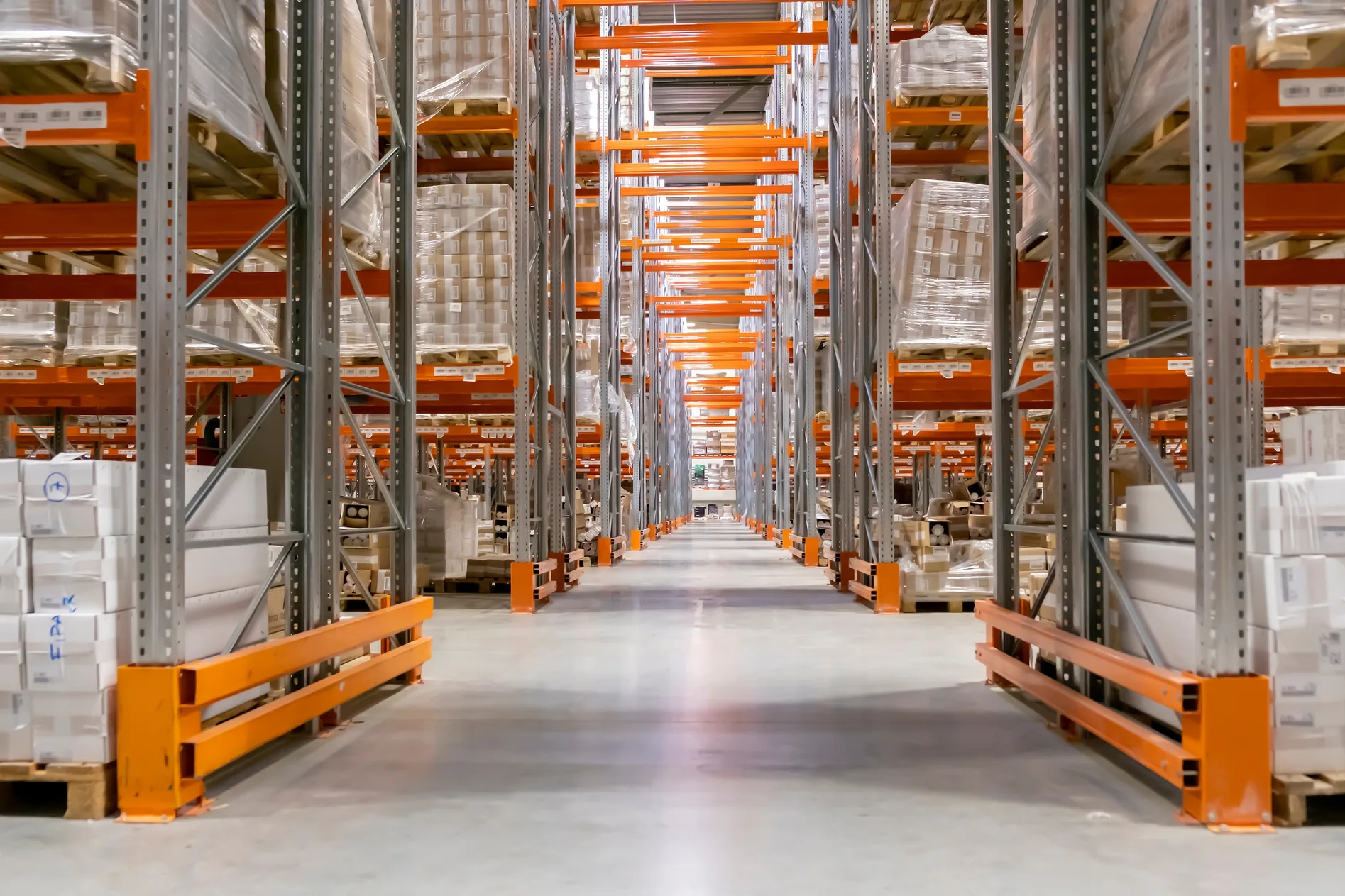

Stock throughput is the coverage that follows your product. For a distributor, a merchant wholesaler, or an importer, the inventory you own does not sit still — it starts at a supplier, crosses an ocean, clears a port, rides an inland leg into your warehouse, waits on the racking, and then goes back out to your customer. Stock throughput is a marine-family policy written to cover that owned product against physical loss or damage at every one of those points, under one form, instead of stitching the journey together from separate contracts that were never designed to meet.
That single-form idea is the whole reason the coverage exists, and it is what sets it apart from the way many distribution programs are built by default: a commercial property policy for the warehouse and a separate ocean cargo or transit policy for the shipping. Those two policies each do their job, but they start from opposite ends and leave gaps at the seams between them. This page tells that coordination-gap story, puts the marine lineage of the form on the table honestly, walks through the ocean and import realities a wholesaler carries — duty, freight, and the shared-sacrifice principle of general average — and then draws the clean seams where stock throughput stops and its neighbors begin.
The owner’s product, covered anywhere it moves
The defining feature of stock throughput is simple to say and hard to replicate with anything else: it covers your own inventory anywhere it is, not just where it happens to be parked. A property policy is anchored to a building — it answers for the stock that is inside your four walls. An ocean cargo policy is anchored to a voyage — it answers for the goods while they are moving on a covered conveyance. Stock throughput dissolves the line between the two, because it is built around the goods themselves rather than around a location or a single trip.
Follow one shipment through and the value shows itself. Your product becomes an ocean cargo exposure the moment it is loaded overseas, waits at the foreign and domestic ports, moves inland — an inland marine exposure by trade name — into your distribution center, rests on your racking where a fire or a water loss can reach it, and ships out to the customer. Under stock throughput that entire arc is one covered thing, with no moment where the goods sit between policies.
One form versus the patchwork: the coordination gap
Most distribution operations that have not looked closely are covered by a patchwork. A commercial property policy covers the warehouse and the inventory that stays put in it. A separate transit or ocean cargo policy covers the goods while they are being shipped. Each is a reasonable contract. The problem is not either one of them — it is the space between them, and the fact that the two policies were bought from different starting points, sometimes from different insurance carriers, with different definitions of when coverage attaches and detaches.
Gaps open exactly at the handoffs. Goods on the pier may have left the cargo policy’s definition of transit without yet reaching the property policy’s definition of your premises. Product held during a customs examination sits where neither contract clearly owns it, and inventory staged in a third party’s facility between legs falls into the same no-man’s-land. When a loss lands in one of those seams, two insurance carriers can each point at the other, and the operator is caught in a coverage argument that should never have existed.
Stock throughput closes those seams by design. Because one marine-family form follows the goods through transit and storage, there is no handoff for a loss to fall into and no second insurer to argue with. The coverage attaches to the product at the start of its journey and stays with it to the end. That continuity — not a longer list of covered perils — is the reason a serious import or distribution operation reaches for stock throughput instead of running two policies and hoping their edges line up.
The marine family: an honest word about the form
Stock throughput does not come from the same place as most of the coverage on a warehouse program, and it is worth being direct about that. Stock throughput is largely a non-ISO, marine manuscript form — it descends from ocean cargo and inland marine coverage, not from the standard property forms, and its wording is negotiated and manuscripted rather than pulled off a single filed template that reads the same from one insurer to the next.
That lineage cuts both ways. It is a genuine strength, because a manuscript form can be shaped to the real shape of your supply chain — the routes you run, the ports you clear, the storage you use — in a way a rigid template cannot. It is also a hazard, because two policies both called “stock throughput” are not automatically the same coverage; the definitions of covered transit, the treatment of stored goods, the valuation basis, and the ocean terms can differ meaningfully. This is the honest reason the form belongs with someone who reads the wording, against how your goods actually travel — because with a marine form that is where the coverage lives.
The import and ocean realities a wholesaler carries
For an importing wholesaler, the value moving on the water is not just the price paid to the supplier. By the time goods are on the ocean, the insured value can already include the duty and the freight paid to get them there — real cost at risk in a loss even though it is not the product itself. A form that follows the goods can be written to reflect that landed value, so a total loss on the ocean does not leave you recovering the bare cost of the merchandise while the duty and freight you already spent simply evaporate. We describe this as a concept, not a calculation: an importer’s insured value is a different, larger thing than a domestic distributor’s.
The ocean carries one exposure a warehouse-anchored policy is not built to reach: general average. It is an old shared-sacrifice principle of ocean shipping. When part of a cargo or the vessel itself is deliberately sacrificed to save the whole venture — goods jettisoned in a storm, or extraordinary expense run up to bring a stricken ship to safety — the loss is shared proportionally among every cargo owner aboard, including owners whose own goods arrived untouched. An importer can face a demand to contribute to a loss it had no part in. A stock throughput form written with the ocean legs in mind is built to respond to that shared-sacrifice exposure; a property policy anchored to your warehouse is not. We flag general average because it surprises owners, and describe it qualitatively — no figures, because the numbers turn on the specific voyage.
One note on language, because this coverage makes it necessary: throughout, your insurance carrier is the company that writes the policy, while the ocean carrier or the motor carrier is the transporter that physically hauls the goods. This niche uses “carrier” in both senses constantly, and we keep them apart on purpose — the transporter of your cargo is not the insurer of it.
Seasonal swings: values that peak before the peak
Inventory value is not a flat line, and for a distribution or wholesaling operation that is an underwriting reality worth naming. Values climb as you build stock ahead of a selling season and fall as it ships out — so your exposure is often highest in the weeks before your busiest period, when the warehouse is fullest and the most product is also in transit toward you. A stock throughput program has to be sized for those peaks, not for an average month, because a loss during the build-up hits the largest concentration of value you carry all year. We read the seasonal shape of your inventory into how the coverage is structured, rather than treating a warehouse that swings hard between full and empty as if it held a steady amount.
Where stock throughput stops: the seams that matter
Stock throughput is a broad form, but it answers one specific question — physical loss or damage to your own product — and several neighbors answer the others. Naming them honestly is the point, because the value of a marine form is lost if an owner assumes it reaches things it does not.
The customers’-goods seam — warehouse legal liability. Stock throughput covers your inventory. The goods you hold for other companies — freight that is not yours but is in your care — are a different exposure entirely, answered by warehouse legal liability, the bailee line. In one building the two run side by side: your owned product on stock throughput, the customers’ freight on warehouse legal liability. The dividing line is ownership, and it is the line the whole brand is built on.
The stays-put seam — commercial property. Stock throughput and commercial property overlap on your owned inventory inside the warehouse, and that is deliberate, but they answer different questions. Property is the line for what is yours and stays put — the building itself, the racking and material-handling systems, and the stationary inventory, along with the business income a facility depends on. Stock throughput is the line for what is yours anywhere it moves. Most programs carry both and coordinate them so the stationary and the in-motion sides of your owned property are each answered without a gap or a wasteful overlap.
The your-product-causes-harm seam — general liability. This is the seam owners most often blur. Stock throughput answers damage to your product. It does not answer the harm your product causes someone else — a sold item that injures a person or damages their property. That is products liability, answered under general liability through the products-completed-operations hazard. Two different questions about the same pallet: general liability is your product hurting others; stock throughput is something hurting your product.
The fleet seam — commercial auto. When your own goods ride on your own trucks, stock throughput can follow the product itself, but the vehicle — the truck, the at-fault accident, the auto liability on the road — is a commercial auto matter, not a stock throughput one. The cargo and the conveyance are two separate insurable things, and final-mile delivery is auto territory.
The excess seam — umbrella. Stock throughput carries its own limits; the excess-limit demands a landlord, a lender, or a national customer places above your primary liability layers sit in an umbrella policy, over the general liability and auto beneath it. Umbrella adds height; it does not change what stock throughput itself covers.
The brand’s map: whose goods are at risk
Three of those seams are really one idea, and it is the map this whole brand is built on. When something is damaged, the first question is not what happened but whose goods were at risk. Property answers what is yours and stays put — your building, your racking, your own inventory at your location. Warehouse legal liability answers what is theirs but in your care — the customers’ goods a bailee holds. Stock throughput answers what is yours anywhere it moves — your owned inventory from the supplier to the customer. Yours-here, theirs-in-your-care, yours-anywhere: three questions about the same pallet, and the reason a distribution program is built from more than one line. Stock throughput is the yours-anywhere line, and for an importer or a merchant wholesaler it is the signature one.
Why distributors, wholesalers, and importers need it
What makes this class distinctive is that the money is in motion. A pure warehouse holds other companies’ goods and worries about the bailee exposure. A distribution or wholesaling operation owns the inventory, and that inventory is almost never all in one place — some is on the water, some is at a port, some is on a truck, and some is on the racking, all at once. Insuring only the warehouse leaves the largest, most mobile part of your balance sheet uncovered exactly when it is most exposed.
Because the exposure differs by the operation, the coverage has to fit it. A Distribution operation lives on the movement — routes, fleets, and product changing locations constantly, with the transit legs front and center. A Wholesaler operation lives on ownership and trade — buying, holding, and reselling inventory, and for an importer the ocean, the duty, and the general-average exposure on top. A Warehouse operation that stores other companies’ freight is largely out of this form, because the goods are not its own. Reading which of those you are is the first thing that has to happen before stock throughput is sized.
What stock throughput responds to
These are the categories underwriters expect on a stock throughput file. They are described qualitatively and with generic carrier language — every claim is handled by the insurance carrier, never named here — with no fabricated cost or frequency figures.
- Loss or damage on the ocean legs. Physical loss to owned inventory while it is an ocean cargo exposure — the water leg from the overseas supplier, where the largest single concentration of value often sits.
- Port, pier, and customs handoffs. The seams a patchwork leaves open — goods on the pier, in a customs hold, or staged in a third party’s facility between legs, where a cargo policy and a property policy each stop short.
- Inland transit into and out of the warehouse. The inland marine leg from the port to your distribution center, and the outbound leg to the customer, whether on your own fleet or a hired one.
- Loss to owned inventory in storage. Fire, water, theft, and similar physical loss to your product while it rests on the racking — the storage side that the same marine form covers so there is no property-to-transit handoff.
- General average and the landed-value exposure. The shared-sacrifice contribution an ocean loss can demand of an importer, and an insured value written to reflect duty and freight already spent, not just the bare cost of the goods.
Limits and structure
Stock throughput is usually structured around the maximum value at any one location and at any one time in transit — the concentration the form has to absorb — rather than a single flat number, because a distribution operation’s value is spread across the warehouse, the ocean, the ports, and the road at once, and it swings with the season. The right structure follows the operation: whether you import or buy domestically; the ports and lanes your goods travel; how high the racking piles before your peak; and whether your insured value should carry duty and freight. Because this is a marine manuscript form, the wording matters as much as the limit — the definitions of covered transit, stored goods, and ocean terms are where two policies quietly differ. Where a contract demands excess limits, that is umbrella territory; the customers’ goods in your care are answered by warehouse legal liability, and your building and stationary inventory by commercial property, as separate lines.
Why Warehouse Guard Insurance
We are an independent agency that writes one world — warehousing, distribution, and wholesaling — and we place coverage with insurance carriers that actually want the work. That focus is the point with a marine form especially. We know to ask whether you import or buy domestically before we quote; to read whether the ocean, the duty, and general average belong in your insured value; to coordinate the stock throughput and property lines so your owned inventory is answered whether it moves or stands still; and to draw the ownership seam so the customers’ freight in your care goes to warehouse legal liability rather than being assumed into a form built for your own goods. Start with a quote, or talk it through with us first.
Learn more
Coverage for a distribution or wholesaling business works as a system. Stock throughput pairs most often with commercial property for the building and the inventory that stays put, warehouse legal liability for any customers’ goods you hold in your care, general liability for the products-liability exposure on what your goods do to others, commercial auto for the fleet that carries them, workers compensation for the crew on the floor, and umbrella liability when a contract demands limits above your primary layer. How it is written also differs by the operation across the three service pillars — Warehouse Insurance, Distribution Insurance, and Wholesaler Insurance.
Coverage for warehousing and distribution
- Warehouse Legal Liability Insurance
- Commercial Property Insurance
- General Liability Insurance
- Commercial Auto Insurance
- Workers Compensation Insurance
- Umbrella Liability Insurance
Insurance by the operation you run
Get covered
Primary sources
Frequently asked questions about Stock Throughput Insurance
What does stock throughput insurance cover?
Stock throughput covers your own inventory against physical loss or damage anywhere along the supply chain — at the supplier, on the ocean, at the port, in inland transit, while it sits in your warehouse, and on the way out to your customer. It is a marine-family form that follows the goods rather than a policy tied to one building, so the moment your product changes hands or moves between locations it stays covered. It is written for distributors, merchant wholesalers, and importers who own the inventory in motion — the goods are yours, which is exactly what makes stock throughput, not a bailee line, the right answer for them.
How is stock throughput different from a commercial property policy?
A commercial property policy covers your building and the inventory you own while it stays put at your location — its coverage is anchored to the walls. Stock throughput covers that same owned inventory anywhere it moves. The difference is motion: property answers what is yours and stays put; stock throughput answers what is yours anywhere it goes. Most distribution programs carry both, because the moment the goods leave the racking — inbound from the supplier or outbound to the customer — the property policy’s coverage thins out and the marine form is what keeps following them.
Isn’t my inventory already covered by a cargo policy while it is shipping?
A separate ocean cargo or transit policy covers the moving legs, and a property policy covers the warehouse — but they were bought as two contracts from two starting points, and gaps open where they are supposed to meet: at the pier, at the port, during a customs hold, or while goods sit in a third party’s facility between legs. Stock throughput closes those seams by putting transit and storage under one marine-family form that follows the goods the whole way, so there is no handoff between policies for a loss to fall into.
What is general average, and why does it matter to an importer?
General average is a long-standing principle of ocean shipping: when part of a cargo or the vessel is sacrificed to save the rest — cargo jettisoned in a storm, or extraordinary expense incurred to bring a ship to safety — every cargo owner with goods aboard shares in the loss proportionally, even owners whose own goods arrived untouched. For an importing wholesaler that means a demand can land on you for a loss you had no part in and never saw. A stock throughput form written with the ocean legs in mind is built to respond to that shared-sacrifice exposure, which a warehouse-anchored property policy is not designed to reach.
Is stock throughput a standard ISO form?
No, and it is important to be honest about that. Stock throughput is largely a non-ISO, marine manuscript form — it descends from ocean cargo and inland marine coverage rather than from the standard property forms, and its wording is negotiated and manuscripted rather than pulled off a single filed template. That is a strength when it is done well, because the form can be shaped to your real supply chain, and a hazard when it is not, because two stock throughput policies are not automatically the same. It is the reason this coverage is worth placing with someone who reads the actual wording against how your goods actually move.
How does stock throughput relate to warehouse legal liability?
They answer opposite sides of the same warehouse. Warehouse legal liability is a bailee line for other companies’ goods that are in your care — property that is not yours but is your responsibility while it sits under your roof. Stock throughput covers your own owned inventory, wherever it is. In one building the two can sit side by side: the freight you hold for customers runs through warehouse legal liability, and the product you bought and own runs through stock throughput. The three-way rule the whole brand is built on says it cleanly — property answers what is yours and stays put, warehouse legal liability answers what is theirs but in your care, and stock throughput answers what is yours anywhere it moves.
Get stock throughput that follows your product, not your building
Tell us whether you import or buy domestically, where your goods travel, and how high the racking piles before your peak, and we will market a marine-family form to insurance carriers that write the class — read against how your inventory actually moves, not off a template.