
Insurance by operating model
Distribution Insurance for Route & DSD Fleet Operators
Insurance for the route-to-market distributor — direct-store-delivery, route and final-mile delivery, own-brand and beverage distribution, and the food, grocery, building-products, and auto-parts operations that move their own product to the customer. The segment is defined by two things at once: the fleet that runs the routes — the truck is the business — and the owned product in transit that moves with it.
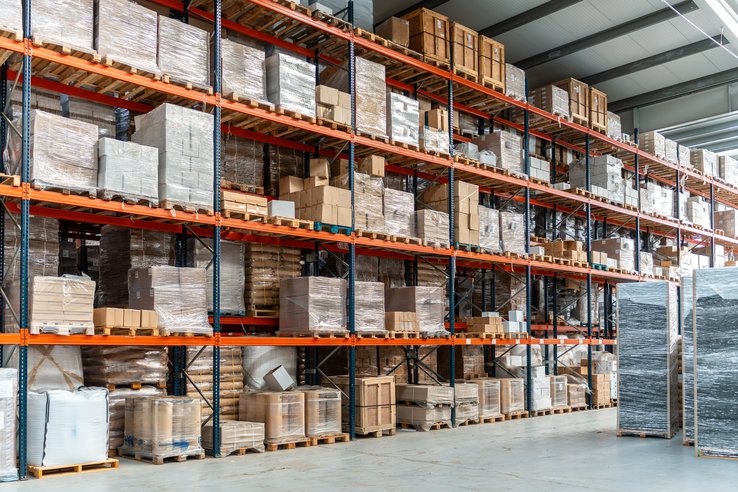

Distribution is the route-to-market end of this brand — the operation that moves its own product to the customer. A distribution business does not sit and wait for freight to arrive; it loads trucks and vans and runs them out on routes every day, carrying its own product from the distribution center to the store, the job site, or the door. What defines the segment is not the building, it is the fleet and what rides on it: the delivery vehicles that run the routes, and the owned product moving with them. The truck is the business, and the two exposures that come with it — the fleet on the road and the owned product in transit — are what a distribution program is built around.
That is a genuinely different business from the wholesaler down the block, even though the two get lumped together constantly. Here is the seam, stated plainly: distribution is about moving product — routes, fleets, and direct-store-delivery, where the operation is logistics and delivery — while wholesaling is about trading product — buying, holding, and reselling owned inventory, where the operation is merchant trade. Many companies are both a distributor and a wholesaler at once, buying and reselling product and also running their own delivery routes; when they are, both exposures apply and we write them together. If your operation is built on the buy-sell inventory side rather than the fleet, the Wholesaler page is built for that model, and this one is built for the fleet.
This page covers how distribution insurance is built for the product-on-the-move reality: the work it covers, the risk profile, the coverage stack in the order this pillar leans on it, the drivers that move cost, and how insurance carriers underwrite a fleet-driven distribution risk. Throughout, one point of language matters — your insurance carrier is the company that writes your coverage, which is a different thing from a motor carrier or freight carrier that hauls goods over the road; this niche uses both meanings of the word constantly, so we keep them separate.
What makes distribution insurance different
Two features separate a distribution business from a warehouse that never moves the goods, and both point the program toward the same place. The first is the fleet. A distributor runs its own delivery vehicles — box trucks, straight trucks, and vans on daily routes — and those vehicles are the largest and most frequent exposure the operation carries. A route runs in traffic, backs into loading docks, and threads through congested delivery points, and an at-fault accident is the loss most likely to become a serious claim. That is why commercial auto leads the program here rather than trailing it, as it does for a pure warehouse. It is worth being clear about audience while we are here: a distribution business runs its fleet in service of moving its own product to its own customers — that is the exposure this page insures — not as a business whose only service is hauling other companies’ freight for pay, which is a different risk with different rules.
The second is the owned product in transit. Unlike a bailee warehouse that holds other companies’ goods, a distributor owns the product it moves, and that product spends much of its life on the road — in from the supplier, briefly through the building, and back out on the routes to the customer. Commercial auto covers the truck and the liability on the road, but it does not pay for damage to your own cargo. Stock throughput is the line that does — one marine-family policy that follows your owned inventory everywhere it goes, including the delivery legs on your own fleet. Between the fleet and the owned product in transit, the whole risk picture of a distribution business is a moving one, and the program is weighted to match — commercial auto and stock throughput first, with the rest of the stack behind them.
The work this covers
The distribution pillar holds several kinds of operation that share one risk profile — a fleet running routes to carry the distributor’s own product to market. These are the operations that live within this pillar:
- Direct-store-delivery (DSD). The defining distribution model — a driver-salesperson runs a fixed route to deliver, stock, and merchandise product directly onto the retailer’s shelf, so the fleet, the daily route, and the product on the truck are the operation itself.
- Route and final-mile delivery. Scheduled and on-demand delivery of your own product from the distribution center to the customer’s door, dock, or job site — the last leg where the fleet exposure and the owned product in transit come together most sharply.
- Own-brand and beverage distribution. Distributing your own branded product or a licensed beverage line on your routes — beverage distribution adding the licensed three-tier structure that governs who a distributor can buy from and sell to.
- Food and grocery distribution. Moving food, grocery, and perishable product to stores, restaurants, and institutions, where cold-chain handling and food-safety obligations ride on top of the fleet and the owned-product-in-transit exposure.
- Building-products and auto-parts distribution. Distributing lumber, hardware, and building materials, or automotive parts, on delivery routes to contractors, shops, and dealers — heavy, high-turn product where the fleet runs constantly and the owned inventory is always in motion.
Storing and shipping other companies’ goods as a bailee is not the distribution model — that is the warehouse operation, which leads with the customers’ goods in your care and lives on the Warehouse page. And a buy-sell operation built on owned-inventory concentration rather than a delivery fleet is the Wholesaler model. If your operation runs distribution alongside one of those, each scope is underwritten on its own terms.
State and regulatory considerations
A distribution business sits inside more than one regulatory world, and the first is fleet safety. Because a distributor operates commercial vehicles on public roads, federal and state motor-vehicle safety rules apply to the fleet — driver qualification and commercial-driver licensing where the vehicle weight requires it, hours-of-service and inspection rules, and the U.S. Department of Transportation registration that comes with running qualifying vehicles across state lines. It is important to frame this honestly: these rules attach because you run a fleet to serve your own routes, not because you are seeking operating authority to haul other companies’ freight for pay. A distributor serving its own delivery routes and a business whose only service is hauling freight are two different regulatory postures, and we read the one that actually applies to your operation rather than assuming the heavier one.
Beverage distribution adds a second layer. Alcoholic-beverage distribution in the United States generally runs through a three-tier system — producers sell to licensed distributors and wholesalers, who in turn sell to licensed retailers — and a beverage distributor is licensed at the state alcohol-beverage-control level to operate in that middle tier. The framework shapes the brands and territories you carry, who you can buy from and sell to, and the records you keep, and it varies genuinely from state to state; we name it by its real shape and never invent a statute or a registration code for it. Food and grocery distributors carry their own registrations where they apply — federal food-facility registration and the state food-distribution or dairy-handling licensing that some states require — again read against the operation rather than assumed. Workers compensation rules also vary by state, including the four monopolistic states — North Dakota, Ohio, Washington, and Wyoming — where coverage comes only through the state fund, which matters for a crew and drivers that cross a state line.
At the state layer, a distributor is served by the shared “Distributor & Wholesaler Business Insurance in {State}” page — the type where distributors and wholesalers land together, because both own the product they move or trade. As those pages come online we link the fleet-safety, beverage-licensing, and workers-compensation specifics for priority markets such as Texas, California, Illinois, Georgia, and New Jersey; in the meantime we write across all 48 licensed states.
Coverage breakdown
Here is the stack a distribution business carries, in the order this pillar leans on it. Each line links to its full page — and because the segment is defined by the fleet and the owned product on the move, commercial auto and stock throughput lead the program.
- Commercial Auto Insurance — the lead line, because the fleet is the business. The route-delivery trucks, DSD box trucks, final-mile vans, and yard vehicles that run your routes — the auto liability when your driver is at fault, and the physical damage that keeps a wrecked truck from stopping the route. One note on language: your insurance carrier writes this policy; a motor carrier is a company that hauls freight — two different meanings of “carrier,” kept separate.
- Stock Throughput Insurance — the owned-product-in-transit line. One marine-family policy that follows your own inventory everywhere it moves — from the supplier and the port, through transit, into the building, and back out on your routes to the customer — covering damage, loss, and theft to the product you own while it is on the move. The line commercial auto is not: it pays for your cargo, not the truck.
- General Liability Insurance — the third-party foundation. Bodily injury and property damage around the operation — a delivery driver, a customer’s representative, or a bystander hurt at a delivery point or on your premises — plus the products-liability chain a distributor sits in as a seller of goods that later cause harm.
- Workers Compensation Insurance — medical and lost-wage coverage for your drivers, loaders, and warehouse crew, with employers liability and honest handling of the monopolistic states. The line that answers an injury to your own worker — a driver strain, a lifting injury, a dock injury — which general liability never does.
- Umbrella Liability Insurance — the excess layer. The higher limits national retail customers, grocery chains, and larger distribution contracts demand, sitting excess of your commercial auto and general liability and answering the severity of a serious fleet accident that can run past a primary limit.
- Commercial Property Insurance — the fire, theft, and water exposure at your own building — the distribution center, the racking and material-handling systems, and the inventory that sits still on the floor between routes. Your own property that stays put, split from the product in transit by where it is.
- Warehouse Legal Liability Insurance — the context line, not the lead here. A distributor mostly moves its own product, so this is the exception rather than the rule — but if you also hold another company’s goods in your care as a bailee, that freight is not yours and not answered by your property or stock throughput. It runs through warehouse legal liability, and if your operation does it, we add the line.
Three of those lines are really one idea, and it is the map this whole brand is built on — the question of whose goods are at risk. Property answers what is yours and stays put — your building, your racking, and the inventory sitting on your floor. Warehouse legal liability answers what is theirs but in your care — the narrower case where you hold another company’s goods as a bailee. Stock throughput answers what is yours anywhere it moves — your owned inventory from the supplier to the customer. Yours-here, theirs-in-your-care, yours-anywhere: for a distributor, the “yours-anywhere” question is the one that matters most, because your product spends its life on the move.
What distribution insurance costs
Premium tracks the operation, not a sticker price. The drivers that move it most are the size and makeup of your fleet — the number of trucks and vans, their weight class, and the routes they run; your driver roster, their records, and the hours-of-service discipline you document; the value and turn of the owned product you move, which drives the stock throughput exposure; your payroll and crew classifications; your auto and cargo loss history, which insurers weigh heavily on a fleet risk; whether you distribute a licensed beverage line or handle food and perishable product; and the limits your national customers demand. We price to that real picture and stand behind any figure we give — verified ranges come from us directly, never a generic guess.
Claims scenarios
These are plausible distribution claim categories, described qualitatively and with generic carrier language — every claim is handled by your insurance carrier, never named here — and with no fabricated cost or frequency figures.
- An at-fault accident on a delivery route. A DSD or route driver is at fault in a collision that injures another motorist and damages their vehicle, and the auto liability and the defense run through commercial auto — the fleet exposure that leads this pillar because it is the loss a distribution operation is most exposed to.
- Owned product damaged in transit. A load of your own product is damaged, lost, or stolen while it moves — an accident on the road, a temperature failure, or a theft off a parked truck — and because the goods are yours, the loss to the cargo itself is a stock throughput matter, not a commercial auto one.
- A products-liability claim in the chain of distribution. A product you distributed later causes injury or property damage, and a claim follows the chain to you as a seller of the goods — the products-completed-operations exposure answered under general liability.
- A driver or loader is injured. A driver strains a back unloading a route stop, or a loader is hurt at the dock, and the injury to your own worker is a workers compensation claim — the line that answers your crew, which general liability does not.
Underwriting realities
Insurance carriers writing the distribution class look hardest at the fleet and the product, and at the discipline around both: the size, weight class, and radius of your fleet; your drivers’ records and the qualification, hours-of-service, and vehicle-maintenance discipline you can document; your auto and cargo loss history, which a fleet risk lives or dies on; the value and turn of the owned inventory you move; whether you handle a licensed beverage line, food and perishable product, or heavy building materials; and your multi-state footprint. A distributor with clean driver records, a disciplined fleet-safety program, and a controlled cargo history opens more markets; a poor auto record, an uncontrolled fleet, or a serious cargo loss narrows them. A business that also runs a bailee warehouse or a buy-sell wholesale operation gets that portion underwritten separately, so the distribution book is not subsidizing — or stranding — the rest. We position your operation to the insurance carriers most likely to want a fleet-driven distribution risk rather than sending one generic submission everywhere.
Why Warehouse Guard Insurance
We write one world — warehousing, distribution, and wholesaling — and within it we treat distribution as the fleet-driven, product-on-the-move operation it is, not as a warehouse that happens to own a few trucks. We weight your stack toward the two lines this pillar actually leans on: commercial auto for the delivery fleet that is the business, and stock throughput for the owned product moving on it. We read whether you run DSD, final-mile, beverage, food, or building-products routes; we keep the fleet-safety rules that apply to a distributor serving its own routes distinct from the heavier posture of a business that hauls freight for pay; we draw the whose-goods map so your owned product in transit is answered by stock throughput and the rare bailee freight by warehouse legal liability; and we keep your insurance carrier and the motor carriers of the trade clearly separated in every conversation. When a national customer lands a certificate request on your desk with limits you do not recognize, that is a call we take. Start with a quote, or talk it through with us first.
Learn more
Distribution is one of three operating models we write, and the coverage stack shifts with the work. The two lead lines for this pillar live on the commercial auto page (the delivery fleet that is the business) and the stock throughput page (your owned product anywhere it moves), with general liability, workers compensation, umbrella liability, and commercial property behind them, and warehouse legal liability for the narrower case of holding another company’s goods. If your operation stores and ships other companies’ freight as a bailee, the Warehouse Insurance page leads with the customers’-goods profile; if it is built on buying, holding, and reselling owned inventory, the Wholesaler Insurance page leads with the owned-inventory and products exposure.
Coverage for a distribution business
- Warehouse Legal Liability Insurance
- Stock Throughput Insurance
- General Liability Insurance
- Commercial Property Insurance
- Workers Compensation Insurance
- Commercial Auto Insurance
- Umbrella Liability Insurance
Insurance by the operation you run
Get covered
Primary sources
Frequently asked questions about Distribution Insurance
What insurance does a distribution business need?
A distribution program is built around the fleet and the product it moves. Commercial auto leads it, because the trucks and vans running your routes are the operation — the at-fault accident on the road, the auto liability, and the physical damage to the fleet are the exposures that show up first. Stock throughput sits close behind, because the product on those trucks is yours — you own it, and it needs coverage for damage while it moves from the supplier through transit and out to the customer. General liability answers the third-party harm around the operation and the products-liability chain a seller of goods sits in; workers compensation covers the drivers and warehouse crew; umbrella liability adds the higher limits national retail customers and larger contracts demand; commercial property covers your own building and the inventory that sits still in it; and warehouse legal liability answers the narrower case where you hold another company’s goods in your care. We weight the program toward commercial auto and stock throughput, because that is where a route-to-market distributor’s exposure actually concentrates.
Why does commercial auto lead a distribution program?
Because the fleet is the business. A distributor’s whole operating model is moving product to market on its own trucks and vans — direct-store-delivery, route delivery, and final-mile — and the moment that model exists, the vehicles are the single largest and most frequent exposure the operation carries. A route runs every day, in traffic, at loading docks, and through congested delivery points, and an at-fault accident is the loss that most reliably turns into a serious claim. Commercial auto answers the auto liability when your driver is at fault, the physical damage when a truck is wrecked, and the coverage the vehicles need to keep the routes running. A pure warehouse that never puts a truck on the road carries this line lightly; a distributor built on delivery leads with it. That is the difference the pillar is written around.
What is the difference between an insurance carrier and a motor carrier for my delivery fleet?
It is worth being precise, because this trade uses the word “carrier” in two completely different ways. Your insurance carrier is the company that writes your coverage and pays your claims — the insurer behind your commercial auto and stock throughput policies. A motor carrier, or freight carrier, is a company in the business of hauling goods over the road. Those are not the same thing, and on this page “carrier” means your insurance carrier unless we say otherwise. It also draws a real line in your operation: you run a delivery fleet in service of moving your own product to your own customers, which is a distributor’s exposure — not a business whose only service is hauling other companies’ freight for pay, which is a different risk with different rules. We insure the fleet a distribution operation runs to serve its own routes.
Does my owned product need stock throughput while it is on the truck?
Yes — that transit leg is exactly what stock throughput is built for. A distributor owns its product, and that product spends much of its life in motion: coming in from the supplier, sitting briefly in the building, and then moving back out on your routes to the customer. Commercial auto covers the truck and your liability on the road, but it is not the line that pays for damage to your own cargo — the goods you own that are damaged, lost, or stolen while they move. Stock throughput is one marine-family policy that follows your owned product everywhere it goes, including the delivery legs on your own fleet, rather than leaving a gap between where your building’s property coverage stops and where the customer’s dock begins. For a route-to-market distributor, the owned product in transit is a defining exposure, and stock throughput is the line written for it.
I run a beverage or direct-store-delivery route — how does the three-tier alcohol system affect my insurance?
Beverage distribution sits inside a regulatory structure most other distribution does not. Alcoholic-beverage distribution in the United States generally runs through a three-tier system — producers sell to licensed distributors and wholesalers, who in turn sell to licensed retailers — and a beverage distributor is licensed at the state alcohol-beverage-control level to operate in that middle tier. That framework shapes who you can buy from and sell to, the territories and brands you carry, and the records you keep, and it varies genuinely from state to state. It does not change the shape of your insurance so much as the operation it insures: a licensed beverage distributor still leads with commercial auto for the DSD fleet and stock throughput for the owned product in transit, with general liability, workers compensation, and umbrella behind them. We read the operation you actually run — the routes, the fleet, the product, and the licensing you hold — rather than assuming a generic distribution policy fits it, and we do not invent a code or a statute that governs your state.
How is distribution insurance different from wholesaler insurance?
The two look similar and are genuinely different, and the difference is what you do with the product. Distribution is about moving product — you run routes, a delivery fleet, and direct-store-delivery to carry your own product to market, and the operation is logistics and delivery. Wholesaling is about trading product — you buy, hold, and resell owned inventory, and the operation is merchant trade, where inventory concentration and the products-liability chain drive the risk. So a distribution program leads with commercial auto and stock throughput for the fleet and the product on the move, while a wholesaling program leads with the owned-inventory and products exposure. Many companies are both a distributor and a wholesaler at once — they buy and resell and also run their own delivery routes — and when they are, both exposures apply and we write them together. If your operation is built on the buy-sell inventory side rather than the fleet, the wholesaler page is built for that model.
Distribution insurance by state
We write distribution businesses in all 48 licensed states. At the state layer, a distributor is served by the shared “Distributor & Wholesaler Business Insurance in {State}” page — the type where distributors and wholesalers land together, because both own the product they move or trade. Priority markets include Texas, California, Illinois, Georgia, and New Jersey. Pick your state for the fleet-safety posture, the beverage-licensing and food-distribution regime, and the workers-compensation rules that apply to a distribution operation where you run your routes.
Insure the fleet and the product the way the routes actually run
Tell us about the routes you run, the fleet that runs them, and the owned product on the trucks, and we will market it to insurance carriers that write the distribution class — with commercial auto and stock throughput leading, not assumed.