
Warehouse, Distribution & Wholesaler Insurance
Insurance for warehouses, distributors, and wholesalers.
Warehouse Guard Insurance insures the business owners of warehousing, distribution, and wholesaling operations — the public, 3PL, contract, bonded, and cold-storage warehouses that hold other companies’ goods, and the distributors, importers, and merchant wholesalers who buy, hold, and sell their own. One specialty program built around the exposure a generic policy leaves out: warehouse legal liability for the goods in your care, stock throughput for the inventory you own anywhere it moves, and the products-liability, property, fleet, and workers compensation lines the trade actually carries — across the 48 states we are licensed in.
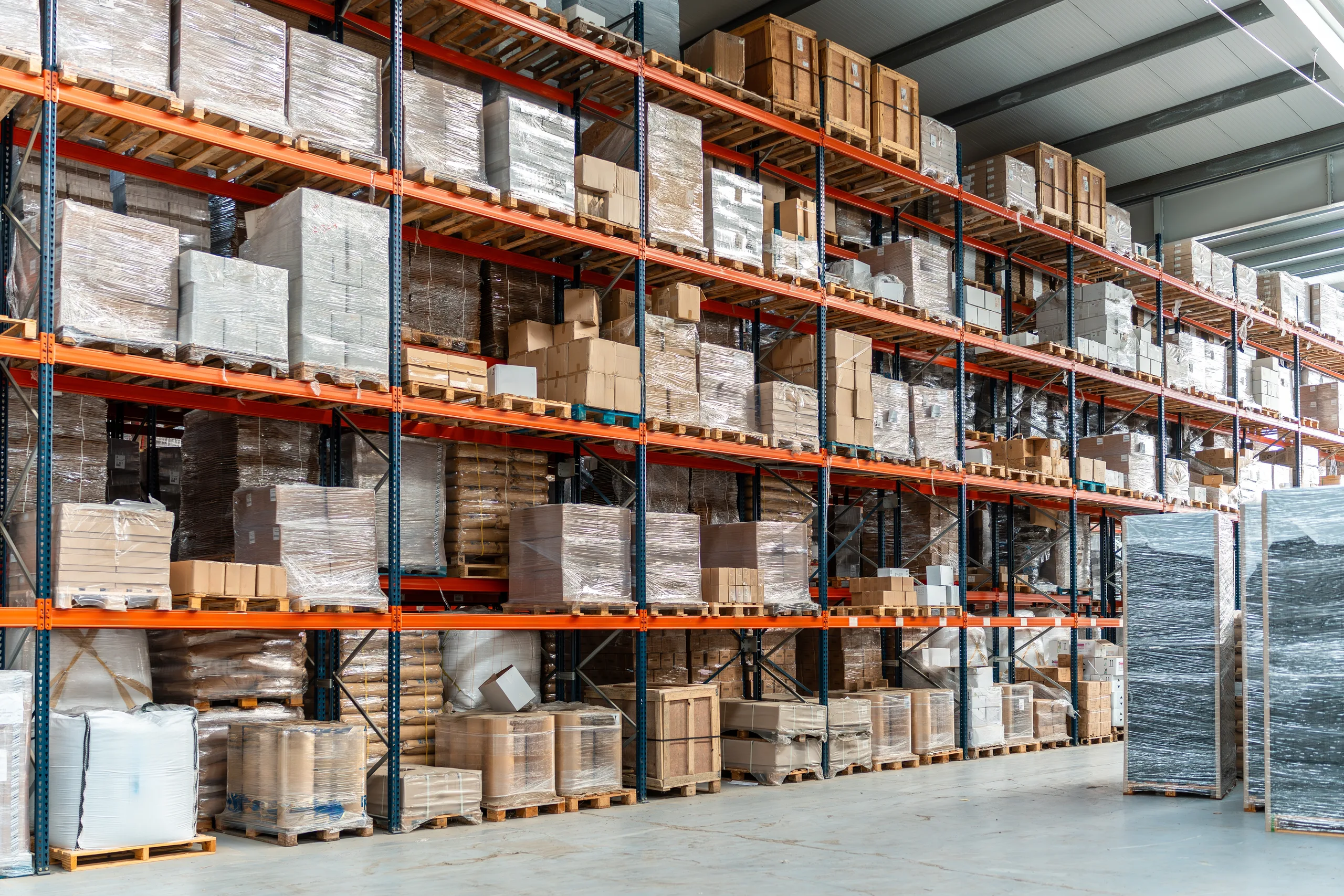

Three operations, one specialty program
Warehouses that hold other companies’ goods, distributors that move product to market, and wholesalers that own and resell inventory run different risk profiles and lead with different coverage. We write each to its own operation, not off one generic form.
Warehouse Insurance
public and 3PL warehousing, contract and dedicated warehousing, bonded warehousing and FTZ, cold-storage and food-grade warehousing, fulfillment and e-commerce warehousing
Insurance for the BAILEE services operation — public, 3PL, contract, bonded, cold-storage, food-grade, and fulfillment warehouses that store and ship other companies’ goods. The care-custody-and-control operating model, where the customers’ goods in your building and the facility itself drive the risk profile.
Learn more →Distribution Insurance
direct-store-delivery (DSD), route and final-mile delivery, own-brand and beverage distribution, food and grocery distribution, building-products and auto-parts distribution
Insurance for the ROUTE-TO-MARKET operation — direct-store-delivery, route delivery, own-brand distribution, and the fleets that carry product to the customer. The product-on-the-move operating model, where the fleet and the owned product in transit drive the risk profile — distinct from the buy-sell inventory concentration of a pure wholesaler.
Learn more →Wholesaler Insurance
merchant wholesaling (NAICS 423/424), importers and first U.S. sellers, durable-goods wholesaling, nondurable-goods wholesaling, B2B and industrial supply
Insurance for the BUY-SELL INVENTORY operation — merchant wholesalers, importers, and B2B sellers who buy, hold, and resell their own product. The owned-inventory-and-trade operating model, where inventory concentration, products liability in the chain of distribution, and the import/ocean exposure of the first U.S. seller drive the risk profile.
Learn more →Coverage for warehousing and distribution
The core lines the trade carries — led by the two that define it: warehouse legal liability for the goods in your care, and stock throughput for the inventory you own anywhere it moves.
Warehouse Legal Liability Insurance
Bailee coverage for the customers’ goods in your care, custody, and control — the defining exposure of a public, 3PL, contract, bonded, or cold-storage warehouse. Built around the legal-liability standard (you answer for loss you are legally liable for) versus the broader all-risk bailee form, the fire, theft, and water damage to goods that are not yours, and the limitation-of-liability language warehouse receipts carry. The signature warehouse page — for the operator who stores and ships other people’s freight.
Learn more →Stock Throughput Insurance
One marine-family policy that follows a distributor’s or wholesaler’s owned product everywhere it goes — from the supplier and the port, through ocean and inland transit, into the warehouse, and out to the customer — replacing the property-plus-cargo patchwork with a single form. Built for importers and merchant wholesalers who own inventory in motion; the signature distributor page. Largely a non-ISO manuscript form, described honestly.
Learn more →General Liability Insurance
Third-party bodily injury and property damage coverage for warehousing, distribution, and wholesaling operations — the premises-and-operations exposure of docks, yards, and forklift traffic for a warehouse, and the deep products-completed-operations exposure of a distributor or wholesaler in the chain of distribution, including the importer who is the first U.S. seller of the goods. The line where the bailee and the owned-stock audiences meet.
Learn more →Commercial Property Insurance
Coverage for the building, the racking and material-handling systems, YOUR OWN inventory (for a distributor or wholesaler), and the business income a big-box distribution facility depends on. Cut crisply from the two signatures: property covers what is YOURS and stays put — distinct from the customers’ goods in your care (warehouse legal liability) and from owned product on the move (stock throughput).
Learn more →Workers Compensation Insurance
Medical and lost-wage coverage for warehouse and distribution crews — built around the material-handling reality of the trade: forklift and powered-industrial-truck injury, racking and stored-material falls, lifting and repetitive-motion strain, and dock injuries. Includes honest handling of the four monopolistic state-fund states. A core line for a labor-dense operation.
Learn more →Commercial Auto Insurance
Coverage for the fleet a distribution operation runs — route-delivery trucks, final-mile vans, and yard vehicles that move owned or customers’ goods between the dock and the destination. Note: throughout this page the insurance carrier is disambiguated from the motor carrier and the freight carrier — this trade uses both meanings of ‘carrier’ constantly.
Learn more →Umbrella Liability Insurance
Excess limits above general liability, commercial auto, and other underlying policies for warehousing and distribution operations — the fleet-severity and high-contract-limit exposure a 3PL agreement, a landlord, or a national customer often requires above the primary lines.
Learn more →Built around whose goods are actually at risk
The two signature exposures of this trade are the customers’ goods in a warehouse’s care and the owned inventory a distributor or wholesaler holds in motion — the bailee side and the owner side, each with its own defining line.
The hardest loss in a warehouse is rarely your own property — it is your customers’ goods in your care
When a fire, a burst sprinkler line, or a theft hits a warehouse, the property that stings is usually not the racking or the building — it is the freight that belongs to your customers, sitting under your roof in your care, custody, and control. That is what warehouse legal liability is built for: the goods that are not yours but are your responsibility while they are in your building. It is the defining exposure of a public, 3PL, contract, bonded, or cold-storage operation, and it is the line a generic property policy quietly leaves out. We build the program around it.
Warehouse legal liability →For a distributor or wholesaler, your product is rarely sitting still — and one marine-family form can follow it everywhere
The inventory a distributor or wholesaler owns is on the move: on the water from an overseas supplier, at the port, on a truck, in the warehouse, and out to the customer. A standard property policy stops at your four walls, which leaves the ocean and inland transit legs and the goods in someone else’s building uncovered. Stock throughput is the marine-family form that follows your owned product everywhere it goes — from the supplier through ocean cargo and inland marine transit into the warehouse and back out — replacing the property-plus-cargo patchwork with a single form. For importers who are the first U.S. seller of the goods, it is the natural home for the exposure.
Stock throughput →Warehouse & distribution insurance guides
Plain-language guides on coverage, cost drivers, the regulatory rules distributors face, and running a warehouse, distribution, or wholesale business.
Licensed in 48 states
We place coverage for warehousing, distribution, and wholesaling operations across the country (every U.S. state except Hawaii & Alaska) — wherever your buildings, your inventory, and your fleets are. Priority states are highlighted.
- Alabama
- Arizona
- Arkansas
- California
- Colorado
- Connecticut
- Delaware
- Florida
- Georgia
- Idaho
- Illinois
- Indiana
- Iowa
- Kansas
- Kentucky
- Louisiana
- Maine
- Maryland
- Massachusetts
- Michigan
- Minnesota
- Mississippi
- Missouri
- Montana
- Nebraska
- Nevada
- New Hampshire
- New Jersey
- New Mexico
- New York
- North Carolina
- North Dakota
- Ohio
- Oklahoma
- Oregon
- Pennsylvania
- Rhode Island
- South Carolina
- South Dakota
- Tennessee
- Texas
- Utah
- Vermont
- Virginia
- Washington
- West Virginia
- Wisconsin
- Wyoming
Warehouse & distributor insurance FAQ
What is warehouse legal liability, and why does a property policy not cover it?
Your commercial property policy covers what you own — the building, the racking, your equipment, and, for a distributor, your own inventory. It does not answer for the goods that belong to your customers while they sit in your warehouse. Warehouse legal liability is the line that responds when those goods are damaged by a fire, water, or theft loss you are legally responsible for as their bailee. For a public, 3PL, contract, bonded, or cold-storage operation storing other companies’ freight, it is the exposure that defines the business.
What does stock throughput cover that property and cargo policies do not?
Stock throughput is one marine-family form that follows a distributor’s or wholesaler’s owned product everywhere it moves — from the supplier, through ocean cargo and inland marine transit, into the warehouse, and out to the customer — instead of the patchwork of a property policy at the building plus a separate cargo policy in transit. It is built for owners who hold inventory in motion, including importers who are the first U.S. seller of the goods. Because it is largely a manuscript, non-standard form, how it is written matters, which is exactly the part we walk owners through.
Are distributors and importers really exposed to products liability?
Yes. A distributor, wholesaler, or importer sits in the chain of distribution, and a products-liability claim over a product that causes injury or damage can reach the seller of that product — not only the manufacturer who made it. For an importer who is the first U.S. seller, that exposure is real and worth structuring general liability around. This is coverage-honest education, not a prediction about any one business.
What is employers liability, and how does it relate to workers comp and umbrella?
Employers liability is the part of a workers compensation policy that responds when an injured employee brings a suit that falls outside the no-fault comp benefit itself. On a labor-dense warehouse or distribution crew — forklifts, racking, dock work, and the lifting that comes with it — it sits alongside the medical-and-wage benefit, and an umbrella policy can sit excess of it. It is a meaningful part of how the program is structured, not a line item to ignore.
Does the program cover my delivery fleet?
Yes — commercial auto answers the route-delivery trucks, final-mile vans, and yard vehicles a distribution operation runs. One point of language worth being precise about: your insurance carrier is the company that writes your coverage, which is a different thing from a motor carrier or freight carrier that hauls goods for hire. We insure the fleet you run in service of your own warehouse, distribution, or wholesale operation; a business whose only work is carriage for hire is a different motor-carrier program.
How much does warehouse or distributor insurance cost?
There is no single price, because premium is driven by your specific operation. For a warehouse, the biggest factors are the value of the customers’ goods in your care, your building and racking values, throughput, and whether you run cold storage. For a distributor or wholesaler, it is the value and concentration of the inventory you own, the products you handle and where they sit in the chain of distribution, your import and transit exposure, and your fleet. A public warehouse and an importing wholesaler look very different to an underwriter, and we price to the real risk rather than a generic guess.
Who we are
Warehouse Guard Insurance is a specialty brand of Wexford Insurance, an independent agency led by Nate Jones, CPCU. We focus on one world — warehousing, distribution, and wholesaling, from the bailee who stores other companies’ freight to the importer who owns inventory in motion — and place coverage with insurance carriers that actually want the work.
Our specialty panel spans 25 markets we hold appointments with, including: Travelers Insurance, The Hartford, West Bend Insurance, Secura Insurance, Liberty Mutual, Texas Mutual, Pie Insurance, Frank Winston Crum Insurance, UFG Insurance, Westfield Insurance, Tokio Marine Insurance, SFM Mutual Insurance, Progressive Insurance, GEICO Insurance, Ohio Mutual, Hastings Insurance, Goodville Mutual Casualty Company, Next Insurance, Encova Insurance, Employers Insurance, CNA Insurance, Cincinnati Insurance, Amerisafe, Grand River Insurance, Hanover Insurance Group. We review the panel regularly and adjust it as insurer appetite shifts.
Warehousing, distribution, and wholesaling don’t fit a generic business policy. If you store other companies’ goods, your biggest exposure is freight that isn’t even yours — warehouse legal liability. If you own the inventory, it is rarely sitting still, and stock throughput follows it from the supplier to the customer in one form. We built Warehouse Guard because the coverage has to match whose goods are actually at risk and where they are, not a one-size-fits-all form.
— Nate Jones, CPCU, Founder
Warehouse Guard Insurance is a DBA of Wexford Insurance, LLC. Verify our license — NPN 19887690 — at NIPR.com.
Get a quote for your warehouse or distribution business
Tell us how you operate — what you store or sell, whose goods are in your building, and the fleets you run — and we will market it to insurance carriers that write the class.