

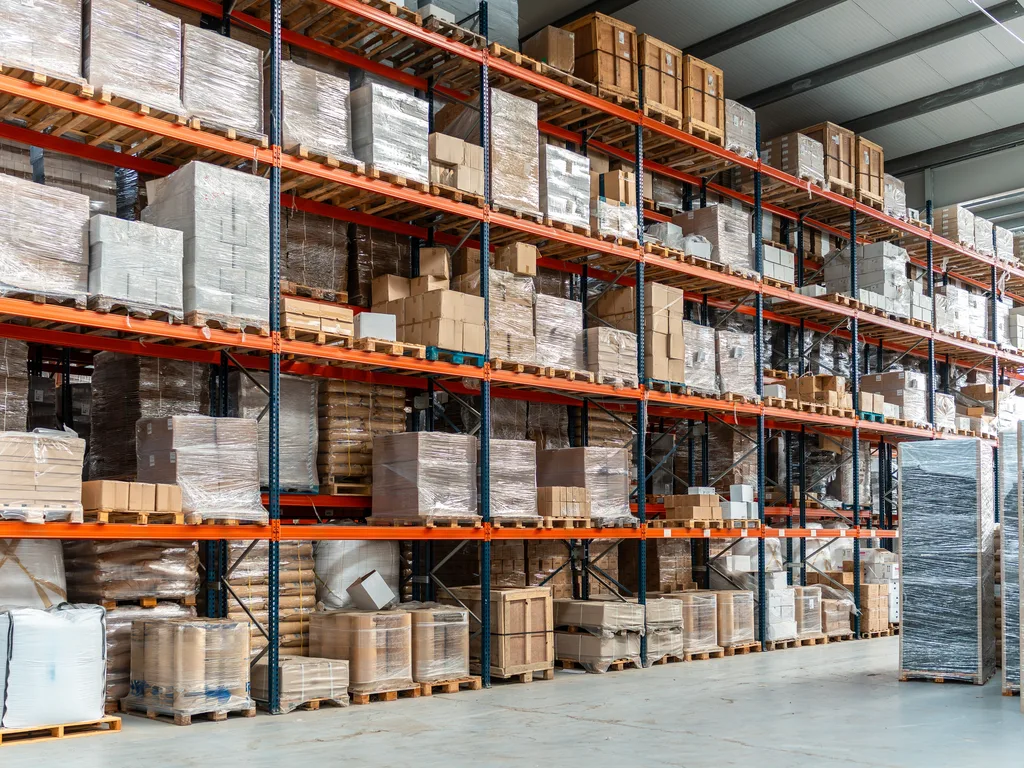
The call usually opens the same way, and it opens with confidence.
“We’re fine. We have a property policy on the building and the stock, and we have a cargo policy for the shipping.”
That sounds like a complete answer, and for most of the year it behaves like one. Two contracts, two halves of the journey, no obvious hole. It is only when a loss lands somewhere unglamorous — a pallet crushed on a pier, a container sitting through a customs hold, product staged in somebody else’s building while it waits for a truck — that an owner discovers the two policies were never two halves of anything.
They were two separate contracts, bought from opposite ends, written by different people who were not thinking about each other. And between them are the moments nobody wrote down.
Two policies, two anchors
Start with what each one is actually anchored to, because that is the whole story.
A property policy is anchored to a place. It answers your owned inventory while that inventory sits at a location the policy schedules. The coverage is a function of the building — the address, the fire protection, the construction, the walls. Ask a property policy about goods and the first thing it wants to know is where are they.
A cargo policy is anchored to motion. It answers goods while they move, under the conveyances and terms that policy defines. It cares about the trip — the leg, the mode, when transit attaches and when it ends. Ask a cargo policy about goods and the first thing it wants to know is are they in covered transit right now.
Neither question is wrong. Each policy is doing exactly the job it was built to do. But notice what happens to a pallet that is honestly neither: not at a scheduled location, and not in covered transit either. It is between. The property policy says “not my place.” The cargo policy says “not my trip.” Both are correct.
That pallet is sitting in a seam.
Where the seams actually are
Seams are not exotic. They are ordinary Tuesdays in a distribution business, which is exactly why owners walk past them for years without noticing.
- The supplier’s dock. Your goods are bought and paid for, staged and waiting, before your transit terms attach. Whose contract is standing behind them in that window?
- The ocean leg. An import moves under terms that decide when risk passes to you, and those terms rarely line up neatly with the day a policy thinks it starts.
- The pier and the port. The ocean transit has ended. The goods have not reached your premises. They are on the ground, in a yard that belongs to neither the ocean carrier nor to you.
- The customs hold. Product sits under examination for an indefinite stretch, in a facility you do not control, with no conveyance under it and no scheduled location around it.
- The transload or cross-dock. Goods come off one conveyance and go onto another. There is a physical moment — sometimes hours long — where they are on a floor rather than in transit.
- A third party’s building. Overflow storage, a partner’s warehouse, a fulfillment facility handling your goods. It is not your scheduled location, so your property policy is not obviously reaching it.
- A loaded trailer in your yard. It is not in the building. It is not moving. It is the single most exposed thing on your site, and it is standing exactly on the line between the two policies.
Every one of those is a place where a loss stops being a claim and becomes a conversation. Two insurance carriers, each holding a contract that was written honestly, each reading it honestly, and each arriving at the same reasonable conclusion: this one belongs to the other policy.
The owner is standing between them, holding a real loss, in a gap they did not know they had bought.
<rect x="170" y="20" width="360" height="58" rx="9" fill="#ffffff" stroke="#C3DEDE"/>
<text x="350" y="44" text-anchor="middle" font-family="Inter, sans-serif" font-size="14" font-weight="600" fill="#0F4C5C">A loss to your owned inventory</text>
<text x="350" y="65" text-anchor="middle" font-family="Inter, sans-serif" font-size="12" fill="#3F5B64">On the pier · in a customs hold · in a third party’s building</text>

<path d="M300 78 L190 104" stroke="#0F4C5C" stroke-width="2" fill="none" marker-end="url(#stp-arrow)"/>
<path d="M400 78 L510 104" stroke="#0F4C5C" stroke-width="2" fill="none" marker-end="url(#stp-arrow)"/>

<rect x="30" y="110" width="300" height="88" rx="9" fill="#ffffff" stroke="#C3DEDE"/>
<text x="180" y="134" text-anchor="middle" font-family="Inter, sans-serif" font-size="13" font-weight="600" fill="#0F4C5C">Your property policy asks:</text>
<text x="180" y="156" text-anchor="middle" font-family="Inter, sans-serif" font-size="12" fill="#3F5B64">“Are the goods at a scheduled location?”</text>
<text x="180" y="182" text-anchor="middle" font-family="Inter, sans-serif" font-size="14" font-weight="600" fill="#0F4C5C">No.</text>

<rect x="370" y="110" width="300" height="88" rx="9" fill="#ffffff" stroke="#C3DEDE"/>
<text x="520" y="134" text-anchor="middle" font-family="Inter, sans-serif" font-size="13" font-weight="600" fill="#0F4C5C">Your cargo policy asks:</text>
<text x="520" y="156" text-anchor="middle" font-family="Inter, sans-serif" font-size="12" fill="#3F5B64">“Are the goods in covered transit?”</text>
<text x="520" y="182" text-anchor="middle" font-family="Inter, sans-serif" font-size="14" font-weight="600" fill="#0F4C5C">No.</text>

<path d="M180 198 L300 234" stroke="#0F4C5C" stroke-width="2" fill="none" marker-end="url(#stp-arrow)"/>
<path d="M520 198 L400 234" stroke="#0F4C5C" stroke-width="2" fill="none" marker-end="url(#stp-arrow)"/>

<rect x="30" y="242" width="640" height="76" rx="10" fill="#C8935A" stroke="#0F4C5C"/>
<text x="350" y="270" text-anchor="middle" font-family="Inter, sans-serif" font-size="15" font-weight="600" fill="#1A1A1A">Neither question fits — the loss lands in the seam</text>
<text x="350" y="294" text-anchor="middle" font-family="Inter, sans-serif" font-size="13" font-weight="600" fill="#1A1A1A">Two honest contracts, each pointing at the other.</text>

<path d="M350 318 L350 350" stroke="#0F4C5C" stroke-width="2" fill="none" marker-end="url(#stp-arrow)"/>

<rect x="90" y="356" width="520" height="94" rx="9" fill="#ffffff" stroke="#C3DEDE"/>
<text x="350" y="382" text-anchor="middle" font-family="Inter, sans-serif" font-size="14" font-weight="600" fill="#0F4C5C">Stock throughput asks one question instead:</text>
<text x="350" y="406" text-anchor="middle" font-family="Inter, sans-serif" font-size="13" font-weight="600" fill="#0F4C5C">“Is the product yours?”</text>
<text x="350" y="432" text-anchor="middle" font-family="Inter, sans-serif" font-size="12" fill="#3F5B64">A form that follows the product has no handoff to fall through.</text>One form across the whole span
Stock throughput is the answer to the seam, and it is worth being precise about why it works, because it is not because the form is longer or the perils are broader.
It works because it changed the question.
A stock throughput form is a marine-family form — it descends from ocean cargo and inland marine coverage rather than from the property side of the house — and it attaches to the product rather than to a place or a trip. It follows your owned inventory from the supplier, through ocean transit, across the pier, through the port and the inland leg, onto your racking, and back out to the customer. Transit and storage sit inside the same contract.
Which means there is no handoff. There is no moment where the goods leave one policy and are waiting to be picked up by another, because there is only one policy and it never let go.
That continuity is the entire product. Not a longer schedule of perils. Not a cleverer definition. Simply the fact that the coverage is following the thing you actually care about — the goods — instead of the two circumstances the goods happen to be in.
The honest part: there is no form number to look up
Here is where most coverage explainers would give you a form number to check on your policy, and here is where this one cannot, because one does not exist.
Stock throughput is largely a non-ISO, manuscript market. There is no single filed template that every insurer starts from, no standard edition, no number to search for. The wording is negotiated. That is not a wrinkle to apologize for — it is a structural fact about the coverage, and it cuts in both directions.
The upside is real. A manuscript form can be shaped to the supply chain you actually run: the lanes you actually use, the ports you actually clear, the third-party facilities your goods actually sit in, the seasonal peak you actually build to. A filed template cannot do that, because it was drafted for everybody.
The consequence is equally real. Two policies that both say “stock throughput” on the cover are not automatically the same coverage. The definition of covered transit can differ. The treatment of goods in storage can differ. The valuation basis can differ. Whether the wording reaches a third party’s facility, a customs hold, or a trailer standing in your yard can differ — and those, you will notice, are precisely the seams you bought the form to close.
So the discipline this coverage demands is different from the discipline a standard form demands. With a filed form you can look up the edition. With a manuscript form the only thing that tells you what you own is the wording, read against how your goods actually travel.
That is not a reason to avoid the form. It is the reason to place it with someone who will read it.
What to actually ask, before anything binds
If you own inventory that moves, this is the short list worth walking through with whoever places your program. None of it requires you to become a coverage lawyer.
- Walk the span out loud. From the supplier’s dock to the customer’s door, name every hand your goods pass through and every floor they sit on. Do not summarize. The seam is always in the part people summarize.
- Ask where each policy attaches and detaches. Not “am I covered” — when does this coverage start and when does it stop. The answer to that question is the seam, stated plainly.
- Name the places you do not own. The port yard. The transload facility. The partner’s warehouse. The overflow building you rented for peak season. These are the addresses your property policy has never heard of.
- Ask what the insured value includes. For an importer, the money at risk on the water is not only what you paid the supplier — the freight and the duty you have already spent are real cost too, and whether the form reflects that is a wording question, not an assumption.
- Ask the direct one. If a container of our product is lost at the pier tonight, which policy pays? A confident, specific answer means you are in good shape. A pause means you have just learned something valuable on a day when nothing is on fire.
Where this form stops
Stock throughput is broad, but it is precisely one thing: physical loss or damage to product you own. Three neighbors answer the rest, and it is worth knowing where the edges are rather than assuming the marine form reaches everything.
Goods that belong to other companies and are sitting in your care are not yours, and no owner’s form answers them — that is a bailee exposure and it runs through warehouse legal liability. Your building, racking, and the business income that stops when the facility goes down are commercial property questions and they stay there. And the harm your product does to somebody else after you sell it is products liability under general liability — the difference between something hurting your product and your product hurting somebody, which is a distinction owners blur more often than any other.
Each of those pages develops its own line properly. The point of this post is narrower: the span between your supplier and your customer is one continuous thing, and if you are insuring it with two contracts, it is worth knowing exactly where they meet.
The short version
Your property policy is not defective. Your cargo policy is not defective. They are two well-built contracts that were never designed to hand off to each other, and the moments between them are where the uninsured loss lives.
Stock throughput answers the whole span with one marine-family form, and it does it by asking a question that stays true the entire way: is this product yours? There is no form number to look up, which is precisely why the wording has to be read — against your ports, your lanes, your yard, and your peak.
If you own inventory that moves, that is worth an hour. See how the coverage is built for a distribution operation or a wholesaling operation, or just ask us — we will walk the span with you and tell you honestly where your two policies meet, and where they do not.