

New York almost has a bailee license.
Read the Department of Agriculture and Markets licensing scheme and you will find a refrigerated warehouse and locker plant license — written, in the state’s own words, for a facility that rents out cold space to hold food owned by other businesses. There is a food warehouse license sitting beside it for facilities holding food for commercial distribution, and New York City layers its own versions of both on top for facilities inside the five boroughs.
That first one is as clean a statutory description of the bailment relationship as any state in the country offers. A building. Somebody else’s goods. Rent for the space. The state saw the arrangement clearly and wrote it down.
And then it stopped there — which is exactly why it matters to what you pay.
The gap the license leaves behind
The refrigerated warehouse license reaches cold food storage. Not dry goods. Not apparel. Not pharmaceuticals. Not the pallets of imported consumer product in a Brooklyn infill building or a wide-span warehouse outside Syracuse. And it is a food-safety instrument, not a documents-of-title one: it governs how the room is run, not what you owe the owner of the goods when the room fails them.
So for the overwhelming majority of New York bailees, there is no general warehouseman regime at all, and the state writes no standard of care. Your warehouse receipt and storage agreement are the entire perimeter around a claim, and an underwriter reads them exactly the way a regulator would read a statute — because here, that is the job they are doing.
Whether your customers accepted a limitation-of-liability or released-value clause, negotiated it out, or handed you their own contract that quietly assumed you carry a far broader form than a bare legal-liability policy provides, changes the exposure the policy is being asked to size, and therefore the price. That absence is a cost driver, not a footnote.
<text x="350" y="30" text-anchor="middle" font-family="Inter, sans-serif" font-size="15" font-weight="600" fill="#0F4C5C">The state saw the bailment. Then it stopped at the cold room door.</text>

<rect x="34" y="56" width="300" height="188" rx="9" fill="#ffffff" stroke="#0F4C5C"/>
<text x="184" y="82" text-anchor="middle" font-family="Inter, sans-serif" font-size="12" font-weight="600" fill="#0F4C5C">What New York licenses</text>
<text x="184" y="112" text-anchor="middle" font-family="Inter, sans-serif" font-size="11" fill="#3F5B64">The food warehouse license.</text>
<text x="184" y="140" text-anchor="middle" font-family="Inter, sans-serif" font-size="11" fill="#3F5B64">The refrigerated warehouse and</text>
<text x="184" y="157" text-anchor="middle" font-family="Inter, sans-serif" font-size="11" fill="#3F5B64">locker plant license — written for</text>
<text x="184" y="174" text-anchor="middle" font-family="Inter, sans-serif" font-size="11" fill="#3F5B64">renting cold space to hold food</text>
<text x="184" y="191" text-anchor="middle" font-family="Inter, sans-serif" font-size="11" fill="#3F5B64">owned by other businesses.</text>
<text x="184" y="220" text-anchor="middle" font-family="Inter, sans-serif" font-size="11" font-style="italic" fill="#3F5B64">The city adds its own on top.</text>

<rect x="366" y="56" width="300" height="188" rx="9" fill="#C8935A" stroke="#0F4C5C"/>
<text x="516" y="82" text-anchor="middle" font-family="Inter, sans-serif" font-size="12" font-weight="600" fill="#1A1A1A">What you are actually holding</text>
<text x="516" y="112" text-anchor="middle" font-family="Inter, sans-serif" font-size="11" font-weight="600" fill="#1A1A1A">Apparel. Imported consumer goods.</text>
<text x="516" y="140" text-anchor="middle" font-family="Inter, sans-serif" font-size="11" font-weight="600" fill="#1A1A1A">Pharmaceuticals. Specialty grocery.</text>
<text x="516" y="157" text-anchor="middle" font-family="Inter, sans-serif" font-size="11" font-weight="600" fill="#1A1A1A">Last-mile retail stock. Dry pallets.</text>
<text x="516" y="186" text-anchor="middle" font-family="Inter, sans-serif" font-size="11" font-weight="600" fill="#1A1A1A">No license reaches any of it.</text>
<text x="516" y="220" text-anchor="middle" font-family="Inter, sans-serif" font-size="11" font-weight="600" font-style="italic" fill="#1A1A1A">And all of it belongs to a customer.</text>

<text x="350" y="278" text-anchor="middle" font-family="Inter, sans-serif" font-size="12" font-weight="600" fill="#0F4C5C">Where the two overlap, the state wrote the bailment down.</text>
<text x="350" y="304" text-anchor="middle" font-family="Inter, sans-serif" font-size="12" font-weight="600" fill="#0F4C5C">Where they do not, your storage contract is the only law there is.</text>

<text x="350" y="348" text-anchor="middle" font-family="Inter, sans-serif" font-size="12" font-style="italic" fill="#3F5B64">A cold food license is not a standard of care for a pallet of apparel.</text>Two bailee markets that look nothing alike
New York is not one warehouse state. It is two, and they price differently because they are different.
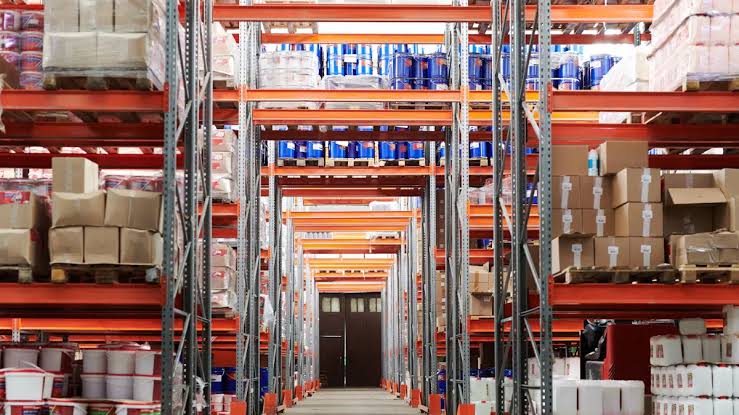
Downstate, a public warehouse is usually an older, sometimes multi-story infill building doing short-cycle storage and last-mile staging. Ceilings are lower, aisles are tight, docks are often street-level with no leveler, and the work is manual and constant. The consequence for a bailee: high value per pallet and a great deal of handling per unit stored — a frequency exposure sitting on top of a severity one.
Upstate, the bailee is a conventional third-party operator in a modern wide-span building on the Thruway, holding inventory for manufacturers and retailers who want a Northeast forward position. Different building, different exposure: powered-industrial-truck traffic, racking work at height, pick-line strain — and snow on the roof.
The economics behind the split are worth stating, because they explain why neither market is going to change. Downstate demand is demand for proximity: the metro is the largest single delivery target in the country, every hour of drive time costs money, and warehouses therefore pay extraordinary rents to sit close — which is exactly why those buildings are small, old, and packed. Upstate demand is the mirror image: Albany, Syracuse, Rochester and Buffalo offer the land and the highway access the metro cannot, and regional distribution centers serving both New York and New England cluster there.
There is a third thing about this state that few others can claim, and it belongs in a bailee’s cost story: New York is a land-border trade state as well as a seaport state. Buffalo, Champlain and the Niagara crossings put Canadian freight into upstate buildings continually, which means an upstate third-party operator can be holding cross-border cargo, domestic forward-position stock, and duty-deferred goods in the same building on the same night — three custody postures, three sets of obligations, one roof. That is not a problem in itself. It is simply something an underwriter needs to be told, rather than left to infer from a building address.
An underwriter is not pricing “a New York warehouse.” They are pricing which of those two you are.
The value and the nature of what is on the racking
In both markets the driver that leads is the same: the biggest input is not the thing you own.
The value and the nature of the customers’ goods in your care is what sizes your warehouse legal liability limit — and it is the number operators most often understate, because that inventory never appears in their own accounts.
Value means the maximum amount of customer-owned freight under your roof on the worst possible day, not the average. Nature is what gets missed, and New York makes it stark: apparel, jewelry and luxury goods, specialty grocery, and pharmaceutical stock all concentrate in and around the metro, and the amount at risk per pallet position in those buildings can be extraordinary — as is the theft profile. A bulky, low-value consignment in the same footprint prices nothing like it.
Two peril states sharing one border
Commercial property answers for what is yours and stays put — the structure, the racking and material-handling systems, and the income lost while the site is down.
Downstate the exposure is coastal: surge and tidal flooding across the harbor and the south shore, and hurricane and nor’easter wind on flat roofs. Flood is a separate placement, not a peril you assume is included.
Upstate the exposure is winter: snow and ice load on wide-span roofs is the governing structural concern, particularly in the lake-effect belts, and freeze losses to sprinkler piping and to cold-sensitive stock follow behind it. A broken wet line in an unheated bay soaks a customer’s goods more thoroughly than the fire it was installed to fight. Riverine flooding along the Hudson and Mohawk corridors is a persistent secondary.
The floor, and a claim environment that has to be managed
Workers compensation is a private-market line here, with a competitive state fund alongside. The exposure divides on the same geography as everything else: manual handling in tight aisles and dock work on street-level bays downstate; lift-truck traffic, racking at height, and pick-line strain upstate.
The New York-specific point is worth being straight about. The claim environment here is among the more demanding in the country to manage, which turns return-to-work discipline into a genuine underwriting variable rather than a slogan. A documented, working program is one of the few things on this list you can build in a quarter and be rewarded for at renewal. General liability carries the premises and operations exposure alongside it.
Bonded, with an honest caveat
New York carries zone coverage — including on the harbor, and up through Buffalo, Syracuse and the Hudson Valley. But the bonded story here is thinner than the size of the port suggests, because a great deal of the harbor’s duty-deferred warehousing physically sits on the New Jersey side. In practice the upstate importer running goods across the Canadian border often has the more usable zone than the operator staring at the water.
Where you do admit duty-deferred cargo, it sits under customs control while it is on your floor: an obligation to the government stacked on top of your duty to the owner, over the same pallet.
The honest summary
New York wrote the bailee relationship into a cold-food statute and then left every other warehouse in the state to be governed by its own contract. Which is fine — as long as you know that is what happened, and you size the limit to the freight that is actually on your racking rather than to the building around it.
Claims history and the retention you choose finish the job: decide how much routine handling damage you would rather fund yourself, in exchange for a better price on the loss you could never absorb.
If you want the coverage rather than the cost, start with warehouse legal liability, see how we work with warehouse businesses, or read the full New York warehouse insurance page. And if you own the inventory you store rather than holding it for other companies, this is not your program: you want the New York distributor cost guide.