
States we serve · Connecticut
Warehouse business insurance in Connecticut
For the food-grade, refrigerated, contract, and third-party operators holding other companies’ freight on its way to New York or Boston — short dwell, high turns, many hands, and goods that are never yours.
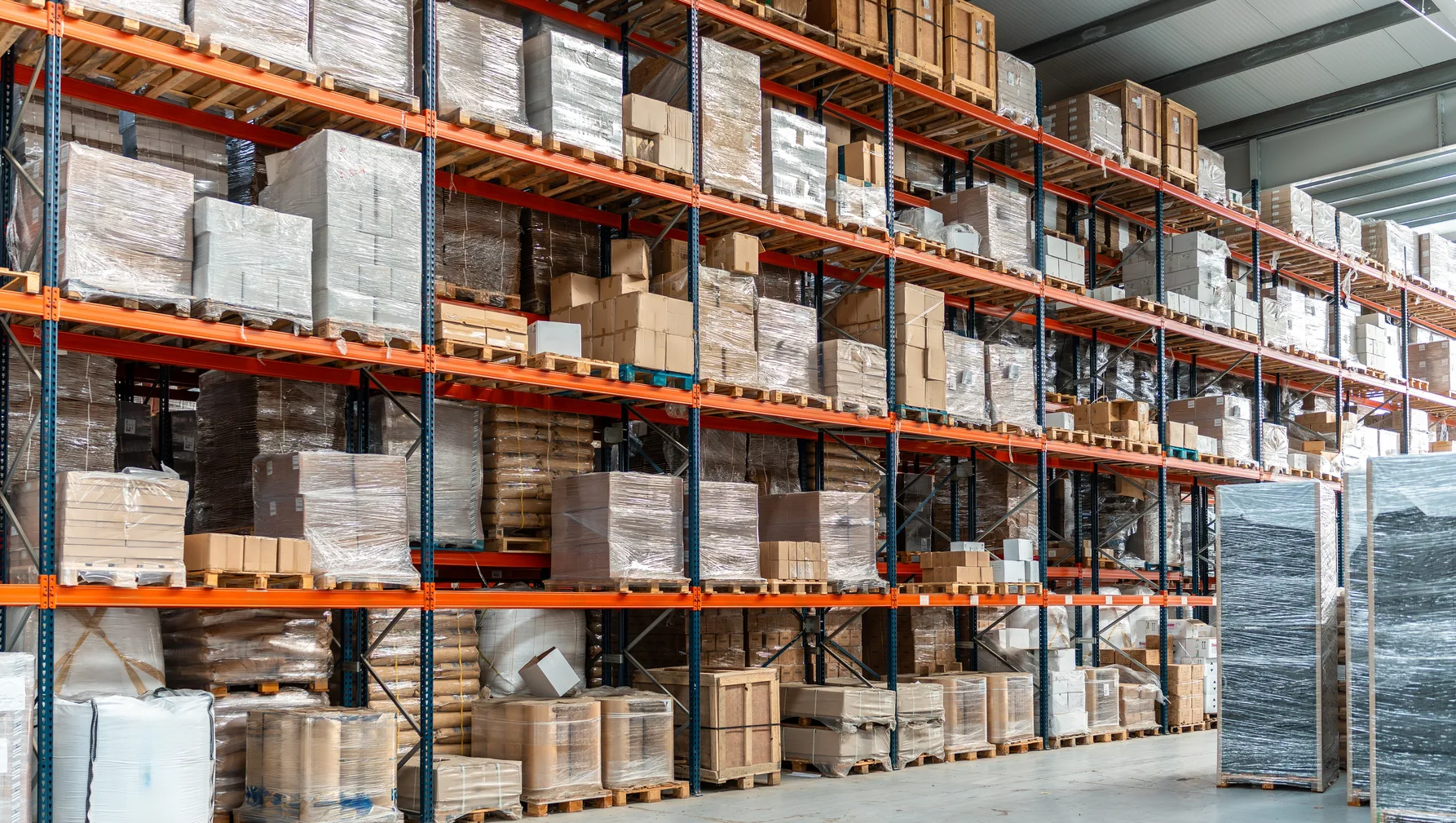

Connecticut does something almost no other state bothers to do: it licenses a warehouse for what is inside it. The Department of Consumer Protection issues a Food Warehouse license — by that name — as a named license category sitting alongside bakery, food manufacturing establishment, and frozen dessert wholesaler. So a Connecticut house that stores food for hire is a licensed warehouse, and the house across the street storing dry consumer goods is not licensed as anything at all.
That is a bailee license in everything but title. The state is not regulating the food, exactly — it is regulating the building that holds somebody else’s food. And it tells you where Connecticut thinks the risk in a warehouse actually lives.
Everything else runs on the contract
Outside food, Connecticut does not license public warehouses as such. A merchandise warehouse here answers to the bailment it accepted and to the terms of the warehouse receipt it issued, and to nothing else. No permit, no inspection, no statutory standard of care.
Which is the whole of the exposure, stated plainly. When a customer’s goods come through your door you take custody of property that is not yours and you answer for it while it is in your care, custody, and control. Your general liability policy will not pay for that loss — not by accident, but because a standard form excludes damage to personal property in your care, custody, or control, and the freight in your racking is exactly that. The loss you worry about most is carved out of your foundation policy by its own terms, and warehouse legal liability exists to answer precisely what that exclusion removes.
Short dwell, many hands
Now the Connecticut wrinkle, and it is one owners consistently get backwards. A bailee here is usually holding goods that are passing through — on their way to New York or to Boston, in a state that is a crossroads rather than a destination. High turns. Mixed customers. Short dwell times.
That sounds like less exposure and it is more. Short dwell means more handling touches per unit stored, and every touch is a chance to damage somebody else’s freight. A pallet that sits still for six months faces fire and water. A pallet received, put away, picked, re-sorted, and shipped inside a week faces fire and water and every forklift, dock plate, and rushed cross-dock in between. Owners price the catastrophe. Underwriters also price the traffic, and in a transit state the traffic is the business model.
The land makes it worse in the southwest. Fairfield County is the outer edge of the New York consumption market, and industrial land there is scarce and dear — so operators run tighter, taller, more heavily utilized buildings, and the same square footage carries more of somebody else’s inventory. That raises the ceiling on a bailee loss at any given address without changing a single thing you can see from the parking lot.
The refrigerated market the state built
Connecticut backs its food license with physical infrastructure. The Connecticut Regional Market in Hartford is a state-created wholesale perishable-food market with refrigerated warehouse space and a rail spur, now held by the Capital Region Development Authority, and it anchors refrigerated storage-for-hire in the middle of the state.
For a bailee holding perishables, the loss profile there is not the one on the property schedule. A customer’s product is destroyed by a temperature drift, a compressor failure, or an outage — events that leave the building entirely intact. There is a license involved, which means a cargo loss and a compliance question can arrive in the same hour. And the refrigerated houses around the market and the New Haven corridor add cold-stress and wet-floor slip exposure on the workers compensation side, on top of the ordinary physical drivers: powered-industrial-truck contact and tip-over, workers struck by product falling from racking, strain on manual pick and pack lines, and dock injuries where the trailer meets the plate.
Two weather problems in one small state
Connecticut sits at the seam of two different perils, and a warehouse program has to answer both. Along Long Island Sound — the industrial waterfronts at Bridgeport, New Haven, and New London — the exposure is coastal wind and storm surge, and flood there is a separate placement that a property policy will not simply absorb.
Inland, in the Connecticut River valley, the problem is weight and cold: snow load on a wide distribution roof, drift against parapets and rooftop units, ice damming, and freeze failures in wet sprinkler systems that soak stored goods without any fire at all. Severe thunderstorm and the occasional valley tornado are real but secondary; hurricanes are a memory the coast respects rather than an annual planning assumption.
Both of those are commercial property conversations for the half of the building that is yours — the structure, the racking, the refrigeration plant, the income that stops. Both are bailee conversations for the half that is not, because water through a roof lands on a customer’s inventory and does not ask whose it is. Property covers what is yours and stays put; warehouse legal liability covers what is theirs and sits in your care. That is the operating model the warehouse insurance program is built around.
Four zones, three ports, and bulk instead of boxes
Connecticut carries four foreign-trade zones — at Windsor Locks in the north, Bridgeport and New Haven on the Sound, and New London to the east — which is a lot of zone coverage for a small state, and reflects the fact that it has three working deepwater ports rather than one. New Haven and Bridgeport handle bulk and breakbulk rather than containers, so bonded storage here attaches to raw material, project cargo, and air-cargo imports through Bradley International rather than to a container gateway.
Bulk and project custody behaves differently from pallet custody in a claim. The goods are hard to count, hard to segregate, and — in project cargo — genuinely irreplaceable, so the description of what was received in the receipt is the sentence a claim gets argued against. And when your building admits duty-deferred goods, you take on customs-bonded obligations on top of your ordinary duty of care to the owner: two masters, one pallet, and a shortage that becomes a formal problem rather than an awkward phone call.
What underwriters weigh on a Connecticut bailee risk
No figures on a web page. What actually moves the placement:
- The value of customers’ goods in your care — the number that sizes the bailee limit, and the one most understated because none of it is on your balance sheet.
- Throughput, not just capacity — how many times a unit is handled between the inbound dock and the outbound one.
- Temperature and license status, if you hold food: the refrigeration, its backup, its monitoring, and the Food Warehouse license behind it.
- Where the building sits — surge and coastal wind on the Sound, snow load and freeze inland, and flood as its own placement either way.
- Bonded and zone activity, which adds a customs obligation to the duty of care.
- Claims history, which moves pricing more than nearly anything else here.
Major Connecticut warehouse markets
Hartford, Connecticut
Home to the Connecticut Regional Market — a state-created wholesale perishable-food market with refrigerated warehouse space and a rail spur, now held by the Capital Region Development Authority. Refrigerated storage-for-hire in the middle of the state is anchored here, and a bailee holding perishables at a market like this loses a customer’s product to a temperature drift long before it loses anything to a fire.
New Haven
A deepwater port under the Connecticut Port Authority handling bulk and breakbulk rather than containers, with a foreign-trade zone of its own. Bulk custody is not pallet custody — the goods are hard to count and hard to segregate — and the description of what was received in the warehouse receipt becomes the sentence a claim is argued against.
Bridgeport
An industrial waterfront on Long Island Sound and a second deepwater port with zone coverage. This is coastal wind and storm-surge ground, and flood there is a separate placement a property policy will not simply absorb — while the goods getting wet belong to somebody else entirely.
Windsor Locks
Bradley International, the state’s air-cargo hub, sitting inside a foreign-trade zone. Bonded custody here attaches to air-freight imports, and a warehouse that admits duty-deferred goods takes on customs obligations on top of its ordinary duty of care to the owner — answering to two masters over one pallet.
Stamford and Fairfield County
The outer edge of the New York consumption market, pulling last-mile and same-day fulfillment space into a corner where industrial land is scarce and dear. Scarce land means tighter, taller, more heavily utilized buildings — and the same square footage holding more of a customer’s inventory raises the ceiling on a bailee loss without changing anything visible about the operation.
New London
The eastern deepwater port with its own zone, handling project and breakbulk cargo. Custody of oversized, one-of-a-kind freight is the hardest bailment to price: there is no replacement pallet, and the customer’s loss when it is damaged is not a matter of unit cost.
Waterbury and Danbury
On the I-84 diagonal running toward the Massachusetts Turnpike, serving freight that is passing through rather than stopping. Short dwell and high turns mean more handling touches per unit stored, and more handling touches is simply more chances to damage somebody else’s freight.
If the goods are yours, you are on the wrong page
A signpost before the questions. This page is for the operator holding other people’s freight. If your Connecticut business buys, holds, and resells its own product — a beverage wholesaler holding a liquor or beer wholesaler permit from the Liquor Control Division and living inside price-posting and territory rules, a drug, device, or cosmetics wholesaler registered with the Drug Control Division, or an importer landing bulk and project cargo at one of the three ports or air freight at Bradley — then your inventory is not a bailment at all. As the first U.S. seller you own both the products-liability exposure and the goods themselves from the foreign dock to the customer’s, and your program leads from stock throughput rather than from warehouse legal liability. That has its own page: distributor and wholesaler insurance in Connecticut.
A good many Connecticut houses do both — a mid-tier wholesaler with a New York-sized customer list will often hold for others besides. If yours does, we place both halves — the distribution operation running your own product to market and the wholesale operation buying and reselling it — and the seam between what you hold and what you own is the first thing we map.
Connecticut warehouse insurance FAQs
Does Connecticut license warehouses?
One kind, and it is the kind that matters most in this state. Connecticut does not license public warehouses as such — a merchandise warehouse here answers to the bailment it accepted and to the terms of the warehouse receipt it issued, not to a state operating permit. But food is different: the Department of Consumer Protection issues a Food Warehouse license as a named license category alongside bakery, food manufacturing establishment, and frozen dessert wholesaler. So a Connecticut house that stores food for hire is licensed as a warehouse, while the house next door storing dry consumer goods is not. That is a real, bailee-adjacent building license, and few states have anything like it.
What covers a customer’s goods when they are damaged in my building?
Warehouse legal liability — the bailee line, and the reason it leads this page. Taking in another company’s freight makes you a bailee: you hold property that is not yours and you answer for it while it is in your care, custody, and control. Your general liability policy will not do that job, because a standard form excludes damage to personal property in your care, custody, or control — which describes everything in your racking. The loss you fear most is carved out of your foundation policy by its own terms, and warehouse legal liability is written to answer precisely what that exclusion removes. Outside food, no state license stands between the operator and the customer’s goods: the warehouse receipt and the storage contract are the whole of the deal.
Why does short dwell time increase my exposure rather than reduce it?
Because a bailee claim comes from handling as often as from catastrophe. A Connecticut bailee is usually holding goods that are passing through on their way to New York or Boston, and that shapes the risk: high turns, mixed customers, and short dwell times mean more handling touches per unit stored, and every touch is a chance to damage somebody else’s freight. A pallet that sits still for six months is exposed to fire and water. A pallet that is received, put away, picked, re-sorted, and shipped within a week is exposed to fire and water and to every forklift, every dock plate, and every rushed cross-dock in between. Owners intuitively price the catastrophe. Underwriters also price the traffic.
What does the weather actually do to a Connecticut warehouse?
Connecticut sits at the seam of two different problems. Along Long Island Sound — the industrial waterfronts at Bridgeport, New Haven, and New London — the exposure is coastal wind and storm surge, and flood there is a separate placement that a property policy will not simply absorb. Inland, in the Connecticut River valley, the story is snow load on a wide distribution roof, drift against parapets and rooftop units, ice damming, and freeze failures in wet sprinkler systems that soak stored goods without any fire at all. Severe thunderstorm and the occasional valley tornado are real but secondary. Hurricanes are a memory the coast respects rather than an annual planning assumption, and we will not sell you one.
I store both groceries and health-and-beauty product. Who regulates me?
Possibly two divisions of the same department, which is a distinctly Connecticut arrangement. The Department of Consumer Protection’s Food and Standards Division issues the Food Warehouse and Food Manufacturing Establishment licenses, and its Drug Control Division separately registers wholesalers of drugs, medical devices, and cosmetics — including out-of-state wholesalers shipping into Connecticut. A house that carries both grocery and health-and-beauty lines can therefore answer to two divisions under one roof. For a bailee that matters because a regulatory event and a cargo loss can arrive together: a temperature excursion in a licensed food warehouse is a customer’s claim and a compliance question at the same moment.
What do four foreign-trade zones mean in a state this size?
They reflect the fact that Connecticut has three working deepwater ports rather than one. Zones sit at Windsor Locks in the north, Bridgeport and New Haven on the Sound, and New London to the east — a lot of zone coverage for a small state. New Haven and Bridgeport handle bulk and breakbulk rather than containers, so bonded storage here tends to attach to raw material, project cargo, and air-cargo imports through Bradley International rather than to a container gateway. Admit duty-deferred goods and you carry customs-bonded obligations on top of your duty of care to the owner of the freight.
Get a Connecticut warehouse insurance quote
Quotes in 1–2 hours during business hours.