
States we serve · Idaho
Warehouse business insurance in Idaho
For the bonded agricultural warehouses, the controlled-atmosphere storage rooms, and the Treasure Valley contract operators who hold goods — and crops — that belong to somebody else.
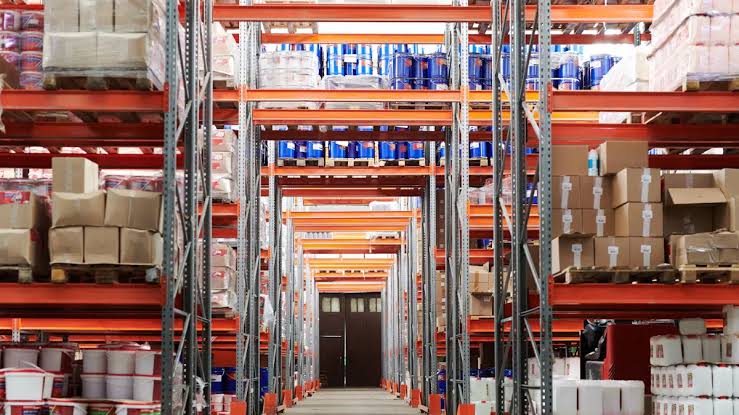

The Idaho warehouse operator holding other people’s goods is, more often than not, holding a farmer’s crop. That is not a colorful way of saying Idaho is rural — it is a statement about what kind of legal relationship the state’s most serious storage businesses are actually in. Potatoes, onions, grain, beans, peas, lentils: somebody grew them, somebody still owns them, and they are sitting in your building on your receipt.
Which makes Idaho unusual. In most states, the warehouse operator who stores other people’s property is licensed by nobody and insured by choice. In Idaho, the operator who stores the state’s most important commodities is licensed, bonded, and required by the terms of that license to carry insurance on goods he does not own. Both kinds of warehouse exist here. They are not in the same legal position, and they should not be in the same insurance program.
The bonded agricultural warehouse: warehouse legal liability with a bond behind it
The Idaho State Department of Agriculture licenses warehouses that store agricultural commodities, and it conditions the license on three things: a warehouseman’s bond, insurance covering the stored commodities, and financial statements. Read that middle condition again, because it is the whole point. The licensed operator takes in a grower’s crop, issues a receipt against it, and answers for it — care, custody, and control, with surety behind it and a state supervisor over it.
That is warehouse legal liability in everything but name, and the state has written the obligation into the license rather than leaving it to the market. It is a genuinely strong position for a grower and a demanding one for an operator. The trap is complacency: a licensing condition is a floor, not a program. Whether the limit actually matches the value of a crop at harvest peak — when the building is fullest and the market is highest — is a question the license does not answer for you.
It is also commodity-scoped. It reaches grain, beans, peas, lentils, oilseeds and the like. It does not reach a distribution or fulfillment building, and no Idaho agency issues that building a warehouse license of any kind.
Everyone else stores under the contract
Conventional third-party and contract warehousing exists in the Treasure Valley, serving regional distribution out of Boise, Meridian, Nampa, and Caldwell. For those operators the obligation is the ordinary one and the paperwork is everything: the bailment and the warehouse receipt, with no license, no bond, and no statutory standard of care to fall back on.
And the coverage seam is the same one that defines this trade everywhere. Your general liability policy excludes damage to personal property in your care, custody, or control — which is exactly what a customer’s pallets are. The loss you fear most is carved out of your foundation policy by its own terms, and warehouse legal liability is the line written to answer what the exclusion removes. In an unlicensed Idaho building, the limitation-of-liability language in your storage agreement is the only thing sizing that exposure, and we read it against the limit before binding. This is how the warehouse insurance program is built.
The excursion: a total loss that never touches the building
Cold and controlled-atmosphere storage for potatoes, onions, and produce is a major Idaho bailment business, and it fails in a way that a dry warehouse never does. There is no fire. There is no water. Nothing collapses and nothing is struck. The temperature drifts, or the atmosphere does, and a customer’s crop is destroyed while the building stands in perfect condition.
Every element of a normal property claim is missing, and the operator is still liable for the full value of the goods. It is the cleanest illustration of why property and bailee coverage are not substitutes: nothing of yours was damaged at all. Dairy and food cold storage in the Magic Valley carries the same shape of exposure with a different commodity in the room.
Two regulators, one company
Idaho’s food-establishment definition explicitly reaches cold-storage plants and warehouses, so a cold building holding food is inside the food regime. The administrative wrinkle is worth knowing before you sign a second lease: permitting and inspection are handled by the local public health districts rather than by one statewide food agency, so an operator with buildings in two districts is answering to two regulators about the same operating standard. The Department of Agriculture carries the commodity side separately, and the Board of Pharmacy registers wholesale drug distributors, including virtual ones that never take physical possession.
Smoke in summer, snow load in winter
Idaho’s two real warehouse perils are fire and winter, and both of them reach a customer’s goods without much help from the building. Wildfire and wildland-urban interface exposure is a summer certainty in rangeland and forest country, and smoke and ash can contaminate stored goods even when the fire never reaches the property — a bailee loss with no property loss attached to it at all. Winter is the structural problem: accumulated snow load on a wide-span roof is a genuine collapse risk, and hard freeze threatens sprinkler piping, dock seals, and anything held in a building that was never designed for a long cold snap.
Seismic activity exists in the sparsely built central mountains rather than under the Treasure Valley distribution corridor, and flood is its own placement. What is yours in all of that — the roof, the racking, the refrigeration plant, the income you lose while the building cannot ship — is commercial property. What is theirs is not.
Cold rooms, sacked product, and a competitive market for comp
Workers’ compensation here is a private-market line, and Idaho’s state fund is a competitive one that sells alongside private insurers — employers can and do buy comp on the open market. The exposures start ordinary and then take an Idaho turn: forklift contact, dock and trailer falls, material off a rack, and lifting strain, layered with cold-room work and seasonal crews handling heavy sacked and palletized farm product. A crew moving hundredweight sacks in a cold room in October is not the same risk as a pick line in a conditioned building, and a submission that describes them identically will be priced as though the worse one were the norm.
What an underwriter reads on an Idaho submission
- Whose goods, and under what document — a state-bonded commodity receipt or a private storage agreement. It is the first fork in the road here.
- The value of the goods in your care at peak, not at average. Harvest fills the building and the limit has to survive it.
- The refrigeration and atmosphere plant — redundancy, alarming, and how quickly a drift is detected and answered.
- The roof — span, slope, and snow-load history, because collapse is the Idaho catastrophic property scenario.
- Wildfire exposure and smoke defensibility, particularly for buildings holding goods that contamination destroys.
- Claims history, which moves the price more than anything else on this list.
Major Idaho warehouse markets
Boise
The state’s only real distribution and air-cargo center, and the seat of a semiconductor and electronics presence that feeds component and supply warehousing. A bailee holding electronic components is holding small, high-value, traceable units for a customer — the loss that hurts is not a collapsed rack but a contaminated or missing lot the customer cannot re-source on any short timeline.
Meridian and Nampa
Treasure Valley growth space along I-84, where regional grocery, building-materials, and consumer-goods distribution has followed the population. Conventional contract and third-party warehousing here operates with no state warehouse license at all: the bailment and the warehouse receipt are the entire legal position, which puts the storage agreement at the center of any customer claim.
Caldwell and the Canyon County produce belt
Where the agricultural warehouse economy actually lives. A licensed warehouse here takes in a grower’s commodity, issues a receipt against it, and must carry insurance on the stored crop — the state has written the bailee obligation into the license itself, which is unusual and useful.
Twin Falls and the Magic Valley
Dairy, sugar, and food-processing country, with cold and dry storage attached to it. A bailee holding processed dairy or food inventory is holding perishable goods whose value can be destroyed by a temperature excursion that leaves the building entirely intact — the classic refrigerated bailee loss.
Idaho Falls and Pocatello
The eastern corridor toward I-15 and Utah, serving grain, potato, and agricultural handling. Warehousing here is often storage-for-hire of commodities under the state’s bonded program, which brings surety, financial reporting, and inspection into a relationship that elsewhere is governed by contract alone.
Coeur d’Alene and the panhandle
Served by I-90 rather than by the I-84 spine, and closer in freight terms to the Pacific Northwest than to Boise. Forest, building-products, and regional consumer warehousing dominates, and snow load on a wide-span roof is the structural question that decides whether a customer’s goods spend the winter dry.
The controlled-atmosphere rooms
Potato and onion storage in modified atmosphere is a major Idaho bailment business and a genuinely distinctive one. The failure mode is invisible: no fire, no water, no impact — the gas mix or the temperature drifts, and a customer’s crop is worthless while the building stands in perfect condition.
The Boundary County crossing
Idaho’s foreign-trade zone presence is modest and honest to describe as such — zone activity exists in the Boise area and up at Boundary County near the Canadian line. Bonded, duty-deferred custody is not what Idaho warehousing is for, and an operator here is far likelier to be carrying an agricultural warehouse bond than a customs bond.
If the crop or the stock is yours, you are on the wrong page
A last signpost. This page is for the operator holding other people’s property. If your Idaho business buys, holds, and resells its own product — a food or produce distributor, a licensed commodity dealer buying crops from growers and reselling on its own account, an agricultural-input or equipment-parts wholesaler, or a beer and wine distributor working the private tier the state left open — then your stock is not a bailment. Your program leads from stock throughput and products liability rather than from warehouse legal liability, and it has its own page: distributor and wholesaler insurance in Idaho.
Many Idaho companies sit on both sides of that line, storing a grower’s crop in one room and their own purchased stock in the next. If yours does, we place both — the distribution operation and the wholesale operation — and we map the seam first, because the seam is what decides who is owed what when the room warms up.
Idaho warehouse insurance FAQs
Does Idaho license public warehouses?
Not in the general sense. Idaho has no public-warehouse licensing statute for merchandise or fulfillment warehousing. What it does have is an agricultural bonded-warehouse regime administered by the Idaho State Department of Agriculture, which licenses warehouses that store agricultural commodities — grain, beans, peas, lentils, oilseeds and the like — and conditions the license on a warehouseman’s bond, insurance covering the stored commodities, and financial statements. That program is genuinely substantial here because agriculture is. But it does not reach a distribution or fulfillment warehouse, and for those the bailment and the warehouse receipt define the obligation instead of a license.
The state requires a licensed ag warehouse to insure the stored crop. Is that the same as warehouse legal liability?
It is the same idea, written into a license. The licensed warehouse takes in a grower’s commodity, issues a receipt against it, must carry insurance on the stored commodity, and answers for it — that is care, custody, and control with a bond behind it, which is exactly what warehouse legal liability is written to cover. The important detail for an owner is that the state sets a condition of licensure, not a program that is adequate to your actual exposure. Whether the limit is right for the crop you are actually holding at harvest peak, and whether the terms of the receipt match what your customers expect, are still your decisions to get right.
If I run a conventional 3PL in the Treasure Valley, what governs my liability?
Your storage contract, and nothing else. There is no license for you, so there is no statutory standard of care and no regulator to answer to. Your warehouse receipt and your storage agreement — including the limitation-of-liability language inside them — are the perimeter of any claim for a customer’s damaged goods. And your general liability policy will not fill the gap, because a standard general liability form excludes damage to personal property in your care, custody, or control. The customers’ goods on your racks are precisely that property, which is why warehouse legal liability leads an Idaho bailee program.
What is the controlled-atmosphere exposure, and why does it matter to a warehouse operator?
Cold and controlled-atmosphere storage for potatoes, onions, and produce is a major Idaho bailment business, and it carries a failure mode a dry warehouse never sees. There is no fire, no water, no impact and no visible event: the temperature or the atmosphere simply excursions, and a customer’s crop is destroyed without the building being touched. That is a warehouse legal liability claim in its purest form — a total loss of goods you never owned, in a facility that looks perfectly fine in the adjuster’s photographs.
Which permits does a cold-storage warehouse need in Idaho?
Idaho’s food-establishment definition explicitly reaches cold-storage plants and warehouses, so a cold building storing food is inside the food regime rather than outside it. The wrinkle is administrative and it catches multi-site operators: permitting and inspection are handled by the local public health districts rather than by a single statewide food agency, so a company with buildings in two districts is dealing with two regulators and two sets of expectations for the same operating standard. The Idaho State Department of Agriculture separately carries the agricultural and commodity side.
How does workers’ compensation work for an Idaho warehouse?
Idaho workers’ compensation is a private-market line. The state has a competitive state fund that sells alongside private insurers, which is a very different thing from a monopolistic fund — Idaho employers can and do buy comp on the open market. The exposures are the ordinary warehouse ones, forklift contact, dock and trailer falls, material off a rack, and lifting strain, plus one Idaho layer: cold-room work and seasonal crews handling heavy sacked and palletized farm product, which is a different injury pattern from a fulfillment pick line and should not be submitted as though it were the same thing.
Get an Idaho warehouse insurance quote
Quotes in 1–2 hours during business hours.