
States we serve · Illinois
Distributor and wholesaler business insurance in Illinois
For the beverage wholesalers holding brand-and-territory registered stock, the importers whose boxes come off the rail at Joliet and Elwood, and the food, industrial, and electrical supply houses who own what they sell.
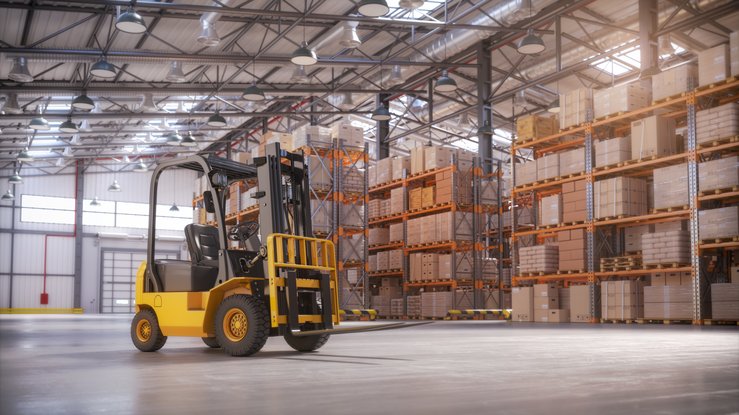

Illinois writes the warehouse into the license. The Liquor Control Commission issues the distributor license, and that license is what permits a business to purchase, store, warehouse, and resell alcoholic liquor at wholesale — the statutory language reaches the building directly. Storage is not something a distributor happens to do under a sales permit here. It is inside the license.
And the license goes further. Illinois distributors file brand registration statements naming the trademark and the territory in which they may resell it — which means a beverage wholesaler’s owned inventory is tied to specific brands in a specific geography rather than being a generic pool of product that could be sold anywhere to anybody. Your stock is yours. It is just not freely tradable, and that is a fact with an insurance consequence most owners never work through.
Then there is the other Illinois, the one that made this state what it is for distribution: Chicago is the pivot of the North American rail network, and its intermodal complex is the largest inland container gateway on the continent. The center of gravity has moved southwest to Will County, where the intermodal center at Joliet and Elwood sits beside the railroads’ terminals and forms the landmark distribution cluster on the I-55 and I-80 corridors. A box discharged at a West Coast or Gulf port is very often railed here, transloaded, and broken down for the eastern half of the country.
The custody changes nobody schedules
Here is what that actually means for an owner of goods. An Illinois distributor or wholesaler with owned stock usually owns inventory that has already crossed an ocean. Between the factory and the rack, the product passes through the hands of an ocean vessel, a marine terminal, a railroad, an intermodal ramp, a drayage move, and a transload building — and in most cases the distributor owned it for all of it.
Commercial property insures owned inventory while it sits in a scheduled building. That is one step out of seven. The rest sit in the seams between a property form and a cargo form, and the Illinois freight pattern puts more of the journey inside those seams than almost any other state’s does, precisely because the goods enter the country somewhere else and finish their journey here.
Stock throughput is the single marine-family policy written to follow the goods rather than the address — supplier, ocean voyage, port, rail, ramp, transload, warehouse, customer, on one form. It is a largely manuscript, non-standard market, so the wording is negotiated: an advantage when someone reads it, a liability when nobody does. And the question that decides where it starts is not an insurance question at all — it is where your purchase terms say the risk of loss passed. If that was a port of loading in Asia and your coverage begins at a Will County dock door, you have owned an uninsured container for several weeks without knowing it.
Brand, territory, and what your stock is actually worth
Return to the registration for a moment, because it changes the loss conversation. A distributor’s beverage inventory is registered to a brand and a territory. So after a fire or a wind loss, the replacement-cost figure on the schedule is not the whole story: the business income that stock was going to produce is tied to a territory this distributor is licensed to serve, and it cannot simply be served out of another company’s building without the registration behind it changing.
That is the kind of detail that turns a routine business-income claim into an argument. It is worth having the conversation while the building is standing.
Zone status defers the duty, not the title
The Illinois International Port District is grantee of the Chicago-area foreign-trade zone, and its service area reaches across Cook, DuPage, Will, Grundy, Kane, Kendall, Lake, Kankakee, and McHenry counties — the intermodal corridor itself. Containers coming off a West Coast port and railing inland can be held in zone status in a Will County building before duty is paid, which is why bonded and duty-deferred storage here is a mainstream warehousing product rather than a port-only specialty.
But zone status is a customs instrument. It defers the duty; it does not transfer the title. The goods in that building are still yours — still exposed to fire, water, and theft, still on the balance sheet, still trailing a products exposure. Nothing about the program gets simpler because the customs charge has not been paid yet.
A seller can be sued for what a maker built
Products liability follows the chain of distribution to a seller, not only to the manufacturer. An Illinois wholesaler that bought a product and resold it is inside that chain, and the exposure is sharpest for the importer, who is frequently the first U.S. seller of a foreign-made product. When the actual maker sits beyond the practical reach of a U.S. claim, the importer becomes the realistic target for it.
General liability answers this through what the standard form calls the products-completed-operations hazard. The real work is sizing those limits against the products you actually handle rather than against a revenue band — and in a state whose distribution economy runs on imported consumer and industrial goods, that is not an academic exercise. This is also the cleanest line between the two halves of this trade: a business that merely stores a defective product for its owner was never in the chain, because the goods were never theirs to sell. A wholesaler that bought it and resold it is squarely in it.
Wind that takes a whole park at once
The Illinois peril profile for a distribution building is dominated by severe convective storms — tornadoes across the central and northern corridors, hail on acres of low-slope roof, and the straight-line wind events that periodically run the length of the state and strip membrane and rooftop equipment across an entire park in a single pass.
That last one deserves emphasis for an owner of inventory with more than one building on the same corridor: it is not a single claim, it is an accumulation. Snow and drift load on long clear-span roofs is a real winter design issue, and deep freezes threaten wet sprinkler systems and cold-chain refrigeration in the same event — one weather system, two entirely different loss mechanisms, both landing on owned goods. Riverine flooding along the Illinois, Mississippi, and Des Plaines is separately placed, and it is worth remembering that flood water arrives at the floor, which is where the pallets are.
The crew, the fleet, and a state that litigates
Illinois has a private workers’ compensation market, and it is a jurisdiction with a well-developed body of comp litigation — so the discipline around a warehouse claim file matters more here than it does in a quieter state. The exposures are the standard ones for a high-throughput building: powered-industrial-truck contact on a congested dock, workers struck by product coming out of racking, falls from dock plates and order pickers, and cumulative lifting and reaching injuries in fulfillment work, concentrated in the Will County and I-55 corridor buildings that run around the clock. The route drivers are a second, separate injury population.
The fleet needs commercial auto, and this trade forces a clarification: your insurance carrier is the company that writes your policy, and a motor carrier or freight carrier is a company that hauls goods for hire. Above the primary lines, umbrella liability is where a national customer’s contract requirement gets satisfied and where a serious severity loss eventually lands.
What underwriters ask an Illinois distributor
We do not print premiums, and any site that does is guessing. What actually drives the conversation:
- How many custody changes your goods pass through before they reach a building you control.
- Where the risk of loss passes under your purchase terms — the item that decides where the throughput span has to begin.
- Peak accumulation in a single corridor building, and how many of your buildings sit in the same weather.
- Brand and territory constraints on beverage stock, and what that does to the business-income conversation.
- What the product is, and whether it was made by somebody you could actually sue.
- Payroll split between the warehouse crew and the route drivers, and the claim-file discipline behind your comp history.
Where Illinois’s owned inventory concentrates
Chicago
The pivot of the North American rail network, where the western and eastern railroads meet. A distributor’s owned inventory does not arrive here so much as it is handed over here — from ship to port to rail to ramp to chassis — and every one of those handovers is a custody change that the scheduled-location property policy sits entirely outside of.
Joliet
The CenterPoint intermodal complex beside the BNSF and Union Pacific terminals, which is where the center of gravity of American inland distribution actually sits. Owned stock staged here is mid-journey by design, and the value concentrated in a single building on the I-55 corridor is the first number an underwriter will want and the last one most owners can produce.
Elwood
The other half of the inland port, where deconsolidation turns a container into pallets. This is the moment a distributor’s imported goods stop being freight and start being inventory — and it is worth knowing whether your coverage recognizes that transition or whether it has been waiting for the goods to reach a building it has heard of.
The I-55 and I-80 corridor
The relentless build-out of distribution space through Will County, running around the clock. Severe convective wind and hail can strip membrane and rooftop equipment across an entire park at once — which for an owner with more than one building in the same weather turns a property loss into an accumulation problem rather than a single claim.
Rockford
Northern Illinois industrial and consumer distribution with genuine air-cargo activity behind it. A wholesaler importing finished goods by air is the first U.S. seller of them, which means the products-liability chain lands directly on a business that never designed, built, or even saw the product before it was crated.
Peoria
Industrial and equipment wholesaling on the Illinois River, where barge is a working mode rather than a curiosity. Owned stock that travels by water and rail as well as truck is precisely the pattern a property-plus-cargo patchwork handles worst, because each mode tends to fall under a different instrument with a seam between them.
Decatur
Central Illinois food and agricultural processing, where a distributor’s owned stock is temperature- and time-sensitive and the value is destroyed without the building being touched. Deep freezes threaten wet sprinkler systems and cold-chain refrigeration in the same event — one weather system, two entirely different loss mechanisms.
Edwardsville
The Metro East end of the state, feeding the St. Louis market and the southern corridors. A distributor here holds owned inventory sited to serve another state’s metro, which puts a large share of its product on the interstate rather than on a rack — a transit exposure that no scheduled-location policy is designed to follow.
If the goods are not yours, you are on the wrong page
An honest signpost, and a necessary one in this state. The Chicago intermodal corridor is the country’s densest concentration of goods belonging to somebody else — transloading, deconsolidation, and contract warehousing are the core business of the Joliet–Elwood cluster, and the operator holding those containers almost never owns their contents. If that is your operation, the inventory on your dock is not owned stock. It is a bailment, and your exposure is defined by the storage contract, the warehouse receipt, and the limitation of liability written into it, with warehouse legal liability standing behind it. That is a different risk with a different policy stack, and it has its own page: warehouse insurance in Illinois.
A great many Illinois businesses do both — they distribute their own product and warehouse someone else’s alongside it. If that is you, we place both, and we draw the line between them before anything binds.
Illinois distributor and wholesaler insurance FAQs
Does my Illinois distributor license actually cover warehousing?
It does, and the statutory language reaches the warehouse directly — which is unusual enough to be worth knowing. Illinois is a license state with a strict middle tier. The Liquor Control Commission issues the distributor license, and that license is what permits a business to purchase, store, warehouse, and resell alcoholic liquor at wholesale. Storage and warehousing are not incidental activities that happen to occur under a sales license; they are inside the license itself. For an owner of beverage inventory that is a useful reminder of what the business really is: you buy the product, you hold it, and you sell it onward — the goods are yours at every step, which is exactly why the exposure is a stock-throughput and products exposure rather than a bailment.
What does brand and territory registration mean for my inventory?
It means your owned stock is not freely tradable. Illinois distributors file brand registration statements naming the trademark and the territory in which they may resell it, so a beverage wholesaler’s inventory is tied to specific brands in a specific geography rather than being a generic pool of product that could be sold anywhere to anybody. That has an underwriting consequence most owners do not think through: the value of the stock in the building is not simply its replacement cost, because a distributor cannot necessarily liquidate it elsewhere, and the business-income conversation after a loss has to reckon with a territory that cannot be served from another distributor’s building without a change in the registration behind it.
My container railed in from a West Coast port. When was it my problem?
From whenever your purchase terms said the risk of loss passed to you — which is very often at a factory gate or a port of loading on the other side of the Pacific, long before the box reached Illinois. That is the gap. An Illinois distributor or wholesaler that owns its stock usually owns inventory that has already crossed an ocean, and it sits in the Chicago corridor at the moment it comes off the rail and before it reaches the customer. A commercial property policy insures owned inventory only while it sits in a scheduled building. Everything before that — the ocean voyage, the terminal, the rail leg, the ramp, the drayage move, the transload building — is uninsured by you unless a policy was written to follow the goods rather than the address. Stock throughput is that policy.
Does foreign-trade zone status change my exposure?
It changes the customs bill, not the ownership. The Illinois International Port District is the grantee of the Chicago-area foreign-trade zone, and its service area reaches across Cook, DuPage, Will, Grundy, Kane, Kendall, Lake, Kankakee, and McHenry counties — which is to say it covers the intermodal corridor itself. That geography is the point: containers coming off a West Coast port and railing inland can be held in zone status in a Will County building before duty is paid, so bonded and duty-deferred storage is a mainstream warehousing product here rather than a port-only specialty. But the goods in that building are still yours. They are still on your balance sheet, still exposed to fire, water, and theft, and still trailing a products exposure behind them.
I distribute, I do not manufacture. How am I in the products chain?
Because products liability follows the chain of distribution to a seller, not only to the manufacturer. An Illinois wholesaler that bought a product and resold it is inside that chain, and the exposure is sharpest for the importer — a business here is frequently the first U.S. seller of a foreign-made product, and when the actual manufacturer sits beyond the practical reach of a U.S. claim, the importer becomes the realistic target for it. Standard general liability answers this through the products-completed-operations hazard. Sizing those limits against the products you actually handle, rather than against a generic revenue band, is most of the real work — and in a state whose distribution economy runs on imported consumer and industrial goods, it is not an academic exercise.
What is the peril profile for an Illinois distribution building?
It is dominated by severe convective storms: tornadoes across the central and northern corridors, hail on acres of low-slope roof, and the straight-line wind events that periodically run the length of the state and strip membrane and rooftop equipment across an entire park at once. That last one matters especially for an owner with more than one building in the same corridor, because it turns a property loss into an accumulation problem. Snow and drift load on long clear-span roofs is a real winter design issue, and deep freezes threaten wet sprinkler systems and cold-chain refrigeration simultaneously. Riverine flooding along the Illinois, Mississippi, and Des Plaines is a separately placed peril — it is not carried by the property policy, and the water arrives at the floor where the pallets are.
Get an Illinois distributor insurance quote
Quotes in 1–2 hours during business hours.