
States we serve · Missouri
Warehouse business insurance in Missouri
For the third-party, contract, food-grade, and zone-activated operators at both ends of I-70 — holding other companies’ inventory in a state that stacks hail, tornado, river flooding, and ground motion over the same rack bay.
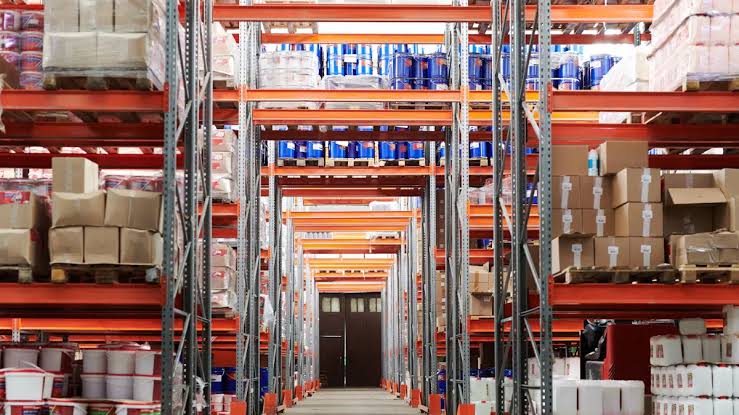

Missouri is a warehousing state for one honest reason: it is in the middle. A truck leaving Kansas City or St. Louis reaches most of the country’s population inside a two-day drive, and that single geometric fact is why Class A boxes keep going up along I-70 and around the northland airport corridor. Kansas City is one of the great rail interchanges on the continent; St. Louis sits where the two great rivers meet. Freight does not come here to arrive. It comes here to be held, briefly, on its way to everywhere else.
Which makes almost every serious Missouri warehouse a bailee — holding somebody else’s inventory, mid-journey, under a roof that has to survive four different kinds of catastrophe. That is an unusual sentence and Missouri has earned it: wind, hail, water, and ground motion, all reaching the same rack bay.
The storage agreement is the whole ballgame
Take in a customer’s inventory and you become a bailee: you hold property that is not yours, in your care, custody, and control, and you answer for it while it is there. In Missouri there is no state license standing behind that relationship, because the only real warehouse license here is the grain program. So the entire perimeter of a claim is contractual.
Three things in your storage agreement decide the argument, and they deserve to be read together rather than a year apart. The limitation-of-liability language — a released-value or per-package cap that limits what you owe unless the customer declares a higher value. The standard of care you agreed to. And whether the customer was told to carry its own coverage on the goods. Those are three contractual choices with three insurance consequences, and we read them against the limit before we bind.
Meanwhile the general liability policy that owners assume is their backstop will pay none of it. A standard general liability form excludes damage to personal property in your care, custody, or control, and a customer’s pallets are the textbook case. The single largest loss in the building is carved out of the foundation policy by that policy’s own terms — which is exactly why warehouse legal liability leads a Missouri program, and why the warehouse insurance program is designed around it rather than around the building.
Missouri licenses grain, and nothing else that looks like you
The Department of Agriculture’s Grain Regulatory Services program licenses, bonds, and audits grain warehouses and grain dealers under the Missouri Grain Warehouse Law, RSMo Chapter 411. Any elevator storing grain for others must hold a state or federal warehouse license, and auditors verify inventory against outstanding obligations — a serious, supervised bailment regime with real teeth.
And it stops there. There is no parallel general-merchandise public-warehouse license in this state. A 3PL storing pallets of consumer goods on the northland or in a St. Louis multi-tenant building is not licensed by the state as a warehouse and cannot be. The elevator is examined; the distribution center holding many times the value is not.
Four perils, one rack bay
Missouri stacks catastrophe in a way few states do. It sits in the severe convective belt — the Joplin tornado is the state’s reference event — and a distribution building presents precisely what a hailstorm punishes: acres of flat, low-slope membrane roof with rooftop units on it. Both great rivers bound and cross the state, so floodplain siting on river-adjacent industrial land is a genuine question, and flood is its own placement, not a property endorsement.
Then there is the one nobody expects. The New Madrid Seismic Zone in the southeastern Bootheel is the most seismically active area east of the Rockies, and for a warehouse the seismic story is the racking rather than the structure. Ground motion does not need to damage your building to empty your high-bay storage — and what comes off the rack and onto the concrete belongs to your customers. That is a bailee claim arriving with little or no property claim beside it, which is the cleanest possible demonstration of why these two coverages are not substitutes. Commercial property answers the steel, the roof, and the income you lose while you cannot ship. Warehouse legal liability answers everything that was on the steel.
Zone space without a fence
Foreign-Trade Zone 15, granted to Greater Kansas City Foreign-Trade Zone, Inc., covers a broad swath of counties in the western half of the state and operates under the alternative site framework — which means an ordinary distribution building in the metro can be activated as zone space rather than having to sit inside a fenced zone campus. St. Louis carries its own zone on the eastern side.
The practical effect is that imported inventory can be warehoused in the middle of the country with duty deferred until it is withdrawn for consumption. The practical effect for the operator is that the value concentration under one roof goes up without whose-goods-are-they ever changing, and a second master appears over the same pallet: the customer who owns the freight, and a customs regime that has not been paid.
Drug distribution: a license per site, and a named individual
Pharmaceutical distribution is the licensed lane in Missouri, and it is exacting. The Board of Pharmacy licenses drug distributors, requires a Board inspection of each distribution site before licensure, and demands fingerprints and a background check from the manager-in-charge — with a separate license for each physical distribution site. An operator adding a second building is adding a second license and a second named individual, not extending the first.
Food distribution is regulated differently: not through a single statewide warehouse permit the way grain is, but through state and local health regulation layered over the federal registration a food warehouse already carries. Given the state’s food-processing base, refrigerated and food-grade space is well represented — and a temperature excursion in a customer’s perishable load is a total loss of goods that were never yours, with the building untouched.
Comp on a building that runs three shifts
Missouri runs a private workers’ compensation market — coverage is bought from insurers competing for the business, not from a state fund. The loss picture is dominated by the same handful of mechanisms found in every distribution building: powered-industrial-truck strikes and tip-overs, workers struck by falling stored material or by a collapsing rack bay, dock-edge and trailer-creep falls, and the slow accumulation of lifting and repetitive-motion strain in a pick operation.
What is distinctive here is volume. The big-box buildings in the Kansas City and St. Louis corridors run enough shifts that the exposure is a headcount-times-hours question long before it is a rate question — and a submission that presents a three-shift operation as though it were a one-shift one will not survive the first loss run.
What an underwriter weighs in Missouri
- The value of the goods in your care — not your own assets. This sizes the bailee limit and is the number owners understate most, because the inventory never touches their balance sheet.
- Your storage agreement — the limitation of liability, the standard of care, and whether customers were told to insure their own goods.
- The racking — height, configuration, seismic bracing, and inspection discipline. In Missouri this is a catastrophe question, not a housekeeping one.
- The roof and the hail history under it, across acres of low-slope membrane.
- Where the building sits relative to the rivers, and whether flood was placed or merely assumed.
- Shifts and headcount on the material-handling floor, which is where the comp exposure actually lives.
- Claims history, which moves pricing further than most of the rest of this list.
Major Missouri warehouse markets
Kansas City
One of the country’s great rail interchanges, where the transcontinental networks meet and a single-line cross-border railroad now runs freight from Mexico through to Canada. A 3PL here takes custody of goods mid-continent rather than at a port or a factory, which means the storage agreement — not any state license — is what a claim for a customer’s damaged inventory will be argued against.
The northland airport corridor
Class A speculative distribution space built to reach most of the U.S. population inside a two-day drive. These are contract and third-party buildings holding national retailers’ and e-commerce operators’ goods, which puts the bailee limit — not the building limit — at the center of the program.
St. Louis
The Mississippi–Missouri confluence, with barge terminals, a rail gateway, and its own foreign-trade zone on the eastern side of the state. River-adjacent industrial land is exactly where floodplain siting becomes a live question, and flood is its own placement rather than a property endorsement — a distinction that decides who pays for a customer’s soaked pallets.
The I-70 corridor
The spine that runs the state end to end and carries the Class A boxes between the two metros. Hail is the recurring loss along it: a distribution roof is acres of flat, low-slope membrane with rooftop units on it, and a single storm bruises the whole plane over goods that belong to somebody else.
Springfield
Regional distribution and food-processing space in the southwest, feeding a multi-state trade area off I-44. Refrigerated and food-grade bailment is well represented here, and it fails quietly: no fire, no impact, the temperature simply drifts and a customer’s perishable load is gone with the racking untouched.
Joplin
The state’s reference tornado event, and a permanent reminder of what a violent convective storm does to a wide-span building. For a bailee the underwriting question is not only whether the structure survives, but what happens to other people’s inventory in the hours after the envelope is opened.
The Bootheel and the New Madrid zone
The most seismically active area east of the Rockies runs through southeastern Missouri, which makes rack seismic bracing and the shake-out of high-bay storage a genuine Missouri conversation rather than a West Coast one. Ground motion does not need to damage the building to empty the racking, and what comes off the rack belongs to a customer.
Columbia, St. Joseph, and Jefferson City
The interior distribution and older multi-tenant industrial stock that keeps regional wholesaling supplied. Shared multi-tenant buildings raise a specific bailee argument after a loss: whose care, custody, and control were the goods actually in at the moment the sprinkler let go?
If the goods are yours, you are on the wrong page
One signpost. This page is written for the operator holding other people’s inventory. If your Missouri business buys, holds, and resells its own product — a beverage wholesaler whose franchise-protected territory makes the warehouse the physical center of the business, a grocery or foodservice distributor serving a multi-state trade area, an animal-health or pharmaceutical distributor licensed site by site, or an importer railing owned goods inland from a coastal gateway — then your stock is not a bailment. Your program leads from stock throughput and products liability rather than from warehouse legal liability, and it has its own page: distributor and wholesaler insurance in Missouri.
Plenty of Missouri companies run both models under one roof. If yours does, we place both sides — the distribution operation and the wholesale operation — and the seam between them is the first thing we map, because when a rack bay comes down it is the seam that decides which policy answers for what is lying on the floor.
Missouri warehouse insurance FAQs
Does Missouri license a public warehouse?
The warehouse license that actually exists in Missouri is agricultural, not general. The Department of Agriculture’s Grain Regulatory Services program licenses, bonds, and audits grain warehouses and grain dealers under the Missouri Grain Warehouse Law, RSMo Chapter 411 — any elevator storing grain for others must hold a state or federal warehouse license, and auditors verify inventory against outstanding obligations. There is no parallel general-merchandise public-warehouse license. A 3PL storing pallets of consumer goods in Kansas City or St. Louis is not licensed by the state as a warehouse, and its duties to the goods run through the bailment relationship and the warehouse receipt rather than through a permit.
So what actually determines what I owe a customer for damaged goods?
The storage agreement, and it is the whole ballgame. With no state license standing behind you, three things in that document decide the argument: the limitation-of-liability language and any released-value or per-package cap inside it, the standard of care you agreed to, and whether the customer was told to carry its own coverage on the goods. Those are contractual choices with insurance consequences, and they should be made together rather than a year apart. Your general liability policy will not step in — a standard form excludes damage to personal property in your care, custody, or control, which is precisely what a customer’s inventory is.
Is earthquake really a Missouri warehouse exposure?
Yes, and for a warehouse the seismic story is the racking rather than the structure. The New Madrid Seismic Zone in the southeastern Bootheel is the most seismically active area east of the Rockies, which makes rack seismic bracing and the shake-out of high-bay storage a genuine Missouri conversation rather than a West Coast one. Here is why it matters to a bailee specifically: ground motion does not have to damage your building to empty your racking, and what comes off the rack and onto the concrete belongs to your customers. That is a warehouse legal liability claim arriving with little or no property claim beside it.
What does zone status add for a Kansas City warehouse?
Duty deferral, and a second obligation on top of the bailment. Foreign-Trade Zone 15, granted to Greater Kansas City Foreign-Trade Zone, Inc., covers a broad swath of counties in the western half of the state and operates under the alternative site framework — which means a distribution building in the metro can be activated as zone space rather than having to sit inside a fenced zone campus. St. Louis has its own zone on the eastern side. For an operator, the practical effect is that imported inventory can be warehoused in the middle of the country with duty deferred until it is withdrawn for consumption. While it sits, you are answering to the customer who owns it and to a customs regime that has not been paid.
Which perils should a Missouri warehouse owner actually plan for?
Missouri is one of the few states where a warehouse owner has to think about all four of wind, hail, water, and ground motion. It sits in the severe convective belt — the Joplin tornado is the state’s reference event — and a distribution building presents exactly what a hailstorm punishes: acres of flat, low-slope membrane roof with rooftop units on it. Both great rivers bound and cross the state, so floodplain siting near the Missouri and the Mississippi is a real question for river-adjacent industrial land, and flood is its own placement rather than a property endorsement. And the New Madrid zone puts ground motion on the list. Every one of those perils reaches goods that belong to somebody else before it reaches anything of yours.
What does a pharmaceutical distribution site need in Missouri?
More than most operators expect. The Missouri Board of Pharmacy licenses drug distributors, requires a Board inspection of each distribution site before licensure, and demands fingerprints and a background check from the manager-in-charge — with a separate license for each physical distribution site, which matters a great deal to any operator running more than one building. Food distribution is regulated but not through a single statewide warehouse permit in the way grain is; food storage and handling obligations run through state and local health regulation layered over the federal registration a food warehouse already carries.
Get a Missouri warehouse insurance quote
Quotes in 1–2 hours during business hours.