
States we serve · Nebraska
Distributor and wholesaler business insurance in Nebraska
For the agricultural input, seed and equipment distributors, protein and food wholesalers, and licensed beverage houses who own their inventory — in a state where the worst day of the year is a spring day.
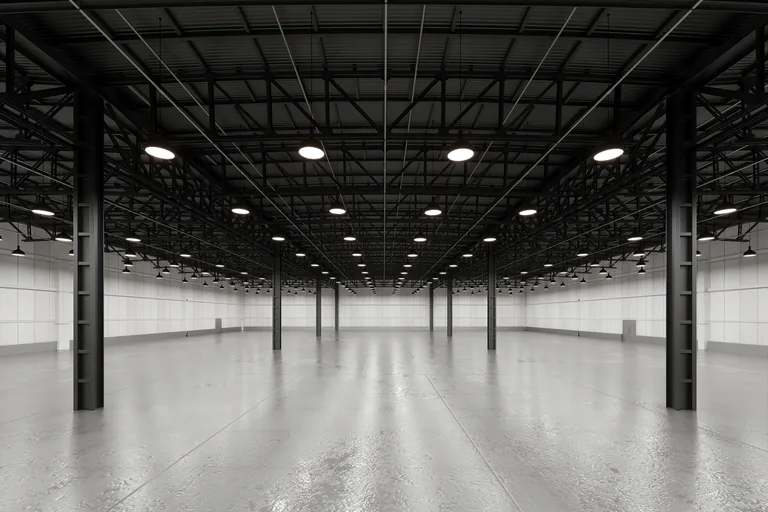

The most expensive day in a Nebraska distributor’s year is a day in spring, and almost nothing about the way its insurance was bought reflects that.
Agricultural chemical, seed, and equipment distributors hold high-value, hazard-classed inventory whose peak accumulation is concentrated in a short window. For a few weeks the building is full — of product that is expensive, regulated, and about to go into the ground — and then it empties out. Protein and food wholesalers swing on a different cycle with the same shape. And a limit that was sized against an annual average is a limit that will be perfectly adequate for eleven months and inadequate on the one day it is asked to answer.
That is the Nebraska owned-stock problem in one sentence, and it sits underneath everything else: the hail that finds the roof, the freeze that finds the sprinkler line, the flood that finds the slab. The peril is ordinary. The timing is what makes it expensive.
Insure the peak, not the average
Start here because everything else follows from it. Owned inventory in this state is seasonal, concentrated, and heavy: agricultural inputs at the spring peak, protein moving through processing and export cycles, beverage swinging on holidays and weather. Commercial property is the right instrument for the building, the racking, the owned stock that stays put, and the business income lost while a site is down — but it can only answer up to the limit it was given.
An underwriter is not asking what you usually hold. The question is what sits in one building on the worst possible day, and whether the schedule reaches it. That is a conversation worth having in February, and a very painful one to have in May.
Licensed one building at a time
Nebraska is a license state under the Liquor Control Act, and the Liquor Control Commission enforces the walls between the tiers about as firmly as any state does. No entity may hold licenses in two tiers. A distributor may not hold equity in a brewery or in a retailer. A brewery may not hold a retail on-premises license.
The licensing detail with real operational consequence is this: wholesale licenses come in two flavors — alcoholic liquor, and beer only — and the annual fee attaches to each wholesale place of business. A distributor running more than one warehouse in Nebraska is licensed building by building. Local approval matters too — the commission will not take a state application until the city council or county board has acted.
For our purposes the effect is clarifying. The state has structurally isolated the middle tier from everything above and below it, which means the product in a Nebraska beverage wholesaler’s building is unambiguously that wholesaler’s own. Nobody is holding it for anyone. It is a wholesale risk in the full sense — owned stock, a products exposure, and a fleet.
Stock throughput across a state that everything crosses
Nebraska is an I-80 state above all else. The transcontinental highway runs its length from Omaha through Lincoln, Grand Island, Kearney, and North Platte, paralleled by a transcontinental railroad mainline with an enormous classification yard at the western end. The state’s function in national freight is throughput: an extraordinary volume of goods crosses it, and a meaningful share stops.
Stock throughput is one marine-family policy that follows your owned product across its whole life — supplier, transit of any kind, warehouse, customer. The marine is a historical name; the form does exactly the same job for a pallet that never sees salt water. And the case for it here is the case against the patchwork: a property policy that covers your inventory only inside a scheduled building, a cargo policy that covers it only while it moves, and seams between them where a rail car sitting in a yard or a load waiting at a transload facility falls into nobody’s coverage at all.
The question that decides the span: where does the risk of loss pass to you? If your purchase terms hand you ownership at a supplier’s dock two states away, then the exposure began there — not when the truck reached Omaha.
Protein: temperature is the entire value
The protein economy — beef and pork processing in the eastern and central counties — creates a cold-chain distribution base disproportionate to the state’s population. A wholesaler owning that product owns something whose entire value depends on temperature holding from the plant to the customer.
That produces a loss with nothing to photograph. The product is not burned, not crushed, not stolen — it is simply warm, and therefore worthless. Whether a policy answers for spoilage, whether it answers when the cause is a refrigeration breakdown rather than a peril at the building, and whether it answers in transit, are three separate wording questions, and most owners have only ever been given an answer to the first.
The cold floors carry their own workers’ compensation profile too. Nebraska is a private-market comp state — no state fund, no monopoly — and in a Nebraska warehouse the claims come off the equipment and the racking: forklift strikes and tip-overs, loads dropped from height, workers caught between a pallet and a rack upright, dock-plate and trailer falls, cumulative lifting injury on the pick line. The cold-storage and protein-handling floors add freezer slips, cold stress on long shifts, and heavy, awkward, wet product a dry-goods building never touches. The route drivers are a second injury population entirely, and they need commercial auto behind them — where, as always in this trade, your insurance carrier is the company writing your policy and a motor carrier or freight carrier is a company hauling goods for hire.
The biggest flat target in the county
Hail is the peril that most reliably damages a Nebraska warehouse, and the reason is geometry: the state sits in one of the country’s most active large-hail corridors, and a distribution building offers a flat, horizontal roof plane of considerable area with mechanical units sitting on top of it. Tornado and straight-line downburst wind run the same corridor from spring into summer.
But the state’s most consequential recent catastrophe was water, not wind. The Missouri River and its tributaries have inundated the eastern and southeastern lowlands, and industrial land near Council Bluffs and the river bottoms carries genuine flood siting risk — which is a separate placement from the property policy, and which reaches the floor slab that an entire owned inventory is standing on. Deep winter freeze puts dry-pipe and unheated space at risk of sprinkler and line freeze.
Regulated on the goods, facility by facility
The licensing pattern repeats. The Department of Agriculture’s Food Safety and Consumer Protection program licenses food establishments and food processing plants under the Nebraska Pure Food Act and the state food code, with an inspection before a facility may operate and annual, non-transferable permits. Drug wholesaling is licensed — unusually — not by a board of pharmacy but by the Department of Health and Human Services, under the Wholesale Drug Distributor Licensing Act, with a separate license for each facility and an on-site inspection or approved accreditation as a condition of holding it.
Different agencies, same logic: you are regulated on the goods you own, one facility at a time. Which is precisely why products liability reaches you. The chain of distribution runs to a seller, not only to the manufacturer, and any Nebraska distributor that imports components, packaging, equipment, or finished goods becomes the first U.S. seller and carries that exposure directly. General liability answers it through the products-completed-operations hazard, and umbrella liability sits above once a customer contract demands more than the primary lines carry.
What underwriters ask a Nebraska distributor
We do not print premiums, and any site that does is guessing. The genuine drivers:
- Peak accumulation, and how far above your annual average the spring window actually runs.
- What the product is — hazard-classed agricultural inputs are their own appetite question before they are a limits question.
- Temperature dependence, and whether spoilage is written into the wording or merely hoped for.
- Roof age and hail history on the buildings your stock stands under.
- Flood siting near the Missouri and the river bottoms.
- Where the risk of loss passes on inbound freight, and how much of the rail and truck journey you own.
Where Nebraska’s owned inventory concentrates
Omaha
The state’s distribution capital, on I-80 and beside the mainline of a transcontinental railroad, with a foreign-trade zone reorganized under the alternative site framework across the surrounding counties. That framework is the operative fact for an owner of imported goods: a qualifying building can be activated for duty-deferred storage where it already stands, rather than the company relocating into a fixed zone campus.
Lincoln
The second metro and the second zone, serving regional distribution across the upper Plains. A wholesaler here is licensed per wholesale place of business if it holds beverage — the annual fee attaches to the building, not to the company — so a distributor running more than one warehouse in the state is licensed one address at a time.
Grand Island
Central Nebraska protein and agricultural distribution, where owned stock is cold, heavy, and unforgiving. A refrigeration failure spoils an entire inventory without touching the building — a total loss with nothing to photograph — and whether the policy answers for spoilage, at the building and in transit, is the question that decides the year.
Kearney
I-80 wholesaling with a long reach into the interior. Owned agricultural inputs and equipment here are seasonal by nature: the accumulation in the building at the height of the spring window bears almost no relationship to the average across the year, and an underwriter is asking about the peak.
Columbus
Agricultural chemical, seed, and equipment distribution in the eastern counties. This is hazard-classed owned inventory — what it is and how it is segregated drives the property and products conversation far more than the floor area of the building, and it drives the underwriting appetite before either.
Norfolk
Northeast Nebraska, where protein and food wholesalers hold product whose entire value depends on temperature holding from the plant to the customer. The cold-chain exposure carries a workers compensation profile of its own — freezer-floor slips, cold stress on long shifts, and heavy, awkward, wet product that a dry-goods building never handles.
North Platte
The western end of the I-80 corridor, beside an enormous rail classification yard. Owned stock moving by rail as well as truck spends time in custody arrangements the distributor does not control — and a property policy scheduled to a Nebraska address has nothing to say about a rail car sitting in a yard.
The Council Bluffs river corridor
Industrial land near the Missouri River and the river bottoms carries genuine flood siting risk — the state’s most consequential recent catastrophe was water, not wind. Flood is a separate placement from the property policy, and it reaches the floor slab that a distributor’s entire owned inventory is standing on.
If the goods are not yours, you are on the wrong page
An honest signpost. This page is for the business that owns what it holds. If your operation stores other companies’ goods for a fee — the 3PL storing pallets in an Omaha or Lincoln distribution center, the public cold-storage building holding a protein company’s product, or the grain elevator licensed by the Public Service Commission and issuing warehouse receipts under the Grain Warehouse Act — then that inventory is not owned stock at all. It is a bailment, and your lead line is warehouse legal liability, turning on your storage agreement rather than your purchase terms. It has its own page: warehouse insurance in Nebraska.
Plenty of Nebraska businesses do both — they distribute their own product and warehouse someone else’s alongside it. If that is you, we place both, and we draw the line between them before anything binds.
Nebraska distributor and wholesaler insurance FAQs
Why do underwriters keep asking about my peak inventory rather than my average?
Because in Nebraska the peak is the risk. Agricultural chemical, seed, and equipment distributors hold high-value, hazard-classed, seasonal inventory whose peak accumulation is concentrated in a short spring window — and the value in the building at that moment can bear almost no relationship to the average across the year. A policy limit sized against the average is a policy that will be adequate for most of the calendar and inadequate on the one day that matters. The same logic applies to the protein and food side, where inventory swings with processing and export cycles. The honest conversation at placement is not about what you usually hold. It is about what you hold on the worst possible day, and whether the limit reaches it.
How strictly does Nebraska enforce tier separation?
Hard, and it is worth knowing where the walls are. Nebraska is a license state under the Liquor Control Act, and the Liquor Control Commission enforces the separation of the tiers: no entity may hold licenses in two tiers, a distributor may not hold equity in a brewery or in a retailer, and a brewery may not hold a retail on-premises license. Wholesale licenses come in two flavors — alcoholic liquor, and beer only — and the annual fee attaches to each wholesale place of business, so a distributor running more than one warehouse in the state is licensed building by building. Local approval matters too: the commission will not take a state application until the city council or county board has acted. The practical upshot for insurance is straightforward — the inventory is unambiguously yours, in a business the state has structurally isolated from the tiers above and below it.
Why does hail damage so many Nebraska warehouses?
Geometry. The state sits in one of the country’s most active large-hail corridors, and a distribution building offers a flat, horizontal roof plane of considerable area with mechanical units sitting on top of it. It is the biggest target in the county. Hail rarely levels a warehouse — it bruises the membrane, and the water that follows finds its way down into the racking, where the owned inventory is standing. Tornado and straight-line downburst wind are live from spring into summer along the same corridor. And the state’s most consequential recent catastrophe was water rather than wind: the Missouri River and its tributaries have inundated the eastern and southeastern lowlands, and industrial land near Council Bluffs and the river bottoms carries genuine flood siting risk. Flood is a separate placement.
What is stock throughput, and why does a landlocked state need it?
Stock throughput is one marine-family policy that follows your owned product across its whole life — supplier, transit, warehouse, customer — rather than splitting that life between a property policy that covers goods only inside a scheduled building and a cargo policy that covers them only while they move. The marine name is historical; the form works the same for goods that never touch salt water. Nebraska needs it because the state’s function in national freight is throughput: an extraordinary volume of goods crosses it and a meaningful share stops. Owned inventory here travels by truck on I-80, by rail through the classification yards, and in and out of buildings the distributor does not control, and the seams between the property form and the cargo form are exactly where a loss goes looking for a home.
Who licenses drug wholesaling in Nebraska?
Not a board of pharmacy — which surprises people who have distributed in other states. Drug wholesaling here is licensed by the Department of Health and Human Services under the Wholesale Drug Distributor Licensing Act, with a separate license required for each facility engaged in wholesale drug distribution, and an on-site inspection or an approved accreditation as a condition of getting and keeping it. Food is separate again: the Department of Agriculture’s Food Safety and Consumer Protection program licenses food establishments and food processing plants under the Nebraska Pure Food Act and the state food code, with an inspection before a facility may operate and annual, non-transferable permits. The pattern across all of it is the one that matters here — you are regulated on the goods you own, facility by facility.
I distribute agricultural inputs. Am I in the products-liability chain?
Yes. Products liability follows the chain of distribution to a seller, not only to the manufacturer that made the product — so a distributor of chemicals, seed, or equipment sits in that chain for goods it did not formulate or build. Any Nebraska distributor that imports — components, packaging, equipment, or finished goods — becomes the first U.S. seller and carries the exposure directly, because when the maker is overseas and beyond the practical reach of a U.S. claim, the importer is the realistic target. General liability answers this through the products-completed-operations hazard, and the limits belong sized against what the product actually does in the field rather than against a revenue band. A hazard-classed agricultural input is not a case of consumer goods, and no revenue figure knows the difference.
Get a Nebraska distributor insurance quote
Quotes in 1–2 hours during business hours.