
States we serve · Nevada
Distributor and wholesaler business insurance in Nevada
For the beverage, food, hospitality-supply, and import wholesalers who own what they sell in the West’s warehouse-by-design state — where the law requires the building before it will issue the license, and no tax discourages you from filling it.
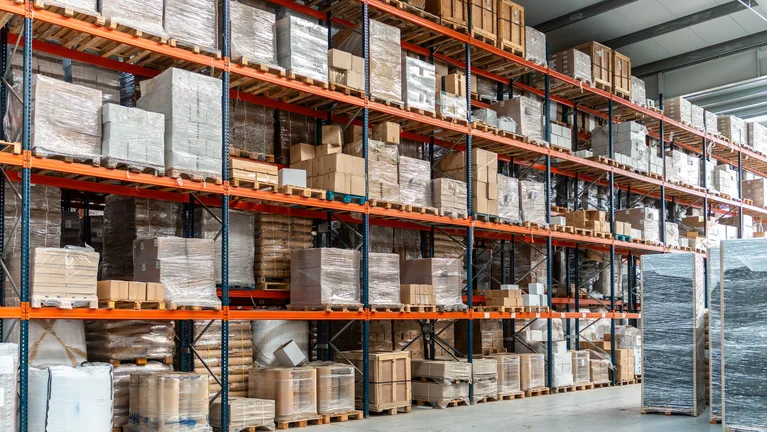

In most states you obtain the license and then go looking for a building. Nevada reverses it. An applicant for the importer/wholesaler license must first have a warehouse located within Nevada, and must agree to maintain sufficient warehouse space to hold product. The building comes before the license.
It is a strange, concrete, physical rule, and it tells you something true about this state: Nevada is not incidentally a warehousing place. It has been designed to be one, and it has written that design into its statutes. For a distributor who owns inventory, that design is the whole risk picture — because the same policies that pulled you here have also made the pile of goods under your roof larger than it would be anywhere else.
A license issued by the tax authority, conditioned on a building
Nevada is a license state with an unusual regulator, and the unusualness is worth stating plainly: there is no separate alcoholic beverage control agency at all. The Department of Taxation licenses the importer/wholesaler tier, as part of the liquor excise-tax framework.
The three-tier lines themselves are drawn hard. A supplier may sell only to a Nevada-licensed importer/wholesaler. The wholesaler may sell only to retailers, and never at retail. A retailer may buy only from a wholesaler. So the middle tier is genuinely private, genuinely separate, and — because of the warehouse condition — genuinely physical. The state has, in effect, legislated owned beverage inventory into an in-state building. Your stock is yours, it is here, and the license says it has to be.
No inventory tax — and what that does to what is under your roof
Then the second half of the design. Nevada has no corporate income tax, no personal income tax, and — decisively for anybody holding goods — no inventory tax.
That is the arithmetic that built Reno–Sparks and North Las Vegas. A truck leaving Reno reaches every major West Coast metro market within a day; the same trip from Las Vegas puts Southern California a few hours out. Do that from a state that does not tax the goods you are holding, and you have the reason national retailers, e-commerce operations, and distributors stacked their inventory here rather than paying to warehouse it in California. Add the Las Vegas hospitality economy — a permanent, enormous, and utterly unforgiving demand base for food, beverage, and supply distribution — and Nevada ends up holding far more goods than its population would ever suggest.
Now read that as an underwriter would. A wholesaler here holds deep owned stock, because nothing penalises it for doing so. The accumulation under a single roof is deliberately larger than the same business would carry across the state line. So the number that matters is not what you move in a year; it is what is standing in that building on the worst day — and Nevada’s tax policy is the thing that put it there. Commercial property answers for the building, the racking, and the owned stock inside, plus the business income lost while the site is down; the limit has to be set against the peak, not the average.
Stock throughput: the coast’s goods, held inland
Nevada has no port, and that is exactly why stock throughput is the lead line here rather than an afterthought. The goods you own were landed at a California or Pacific Northwest seaport, then trucked or railed inland and held in a Nevada building. They were at your risk from a foreign supplier’s dock forward — across the ocean leg, through a coastal terminal you may never have visited, along the drayage and the rail move over the mountains.
A property policy insures inventory while it sits in a scheduled building and stops at the walls. A cargo policy responds while goods move. Between them is a seam, and a Nevada distributor’s stock spends most of its life inside it. Stock throughput is a single marine-family form written across the entire span — and the state’s foreign-trade zones reflect the same inland logic: one at each end of the state, attached to a distribution cluster rather than to a port, with the Las Vegas Global Economic Alliance as the grantee in the south and the Economic Development Authority of Western Nevada holding the Reno zone in the north. Duty-deferred storage here is the storage side of an inland consolidation play. The zone is a cost tool inside a warehouse strategy, which is precisely what Nevada sells.
The question the form forces: when does risk of loss actually pass to you? If ownership passes at a foreign dock and your coverage begins when the trailer reaches Fernley, there is an ocean and a mountain range on which your own inventory is traveling uninsured by you.
The first U.S. seller, a long way from the sea
A distributor who never made anything can still be sued over what it sold. Products liability follows the chain of distribution to a seller, and buying a product and reselling it makes you one. For the importer — the first party to put a product into U.S. commerce — the position is sharpest, because when the actual maker sits beyond the practical reach of a U.S. claim, you are the party who is realistically there to answer for it.
That posture does not soften because the goods were landed in another state and railed in. General liability answers through the products-completed-operations hazard, and a wholesaler of consumables, hospitality supply, or imported consumer goods needs limits sized against what the product actually is rather than against a revenue band.
Heat, wind, and the dry perils
Nevada’s perils are dry and wind-driven, and they are not the perils most owners arrive prepared for.
Extreme, sustained summer heat in the south stresses roofing, stresses refrigeration, and stresses the people on a Las Vegas-area dock — and a cold-chain failure in that heat is a total loss on owned product rather than an inconvenience. High desert wind loads a large roof plane and the equipment sitting on top of it. Wildfire is a serious northern exposure where the industrial base sits close to open range and foothill fuel, and it reaches stored goods through smoke and ash rather than flame. Monsoon-driven flash flooding hits washes and low ground — and flood is its own placement, never a property-form assumption. And Nevada does carry real seismic activity in the west of the state, which for a warehouse means the racking and its anchorage rather than the building shell.
The busiest buildings, and the newest people in them
Nevada workers compensation is a private-market line — the state moved off a monopolistic system decades ago, and an employer buys comp from private insurers. But this state carries more warehouse comp exposure per capita than almost any state in the region, for the simple reason that the distribution clusters are where the jobs are.
Forklift and powered-industrial-truck traffic in high-throughput fulfillment buildings. Order-picker and mezzanine falls. Product coming off racks. Conveyor and automation pinch points. The repetitive lifting and reaching of a high-velocity pick line. And the aggravator that matters most: peak-season hiring surges put inexperienced people into the busiest buildings at the busiest possible moment. That is where the claims come from, and it is a controllable exposure if it is named early.
The route fleet is the second and separate exposure, answered by commercial auto. A note on the word this trade cannot avoid: your insurance carrier writes your policy; a motor carrier or freight carrier hauls goods for hire. Above the primary lines, umbrella liability is what a resort group, a national retailer, or a landlord demands of a route-based distribution operation once the contract limits climb.
Licensed on the goods
Beyond alcohol, Nevada regulates the distributor for what it owns — and one door moved recently enough to catch people out. Food-establishment permitting shifted from the state public-health division to the Nevada Department of Agriculture, which now runs the state food programs, so a food warehouse or a food distributor answers to agriculture; the department separately licenses dairy distributors. Prescription drugs run through the Nevada State Board of Pharmacy, which licenses wholesale distribution into the state, requires the board license before any wholesale drug distribution occurs, and backs it with a surety bond.
What drives the pricing conversation for a Nevada distributor
We do not print premiums, and any site that does is guessing. What genuinely moves it for an owner of inventory here:
- Concentration — how deep the owned stock actually runs, in a state that has removed the reason to keep it shallow.
- Refrigeration reliability and backup power, against sustained desert heat.
- The transit span you own — ocean leg, coastal terminal, and the inland move over the mountains.
- Duty-deferred inventory, and what a loss on customs-controlled goods triggers beyond the stock.
- Seasonal hiring and headcount surges on the pick line, and the split between warehouse and driver payroll.
- Wildfire siting and roof exposure, and whether flood has been placed at all.
Where Nevada distributors and wholesalers concentrate
Reno and Sparks
The northern cluster on I-80, from which a truck reaches every major West Coast metro market within a day. Owned inventory is held deep here on purpose, because the state does not tax it — which means the accumulation under one roof is deliberately larger than the same business would carry across the state line.
North Las Vegas
The southern cluster on I-15, a few hours from Southern California and among the largest industrial build-outs in the West. High-velocity fulfillment buildings hold enormous owned value at a fast turn — and a fast turn understates the annual product volume moving through the chain of distribution behind it.
Las Vegas and the resort supply chain
A permanent, enormous, and utterly unforgiving demand base for food, beverage, and hospitality supply. A distributor serving it cannot defer a delivery, so when a site goes down the loss is the service as much as the stock — which is why business income is the section to read hardest.
The Tahoe Reno Industrial Center
A vast industrial build-out east of Sparks, close to open range and foothill fuel. Owned goods concentrate at a scale the state’s own population would never explain, and the wildfire exposure out here reaches stored product without a flame ever touching the property.
Fernley
Consolidation space on the I-80 corridor where imported inventory railed or trucked from a coastal port comes to rest. Goods that landed in California or the Pacific Northwest were already at their owner’s risk across the ocean leg — a span that begins long before the four walls a property policy is written around.
Henderson
Southern-valley distribution serving the metro and the interior Southwest. Extreme, sustained summer heat stresses roofing and refrigeration here in a way that is not decorative — a cold-chain failure in a Las Vegas-area July is a total loss on owned product rather than an inconvenience.
Carson City
Government, institutional, and regional wholesaling with duty-deferred zone access in the north of the state. The zone here is a cost tool inside a warehouse strategy rather than a dockside function, and duty-unpaid stock is valuable and encumbered at the same time.
Elko
Mining and industrial supply distribution in the northeast, far from anywhere. Distance means deeper safety stock and long transit legs in both directions, and inventory spending that much of its life on a road is a throughput exposure rather than a building one.
If the goods are not yours, you are on the wrong page
An honest signpost. This page is for the business that owns what it stores. If your operation holds other companies’ freight for a fee — a third-party, public, contract, or fulfillment warehouse in Reno–Sparks or North Las Vegas, staging inventory that belongs to a retailer or a brand somewhere else entirely — then the goods on your racks are not owned stock, they are a bailment, and none of the above is your lead exposure. Your program begins with warehouse legal liability, the bailee line for goods in your care, custody, and control, and it turns on the storage contract and the limitation of liability you negotiated rather than on your purchase terms. That is a genuinely different risk with a different stack — and in this state it is an enormous business in its own right. It has its own page: warehouse insurance in Nevada.
Many Nevada businesses do both — they sell their own product and hold somebody else’s in the same building. If that is you, we place both, and we draw the line between them before anything binds.
Nevada distributor and wholesaler insurance FAQs
Who licenses a liquor wholesaler in Nevada if there is no ABC agency?
The Department of Taxation does. Nevada is a license state with an unusual regulator: it has no separate alcoholic beverage control agency at all, and the Department of Taxation licenses the importer/wholesaler tier as part of the liquor excise-tax framework. The three-tier lines are drawn hard — a supplier may sell only to a Nevada-licensed importer/wholesaler, the wholesaler may sell only to retailers and never at retail, and a retailer may buy only from a wholesaler. But the clause that matters most to anyone with a building is the physical one: an applicant for the importer/wholesaler license must first have a warehouse located within Nevada, and must agree to maintain sufficient warehouse space to hold product. In Nevada, the building comes before the license.
What does having no inventory tax actually do to my risk?
It raises your accumulation, deliberately. Nevada has no corporate income tax, no personal income tax, and — decisively for anyone holding stock — no inventory tax. That last one is not a footnote in a brochure; it is the reason national retailers, e-commerce operations, and distributors stack owned inventory into Reno–Sparks and North Las Vegas instead of paying to warehouse it in California. A wholesaler can hold deep owned stock here without a tax penalty for holding it, so it does. The consequence for the insurance program is direct: the value standing under one roof on the worst day is larger, by design, than the same business would carry elsewhere. Concentration is the number, and the state’s tax policy is what put it there.
Why would a Nevada distributor need stock throughput when the state has no port?
Precisely because it has no port. Nevada is an inland consolidation play: the goods you own were landed at a California or Pacific Northwest seaport, then trucked or railed inland and held here. They were at your risk from a foreign supplier’s dock forward — across the ocean leg, through the coastal terminal, along the drayage and the rail move — and a commercial property policy does not wake up until the goods are sitting inside a scheduled building. Stock throughput is one marine-family form written across that whole span. The word marine is a historical artifact of where the coverage came from; it works exactly as well on a container crossing the Sierra as on a hull, and a landlocked owner should not be put off by the name.
What are the real property perils for a Nevada warehouse full of my stock?
Dry ones and wind-driven ones. Extreme, sustained summer heat in the south stresses roofing and refrigeration and the people on the dock, and a cold-chain failure in that heat is a total loss on owned product rather than a nuisance. High desert wind loads a large roof plane and its rooftop equipment. Wildfire is serious in the north, where the industrial base sits close to open range and foothill fuel, and smoke and ash can foul stored goods without a flame ever touching the property. Monsoon-driven flash flooding hits washes and low ground — and flood is its own placement, never a property-form assumption. Nevada also carries real seismic activity in the west of the state, and for a warehouse that means the racking and its anchorage rather than the building shell.
Does Nevada license me for the food or drugs I distribute?
It does, and one of the doors moved recently, so it is worth checking which agency you actually answer to. Food regulation was reorganized: food-establishment permitting moved from the state public-health division to the Nevada Department of Agriculture, which now runs the state food programs — so a food warehouse or a food distributor answers to agriculture, and the department separately licenses dairy distributors. Prescription drugs run through the Nevada State Board of Pharmacy, which licenses wholesale distribution into the state, requires the board license before any wholesale drug distribution occurs, and backs it with a surety bond. In both regimes the credential attaches to the goods you own, not the shell you keep them in.
Is workers compensation a big exposure for a Nevada distribution business?
It is bigger here than almost anywhere in the region, and the reason is that this is where the warehouse jobs actually are. Nevada workers compensation is a private-market line — the state moved off a monopolistic system decades ago, so an employer buys comp from private insurers. The distribution clusters in Reno–Sparks and North Las Vegas concentrate the exposure: forklift and powered-industrial-truck traffic in high-throughput fulfillment buildings, order-picker and mezzanine falls, product coming off racks, conveyor and automation pinch points, and the repetitive lifting and reaching of a high-velocity pick line. Peak-season hiring surges make it worse in the way that matters most — they put inexperienced people into the busiest buildings at the busiest possible moment.
Get a Nevada distributor insurance quote
Quotes in 1–2 hours during business hours.