
States we serve · New Mexico
Warehouse business insurance in New Mexico
At Santa Teresa the goods in your building are there precisely because they are between one owner’s hands and another’s. You never own any of it — and in New Mexico, nothing but your storage agreement says what you owe for it.
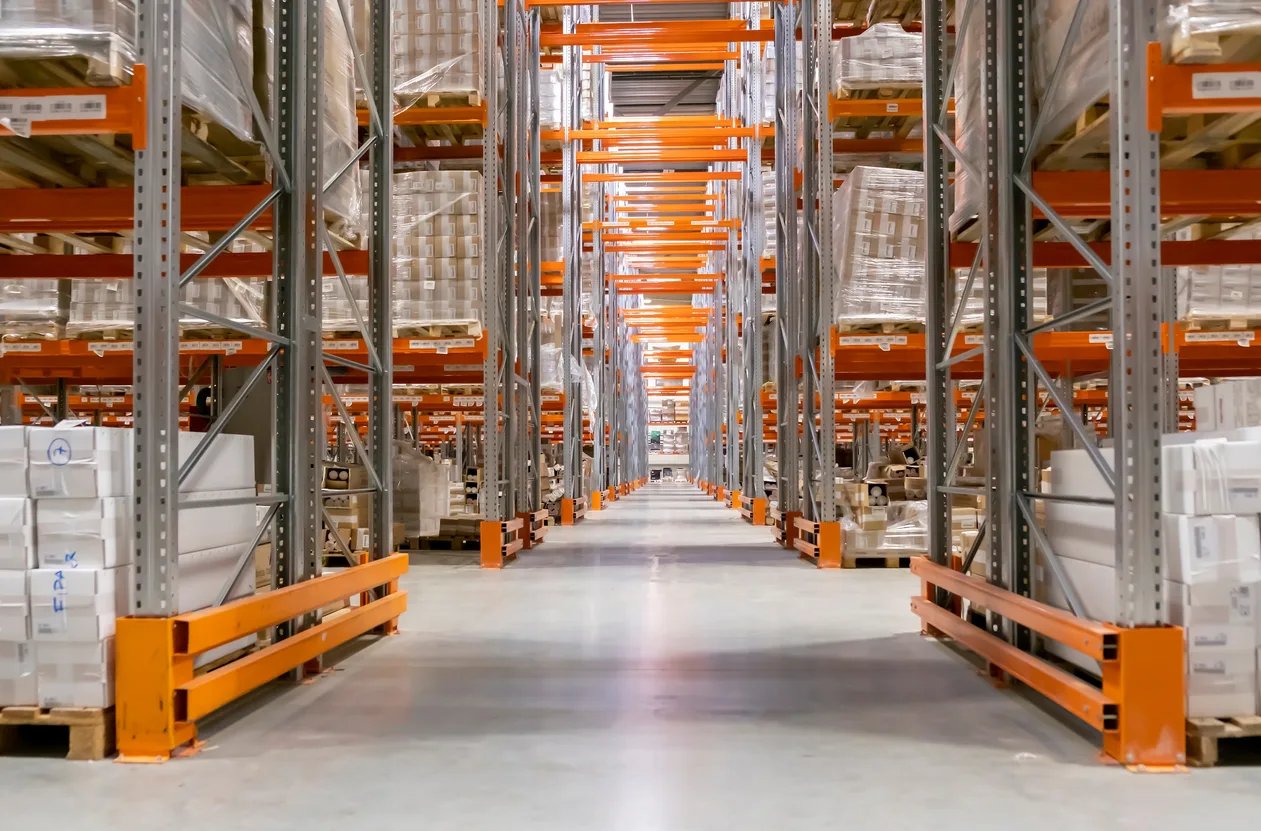

New Mexico’s most distinctive warehousing asset is not a city. It is a crossing.
At Santa Teresa, a port of entry, a large Union Pacific intermodal facility, and a foreign-trade zone sit together, and a stretch of desert becomes the state’s real distribution economy. The warehouses there hold, transload, consolidate, and stage goods belonging to Mexican manufacturers and U.S. importers — freight that arrived by truck across the line and leaves by rail, or the reverse. Which makes them the purest bailees in this trade: the goods are on the property specifically because they are between owners’ hands. Not being sold. Not being made. Just held, by a company that will never own a single carton of it.
That fact, and not the size of the building, is what the insurance program has to answer for.
The exclusion sitting under every pallet
Start with the hard structural fact of the trade. A standard general liability policy excludes damage to personal property in your care, custody, or control. Everything on your floor at Santa Teresa or in an Albuquerque contract building is exactly that — which means the loss you fear most, a fire in a rack aisle or a theft out of a staged trailer, is carved out of your foundation policy by the form’s own terms.
Warehouse legal liability is the line written to answer precisely what the exclusion removes. It leads the warehouse program here, and it does so carrying more weight than usual, because New Mexico gives you no license, no inspection regime, and no statutory standard of care to fall back on. Your position rests on two things: the storage agreement, and the coverage standing behind it.
Three regulators — and not one of them is yours
New Mexico does license warehouses. It just does not license yours, and the near-misses are worth naming so nobody chases the wrong one.
The first is agricultural and, unusually, county-administered: a bonded warehouse license covering warehouses that store agricultural products grown from the ground, filed with a surety bond, displayed on the building, and expiring with the bond. Most states run their warehouse programs through a state agency; New Mexico runs this one through the county. It is real, and it does not reach a distribution or fulfillment warehouse.
The second is food, and it will surprise anyone arriving from a neighboring state: food permitting sits with the Environment Department, not an agriculture or health agency — and the department’s manufactured-food permit application lists warehouse as a food-processing-plant type outright. A food-grade warehouse here is permitted and inspected as a food facility, full stop. The third is the Board of Pharmacy, which licenses wholesale drug distributors, inspects their facilities, and requires a separate, non-transferable license for each location — so a second building is a second license.
Add them up and the picture is clear. Store hay, and a county has a bond form for you. Store food, and an environmental regulator inspects you as a plant. Store drugs, and the pharmacy board licenses you building by building. Store pallets of general merchandise for a customer, and no one in New Mexico licenses you at all — which is why the limitation-of-liability language in your warehouse receipt is not administrative overhead. It is the only perimeter you have.
Two masters at the crossing
The state’s zone footprint is small in count but pointed in placement: the City of Albuquerque’s aviation department is a grantee, and Doña Ana County holds the one that matters, because Doña Ana County is where Santa Teresa is. Bonded storage in New Mexico is a land-border function, not a seaport one — goods cross from Mexico and are warehoused on the U.S. side before duty is paid.
For the bailee, that stacks a customs obligation on top of the duty of care. Over the same pallet you now answer to the owner of the freight and to a customs regime that has not been paid. A shortage that would be an awkward call in an ordinary building becomes a formal event, and the reconciliation discipline in your warehouse system becomes an underwriting topic rather than an operations one.
Smoke, wind, and the loss with no fire in it
New Mexico’s perils are dry-country perils, and the headline is wildfire. The state has seen destructive, wind-driven fires and carries real wildland-urban interface exposure in the forested and brush country. But here is the part a bailee has to understand: the smoke and ash that come with a nearby fire can contaminate stored goods even when the building never burns. Your customer’s product is unsaleable. Your commercial property policy looks at an undamaged building and sees nothing to answer for. The bailee line is what is left facing the loss.
High spring winds drive both the fire risk and direct wind damage to a large roof plane and its rooftop equipment. Hail turns up on the eastern plains. Monsoon-season flash flooding is localized but violent in arroyos and low ground — flood is its own placement, not a property-form peril. Winter freeze reaches sprinkler systems in the north, where the elevation is high enough to matter. Earthquake is not New Mexico’s story and should not be dressed up as one.
People on foot, in the same space as the equipment
Workers compensation is a private-market line here. The loss picture is the standard one — powered-industrial-truck contact, dock and trailer falls, product falling from racks, lifting and repetitive-motion strain — with a real wrinkle in the border logistics zone: cross-dock and transload operations put people on foot in the same space as moving equipment far more often than a slow-turn storage building does. That is a concentration, not an incident rate, and an underwriter will ask how the traffic is separated. Heat matters in the south on an open dock.
An umbrella sits over the liability stack, and commercial auto attaches the moment your own equipment moves a customer’s freight beyond the yard.
What drives cost for a New Mexico bailee
- The value of the goods in your care at Santa Teresa peak — border staging concentrates value in short, intense windows.
- Bonded and zone posture, and how inventory is reconciled against a customs obligation.
- Wildfire proximity and smoke exposure, which is a goods-contamination question as much as a building question.
- Whether you hold food or drugs, and therefore which regulator has already inspected the building.
- Pedestrian and equipment separation on a transload floor — the comp exposure specific to this trade here.
- Claims history, which moves pricing more than almost anything else on this list.
Major New Mexico warehouse markets
Santa Teresa
A port of entry with a large Union Pacific intermodal facility and a rail and industrial park built around it, deliberately routing around the congestion of the older crossings. The warehouse here holds, transloads, consolidates, and stages goods belonging to Mexican manufacturers and U.S. importers — freight that arrived by truck and leaves by rail, or the reverse — and the operator owns none of it at any point.
Doña Ana County and the zone
The county holds the foreign-trade zone that matters most in New Mexico, because Doña Ana County is where Santa Teresa is. Bonded and duty-deferred storage here is a land-border function rather than a seaport one: goods cross from Mexico and are warehoused on the U.S. side before duty is paid — which puts a customs obligation on top of the ordinary duty of care owed to whoever owns the freight.
Las Cruces and the Borderplex
The metro behind the crossing, where cross-border warehousing needs transload, consolidation, and staging space with rail reach. Custody here is short and repeated — goods change hands several times inside one building — and every handoff is a place a bailee claim can begin.
Albuquerque
Where I-40 and I-25 meet, carrying the state’s air cargo and its metro distribution. The city’s aviation department is a zone grantee. Regional public and contract warehouse space here serves food, beverage, building-materials, and medical distribution across a state where towns are far apart and a wholesaler’s territory is enormous.
Rio Rancho and the north metro
Newer industrial space serving the Albuquerque market. A warehouse here is frequently the only storage between a supplier and a very wide territory, so when the building stops, the customer’s supply stops too — and whether the storage agreement contemplated that consequence is a question worth answering before the fire season that raises it.
Hobbs and the southeast
Oilfield-supply storage, which is its own kind of warehousing: heavy, high-value, hazard-classed equipment held in remote yards for owners who need it on a rig schedule. A bailee holding that inventory is exposed to a value per square foot far above consumer goods, and to a delay consequence written into somebody else’s drilling program.
Roswell and Farmington
Regional storage points at opposite ends of the state, serving agricultural, energy, and consumer supply chains hundreds of miles from a metro. The eastern plains bring hail onto a wide roof plane; the north brings a freeze that reaches sprinkler systems where elevation is high enough to matter.
Santa Fe
Distribution serving the state capital and its northern trade area along I-25. Wildland-urban interface exposure is real in the forested country nearby — and for a bailee the danger is not only flame: smoke and ash from a nearby fire can contaminate a customer’s stored goods even when the building itself is never touched.
If the goods are yours, you are on the wrong page
A signpost before the questions. This page is for the operator holding other people’s goods. If your New Mexico business owns what it stores — an importer bringing product north through Santa Teresa who owns it from the Mexican plant to the customer, a food or grocery distributor permitted as a food facility, a beverage wholesaler legally required to take goods into its own licensed warehouse before reselling, or an oilfield-supply distributor holding heavy owned inventory in a remote yard — then nothing you hold is a bailment. As the first U.S. seller of an imported product you sit squarely in the products-liability chain, and your stock is at risk across the whole span. That belongs on its own page: distributor and wholesaler insurance in New Mexico.
Border companies frequently do both. If yours does, we place both sides — the distribution operation and the wholesale operation — and we map the seam between them first.
New Mexico warehouse insurance FAQs
Is there a warehouse license in New Mexico?
Not one that reaches you, unless what you store came out of the ground. New Mexico has no general public-warehouse license for merchandise or fulfillment warehousing. The state’s warehouse licensing is agricultural and county-administered: a bonded warehouse license covering warehouses that store agricultural products grown from the ground, filed with a surety bond, displayed on the building, and expiring with the bond. That is an unusual arrangement — most states run their warehouse programs through a state agency rather than a county — and it is worth understanding precisely so you do not mistake it for something that covers you. It does not reach a distribution or fulfillment warehouse. For everything else, your duties to the goods you hold come from the bailment and the warehouse receipt under the commercial code, not from a state license.
What actually pays when a customer’s goods are destroyed in my building?
Warehouse legal liability — the bailee line. Your general liability policy will not, because a standard form excludes damage to personal property in your care, custody, or control, and the freight you hold at Santa Teresa or Albuquerque is exactly that. The loss you fear most is therefore carved out of your foundation policy by its own terms. Warehouse legal liability is written to answer precisely what that exclusion removes, and in a state that hands you no license and no statutory standard of care, it carries the entire weight of your legal position alongside the storage contract itself.
What does bonded storage at the border add to my exposure?
A second obligation over the same pallet. New Mexico’s foreign-trade zone footprint is small in count but pointed in placement: the City of Albuquerque’s aviation department is a grantee, and Doña Ana County holds the zone that matters, because that is where Santa Teresa is. Bonded and duty-deferred storage in this state is a land-border function tied to the port of entry and the industrial and rail park behind it — goods crossing from Mexico and warehoused on the U.S. side before duty is paid. When you admit those goods you answer to two masters: the owner of the freight, and a customs regime that has not been paid. That changes what a shortage means and what your records have to prove.
Do I need a food permit if I store food for a customer?
Very likely, and the agency will surprise you. Food permitting in New Mexico sits with the Environment Department rather than an agriculture or health agency — which trips up distributors moving in from neighboring states — and the department’s manufactured-food permit application lists warehouse as a food-processing-plant type outright. So a food-grade warehouse or food distributor is permitted and inspected as a food facility, not as a storage building. Prescription-drug distribution runs through the New Mexico Board of Pharmacy, which licenses wholesale drug distributors, inspects their facilities, and requires a separate, non-transferable license for each location — so a second building means a second license, not an amendment.
Can a wildfire hurt me if my building never burns?
Yes, and this is the New Mexico peril most often underestimated. Wildfire is the headline exposure — the state has seen destructive, wind-driven fires and carries real wildland-urban interface exposure in the forested and brush country. But the smoke and ash that come with a nearby fire can contaminate stored goods even when the building is never touched. For a bailee, that is a claim with no structural damage attached to it: your customer’s product is unsaleable, your property policy sees an undamaged building, and warehouse legal liability is the line left facing the loss. High spring winds drive both the fire risk and direct wind damage to a large roof plane and its rooftop equipment.
What is different about workers compensation in a border transload building?
The market is ordinary — New Mexico workers compensation is a private-market line, bought from private insurers — but the floor is not. Cross-dock and transload operations put people on foot in the same space as moving equipment far more often than a slow-turn storage building does, so the powered-industrial-truck exposure is concentrated rather than incidental. Add the standard warehouse pattern: dock and trailer falls, product falling from racks, lifting and repetitive-motion strain. Heat matters in the southern part of the state on an open dock, which is a real consideration in the Borderplex through the summer.
Get a New Mexico warehouse insurance quote
Quotes in 1–2 hours during business hours.