
States we serve · New York
Distributor and wholesaler business insurance in New York
For the beverage wholesalers, specialty-grocery importers, apparel and luxury-goods distributors, and pharmaceutical wholesalers who concentrate expensive owned inventory in expensive space — downstate and up the Thruway alike.
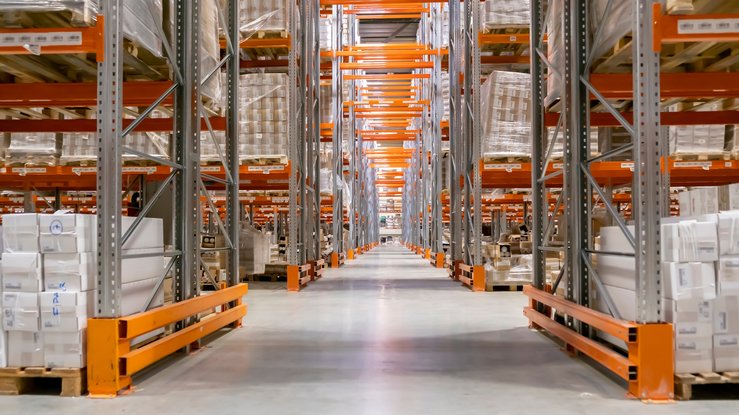

A New York distributor pays for every square foot twice — once in rent, and once in the value it has to stack inside it.
That is the arithmetic that makes this state different. Downstate demand is demand for proximity: the metro population is the largest single delivery target in the country, every hour of drive time costs money, and warehouses pay extraordinary rents to sit close. So the buildings are older, the ceilings are lower, the aisles are tight, and the inventory inside them is expensive — beverage, food and specialty grocery, apparel and fashion, jewellery and luxury goods, pharmaceuticals. All of it bought. All of it owned. All of it on one balance sheet: yours.
And a property limit set against square footage rather than against the value stacked inside will be wrong, in the direction that hurts. That is the New York conversation, and it starts before any peril is named.
The license stack mirrors the book
New York is a license state. The State Liquor Authority heads the Division of Alcoholic Beverage Control, and together they license the wholesale tier under the Alcoholic Beverage Control Law. The state buys and sells nothing. A licensed beer wholesaler, wine wholesaler, or importer may sell to other New York-licensed wholesalers and to licensed retailers, and the tiers stay separated.
The structural quirk is worth knowing: New York issues the wholesale privilege by beverage class rather than as one undifferentiated license, so a distributor’s license stack tends to mirror the book it actually carries. Add a class, add a license. It is an administratively legible system and it makes a New York wholesaler unusually conscious of what, precisely, is in the building.
Which is convenient, because that is the same question the insurance program has to answer — and the answer is the same in every class. The inventory is yours.
Stock throughput when the port paperwork sits in another state
Stock throughput is one marine-family policy that follows your owned product across the whole span — the foreign supplier, the ocean or air leg, the port or the border, the warehouse, and out to the customer. It replaces the patchwork of a property policy that covers goods only while they sit in a scheduled building and a cargo policy that covers them only while they move, with a seam in between where losses fall.
Now an honest note about the bonded position, because New York is routinely oversold on this point. Foreign-Trade Zone 1, on the New York side of the harbour, was the first foreign-trade zone in the United States, and the state carries additional zones through Buffalo, Syracuse, and the Hudson Valley. In practice, though, the FTZ and bonded story here is thinner than the sheer size of the port suggests, because so much of the harbour’s duty-deferred warehousing physically sits on the New Jersey side. An upstate importer running goods across the Canadian border at Buffalo or Champlain is often the one with the more usable zone.
None of that changes who owns the goods. For an importer clearing at JFK or crossing at Buffalo, the owned-goods exposure begins overseas and does not end until delivery — which is exactly the span a throughput placement is written to close, regardless of which side of the harbour the paperwork lives on.
Two peril states sharing one border
Where the building sits decides which New York you are insuring, and the two have almost nothing in common.
Downstate, the exposure is coastal: surge and tidal flooding across the harbour and Long Island’s south shore, and hurricane and nor’easter wind on flat roofs. Upstate, the exposure is winter: snow and ice load on wide-span warehouse roofs is the governing structural concern, particularly in the lake-effect belts east of Erie and Ontario, and freeze losses to sprinkler piping and to cold-sensitive stock follow directly behind it. Riverine flooding along the Hudson and Mohawk corridors is a persistent secondary. Flood is a separate placement in both halves. Seismic is not a factor here.
For an owner of goods, the common thread is the mechanism. In both halves, the peril reaches the inventory through the building rather than by destroying it. Water comes in at the door downstate; weight comes down through the roof upstate; a sprinkler line lets go in an unheated bay and soaks a rack of product without a fire ever starting. The shell survives. The stock does not.
Every link in the chain, including yours
Products liability follows the chain of distribution, and it reaches every one of the businesses named above. A wholesaler that never touched the manufacturing line is still a link in that chain when a product hurts somebody — the claim can reach a seller, not only the maker.
The importer is the exposed end of it. For a distributor clearing goods at JFK or crossing at Buffalo, the owned-goods exposure begins overseas, and when the actual manufacturer sits beyond the practical reach of a U.S. claim, the first U.S. seller becomes the realistic target. General liability answers this through what the standard form calls the products-completed-operations hazard, and sizing those limits against what you truly handle is most of the work. A specialty food, an apparel item, and a pharmaceutical are three different underwriting conversations and should not receive one limit by default.
It is also the clean line across this trade: a wholesale business bought the product and resold it, so it is inside the chain. A warehouse that merely held the same product for its owner largely is not.
A demanding comp environment, and a fleet in traffic
New York is a private-market workers compensation state with a competitive state fund alongside the private writers, and the claim environment is one of the more demanding in the country to manage — which makes return-to-work discipline a real underwriting variable rather than a talking point.
The exposure divides on geography like everything else here. In the boroughs and on Long Island, buildings are older, ceilings are lower, and the injuries come from manual handling in tight aisles and from dock work on street-level bays with no leveller. In the newer upstate buildings, the pattern shifts to powered-industrial-truck traffic, racking work at height, and pick-line strain.
A distribution business carries two injury populations rather than one — the crew inside and the route drivers on commercial auto exposure, which in this metro means a fleet spending its day in the densest traffic in the country. A word this niche uses two ways and must never blur: your insurance carrier writes your policy; a motor carrier hauls freight for hire. Umbrella liability is where a national retail or grocery customer’s contract limits usually land.
Where New York distributors and wholesalers concentrate
New York City
Last-mile and short-cycle buildings squeezed into the Bronx, Queens, and Brooklyn, where warehouses pay extraordinary rents to sit close to the largest single delivery target in the country. Owned inventory here is high value per pallet in a small footprint — which means a single-location property limit set against square footage rather than against the value stacked inside it will be wrong.
Long Island
Older buildings, lower ceilings, and a great deal of handling per unit stored, serving a dense suburban market. The exposure that follows an owner here is handling damage rather than catastrophe: the more times a pallet is touched, the more chances there are to destroy goods that are already on your balance sheet.
JFK and the air-cargo belt
The high-value, time-critical end of an importer’s book — pharmaceuticals, electronics, and fashion arriving by air. The stock throughput span for air cargo is shorter in time and far denser in value than an ocean move, which changes the limit conversation without changing who owns the goods: the importer clearing here is the first U.S. seller and stands in the products-liability chain for it.
Buffalo and the Niagara crossings
The land border, and in practice the place a New York importer often has the more usable foreign-trade zone. Duty-deferred goods held here are still the distributor’s goods, so a loss reaches the customs position as well as the value — and cross-border trade means owned inventory routinely changes countries as well as buildings.
Albany and the Thruway
Where a regional distribution center can hold a Northeast forward position on land the metro cannot offer. Owned stock concentrates into modern wide-span buildings here, and the governing structural concern is weight on the roof: snow and ice load over racked inventory, with drift against parapets and rooftop units as the failure mode.
Syracuse and Rochester
Central and western distribution serving both New York and New England, sitting in the lake-effect belts. A freeze loss here is a sprinkler line letting go in an unheated bay and soaking a rack of goods without a fire ever starting — a total loss of owned stock in a building that never burned.
Binghamton and the Southern Tier
The I-81 link between the Thruway and the Pennsylvania distribution belt, carrying regional wholesaling on a long-haul route profile. Owned product spends more of its life in a trailer here than on a rack, which is transit exposure — and transit is precisely where a four-walls property policy stops looking.
If the goods are not yours, you are on the wrong page
A signpost, honestly meant. Everything above assumes you own what you store. If your building instead holds other companies’ goods for a fee — an older infill house doing short-cycle storage and last-mile staging in the boroughs, a conventional third-party operator on the Thruway holding inventory for manufacturers and retailers, or a cold house renting refrigerated space to hold food commodities that belong to somebody else — then it is not owned stock. It is a bailment, and your lead line is warehouse legal liability, not stock throughput. New York even writes that distinction into law: the state’s refrigerated warehouse license is drafted specifically for a facility renting cold space to hold food that belongs to another business. That is a different risk with a different policy stack, and it has its own page: warehouse insurance in New York.
Plenty of New York businesses do both — they distribute their own product and warehouse someone else’s alongside it. If that is you, we place both, and we draw the line between them before anything binds.
New York distributor and wholesaler insurance FAQs
How does New York license a beverage wholesaler?
By beverage class, which is unusual and worth planning around. New York is a license state: the State Liquor Authority heads the Division of Alcoholic Beverage Control, and the two together license the wholesale tier under the Alcoholic Beverage Control Law — the state buys and sells nothing. A licensed beer wholesaler, wine wholesaler, or importer may sell to other New York-licensed wholesalers and to licensed retailers, and the tiers stay separated. But New York issues the wholesale privilege by beverage class rather than as one undifferentiated license, so a distributor’s license stack tends to mirror the book it actually carries. For an insurance program the point that matters is the same in every class: the inventory is genuinely yours, bought and held and resold on your own balance sheet, which makes it a stock-throughput exposure rather than a bailment.
Is New York a good foreign-trade zone state for an importer?
Less than the size of the port would suggest, and it is more useful to say so plainly. Foreign-Trade Zone 1, on the New York side of the harbour, was the first foreign-trade zone in the United States, and the state carries additional zones through Buffalo, Syracuse, and the Hudson Valley. But in practice the bonded and duty-deferred story here is thinner than the port’s scale implies, because so much of the harbour’s duty-deferred warehousing physically sits on the New Jersey side. An upstate importer running goods across the Canadian border at Buffalo or Champlain is often the one with the more usable zone. None of that changes ownership: duty-deferred goods are still your goods, and a loss on them touches the customs position as well as the value — it simply means the place you hold them may not be where the ship docked.
Why does high-value inventory in expensive space change the insurance arithmetic?
Because the limit follows the value, not the floor plan. A New York distributor is usually holding high-value owned inventory in expensive space — beverage, food and specialty grocery, apparel and fashion, jewellery and luxury goods, pharmaceuticals — and downstate that inventory sits in older, lower-ceilinged buildings with tight aisles and a great deal of handling per unit stored. A property limit set against square footage rather than against the value stacked inside will be wrong, and it will be wrong in the direction that hurts. The other half of the arithmetic is transit: stock throughput is one marine-family policy that follows your owned product from the foreign supplier through the ocean or air leg, the port or the border, the warehouse, and out to the customer — closing the seam where a property policy stops at the walls and a cargo policy has not yet started.
Am I in the products-liability chain if I only distributed the product?
Yes — the chain reaches every one of them. A wholesaler that never touched the manufacturing line is still a link in the distribution chain when a product hurts somebody, because products liability follows that chain to a seller and not only to the manufacturer. The exposure is sharpest for the importer: for a distributor clearing goods at JFK or crossing at Buffalo, the owned-goods exposure begins overseas and does not end until delivery, and when the actual maker sits beyond the practical reach of a U.S. claim, the first U.S. seller becomes the realistic target for the claim. Standard general liability answers this through the products-completed-operations hazard, and sizing those limits against what you actually handle — a specialty food, an apparel item, a pharmaceutical — is most of the work.
What catastrophe exposure applies to a New York distribution building?
It depends entirely on which half of the state you are in — two different peril states share one border. Downstate, the exposure is coastal: surge and tidal flooding across the harbour and Long Island’s south shore, and hurricane and nor’easter wind on flat roofs. Upstate, the exposure is winter — snow and ice load on wide-span warehouse roofs is the governing structural concern, particularly in the lake-effect belts east of Erie and Ontario, and freeze losses to sprinkler piping and to cold-sensitive stock follow. Riverine flooding along the Hudson and Mohawk corridors is a persistent secondary. Flood is a separate placement in both halves; seismic is not a factor here. For an owner the common thread is that all of these reach the goods through the building rather than destroying the building itself.
What should I know about workers compensation in New York?
That the claim environment is one of the more demanding in the country to manage, which makes return-to-work discipline a genuine underwriting variable rather than a talking point. New York is a private-market workers’ compensation state with a competitive state fund alongside the private writers. The exposure divides on geography, like everything else here: in the boroughs and on Long Island, buildings are older, ceilings are lower, and the injuries come from manual handling in tight aisles and from dock work on street-level bays with no leveller; in the newer upstate buildings, the pattern shifts to powered-industrial-truck traffic, racking work at height, and pick-line strain. A distribution business also carries two injury populations rather than one, because the route drivers are exposed differently from the crew inside.
Get a New York distributor insurance quote
Quotes in 1–2 hours during business hours.