
States we serve · Ohio
Distributor and wholesaler business insurance in Ohio
For the wholesalers, food and beverage distributors, and importers who own what they sell — in a state that runs a monopolistic comp fund on one side and holds title to the spirits on the other.
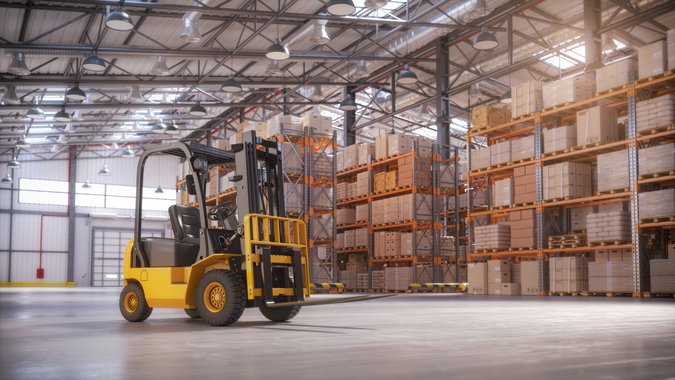

There is a floor in Ohio where two kinds of goods sit side by side, and only one of them belongs to the business handling it.
Ohio is a control state, and the control runs deeper than the label suggests. The Division of Liquor Control holds the wholesale tier for spirituous liquor itself, and it retains ownership of the spirits inventory until the moment it is sold — with retail running through private contract liquor agencies rather than state-owned stores. Beer and wine move the ordinary way: private distributors buy from suppliers, sell to retailers under state permits, and own every case in between. So an Ohio beverage business can be living in two worlds at once — an open, privately held book of beer and wine on its own balance sheet, and a spirits stream in which the product on the floor may never have belonged to it at all.
That is an unusually literal illustration of the question this page exists to answer: whose goods are these? Because everything below — the coverage that leads, the policy that follows the product, the liability that attaches to the sale — turns on the inventory being yours. For an Ohio wholesaler of food, consumer products, automotive parts, or industrial supply, it is. And the whole program should be built around that fact rather than around the building it happens to be standing in.
What an Ohio distributor is actually allowed to own
Take the beverage question first, because it is the sharpest one in the state. If your beverage business is beer and wine, your inventory is genuinely yours — you buy it, you carry it, you resell it, and every case in the building is an owned-stock exposure from the moment it lands. If your business touches spirituous liquor, the picture changes, because the state occupies that wholesale tier and holds title to the goods until sale. Two different legal positions, sometimes under one roof.
Outside beverages, Ohio is refreshingly ordinary and the concentration of owned goods is heavy: consumer-products, food, industrial, and automotive-parts distributors carrying real inventory value across Cincinnati, Columbus, and the northern industrial belt, much of it arriving as imported goods through Rickenbacker air cargo or over the road from the coasts. Food distribution is licensed through the Ohio Department of Agriculture. And on the drug side, the State Board of Pharmacy licenses wholesale distributors of dangerous drugs and, separately, third-party logistics providers — the class written for an operator that warehouses and ships drugs for someone else without ever taking ownership of them. That distinction, drawn in Ohio Revised Code section 4729.52 and in the Board’s rules, is the whose-goods question written into state law. You are on the owner side of it.
Stock throughput: the policy that travels with what is yours
Stock throughput is the lead line for an owner of inventory, and the reason is simple: your goods are almost never standing still. It is a single marine-family policy that covers owned product across the entire span — at the supplier, in ocean or air transit, on the rail move inland, in the warehouse, and out to the customer. The name is a historical artifact of the marine market it came from, and the vocabulary borrows from ocean cargo and inland marine language even when your product never sees salt water. The coverage is the point.
What it replaces is a patchwork. Commercial property insures inventory while it sits in a scheduled building. A cargo policy insures it while it moves. Between those two instruments are seams — and an Ohio distributor’s stock spends a remarkable share of its life in exactly those seams: held in zone status at an air-cargo facility, on a rail car coming inland from a coastal port, in a third party’s building, in a yard, on a truck.
The question stock throughput forces is the one importers most often answer by accident: when does the risk of loss actually pass to you? Your purchase terms may hand you ownership at the foreign supplier’s dock, at the port of loading, or on arrival. Whichever it is, that is when your exposure begins — and if your coverage begins later, there is a stretch of ocean, air, or highway where your own inventory is traveling uninsured by you.
Rickenbacker: an inland port, and a duty clock on goods you already own
Ohio’s foreign-trade zone story is centered on the Columbus Regional Airport Authority, whose zone sites reach across Rickenbacker International Airport and the Groveport and Alum Creek industrial parks — an inland port built to receive international air freight and hold it in zone status before it is released to the domestic market. Greater Cincinnati and Cleveland carry their own zone programs.
For a distribution center in the Rickenbacker cluster, duty-deferred storage is a live operating choice rather than a theoretical one. It is also an insurance fact that gets missed, because zone status changes when duty is paid — it does not change who owns the pallet. The goods are yours the entire time. The customs posture is a tax question; the exposure is a coverage question, and they are answered on different pieces of paper.
The chain of distribution reaches the seller
A distributor who never made anything can still be sued over what it sold. Products liability follows the chain of distribution, and a claim over a product that injures someone or damages property can reach a seller in that chain — not only the manufacturer.
For an Ohio importer this is concrete. When the goods came in through Rickenbacker or over the road from a coastal port and the manufacturer that made them sits beyond the practical reach of a U.S. claim, the importer — as first U.S. seller — stands in for a supplier who cannot be reached. General liability answers this through the products-completed-operations hazard, and it is the coverage a wholesaling business carries precisely because it buys and resells rather than merely stores. A warehouse operator holding that same defective product for its owner is largely outside the chain; the goods were never theirs to sell. Same pallet, same aisle, entirely different liability.
Hail across an acre of roof, with your season underneath it
Ohio sits at the eastern edge of the severe-convective belt, and the peril that matters most to a distribution building is the one that lands flat. Hail and straight-line wind on an acres-wide low-slope roof can bruise a membrane across the whole plane and leave the damage invisible from the dock — until water finds the racking, and your inventory beneath it. Tornado exposure is real across the western and central corridors.
Northeast Ohio takes lake-effect snow off Erie, which makes snow and drift load on a long roof span a design question rather than an abstraction, and hard freezes threaten wet sprinkler systems in unheated storage bays and the refrigeration on any cold-chain building — a water loss that starts with cold rather than fire. Flood is a separate placement and is never simply absorbed by the property form. For an owner, every one of those perils is the same story told four ways: the building is replaceable, and the season of goods underneath it is what you actually lose.
The comp question Ohio answers for you
Ohio is one of the few monopolistic workers’ compensation states. There is no private market for the statutory line: an employer either buys coverage from the Ohio Bureau of Workers’ Compensation state fund or qualifies to self-insure. That splits a distributor’s program in two, and the second half is the half people forget. The injury side of the book sits with the state fund; employers liability has to be picked up separately, most often through the stop-gap endorsement written alongside the general liability policy. A program without it has a hole in a place nobody looks.
The injuries themselves are the ordinary ones — powered-industrial-truck strikes on the dock, falls from racking and mezzanines, product coming down off a pallet, and the lifting and repetitive-reach strain that dominates a pick-and-pack floor. A distributor carries two of them, not one: the warehouse crew, and the route drivers who load, unload, and work a lift gate all day.
Those drivers are why commercial auto is a lead line here and not an afterthought — and a note on language this trade cannot avoid: your insurance carrier is the company that writes your policy, which is an entirely different thing from a motor carrier or freight carrier that hauls goods for hire. Above all of it, umbrella liability is what a national customer or a landlord usually demands once contract limits climb past the primary lines, and a route-based distribution operation reaches those limits faster than a static one.
What drives an Ohio distributor’s pricing conversation
We do not print premiums, and any site that does is guessing. What genuinely moves the conversation for an owner of inventory:
- How much of your owned inventory sits in one building on the worst possible day — the concentration, not the annual throughput.
- What the product is. Industrial parts and a consumable or household product are not the same products-liability conversation.
- Whether you import, through which gateway, and where the risk of loss passes to you.
- Whether zone status is part of your operation — and whether your coverage reaches the goods while they sit in it.
- Fleet size and route profile, and the split between dock and driver payroll.
- Whether the stop-gap endorsement is actually on your general liability policy, given the monopolistic fund.
Where Ohio distributors and wholesalers concentrate
Columbus
The drive-time capital of American distribution, and the reason so much national retail and e-commerce inventory is owned by a company that has never set foot in the state. For a wholesaler headquartered here, the exposure is concentration: the whole replenishment book for a multi-state territory can sit in one building, and one bad afternoon of weather decides what is left of it.
Rickenbacker and Groveport
An inland port in the literal sense — international air freight lands here and can be held in zone status before it is released to the domestic market. That is duty-deferred storage of goods a distributor already owns, and it means the owned-inventory clock starts long before anything reaches a rack in Groveport.
Cincinnati
Consumer-products distribution and Ohio River barge traffic in the same market. A wholesaler here typically owns a broad, fast-turning book of packaged goods — which is a products-liability profile as much as an inventory one, because a consumable or a household product carries an exposure that industrial hardware does not.
Cleveland
Great Lakes and Seaway cargo through the port, with industrial and automotive-supply distribution behind it. An importer landing bulk or project cargo here becomes the first U.S. seller of it, and the goods are exposed from the foreign loading berth onward — not from the moment a forklift touches them.
Toledo
Lake-edge industrial distribution where the weather is part of the underwriting file. Lake-effect snow loads a long roof span through a whole winter, and a hard freeze reaches wet sprinkler piping over a floor stacked with a distributor’s own goods — a water loss that begins with cold, not with fire.
Dayton and Akron
Industrial and automotive parts wholesaling, where the owned inventory is heavy, slow-moving, and worth more per pallet position than a casual look at the racking suggests. Business income is the quiet coverage here: a parts distributor that cannot ship loses the account, not just the pallet.
The I-70 and I-71 crossing
Where Ohio’s owned stock is actually in motion. A distributor running its own trucks out to retailers spends a meaningful share of every day with inventory on the road rather than on a shelf — and a commercial property policy stops at the warehouse walls, which is precisely where that inventory is not.
If the pallets belong to someone else, this is the wrong page
An honest signpost. Ohio has a very large third-party warehouse business, particularly through the Columbus and Rickenbacker cluster, and if that is what you run — holding other companies’ inventory under contract for a fee — then your goods are not owned stock at all. They are a bailment, and your program starts somewhere else entirely: from warehouse legal liability, the bailee line for goods in your care, custody, and control, which turns on your storage contract and your warehouse receipt rather than on your purchase terms. That is a different risk with a different policy stack, and it has its own page: warehouse insurance in Ohio.
Plenty of Ohio businesses do both — distribute their own product and warehouse someone else’s alongside it. If that is you, we place both, and we draw the line between the two before anything binds.
Ohio distributor and wholesaler insurance FAQs
Ohio holds title to the spirits inventory. What does that actually mean for a distributor?
It means the goods sitting in a spirits stream are not on your balance sheet. Ohio is a control state, and the Division of Liquor Control holds the wholesale tier for spirituous liquor itself, retaining ownership of the spirits inventory until the moment it is sold, with retail handled through private contract liquor agencies rather than state-owned stores. Beer and wine work the ordinary way — private distributors buy from suppliers and sell to retailers under state permits, and that inventory is genuinely yours. So an Ohio beverage business can be living in two worlds at once: an open, privately held book of beer and wine that it owns outright, and a spirits stream in which the product it is handling may never have belonged to it. Those two streams do not insure the same way, and knowing which is which before a loss is the whole point of the exercise.
What is stock throughput and why would an Ohio wholesaler carry it?
Stock throughput is one marine-family policy that follows your owned product across the entire span it travels — from the supplier, through ocean, air, or over-the-road transit, into the warehouse, and out to your customer. An Ohio wholesaler carries it because the alternative is a patchwork of a property policy that only insures inventory while it sits in a scheduled building and a cargo policy that only insures it while it moves, with seams between them. Ohio inventory lives in those seams constantly: air freight held in zone status at Rickenbacker, containers railed inland from the coasts, a route truck out to a retailer. The line is largely a manuscript, non-standard market rather than an off-the-shelf form, which means the wording is negotiated — an advantage when somebody reads it.
Can I buy workers compensation from a private insurer in Ohio?
No. Ohio is one of the few monopolistic workers’ compensation states — there is no private market for the statutory line. An employer either buys coverage from the Ohio Bureau of Workers’ Compensation state fund or qualifies to self-insure. That splits your program in two, and it is the split distributors most often miss: the injury side of the book sits with the state fund, while employers liability has to be picked up separately, most often through the stop-gap endorsement written alongside the general liability policy. A distribution business carries two distinct injury exposures — the warehouse crew on the dock and the pick line, and the route drivers loading and unloading all day — and both of them sit behind that same structure.
I did not manufacture the product. Am I still exposed to a products claim?
Yes. Products liability follows the chain of distribution, and a claim over a product that injures someone or damages property can reach a seller in that chain — not only the manufacturer who made it. As the party that buys and resells, an Ohio distributor sits squarely inside it. The exposure is sharpest for the importer: when goods arrive as air freight through Rickenbacker or over the road from a coastal port and the foreign manufacturer sits beyond the practical reach of a U.S. claim, the first U.S. seller becomes the realistic defendant. General liability answers this through the products-completed-operations hazard, and sizing those limits against the products you actually handle — rather than a generic revenue band — is most of the work.
My property policy covers my inventory. Isn’t that enough?
Only while the inventory stays put. Commercial property answers for the building, the racking, and the owned goods inside a scheduled location, plus the business income you lose when that location cannot ship. What it does not do is follow the goods. The moment your product is in zone status at an air-cargo facility, on a rail car coming inland, in a third party’s building, or on one of your own trucks running out to a retailer, an ordinary property policy is no longer the right instrument. That traveling exposure is what stock throughput is built for. Most Ohio distributors need both, and the honest work is drawing the line between them rather than assuming one absorbs the other.
What does hail actually do to a distribution building in Ohio?
Less than you would expect to the structure, and more than you would expect to your inventory. Ohio sits at the eastern edge of the severe-convective belt, and the peril that matters most to a distribution building is the one that lands flat: hail and straight-line wind across an acres-wide low-slope roof, where a single storm can bruise the membrane across the whole plane and leave damage that is invisible from the dock. The water arrives later, and it arrives on top of your racking. For a business whose entire season of owned goods is under that roof, the loss is not the roof — it is the stock, plus the weeks of business income while a claim gets adjusted. Flood, separately, is its own placement and is never simply absorbed by a property form.
Get an Ohio distributor insurance quote
Quotes in 1–2 hours during business hours.