
States we serve · Pennsylvania
Warehouse business insurance in Pennsylvania
For the public, contract, and third-party operators of the Lehigh Valley and central Pennsylvania — one of the densest concentrations of other people’s goods anywhere in the country, and not one of those buildings holds a state warehouse license.
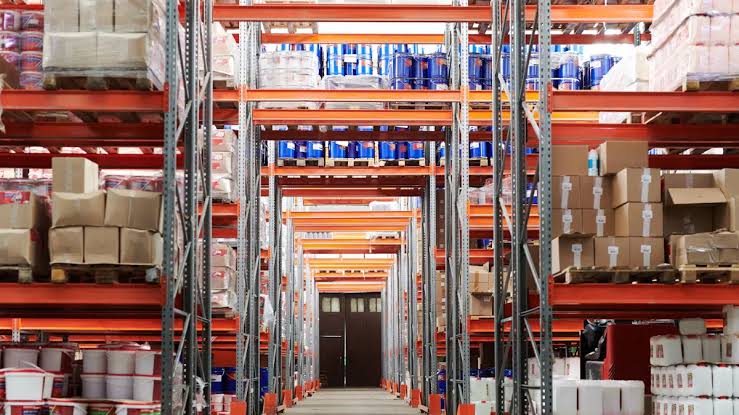

If there is a capital of the American bailee, it is the I-78/I-81 corridor.
The Lehigh Valley and central Pennsylvania hold one of the densest concentrations of public, contract, and third-party warehouses anywhere in the country, and they exist for a reason that has nothing to do with local consumption. It is reach. A truck leaving Carlisle or Bethlehem in the morning can serve New York, Philadelphia, Baltimore, Washington, and much of New England the same day, on land and at rents the coastal markets cannot offer. That single geographic fact pulled in retailer regional distribution centers, e-commerce fulfillment campuses, and contract 3PLs at extraordinary density.
And the defining fact about almost all of those buildings is that the goods on the racks belong to somebody else — a retailer, a manufacturer, an e-commerce brand that never sees the facility. Care, custody, and control over inventory a 3PL did not buy, did not price, and cannot replace out of margin.
Now put the other half of the Pennsylvania story next to it: the Commonwealth does not license any of them.
No warehouseman license anywhere in the Commonwealth
Pennsylvania does not license public warehouses as such. There is no general warehouseman licensing program — not a grain-scoped one with a misleading name, not a household-goods statute that trips people up, not a permit regime for merchandise. Nothing. A contract, public, or fulfillment warehouse holding another company’s goods needs no state warehouse license to do it, and no state agency stands behind the relationship.
Which means the perimeter of your liability is a document you drafted. The bailment, the warehouse receipt, the storage agreement, and the limitation of liability written into it are what a claim over a customer’s damaged inventory will be argued against. A released-value or per-package cap limits what you owe unless the customer declares a higher value and pays for it — and whether your customers accepted that cap, negotiated it away, or never read it changes the exposure your policy is being asked to size. In a state that hands you no statutory standard of care, the contract is the regulation, and that is not a figure of speech.
Warehouse legal liability is the central line, not a footnote
Your general liability policy will not pay when a customer’s freight is damaged in your building. A standard general liability form excludes damage to personal property in your care, custody, or control, and every pallet in a Pennsylvania 3PL is exactly that property. The exclusion removes the one loss the whole business model is exposed to, and it does so by design.
Warehouse legal liability is the line written to answer what that exclusion takes out — and in this state it is not an accessory to the program, it is the program. A fire in a rack aisle at a Hazleton building. A sprinkler discharge over a retailer’s seasonal inventory in Carlisle. A theft from a trailer in a long trailer court at three in the morning. A refrigeration outage in a Philadelphia cold house. Every one of those is a loss of somebody else’s property, argued against your contract, and answered by your bailee limit.
That limit is sized against the stored value of goods that appear nowhere on your balance sheet — which is exactly why it is the number operators most often understate, and why we do not quote it from floor space. That is the model the warehouse insurance program here is built on.
The registrations you acquire by changing what is on the rack
The Commonwealth does not regulate custody. It regulates goods — and a 3PL can walk into a regulatory regime simply by winning an account.
The Department of Agriculture’s Bureau of Food Safety and Laboratory Services registers food establishments, a category that expressly includes facilities that hold and distribute food, and cold-storage warehouses among them. Take on a grocery customer and you have acquired a registration you did not previously need, without changing a thing about your building. Pharmaceutical work sits with the Department of Health rather than a pharmacy board: the Drug, Devices and Cosmetics program licenses wholesale prescription drug distributors, and a warehouse that stores or distributes drugs or devices registers there.
Neither of those is a warehouse license, and neither creates a statutory standard of care over the goods. They attach to what is inside the building, not to the fact that it is not yours.
Bonded storage in the building you would have leased anyway
Pennsylvania is unusually well covered by foreign-trade zones, and they land directly on top of the warehouse corridors. FTZ 24 is centered on Pittston in the northeast, in the middle of the I-81 distribution belt. FTZ 147 reaches across the south-central counties from Berks and Lancaster through Cumberland, Dauphin, and York. FTZ 35 is the Philadelphia zone tied to the port. FTZ 33 covers the Pittsburgh region.
The practical consequence is that duty-deferred and bonded storage is available in the same buildings a distributor would have leased anyway — which is not true in most states, and which makes bonded warehousing an ordinary offering for a Pennsylvania 3PL rather than a specialty. For the bailee it is a second obligation stacked on the first: admit duty-deferred goods and you carry customs-bonded obligations on top of the duty of care you already owe the owner. Two masters, one pallet, and one of them has not been paid.
Cold bailment, and the failure mode that is not fire
Cold storage is a distinct and substantial sub-market here, driven by PhilaPort’s perishable trade — a genuine seaport with a distinctive cold-chain specialization in imported fruit — and by the state’s food processing base.
Cold bailment carries its own failure mode, and it is one owners consistently underinsure: a refrigeration outage can destroy a customer’s entire consignment without a fire ever starting. No flame, no water, no broken steel; a building that passes inspection the next morning and a load that is worthless. It is a total loss of somebody else’s property with almost nothing for an adjuster to photograph, and a property policy is not written to see it.
Very large roofs, and what the weather does to them
Pennsylvania’s warehouses are enormous, and the peril that matters most is the one that hits a very large roof plane. Severe thunderstorm wind and hail across the southeast and the Lehigh Valley. Snow and ice load on wide-span roofs in the north and in the mountains. Each of those is a two-stage loss for a bailee: the roof is your commercial property claim, and the water that follows finds the racking and the cartons underneath, which are not.
Tropical remnants are a real and recurring flood driver in the southeastern counties — the Susquehanna, Schuylkill, and Delaware basins have all put water into commercial buildings — and flood remains its own placement rather than a property-policy add-on. Freeze losses to sprinkler systems in unheated dock and mezzanine areas are a quiet but common claim, and they produce exactly the same split: your pipe, their inventory. Seismic is not a Pennsylvania concern, and we are not going to invent it.
The most concentrated warehouse comp exposure in the country
Pennsylvania runs a private workers compensation market with a competitive state-operated fund available alongside it — you buy the line on the open market. And the warehouse comp exposure here is arguably the most concentrated in the United States, for the simple reason that this is where the buildings and the bodies are.
Powered-industrial-truck traffic in high-throughput fulfillment operations. Order-picker work at rack height. Dock injuries at long trailer courts. Repetitive lifting on pick lines running at peak-season pace. Freezer and cooler work adding cold stress in the food-grade buildings. Pennsylvania’s injury pattern is the warehouse injury pattern with nothing else diluting it — which means an underwriter is reading your operation against a very deep book of comparable ones. That cuts both ways: real loss control shows up clearly here, and so does its absence. The umbrella and the commercial auto layers over the yard, shuttle, and delivery fleet finish the tower.
Major Pennsylvania warehouse markets
Allentown and the Lehigh Valley
Where I-78 crosses the valley and the 3PL density becomes unlike anywhere else in the country. A truck leaving Bethlehem in the morning serves New York, Philadelphia, Baltimore, Washington, and much of New England the same day — which is why retailer regional distribution centers and contract operators stacked in here, and why the stored value of other companies’ goods per square mile is extraordinary.
Bethlehem
The other half of the valley cluster, and a market built on reach rather than on local consumption. Long-dwell contract storage for national accounts means the bailee limit has to be sized to a customer’s inventory at its seasonal peak, not to the operator’s own assets, which are trivial by comparison.
Harrisburg
The pivot of central Pennsylvania, where I-81 meets I-83 dropping toward Baltimore, with intermodal rail on the same corridors. Operators here run high-throughput contract and fulfillment buildings, and severe thunderstorm wind and hail on those very large roof planes is the peril that puts water onto a customer’s cartons.
Carlisle
The archetypal central-Pennsylvania distribution town, and the one that proves the demand thesis: a morning departure reaches most of the eastern seaboard the same day. Custody at that pace means handling frequency, not floor space, is what an underwriter should be pricing.
Hazleton
On the I-81 belt, with FTZ 24 centered on Pittston nearby and duty-deferred storage genuinely available in ordinary buildings. Bonded custody stacks a customs obligation on top of the duty of care already owed to the owner of the goods — two masters over the same pallet.
Wilkes-Barre
The northern end of the corridor, where snow and ice load on wide-span roofs becomes a design question rather than a nuisance. A roof failure over a full rack is a property loss and a bailee loss in the same instant, answered by two different policies.
Philadelphia
PhilaPort is a genuine seaport with a distinctive cold-chain specialization in imported fruit and perishables, and FTZ 35 is tied to it. The cold bailee here holds a consignment whose failure mode is temperature: a refrigeration outage destroys the customer’s fruit outright without a fire ever starting.
Pittsburgh
The Ohio Valley anchor, with FTZ 33 covering the region and the inland river and rail network at the head of the Ohio. Operators here serve a different market on different roads, with heavier industrial and building-products storage and a peril mix that leans toward snow and freeze rather than tropical remnants.
What underwriters price on this corridor
We do not publish figures. What gets asked, in roughly this order:
- The stored value of goods you do not own, at seasonal peak. It is the number that sizes the bailee limit, it is nowhere in your accounts, and it is the one most often understated.
- Your storage contracts — the limitation of liability, and which of your large accounts negotiated it away.
- What you store. Dry retail freight, a registered food and cold-storage operation, and licensed drug and device work are three different standards of care in the same shell.
- The roof, its age and its span, in a state where hail, thunderstorm wind, and snow load all attack a very large plane.
- Zone activity under FTZ 24, 147, 35, or 33, which adds customs obligations to custody.
- The comp file, read against the deepest book of comparable warehouse operations in the country — and the loss runs, which move price further than anything else here.
If the goods are yours, you are on the wrong page
An honest signpost before the questions. Everything above is written for the operator who holds other people’s freight. If your business buys, holds, and resells its own product — a beer distributor or importing-distributor licensed by the Liquor Control Board, which is what a private Pennsylvania beverage distribution business actually is; a food and grocery wholesaler; a pharmaceutical or medical-device distributor licensed through the Department of Health; an industrial or building-products wholesaler; an importer bringing perishables through Philadelphia and owning them from the grower to the retailer — then your inventory is not a bailment at all, and your program leads from stock throughput and products liability rather than from warehouse legal liability. That is a genuinely different risk with a different policy stack, and it has its own page: distributor and wholesaler insurance in Pennsylvania.
A great many Pennsylvania businesses run both models, often in adjoining buildings on the same campus. When yours does, we place the distribution and wholesale sides alongside the bailee side, and the seam between the goods you hold and the goods you own is the first thing we map.
Pennsylvania warehouse insurance FAQs
Does Pennsylvania license a public or contract warehouse?
No — and it is worth being blunt, because the Commonwealth is where this fact matters most. Pennsylvania does not license public warehouses as such. There is no general warehouseman licensing program, and a contract, public, or fulfillment warehouse holding another company’s goods needs no state warehouse license to do it. The obligations run through the bailment relationship and the warehouse receipt. The nearest state touchpoint is the Department of Agriculture’s registration of food warehouses and cold-storage facilities, which is a food-safety instrument and applies only because food is in the building. So in the state with the densest concentration of third-party warehousing in the country, the perimeter of your liability is a document you wrote yourself.
If there is no license, what actually sets my duty of care?
Your storage agreement, your warehouse receipt, and the limitation-of-liability language inside them — and nothing else. That is the whole point, and it is why we read your contracts before we quote your limit. A released-value or per-package cap limits what you owe unless the customer declares a higher value; whether your customers accepted that limit, negotiated it away, or never read it changes the exposure your policy is being asked to size. In a licensed state an operator can at least point to a statutory standard. In Pennsylvania there is no such thing. The contract is the regulation, and warehouse legal liability is what stands behind it.
Why is warehouse legal liability the central line here rather than one line among several?
Because of what is actually in the building. The Lehigh Valley and central Pennsylvania hold one of the densest concentrations of public, contract, and third-party warehouses anywhere in the country, and the defining fact about almost all of them is that the goods on the racks belong to somebody else — a retailer, a manufacturer, an e-commerce brand that never sees the facility. That is care, custody, and control over inventory a 3PL did not buy, did not price, and cannot replace out of margin. And your general liability policy will not answer for it: a standard form excludes damage to personal property in your care, custody, or control, which describes every pallet in the building. Warehouse legal liability is written to answer precisely what that exclusion removes.
I am taking on a grocery account. Does that change my regulatory position?
Yes, and operators are routinely surprised by it. The Department of Agriculture’s Bureau of Food Safety and Laboratory Services registers food establishments — a category that expressly includes facilities that hold and distribute food, and cold-storage warehouses among them. So a Pennsylvania 3PL that takes on a grocery account acquires a registration it did not previously need, simply by changing what is on the rack. Pharmaceutical work sits with the Department of Health rather than a pharmacy board: its Drug, Devices and Cosmetics program licenses wholesale prescription drug distributors, and a warehouse that stores or distributes drugs or devices registers there. Neither is a warehouse license. Both attach to the goods, not to the custody.
How usable are the foreign-trade zones in Pennsylvania?
Unusually usable, and it changes what a 3PL can offer. Pennsylvania is well covered, and the zones land exactly on top of the warehouse corridors: FTZ 24 is centered on Pittston in the northeast, in the middle of the I-81 distribution belt; FTZ 147 reaches across the south-central counties from Berks and Lancaster through Cumberland, Dauphin, and York; FTZ 35 is the Philadelphia zone tied to the port; and FTZ 33 covers the Pittsburgh region. The practical consequence is that duty-deferred and bonded storage is available in the same buildings a distributor would have leased anyway — which is not true in most states. For the bailee it means customs-bonded obligations sitting on top of an ordinary duty of care: you answer to the owner of the goods and to a customs regime that has not been paid.
What does the workers compensation exposure look like in a Pennsylvania warehouse?
Concentrated — arguably the most concentrated warehouse comp exposure in the country, because this is where the buildings and the bodies are. Pennsylvania runs a private workers compensation market with a competitive state-operated fund available alongside it, so you buy the line on the open market. The exposures are the warehouse exposures with nothing else diluting them: powered-industrial-truck traffic in high-throughput fulfillment operations, order-picker work at rack height, dock injuries at long trailer courts, and repetitive lifting on pick lines running at peak-season pace. Freezer and cooler work adds cold stress in the food-grade buildings. An underwriter here is reading your operation against a very deep book of similar operations, which cuts both ways: good loss control shows up clearly, and so does the absence of it.
Get a Pennsylvania warehouse insurance quote
Quotes in 1–2 hours during business hours.