
States we serve · Rhode Island
Distributor and wholesaler business insurance in Rhode Island
For the wholesalers, importers, and seafood and beverage distributors who own what they sell in a state small enough that the whole book usually sits under one roof — and that roof is usually near salt water.
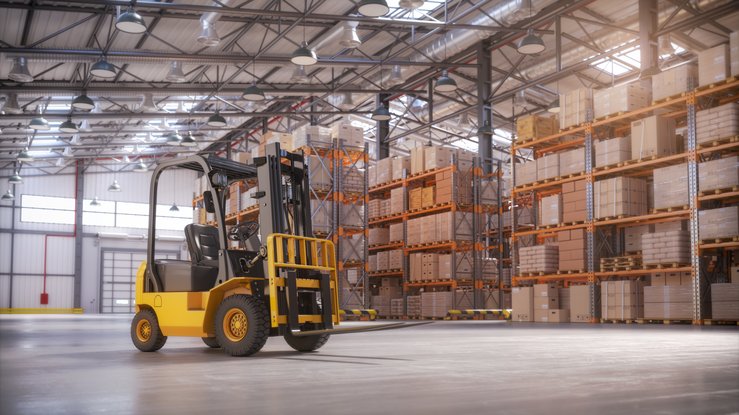

Most Rhode Island wholesalers keep everything they own in one building. Sometimes two. There is no regional network to spread the risk across, no second distribution center a state away to run the book out of while the first one is rebuilt — the whole business is a single roof, usually within sight of salt water, with the entire inventory position stacked underneath it.
That is not a criticism of how the businesses here are built; it is a rational response to a small state sitting inside the Boston–New York consumption belt, where a distributor can serve two enormous markets from Providence and where the land at Quonset is cheaper and easier to build on than anything comparable in eastern Massachusetts. But it does mean that for an owner of inventory, the single most important number in the placement is not the annual volume moved. It is how much of the business is standing in one place when something goes wrong.
One roof, and everything you own under it
Commercial property answers for the building, the racking, and the owned stock inside a scheduled location. For a Rhode Island distributor, the section of that policy that deserves the hardest reading is not the stock limit at all — it is business income. If the roof opens or the building floods, you have not simply lost product. You have lost the only place from which the business operates, in a market where a replacement facility is not sitting empty around the corner, and the customers you serve are being served by somebody else in the meantime.
Concentration also changes how a limit should be set. The value on hand is not level through a year, and the number that has to answer for a loss is the one in force on the worst week, not the average one.
Stock throughput: the goods were yours long before they got here
Stock throughput is one marine-family policy that follows your owned product across the whole span — the foreign supplier, the ocean leg, the port, the drayage, the warehouse, the customer. Property covers the goods at rest inside a scheduled building; cargo coverage responds while they move; and the seam between those two instruments is where losses fall.
For a Rhode Island importer that seam is most of the journey. Goods landing at Davisville or ProvPort, or arriving by air freight through T.F. Green, have been at your risk from the supplier’s dock forward, and the state’s single foreign-trade zone — administered by the Rhode Island Commerce Corporation, with magnet sites at ProvPort, the business park beside T.F. Green, and the Quonset Business Park — adds a duty-deferred layer on top: inventory that is valuable and encumbered at the same time, where a loss carries a customs consequence beyond the value of the stock. The word marine in the coverage name is a historical artifact, but in this state it happens to be literal.
The goods on the yard
The Port of Davisville is one of the busiest automobile import ports on the East Coast, with break-bulk and project-cargo berths alongside — and imported vehicles standing on a processing yard are exactly the kind of goods duty deferral was invented for.
If you are the importer who has taken title, those vehicles are your owned inventory: very high value per unit, sitting outdoors, with nothing between them and a coastal wind. Property insurance is built around a described building and the contents within it. Property in the open is a separate conversation, on separate terms, frequently with a sublimit an owner never noticed until it mattered. If a meaningful share of what you own is standing outside a building, it belongs scheduled on purpose.
Licensed by the state, selling into a tier licensed by the towns
Rhode Island is a license state with a genuinely odd split. Manufacturer and wholesaler licenses are issued by the state, through the Department of Business Regulation’s Division of Commercial Licensing. Retail licenses are issued by the cities and towns. So a Rhode Island wholesaler sells into a retail tier it does not share a regulator with. The state also polices who may hold the middle tier — an out-of-state distiller or winery cannot hold, or hold an interest in, a Rhode Island wholesaler’s license — which keeps that tier genuinely independent of the one above it.
The insurance consequence is the ordinary license-state one, and it is the theme of this page: the inventory is yours outright, so it is a stock-throughput and property exposure rather than a bailment. Food runs a parallel track. The Department of Health licenses food processors, distributors and wholesalers, and draws a working line between a dry warehouse holding packaged shelf-stable goods and one handling exposed or temperature-dependent product, which carries the heavier hazard-analysis and preventive-controls burden. Seafood is the distinctive Rhode Island line — Point Judith and Galilee feeding processors and cold storage around the bay — and there a temperature failure is a total loss on owned stock that was never burned and never crushed. It simply stopped being sellable.
First seller in the chain
A distributor who made nothing can still be sued over what it sold. Products liability follows the chain of distribution to a seller, and a wholesaler who bought a product and resold it is one. The importer sits at the head of it: goods landing at Davisville or ProvPort or arriving through the air lane make a Rhode Island company the first U.S. seller, and when the foreign maker sits beyond the practical reach of a U.S. claim, that company is the party realistically standing there. General liability answers through the products-completed-operations hazard, and the limits belong sized against the products you actually handle.
The bay, the winter, and the people on the dock
Rhode Island’s perils arrive in opposite seasons. Almost everything industrial here is near salt water, which makes coastal wind and surge a first-order concern — Narragansett Bay funnels storm surge inland toward Providence, and the state has a long institutional memory of what a serious coastal storm does to the head of the bay. Flood is its own placement, not a property peril to be assumed. Then winter flips it: snow and ice load on a wide low-slope roof, drift behind parapets, and freeze failures in wet sprinkler systems that ruin stored goods without a fire ever starting.
Workers compensation is a private-market line here, and the claim set is the familiar one — powered-industrial-truck strikes, product coming down out of racking, lifting strain on pick lines, dock and trailer injuries — with the seafood and cold-storage houses around the bay adding wet floors, cold stress, and repetitive processing motion on top. The route fleet is the second and separate exposure, answered by commercial auto; a necessary note on vocabulary is that your insurance carrier writes your policy while a motor carrier or freight carrier hauls goods for hire, and this trade uses both words constantly. Above the primary lines, umbrella liability is usually what a landlord or a large customer requires of a route-based distribution operation.
What drives the pricing conversation here
We do not print premiums, and any site that does is guessing. What actually moves it for a Rhode Island owner of inventory:
- How much of the business stands in one building — and what the business income section does when that building is gone.
- Whether flood has been placed, and where the building sits relative to the bay.
- Property in the open — owned goods on a yard, scheduled rather than assumed.
- Where risk of loss passes on imports, and how much ocean sits between there and Davisville.
- Whether the product is exposed or temperature-dependent, which changes both the license burden and the loss mode.
- Roof condition and snow-load capacity, plus sprinkler freeze protection.
Where Rhode Island distributors and wholesalers concentrate
North Kingstown and the Quonset Business Park
The state’s largest concentration of industrial and distribution land, and its foreign-trade-zone magnet site. An importer holding duty-deferred owned inventory here has goods that are valuable and encumbered at once — a loss carries a customs consequence layered on top of the loss of the stock itself.
The Port of Davisville
One of the busiest automobile import ports on the East Coast, with break-bulk and project-cargo berths alongside. An importer taking title to vehicles is holding owned inventory that sits outdoors on a processing yard — high value per unit, no roof over it, and coastal wind reaching it directly.
Providence and ProvPort
A working deepwater breakbulk and bulk terminal on the Providence River, at the head of a bay that funnels surge inland. Owned stock landed here is exposed at the terminal, on the drayage, and in the building — and the building is on the water side of a state that remembers what a serious coastal storm does.
Warwick and T.F. Green
The air-cargo lane, and the fastest way for high-value owned inventory to reach the state. Airfreighted stock has a short dwell and a steep value, which means the concentration in the building spikes in ways an annual average will never show an underwriter.
Narragansett Bay and the seafood trade
Point Judith and Galilee feed processors and cold storage around the bay. A seafood wholesaler’s owned inventory fails on temperature rather than fire — the product is never burned, it simply stops being sellable, and Rhode Island’s health department draws a heavier line around exposed and temperature-dependent product than around dry shelf-stable goods.
Cranston and Pawtucket
Jewelry and consumer-goods wholesaling with deep local roots, in dense older industrial building stock. Older buildings concentrate value under roofs that were not designed for a modern inventory position, and snow and ice load on a wide low-slope roof is the winter half of a coastal state’s peril story.
Woonsocket and the northern corridor
Inland wholesaling serving the Providence metro and reaching into the Boston–New York belt. Distance from the water changes the surge exposure and nothing else: freeze failure in a wet sprinkler system ruins stored goods without a fire ever starting, and that peril does not care how far inland you are.
If the goods are not yours, you are on the wrong page
An honest signpost. This page is for the business that owns what it stores. If your operation holds other companies’ freight for a fee — a public, contract, third-party, or cold-storage warehouse, or a yard holding imported vehicles for the company that owns them — then the goods in your hands are not owned stock, they are a bailment, and none of the above is your lead exposure. Your program starts at warehouse legal liability, the bailee line for goods in your care, custody, and control, and it turns on your storage contract rather than on your purchase terms. That is a different risk with a different stack, and it has its own page: warehouse insurance in Rhode Island.
In a state this size a good many businesses do both — they sell their own product and store somebody else’s in the same building at Quonset. If that is you, we place both, and we draw the line between them before anything binds.
Rhode Island distributor and wholesaler insurance FAQs
Why is inventory concentration the main conversation for a Rhode Island distributor?
Because of the size of the state and the shape of the businesses in it. A Rhode Island wholesaler is typically holding its owned inventory in one building, or two — not spread across a regional network — which means a single event can reach the entire book at once. That changes what matters in a placement. The value of the stock is only half the question; the other half is business income, because if the building goes down there is rarely a second facility nearby to run the business out of while it is rebuilt. Commercial property answers for the building, the racking, and the owned stock inside it, and the business income section is the part a single-site distributor should read hardest.
What does stock throughput cover that my property policy does not?
The journey. Property insures owned inventory while it sits in a scheduled building and stops at the walls. Stock throughput is one marine-family form that follows the goods instead — from a foreign supplier, across the ocean leg, into Davisville or ProvPort or through the air-cargo lane at T.F. Green, across the drayage, into your warehouse, and out to the customer. For a Rhode Island importer, the goods have been at your risk from the supplier’s dock forward, which is a long way before the four walls the property form was written around. The alternative is a patchwork of property and cargo with a seam between them, and losses have a habit of landing exactly in seams.
My imported goods sit outdoors on a yard. Are they covered?
Not automatically, and at Davisville that is a live question rather than a theoretical one. The port is one of the busiest automobile import operations on the East Coast, and imported vehicles sitting on a processing yard are exactly the kind of goods duty deferral was invented for. If you are the importer who has taken title, that is your owned inventory — high in value per unit, sitting outdoors, with no roof between it and a coastal wind. Property coverage is built around a described building and its contents; property in the open is a separate conversation with its own terms and frequently its own sublimit. If a meaningful part of what you own is standing outside, it needs to be scheduled deliberately rather than assumed into the building limit.
Who licenses a beverage wholesaler in Rhode Island?
The state does — and this is a license state with a split worth understanding. Manufacturer and wholesaler licenses are issued by the state, through the Department of Business Regulation’s Division of Commercial Licensing, while retail licenses are issued by the cities and towns. So a Rhode Island wholesaler sells into a retail tier it does not share a regulator with. State law also polices who may hold the wholesale license: an out-of-state distiller or winery cannot hold, or hold an interest in, a Rhode Island wholesaler’s license, which keeps the middle tier genuinely independent of the first. The practical consequence for the insurance program is the ordinary one for a license state — the inventory is yours outright, so it is a stock-throughput and property exposure rather than a bailment.
Does Rhode Island regulate me differently if I distribute food?
It does, and the line it draws is about the product rather than the building. The Department of Health’s food protection program licenses food processors, distributors and wholesalers, and it draws a working distinction between a dry warehouse holding packaged, shelf-stable goods and a warehouse handling exposed or temperature-dependent product — the latter carries the heavier hazard-analysis and preventive-controls burden. Prescription-drug wholesale distribution is licensed separately through the state’s pharmacy regulation at the same department. Seafood is the distinctive Rhode Island food line, with Point Judith and Galilee feeding processors and cold storage around Narragansett Bay, and a temperature failure there is a total loss on owned stock that never burned.
What is the peril that actually threatens my building here?
Two of them, and they arrive in opposite seasons. Rhode Island is small enough that almost everything industrial is near salt water, which makes coastal wind and surge a first-order concern rather than a footnote — Narragansett Bay funnels storm surge inland toward Providence, and the state has a long institutional memory of what a serious coastal storm does to the head of the bay. Flood is its own placement, separate from the property policy, and that is the single most important thing to know if your goods are stacked on a slab near the water. Then in winter the exposure flips: snow and ice load on a wide, low-slope warehouse roof, drift collecting behind parapets, and freeze failures in wet sprinkler systems that ruin stored goods without a fire ever starting.
Get a Rhode Island distributor insurance quote
Quotes in 1–2 hours during business hours.