
States we serve · Wisconsin
Warehouse business insurance in Wisconsin
For the public refrigerated warehouses, the licensed food and grain keepers, and the Kenosha–Racine operators serving Chicago from Wisconsin ground — where what you are holding for somebody else is usually cold.
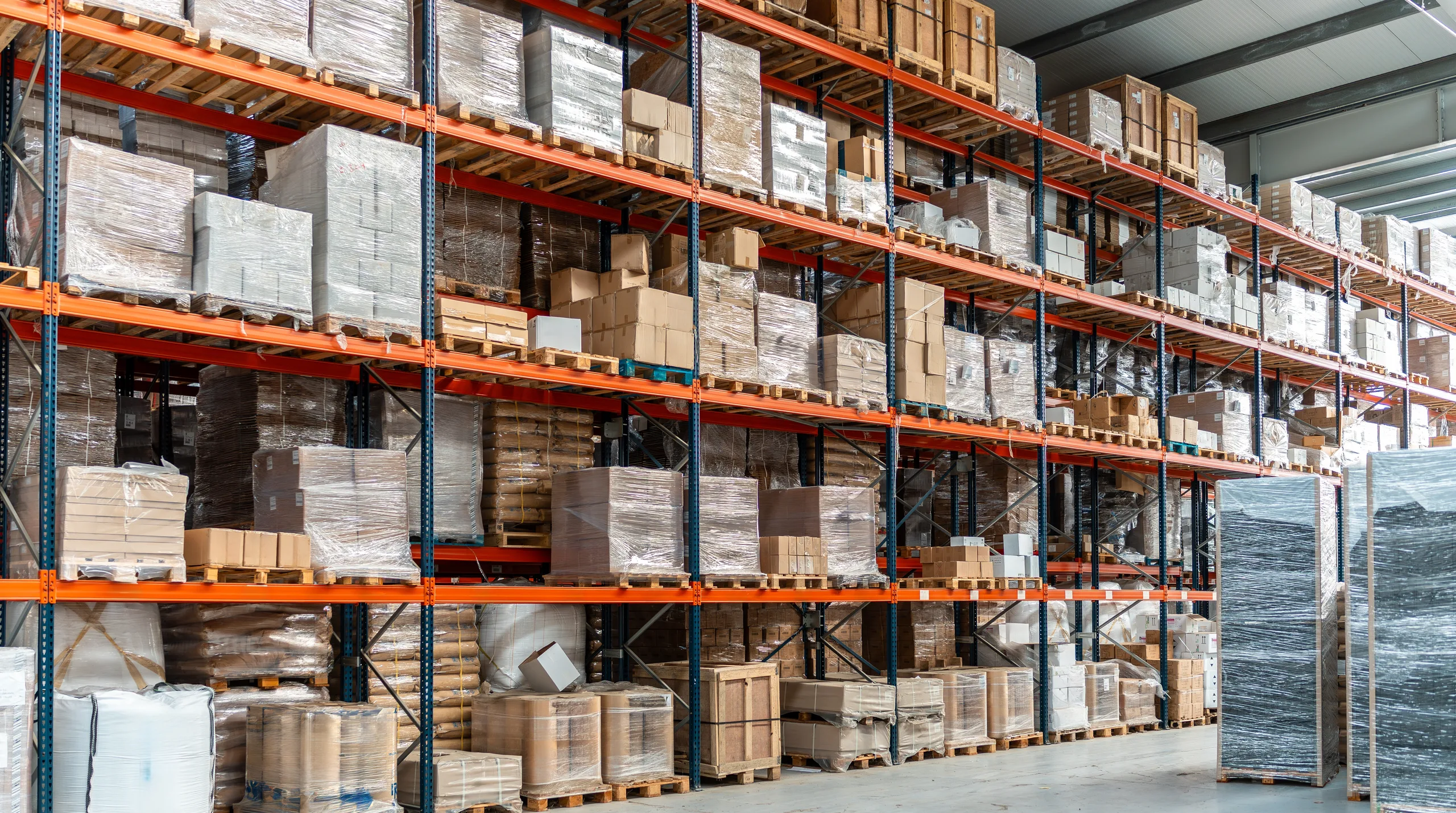

In most states, holding other people’s goods means holding boxes. In Wisconsin, it usually means holding food — and often holding it frozen.
Dairy processing, cheese, meat, and packaged-food production generate an enormous refrigerated and frozen storage requirement here, and the state’s cold-chain capacity exists to serve it. Public refrigerated warehousing is a genuine industry in Wisconsin rather than a niche, and the operator running one of those buildings is squarely a bailee: the pallets in the freezer belong to processors, packers, and food brands, and the operator owns not one of them.
Which reframes the entire risk. A temperature excursion, a refrigeration breakdown, or an ammonia release does not damage the operator’s property. It destroys the customer’s. That is the sentence the whole insurance program in this state has to answer for.
Warehouse legal liability, in a building where the loss leaves no mark
A standard general liability policy excludes damage to personal property in your care, custody, or control — and a customer’s pallets of frozen product are exactly that property. So the loss you are most exposed to is carved out of your foundation policy by its own terms. That is the form working as drafted, not a gap in your placement.
Warehouse legal liability is the line written to answer what that exclusion removes, and it leads a Wisconsin program. What it is being asked to cover here is unusual and worth stating plainly: not a fire, most of the time, but a failure. A compressor that quits over a long weekend. A power interruption in a deep freeze. An ammonia release that contaminates a customer’s food stock outright and leaves the racking, the slab, and the roof entirely serviceable.
Those are total losses of somebody else’s goods with almost nothing for an adjuster to photograph — and they are the claims operators most reliably underinsure, because instinct sizes a limit against perils that visibly damage buildings. The number that matters is the stored value of goods you do not own, and it appears nowhere in your accounts.
Licensed by commodity: grain keepers, food warehouses, milk distributors
Wisconsin has no general public-warehouse licensing statute — and yet it licenses warehouses to an unusual degree, because it licenses them by what is inside.
The Department of Agriculture, Trade and Consumer Protection licenses grain warehouse keepers — operators who store grain for others — and separately licenses food warehouses and milk distributors under its food-warehouse rules. The dairy rules reach the storage and movement of milk and milk products directly, so an operator holding dairy inventory for others is inside a licensing regime rather than outside one. Prescription-drug distribution runs on a different track again: the Pharmacy Examining Board within the Department of Safety and Professional Services licenses each facility that distributes prescription drugs at wholesale.
And the dry general-merchandise warehouse holding non-food goods for hire? It needs no state license at all, and its exposure runs entirely through the storage contract. That is the Wisconsin pattern: the state cares intensely about what you are holding and not at all about the fact that it is not yours. Which means an operator here can be licensed, inspected, and audited on one aisle and completely unregulated on the next — with the same duty of care running through both.
The roof was designed around snow
Snow load is the peril a Wisconsin warehouse building is actually engineered for: long-span, low-slope roofs carrying accumulated snow, with drift against parapets and roof-level equipment as the failure mode, and lake-effect bands adding to it along Lake Michigan.
For a bailee, a roof failure is never one loss. The structure and the business income that stops with it are commercial property — yours. What comes down onto the racks, and the water that follows, is a customer’s inventory — theirs. Two policies, one event, and an operator who has bought a generous property limit while carrying a thin bailee limit has insured the cheaper half of the building. Hail and severe convective wind reach the southern half of the state, tornado exposure is real but lower than in the plains, and river flooding is a separate placement that does not ride the property form.
The freeze that empties a sprinkler line into somebody else’s cartons
Deep and sustained freeze is the second design problem, and it produces two distinct claims. Wet sprinkler systems in unheated bays fail and discharge — a property event that immediately becomes a bailee event when the water reaches a customer’s product. And refrigeration and ammonia systems on cold-storage buildings simply cannot be allowed to fail, because the entire economic value of what is inside them is contingent on their running.
The pattern repeats through everything in this state: the building survives, and the goods do not. That is the operating model we build the warehouse insurance program around here — goods first, structure second.
Kenosha–Racine: serving Chicago from Wisconsin ground
The state’s freight spine is I-94, running from the Illinois line through Kenosha, Racine, and Milwaukee to Madison and on toward the Twin Cities, with I-43, I-41, and I-39 feeding it. The growing e-commerce fulfillment cluster in the Kenosha–Racine corridor is there for an obvious reason: it can serve Chicago from lower-cost Wisconsin land.
Port Milwaukee is the grantee of the state’s foreign-trade zone, whose service area reaches across the southeastern counties from Kenosha and Racine up through Milwaukee, Waukesha, and Ozaukee — the same industrial belt. Zone use here is practical rather than glamorous: kitting, warehousing, and duty deferral for imported components and consumer goods. Elsewhere in the state, foreign-trade zone activity is thin, and we would rather say so than inflate it. Wisconsin is not a container gateway; its logistics identity is manufacturing outbound and food and dairy moving in refrigerated trailers, and the bailee business follows that reality rather than fighting it.
Cold floors, wet floors, and the comp file
Wisconsin runs a private workers compensation market, and the warehouse exposures here skew cold and heavy. Freezer work brings slip-and-fall on iced floors, cold stress, and the awkward handling of frozen product — on top of the ordinary forklift strikes, racking falls, and lifting strain that every distribution building produces. Dairy and food-plant warehouses add wet-floor and sanitation-related injuries a dry-goods operation never sees.
It is a frequency profile more than a severity one, which is good news: it responds to loss control, and an underwriter will want evidence of it before anything else. Over comp we build the umbrella and the commercial auto layers that a refrigerated fleet and yard operation needs.
Major Wisconsin warehouse markets
Milwaukee
Port Milwaukee is the grantee of the state’s foreign-trade zone, and the city anchors the I-94 freight spine. A bailee here can hold duty-deferred goods for an importer — which layers customs-bonded obligations on top of the duty of care already owed to whoever owns the cargo.
Kenosha
The southern end of the zone’s service area and the fastest-growing fulfillment ground in the state, positioned to serve Chicago from lower-cost Wisconsin land. Zone use here is practical rather than glamorous — kitting, warehousing, and duty deferral for imported components and consumer goods that belong to somebody else.
Racine
The other half of the corridor, with industrial and third-party space serving both the Milwaukee and Chicago markets. Multi-tenant buildings holding several customers’ inventory at once carry an aggregation exposure: modest values apiece, many accounts, one roof, one fire.
Madison
The western end of the I-94 spine, with regional distribution and a food and packaged-goods base behind it. Long-dwell contract storage for food owners means the bailee limit is being asked to answer for a customer’s product whose value is entirely contingent on temperature.
Green Bay
Great Lakes and Seaway cargo, with paper, packaging, and food processing behind the port. Break-bulk and project custody means individually valuable pieces rather than uniform pallets, and a limit built on pallet arithmetic will not survive contact with one of them.
Appleton
The Fox Valley industrial and paper economy, where parts and packaging storage for others runs long and heavy. Snow and drift load on a wide, low-slope roof is a design question here, and a roof failure over a full rack is a property loss and a bailee loss in the same instant.
Superior
The Wisconsin half of the Twin Ports on Lake Superior, inside the leading bulk port complex on the Great Lakes. Bulk custody is its own discipline — the goods are commingled, the measurement is the claim, and a shortage argument turns on records rather than on photographs.
What underwriters ask a Wisconsin bailee
No figures on a web page — a published number is a guess with a haircut. What is actually asked:
- The stored value of goods you do not own, which sizes the bailee limit and is nowhere in your accounts.
- The refrigeration. The systems, the alarms, the backup power, and how long a customer’s consignment survives when it stops.
- Ammonia — containment, detection, response, and what a release would do to the food stock currently in the building.
- The roof, its span and its drift geometry, in a state where snow load is a structural design problem rather than a seasonal nuisance.
- Which licenses you hold — grain keeper, food warehouse, milk distributor, wholesale drug facility — and which aisles are covered by none of them.
- The comp loss run, on cold and wet floors, where frequency rather than severity is the story.
If the goods are yours, you are on the wrong page
One honest signpost. This page is written for the operator holding other people’s goods. If your business buys, holds, and resells its own inventory — a food or dairy distributor moving perishable product it bought and must sell before it turns, a beverage wholesaler licensed by the Department of Revenue and required to unload liquor at its own permitted warehouse premises, an industrial or machinery parts distributor, a paper and packaging wholesaler, or a consumer-goods importer in the Kenosha–Racine corridor — then spoilage and refrigeration breakdown are balance-sheet events rather than third-party claims, your inventory is not a bailment, and your program leads from stock throughput and products liability. That has its own page: distributor and wholesaler insurance in Wisconsin.
A good number of Wisconsin businesses run both models, sometimes in adjoining rooms of the same cold building. When yours does, we place the distribution and wholesale sides alongside the bailee side, and the seam between the goods you hold and the goods you own is the first thing we map.
Wisconsin warehouse insurance FAQs
Does Wisconsin license a warehouse that stores goods for other companies?
It depends on the commodity, and Wisconsin licenses by commodity to an unusual degree. There is no general public-warehouse licensing statute. But the Department of Agriculture, Trade and Consumer Protection licenses grain warehouse keepers — operators who store grain for others — and separately licenses food warehouses and milk distributors under its food-warehouse rules. A general merchandise warehouse holding non-food goods for hire needs no state license at all, and its duties to those goods come from the bailment and the storage agreement. So the same building, doing the same job, can be inside a licensing regime or entirely outside one depending on what came in on the trailer.
What actually covers a customer’s frozen product when my refrigeration fails?
Warehouse legal liability — the bailee line, and in this state it is the coverage the whole program turns on. Public refrigerated warehousing is a genuine industry in Wisconsin, and the operator is squarely a bailee: a temperature excursion, a refrigeration breakdown, or an ammonia release does not damage the operator’s property, it destroys the customer’s. Your general liability policy will not answer for that, because a standard form excludes damage to personal property in your care, custody, or control — which is exactly what a customer’s pallets of frozen product are. The exclusion removes the precise loss the business is exposed to, and warehouse legal liability is written to answer what it removes.
Why is an ammonia release different from an ordinary property loss?
Because it destroys somebody else’s goods without necessarily damaging yours. A release in a cold-storage building is simultaneously a life-safety event, a property event, and an environmental one — and, for a bailee, a contamination event: a customer’s food product is rendered unsaleable outright. The building may be entirely serviceable afterward. The consignment inside it is not. That is a care, custody, and control loss with very little for an adjuster to photograph, and it is the claim shape a warehouse operator is least prepared for and most likely to underinsure.
What is the peril a Wisconsin warehouse is actually designed around?
Snow load. A long-span, low-slope warehouse roof carrying accumulated snow is the structural problem the building was engineered to solve, with drift against parapets and roof-level equipment as the failure mode, and lake-effect bands adding to it along Lake Michigan. Deep and sustained freeze is the second: wet sprinkler systems in unheated bays, and refrigeration and ammonia systems on cold-storage buildings that cannot be allowed to fail. Hail and severe convective wind reach the southern half of the state, tornado exposure is real but lower than in the plains, and river flooding is a separate placement. For a bailee, all of these end the same way — with water, or warmth, reaching a customer’s goods.
How usable is the foreign-trade zone in Wisconsin?
Usable where the industry is, and honestly thin elsewhere. Port Milwaukee is the grantee of the Milwaukee zone, whose service area reaches across the southeastern counties from Kenosha and Racine up through Milwaukee, Waukesha, and Ozaukee — the industrial and distribution belt along I-94. Zone use here is practical rather than glamorous: kitting, warehousing, and duty deferral for imported components and consumer goods in the Kenosha–Racine corridor. Elsewhere in the state, foreign-trade zone activity is thin, and we will say that rather than dress it up. For the operator that does offer bonded storage, the consequence is the usual one: you answer to the owner of the goods and to a customs regime that has not been paid.
What does the workers compensation file look like in a Wisconsin warehouse?
Cold and heavy. Wisconsin runs a private workers compensation market, and the exposures here skew differently than in a dry-goods state: refrigerated and freezer storage is a much larger share of the building stock, and freezer work brings slip-and-fall on iced floors, cold stress, and the awkward handling of frozen product on top of the ordinary forklift strikes, racking falls, and lifting strain. Dairy and food-plant warehouses add wet-floor and sanitation-related injuries that a dry distribution center never sees. It is a frequency profile more than a severity one, and it responds well to loss control — which an underwriter will want to see evidence of before anything else.
Get a Wisconsin warehouse insurance quote
Quotes in 1–2 hours during business hours.