

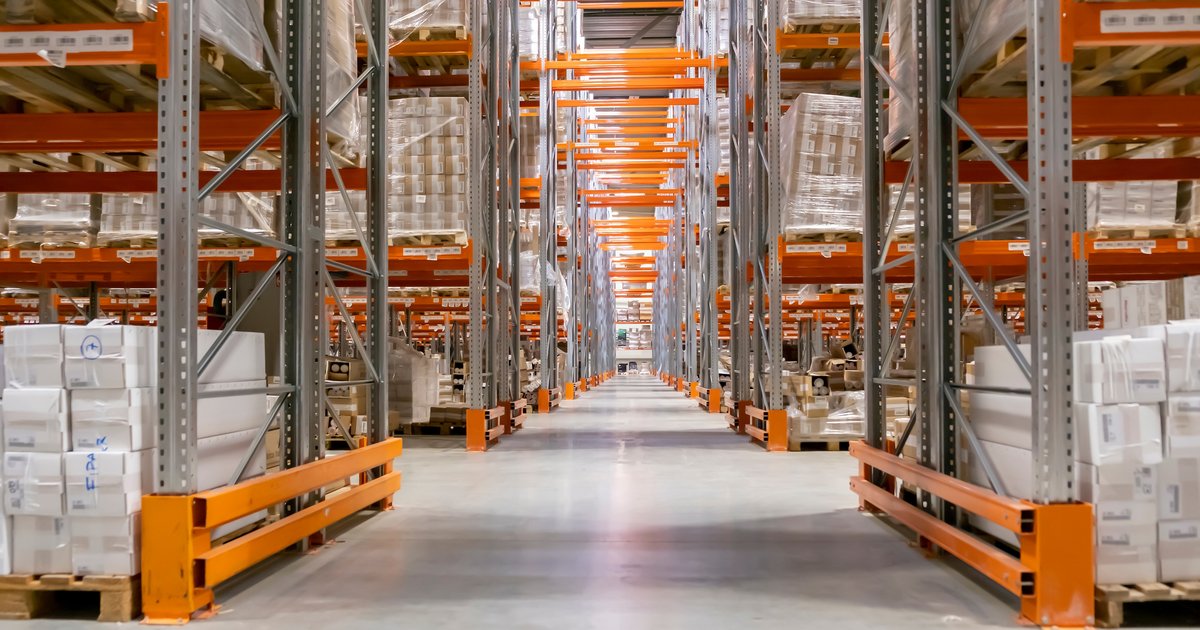
There is no published price for distributor or wholesaler insurance in Alabama, and any number offered before an underwriter has looked at your book is a guess. What an insurance carrier does instead is build the cost from your operation — and in Alabama the build almost always starts somewhere owners do not expect. Not with the building. Not with the trucks. With the goods themselves, and with a question the owner has usually never been asked: what happens when the part you sold fails inside a machine you did not build?
You did not make it. You are still in the chain.
Alabama’s owned-inventory economy is unusually industrial. The stock a wholesaler here holds is disproportionately components, steel, chemicals, and forest products — goods whose destiny is to be consumed by somebody else’s production, not carried out of a store in a bag. Automotive and aerospace parts staged for the assembly lines the state spent decades building. Material inputs, not finished consumer product.
That fact puts an Alabama distributor squarely and unavoidably in the chain of distribution, and a products-liability claim over something that injures a person or damages property can follow that chain to a seller — not only to the manufacturer who made it. You did not design it. You did not assemble it. You bought it and you sold it, and that is enough to be named. When the item in question is a component that ended up inside a finished machine, the claim arrives with a downstream failure attached to it, and the fact that you were a link rather than the source does not get you out of the caption.
General liability answers this through what the standard form calls the products-completed-operations hazard, and sizing those limits against what you actually move — rather than against a generic revenue band — is most of the real work on an Alabama distributor’s submission. It is the driver owners here underestimate most, and it is priced whether they think about it or not.
<text x="350" y="32" text-anchor="middle" font-family="Inter, sans-serif" font-size="15" font-weight="600" fill="#0F4C5C">A claim does not stop at the maker</text>

<rect x="24" y="58" width="118" height="62" rx="7" fill="#ffffff" stroke="#C3DEDE"/>
<text x="83" y="86" text-anchor="middle" font-family="Inter, sans-serif" font-size="12" font-weight="600" fill="#0F4C5C">the maker</text>
<text x="83" y="106" text-anchor="middle" font-family="Inter, sans-serif" font-size="11" fill="#3F5B64">often overseas</text>

<rect x="158" y="58" width="118" height="62" rx="7" fill="#E2F4F3" stroke="#C3DEDE"/>
<text x="217" y="86" text-anchor="middle" font-family="Inter, sans-serif" font-size="12" font-weight="600" fill="#0F4C5C">first U.S. seller</text>
<text x="217" y="106" text-anchor="middle" font-family="Inter, sans-serif" font-size="11" fill="#3F5B64">the importer</text>

<rect x="292" y="58" width="118" height="62" rx="7" fill="#E2F4F3" stroke="#C3DEDE"/>
<text x="351" y="86" text-anchor="middle" font-family="Inter, sans-serif" font-size="12" font-weight="600" fill="#0F4C5C">the distributor</text>
<text x="351" y="106" text-anchor="middle" font-family="Inter, sans-serif" font-size="11" fill="#3F5B64">you</text>

<rect x="426" y="58" width="118" height="62" rx="7" fill="#ffffff" stroke="#C3DEDE"/>
<text x="485" y="86" text-anchor="middle" font-family="Inter, sans-serif" font-size="12" font-weight="600" fill="#0F4C5C">the plant</text>
<text x="485" y="106" text-anchor="middle" font-family="Inter, sans-serif" font-size="11" fill="#3F5B64">it goes inside</text>

<rect x="560" y="58" width="118" height="62" rx="7" fill="#ffffff" stroke="#C3DEDE"/>
<text x="619" y="86" text-anchor="middle" font-family="Inter, sans-serif" font-size="12" font-weight="600" fill="#0F4C5C">the end user</text>
<text x="619" y="106" text-anchor="middle" font-family="Inter, sans-serif" font-size="11" fill="#3F5B64">where it fails</text>

<path d="M619 132 L619 168 L217 168 L217 132" stroke="#0F4C5C" stroke-width="2" fill="none"/>
<path d="M217 132 l-6 12 l12 0 z" fill="#0F4C5C"/>
<path d="M351 168 L351 132" stroke="#0F4C5C" stroke-width="2" fill="none"/>
<path d="M351 132 l-6 12 l12 0 z" fill="#0F4C5C"/>
<text x="418" y="192" text-anchor="middle" font-family="Inter, sans-serif" font-size="12" font-weight="600" fill="#0F4C5C">the claim travels back along the chain</text>

<rect x="40" y="222" width="620" height="56" rx="9" fill="#C8935A" stroke="#0F4C5C"/>
<text x="350" y="248" text-anchor="middle" font-family="Inter, sans-serif" font-size="14" font-weight="600" fill="#1A1A1A">You bought it and you sold it. That is enough to be named.</text>
<text x="350" y="268" text-anchor="middle" font-family="Inter, sans-serif" font-size="12" font-weight="600" fill="#1A1A1A">A seller does not have to build a part to answer for it.</text>
<text x="350" y="300" text-anchor="middle" font-family="Inter, sans-serif" font-size="11" fill="#3F5B64">Alabama’s owned stock is mostly inputs, which is why this driver leads here.</text>Peak owned stock, and the clock it runs to
The second driver is the one that sizes a stock throughput limit, and owners get it wrong routinely.
Underwriters are not asking what you typically hold. They are asking for the maximum value of owned product concentrated in one place on one day, because a loss does not wait for a convenient month — it arrives when the building is fullest. Alabama adds a wrinkle to that question. A supplier warehouse feeding an assembly plant does not run to a retail calendar; it runs to the plant’s clock. When the line is calling, the building fills, and the value on the floor is at its high-water mark exactly when a shortfall would be most catastrophic to the customer relationship as well as to your balance sheet.
Quote the peak. A limit set to a slow month is a limit that fails you in a busy one.
Mobile, and the long road inland
Mobile is the state’s deep-water gate and the fastest-growing container terminal on the Gulf, with an intermodal transfer facility that puts boxes on Class I rail for Memphis, Chicago, and the upper Midwest — which is exactly why a container landed here competes with one landed at a far larger port. Huntsville adds air cargo. The inland foreign-trade zones at Birmingham, Montgomery, and Dothan exist because Alabama manufactures: duty-deferred parts and components feed plants a long way from the water.
For an owner of inventory, that geography has a direct consequence. Goods landed at Mobile travel a long inland journey before they reach a customer, and your owned-product exposure runs across all of it — from the supplier’s plant, through the ocean leg, through the terminal, onto the rail or the truck, into your warehouse, and out to the plant that will consume it.
Which raises the question importers most often answer by accident:
When does the risk of loss actually pass to you?
Your purchase terms may hand you ownership at the foreign supplier’s dock, at the port of loading, or on arrival. Whichever it is, that is when your exposure begins — not when the pallet reaches your rack. If risk passes early and coverage starts late, there is a stretch of ocean and highway where your own inventory is traveling uninsured by you. This is precisely the span a marine-family stock throughput form is written to close: one policy following the goods from the supplier through ocean cargo and inland transit into the building and out to the customer, instead of a property-plus-cargo patchwork with seams in it.
The beverage tier the state left in private hands
If beverages are your book, Alabama is one of the strictest regimes in the country and you should know exactly where you stand in it. This is a control state at both tiers, not one. The Alabama Alcoholic Beverage Control Board is the state’s wholesaler for spirits, and it operates a chain of state retail package stores — and a private retailer licensed to sell spirits must buy from the state’s wholesale operation rather than from a private distributor.
Wine and beer are the carve-out. Independent licensed wholesalers handle those and deliver directly to the licensee. So the beverage-distribution business that actually exists in Alabama is a beer-and-wine business: the spirits middle tier belongs to the state, and so does a large share of the counter it is sold across.
The insurance consequence is clean. In the tier you can occupy, the inventory in your warehouse is genuinely yours at every step — which is exactly why it is a stock-throughput exposure and not goods held for somebody else. Food and drug wholesalers face the same logic through different agencies: Public Health and the Department of Agriculture and Industries permit food operations that hold food for wholesale distribution, and the State Board of Pharmacy permits wholesale drug distributors as their own license class. In every case the state is regulating you on the goods you own.
A very large roof, in a state that gets hit at night
Commercial property does a bounded job for a distributor: the building, the racking, and the owned inventory while it sits in a scheduled location, plus the income lost when the location goes down. It stops at the walls. What an underwriter weighs on that line is the accumulation problem seen through Alabama’s perils.
Tornadoes here are stronger and less seasonal than almost anywhere — they come in November and December as readily as April, and they come at night, which is the detail that makes a night-shift building a real question rather than an academic one. A distribution center is a very large, very low-profile target and cannot be engineered out of a path. On the coast, Mobile and Baldwin County carry named-storm wind and surge, and the port warehouses are the exposed edge. Hail bruises the big inland roof planes — and hail does not level a building, it opens a membrane and lets water down onto the racking with your entire owned season underneath it. Flood belongs in its own placement, and along the coast and the river bottoms it is the placement that matters.
Trucks, crews, claims, and the limits you choose
A distribution business moves its own product, which puts trucks on the road. Commercial auto prices unit count, radius, what is hauled, and above all who drives. One note on language this trade cannot avoid: your insurance carrier is the company that writes your policy — an entirely different thing from a motor carrier or freight carrier that hauls goods for hire.
On workers compensation, Alabama is a private-market state with no fund and no opt-out, and a distributor carries two injury exposures rather than one: the warehouse crew putting away heavy, dense, awkward freight, and the route drivers loading and unloading it. The just-in-time tempo that supplier warehouses run to is itself a hazard — schedule pressure and forklift traffic mix badly.
Claims history is read for shape. Cargo in transit, shrinkage in the building, and at-fault fleet losses are three different stories about three different parts of the operation. Limits and retention are the decision that is genuinely yours: absorb the ordinary handling damage, and spend the money on a stock throughput limit sized to the peak and a products limit sized to what you actually sell. Doing the reverse buys convenience and calls it protection — umbrella exists for the tail, not for the routine.
The honest summary
An Alabama distributor is priced on what it owns, what that stuff becomes once it leaves, how far it traveled to get here, and what is over the top of it. The products chain leads. The peak comes next. The import leg and the fleet fill in the rest.
If you want the coverage mechanics rather than the cost drivers, stock throughput is the line this guide orbits, the wholesaling businesses pillar covers how these programs get assembled, and the Alabama distributor and wholesaler insurance page goes deeper on the exposures. If the goods under your roof belong to your customers rather than to you, this is not your program — read the warehouse cost guide instead, or ask us for a quote and we will rate the operation you actually run.