
States we serve · Alabama
Distributor and wholesaler business insurance in Alabama
For the wholesalers, importers, and parts distributors who own what they sell in a state that builds things — where a pallet of components is on your balance sheet from a foreign supplier’s dock all the way to an assembly line that is waiting for it.
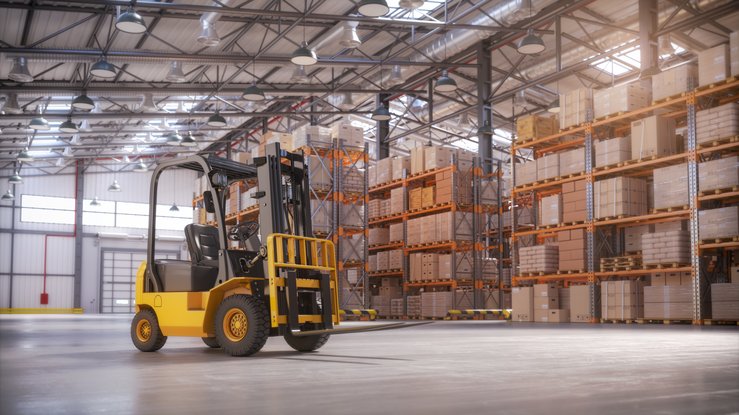

Ask an Alabama beverage distributor what it sells and you get an answer that would be strange almost anywhere else: beer and wine, and only beer and wine. That is not a business choice. Alabama is a control state, and unlike most of them it controls at both tiers rather than one. The Alabama Alcoholic Beverage Control Board is the state’s wholesaler for spirits, and it also runs a chain of state retail package stores — and a private retailer licensed to sell spirits has to buy from the state’s wholesale operation, not from a private distributor. The middle tier for liquor is the government. What is left in private hands is the beer and wine carve-out, where independent licensed wholesalers own the product and deliver it directly to the licensee.
That one fact tells you most of what you need to know about what it means to own inventory in this state: the thing that decides your exposure is not the building you keep the goods in, it is what the goods are and whose they are. And in Alabama, more often than not, they are industrial. Automotive and aerospace components. Steel. Chemicals. Forest products. Parts that end up inside somebody else’s finished machine.
You did not build it, and you can still be sued over it
Products liability follows the chain of distribution. A claim over a product that injures somebody or damages property can reach a seller in that chain, not just the manufacturer who made it — and a distributor who bought a product and resold it is a seller, whatever it did or did not do to the goods.
In an industrial state this is not a footnote. When your owned stock is components rather than consumer goods, the value of what you sold has almost nothing to do with the size of the claim. The fastener, the casting, the circuit board, the length of steel — the part is small, and the machine it fails inside of is not. And the importer stands at the head of the chain: a wholesaler bringing goods in through Mobile is very often the first U.S. seller of something made abroad, which means that when the actual manufacturer sits beyond the practical reach of a U.S. claim, the importer is the party who is actually there to be sued. General liability answers this through the products-completed-operations hazard, and sizing those limits against what your component genuinely goes into — rather than against a revenue band — is most of the honest work.
This is also the cleanest line between the two halves of this trade. A warehouse operator merely storing a defective part for its owner is largely outside the chain; the goods were never theirs to sell. A wholesaler who bought that same part and resold it is squarely inside it. Same pallet, same rack, entirely different liability.
From a foreign dock to an inland plant, on one form
Mobile is Alabama’s gateway — a deep-water port run by the Alabama Port Authority, the fastest-growing container gate on the Gulf, with an intermodal container transfer facility that puts boxes straight onto Class I rail bound for Memphis, Chicago, and the upper Midwest. What that means for an owner of inventory is a very long ownership span. Your goods were yours at the supplier. Yours on the ocean. Yours at the terminal, on the transload, up I-65, and in the building at the far end of it.
Stock throughput is the single form built for that span. It is a marine-family policy — the name is a historical artifact of where the coverage came from, and it applies just as well to a trailer on I-65 as to a hull on the water — and it follows the owned product from the supplier all the way through to the customer. The alternative is the patchwork: a commercial property policy that covers inventory while it sits in a scheduled building and stops at the walls, plus cargo coverage that only responds while things are moving, and a seam between the two where a loss can quietly fall.
The question it forces is the one importers most often answer by accident: when does risk of loss actually pass to you? Your purchase terms may hand you ownership at the foreign supplier’s dock, at the port of loading, or on arrival — and whichever it is, that is where your exposure begins. If your coverage begins later, there is a stretch of ocean and highway on which your own goods are traveling uninsured by you. We read the purchase terms next to the policy, because that seam is invisible until it is a claim.
Inventory that owes somebody a delivery date
Alabama warehouses what Alabama builds. The automotive cluster at Vance, Montgomery, and Huntsville pulls an entire tier of supplier and just-in-time parts distribution into the state, and that inventory runs to an assembly plant’s clock rather than to a retail calendar. Aerospace and defense in Huntsville does the same for high-value components.
Which adds a dimension most distributors underinsure. When a fire, a storm, or a roof failure takes your stock, it does not only destroy goods you paid for — it destroys a delivery you promised, on a schedule someone else is running a plant against. Property coverage answers for the building, the racking, and the owned stock inside it, and the business income you lose while the site is down; the contract you signed with the plant is where the rest of the consequence lives, and that document deserves to be read before anything binds rather than after the water dries.
A tornado in December, at night
Concentration is a catastrophe question, and Alabama’s catastrophe is not a coastal cliché. This is the part of the South where tornadoes are strongest and least seasonal — they come in November and December as readily as in April, and they come at night. That last detail is what turns an academic exposure into a real one for a business running a night shift, and a distribution building is a very large, very low-profile target that cannot be engineered out of the path.
Around Mobile and Baldwin County, named-storm wind and surge take over, and the port and the warehouses behind it are the exposed edge. Inland, hail bruises the wide roof planes, and the water that follows finds the racking and everything under it. And flood is its own placement — never a property-form assumption — which matters enormously when the goods on the floor are on your balance sheet rather than someone else’s.
The crew, the route, and the comp line
Alabama is a private-market workers compensation state, administered through the workers’ compensation division of the state labor department: no state fund, no opt-out, and coverage bought from an insurer. The exposure is shaped by what is actually on the rack — heavy, dense, awkward industrial freight rather than light cartons. Powered-industrial-truck incidents, falls from racking and mezzanines, struck-by injuries during putaway, dock and trailer movement, and lifting strain make up the claim set, and the just-in-time tempo is itself a hazard, because schedule pressure and forklift traffic do not mix well.
A distribution business carries two separate injury exposures, not one, and the second is on the road. Commercial auto answers the route and final-mile fleet — and a word on the vocabulary this trade cannot escape: your insurance carrier is the company that writes your policy; a motor carrier or freight carrier is a company hauling goods for hire. Both meanings live in the same sentence here constantly, and confusing them in a contract discussion is expensive. Above the primary lines, umbrella liability is usually what an assembly-plant customer or a landlord demands once the contract limits climb, and a route-based distribution operation is where that severity tends to show up first.
What underwriters actually look at for an Alabama distributor
We do not print premiums, and any site that does is guessing. What genuinely drives the conversation for an owner of inventory here:
- What the product is — a component that goes inside a machine, a chemical, and a case of beer are three different products-liability appetites.
- Whether you import, and where risk of loss passes — the first-U.S.-seller posture sets both the products exposure and the length of the throughput span.
- The concentration of owned inventory — how much of it is under one roof on the worst possible night.
- Roof, wind, and siting — tornado inland, named storm and surge on the coast, and whether flood has been placed at all.
- Contract terms with plant customers, and what a missed delivery after a loss actually costs you.
- Fleet size and route profile, and the split between warehouse and driver payroll.
Where Alabama distributors and wholesalers concentrate
Mobile and the port
The state’s deep-water anchor and the fastest-growing container gate on the Gulf, run by the Alabama Port Authority. An importing wholesaler taking title here is the first U.S. seller of what comes off the vessel — and its ownership of the goods began weeks earlier at a foreign supplier’s dock, which is a span no commercial property policy was ever written to follow.
Birmingham
Where I-20 and I-59 cross and the Class I railroads converge — the natural consolidation point for owned stock moving inland from the coast. Steel, industrial supply, and building-products wholesalers hold deep inventory here, and deep inventory in one building is a catastrophe-accumulation question long before it is a logistics one.
Huntsville
Aerospace and defense, with air cargo attached and a duty-deferred zone alongside it. The distributor here owns high-value components with a documentation trail as valuable as the parts, and a products exposure that is disproportionate to the size of the box: the item is small, and the machine it goes into is not.
Montgomery
Automotive supply on the I-65 spine, running to an assembly plant’s clock rather than to a retail calendar. A parts distributor here is not simply holding inventory — it is holding a promise to deliver on schedule, and a fire or a storm that takes the stock also takes the delivery, which is a contract problem sitting on top of a property problem.
The I-65 corridor
The state’s spine, carrying containerized import stock north from Mobile toward Nashville and pulling distribution space toward the coast behind it. Goods on this corridor are owned, moving, and outside a building for a long stretch of their life — the exact stretch that stock throughput exists to insure and a property form does not touch.
Decatur and the Tennessee Valley
Chemicals, forest products, and industrial supply along the river. Hazard-classed and bulk inventory changes both the appetite conversation and the storage conversation, and a wholesaler of it needs an underwriter who has read what is actually in the drums rather than a revenue band.
Tuscaloosa
Just-in-time automotive parts staging for the assembly cluster. Inventory turns fast, which flatters the balance sheet and misleads the insurance conversation: high turnover means the value on hand at any moment badly understates the annual product volume passing through the chain of distribution behind it.
Dothan and the Wiregrass
Agricultural and industrial wholesaling in the southeast corner, with its own duty-deferred zone. Owned stock this far from the port has already ridden a long inland leg by truck, and each transfer between a terminal, a transload, and a rack is a handoff where responsibility for the goods can be argued about after the fact.
If the goods are not yours, you are on the wrong page
An honest signpost. This page is for the business that owns what it stores. If your operation holds other companies’ freight for a fee — a public, contract, third-party, bonded, or cold-storage warehouse — then the goods on your floor are not owned stock at all, they are a bailment, and none of this is your lead exposure. Your program starts at warehouse legal liability, the bailee line for goods in your care, custody, and control, and it turns on the storage contract rather than on your purchase terms. Alabama also happens to be one of the very few states with a public-warehouse permit on the books, which makes that page a genuinely different read from this one: warehouse insurance in Alabama.
Many Alabama businesses do both — they sell their own product and store a manufacturer’s alongside it. If that is you, we place both, and we draw the line between them before anything binds.
Alabama distributor and wholesaler insurance FAQs
Can I run a spirits wholesaling business in Alabama?
No — and this is the fact that shapes the whole beverage picture here. Alabama is a control state, and unusually it controls at both tiers rather than one. The Alabama Alcoholic Beverage Control Board is the state’s wholesaler for spirits, and it also operates a chain of state retail package stores; a private retailer licensed to sell spirits must buy from the state’s wholesale operation rather than from a private distributor. What is left for a private owner of beverage inventory is the beer and wine carve-out, where independent licensed wholesalers hold the product and deliver directly to the licensee. So an Alabama beverage distribution business is a beer-and-wine business. The spirits middle tier belongs to the state, and so does a large share of the counter it is sold across.
Why does stock throughput matter more than usual for an Alabama importer?
Because of the distance between where the goods become yours and where they finally stop moving. Product landed at the Port of Mobile travels a long inland journey — up I-65, through Birmingham, on to a plant or a customer well away from the water — and it was already at your risk long before it reached the dock, from the foreign supplier onward. Stock throughput is one marine-family form that follows the owned product across that entire span: supplier, ocean transit, the terminal, the transload, the warehouse, the customer. The alternative is a patchwork of a property policy that only wakes up inside a scheduled building and a cargo policy that only wakes up when the goods move, with seams between them. In Alabama, the seams are most of the trip.
My product is a component, not a finished good. Am I still exposed to products liability?
Yes, and arguably more sharply. Products liability follows the chain of distribution to a seller, not only to the manufacturer, and an Alabama distributor’s owned stock is disproportionately industrial — automotive and aerospace components, steel, chemicals, forest products — which means the thing you sold ends up inside somebody else’s finished machine. The value of the part has very little to do with the size of the claim; the machine it failed inside of does. And an importer is at the head of that chain: as the first U.S. seller of goods made abroad, you become the realistic target when the actual maker sits beyond the practical reach of a U.S. claim. Standard general liability answers this through the products-completed-operations hazard, and the limits have to be sized against what the component actually goes into.
What is the real catastrophe exposure for an Alabama building full of my own inventory?
Tornado, and it does not behave the way people expect. Alabama sits in the part of the South where tornadoes are strongest and least seasonal — they come in November and December as readily as in April, and they come at night. A distribution building is a very large, very low-profile target and cannot be engineered out of the path. On the Gulf coast, Mobile and Baldwin County carry named-storm wind and surge, and the port and the warehouses behind it are the exposed edge. Inland, hail bruises the wide roof planes. Flood belongs in its own placement rather than the property policy, and along the coast and the river bottoms it is the placement that decides whether your owned stock was actually covered.
Do I need a license to distribute food or drugs in Alabama?
You may well need one, and it attaches to the goods rather than the building. Alabama splits food between two agencies: the Department of Public Health permits food processing establishments that manufacture, pack, or hold food for wholesale or interstate distribution, while the Department of Agriculture and Industries runs its own food safety permitting. The sharper requirement is on the drug side. The Alabama State Board of Pharmacy permits wholesale drug distributors, third-party logistics providers, and repackagers as their own separate license categories — so what you are permitted as depends on whether you take ownership of the product or merely handle it for someone who does. If you buy and resell drugs, you are the wholesale distributor, and you hold that permit in your own name.
Is workers compensation required for an Alabama distribution business?
Yes. Alabama is a private-market workers’ compensation state, administered through the workers’ compensation division of the state labor department — there is no state fund and no opt-out, so an Alabama employer buys the statutory line from an insurer. The exposure is shaped by what Alabama distributors actually hold: automotive and aerospace components staged for assembly, which is heavy, awkward, densely packed freight rather than light cartons. Powered-industrial-truck incidents, falls from racking and mezzanines, struck-by injuries during putaway, dock and trailer movement, and lifting strain make up the claim set — and the just-in-time tempo a supplier warehouse runs to is itself a hazard, because schedule pressure and forklift traffic do not mix well. Route drivers are a second, separate injury exposure from the crew inside.
Get an Alabama distributor insurance quote
Quotes in 1–2 hours during business hours.