

Most states let a distributor buy into any tier it can afford. Mississippi does not.
For spirits and wine, the wholesale tier — the exact tier a beverage distributor would otherwise own — belongs to the Alcoholic Beverage Control division of the Department of Revenue. The state imports the product, warehouses it in its own distribution center in Madison County, and sells it on to permitted retailers at prices it sets. It does not own the retail tier; package stores here are private. So this is wholesale-only control, and the practical result for an owner is stark: in Mississippi you can build a beer distributorship, but the spirits-and-wine wholesale business is not for sale, because the state is already in it.
Which is a useful place to begin a cost guide, because it puts the right question in front of you immediately: what do you actually own? Everything a distributor is priced on flows from the answer. And there is no published price — any figure quoted before an underwriter has seen your inventory is a guess.
The day you own the most of it
Once you know what is yours, the next question is how much of it is in one place at once — and the answer that matters is not the one owners give.
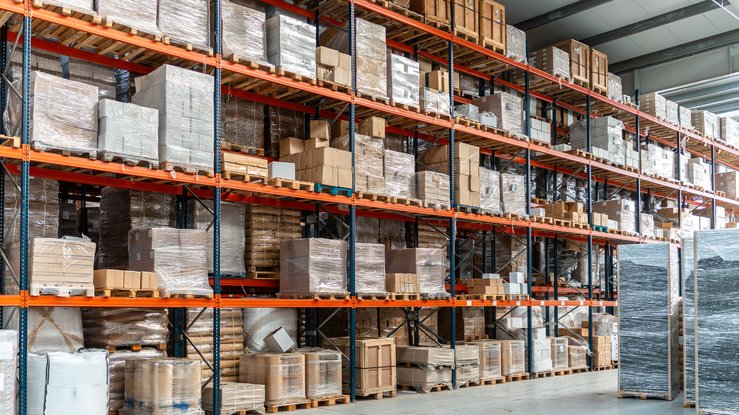
Owners answer with a comfortable annual average. Underwriters are asking: what is the maximum value of owned product concentrated in one building on one day? Because a loss does not arrive in a quiet month. It arrives in the season you bought for, when the racking is deepest and the value on the floor is at its high-water mark. That number is what sizes a stock throughput limit, and a limit set to the quiet season is a limit that fails you in the busy one.
Mississippi concentrates this more than its population suggests. A DeSoto County building is stocked to serve a national network, not a local one, and the value under that roof answers to a supply chain three states wide. Adjacency, not consumption, is what fills these buildings — and adjacency stacks inventory.
The loss that leaves the building standing
Here is the Mississippi exposure that costs owners the most and surprises them the hardest.
The state’s poultry, seafood, and food-processing base means an enormous share of owned inventory here is temperature-dependent. After a named storm on the coast, or a wide convective event inland, the building may come through fine — the roof intact, the racking straight, the dock doors working — and every case of owned product in the cold rooms worthless.
That is a contents loss with no property damage behind it. A commercial property policy is written to answer for the building, the racking, and the goods while they sit still in a scheduled location. It does a bounded job, and it does it well. But the loss that most often ruins a Mississippi food distributor’s year is one where nothing was damaged except the thing the business actually sells.
It is also why the standby-power and temperature-monitoring story belongs in the underwriting conversation rather than in the housekeeping file. An underwriter who can see how you handle the day the grid goes down is pricing a different risk than one who cannot.
The goods, and the chain you are already in
The driver distributors are most surprised by has nothing to do with the building at all.
You sit in the chain of distribution, and a products-liability claim over something that causes injury can follow that chain to a seller — not only to the manufacturer who made it. You did not design it. You did not process it. You bought it and sold it, and that is enough to be named.
Mississippi’s owned-goods economy leans hard into food and poultry, and anything with an ingestion or contact profile carries a severity picture a hard good does not. An importer landing stock at Gulfport is frequently the first U.S. seller of goods made abroad, and when the actual maker sits beyond the practical reach of a U.S. claim, the first seller is the realistic target. General liability answers this through what the standard form calls the products-completed-operations hazard, and sizing that limit against what you truly move rather than a generic revenue band is most of the work on a submission.
Wind that shows up in winter
The Gulf counties carry named-storm wind and surge, and Mississippi remembers precisely what that does to a port and the warehouses behind it. But the peril that reaches the whole state is tornado — Mississippi sits in the corridor where long-track tornadoes run, and they arrive in winter as well as spring, which is not true everywhere and is the single most under-planned fact about the state’s peril profile.
A large warehouse roof gives wind an enormous surface and a hailstorm an enormous target. Flood is a separate placement and a serious one along the Delta and the river towns, where the flat ground that makes a good warehouse site is flat because the river made it so. When the goods on that floor are on your balance sheet, the distinction between a property policy and a flood placement stops being technical.
The route, the crew, and a word this trade uses twice
Mississippi is a corridor state — I-55 up the spine toward Memphis, I-20 across the middle — and a distribution business moves its own product along those lines. Commercial auto prices the fleet on unit count, radius, what is hauled, and above all who drives.
A note on language, because this niche cannot avoid it: your insurance carrier is the company that writes your policy. A motor carrier or freight carrier hauls goods for hire. The words look alike and mean nothing alike, and both appear in the contracts you sign.
On workers compensation, Mississippi is a private-market state — no state fund, no opt-out. A distributor carries two injury exposures rather than one: the warehouse crew around powered industrial trucks and racking, and the route drivers loading, unloading, and working a lift gate all day. The cold-storage floors add their own quiet accumulation — wet surfaces, cold shifts, and slip claims that never make the headlines but carry real lost time.
Two boards, one loading dock
Mississippi does not license the fact of warehousing — there is no state license for a general merchandise or contract warehouse here. What it does instead is reach into the building and regulate what is in it, which for an owner of inventory is the more consequential arrangement.
The Mississippi State Department of Health, through its food protection division, permits food establishments and names warehouses and re-packers among the facilities it regulates — so a food warehouse is a permitted premises even though a general warehouse is not. Separately, the Mississippi Board of Pharmacy licenses wholesale distributors of prescription drugs, in-state and out-of-state alike, and requires surety behind the license.
A distributor stocking both groceries and drugs is therefore answering to two different boards about the same loading dock. That is a compliance cost sitting alongside the premium rather than inside it — but it is also, quietly, an underwriting asset. The recordkeeping those regimes force on you is exactly the recordkeeping an insurance carrier wants to see when it is deciding how much of your inventory story to take on faith. A distributor who can produce clean, current, inspected records is a materially easier submission than one who cannot.
The customer who is not in this state
One last driver, and it is the one Mississippi owners tend to under-weight.
A great deal of the owned stock here is staged for a network that is somewhere else. A DeSoto County building is filled to serve a national supply chain inside the Memphis logistics footprint, not to serve the people down the road. Adjacency fills these buildings; population does not.
The insurance consequence is about business income, not property. When a storm takes the roof or the power, the interruption is not just yours — it lands on a customer network in other states, on delivery commitments you have made, and on a replenishment cycle that does not pause because Mississippi had a bad week. An underwriter reading this account is asking how quickly you could serve those commitments from somewhere else, and what it would cost you if you could not. That question is worth answering before it is asked.
What the underwriter is actually pricing
<text x="350" y="32" text-anchor="middle" font-family="Inter, sans-serif" font-size="15" font-weight="600" fill="#0F4C5C">Three tiers, and one rung that is only half for sale</text>

<rect x="120" y="52" width="460" height="48" rx="6" fill="#ffffff" stroke="#C3DEDE"/>
<text x="350" y="74" text-anchor="middle" font-family="Inter, sans-serif" font-size="13" font-weight="600" fill="#0F4C5C">producers</text>
<text x="350" y="92" text-anchor="middle" font-family="Inter, sans-serif" font-size="11" fill="#3F5B64">private</text>

<rect x="120" y="116" width="230" height="70" rx="6" fill="#E2F4F3" stroke="#0F4C5C"/>
<text x="235" y="142" text-anchor="middle" font-family="Inter, sans-serif" font-size="13" font-weight="600" fill="#0F4C5C">beer and light wine</text>
<text x="235" y="162" text-anchor="middle" font-family="Inter, sans-serif" font-size="11" fill="#3F5B64">private — the stock is yours</text>
<text x="235" y="178" text-anchor="middle" font-family="Inter, sans-serif" font-size="11" fill="#3F5B64">a stock throughput exposure</text>

<rect x="350" y="116" width="230" height="70" rx="6" fill="#ffffff" stroke="#C3DEDE"/>
<text x="465" y="142" text-anchor="middle" font-family="Inter, sans-serif" font-size="13" font-weight="600" fill="#0F4C5C">spirits and wine</text>
<text x="465" y="162" text-anchor="middle" font-family="Inter, sans-serif" font-size="11" fill="#3F5B64">the state is the wholesaler</text>
<text x="465" y="178" text-anchor="middle" font-family="Inter, sans-serif" font-size="11" fill="#3F5B64">and it owns the inventory</text>

<rect x="120" y="202" width="460" height="48" rx="6" fill="#ffffff" stroke="#C3DEDE"/>
<text x="350" y="224" text-anchor="middle" font-family="Inter, sans-serif" font-size="13" font-weight="600" fill="#0F4C5C">retailers</text>
<text x="350" y="242" text-anchor="middle" font-family="Inter, sans-serif" font-size="11" fill="#3F5B64">private — package stores are not state-owned</text>

<rect x="40" y="278" width="620" height="72" rx="9" fill="#C8935A" stroke="#0F4C5C"/>
<text x="350" y="306" text-anchor="middle" font-family="Inter, sans-serif" font-size="14" font-weight="600" fill="#1A1A1A">Only an owned book is a stock throughput exposure.</text>
<text x="350" y="326" text-anchor="middle" font-family="Inter, sans-serif" font-size="14" font-weight="600" fill="#1A1A1A">In Mississippi, that book is beer and light wine.</text>
<text x="350" y="344" text-anchor="middle" font-family="Inter, sans-serif" font-size="12" font-weight="600" fill="#1A1A1A">The rest of the middle tier is not a business you can buy into.</text>The honest summary
A Mississippi distributor is priced on what it owns, how much of that is in one building on the worst day, what happens when the thing it sold hurts somebody, and — more than in most states — what happens to the contents when the power goes and the building stays up. The beverage ceiling is unusual and worth understanding: the state holds the spirits and wine wholesale tier, and beer is where a private owned book actually lives.
If you want coverage mechanics rather than cost drivers, stock throughput is the line this guide orbits, wholesaling businesses is the wider program view, and the Mississippi distributor and wholesaler insurance page goes deeper on the exposures. And if the goods in your cold rooms belong to your customers rather than to you — a national shipper’s freight in a DeSoto County building, say — none of the above is your program. Read the Mississippi warehouse cost guide instead.