

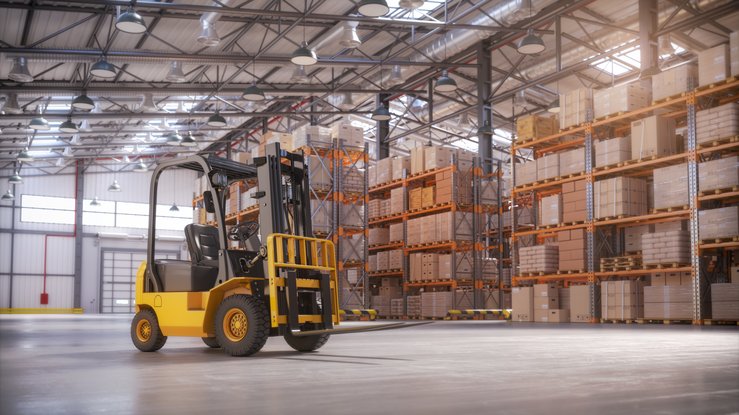
In most states, an insurance conversation with a distributor starts with the inventory. In Vermont it starts with the elevation of the slab it is sitting on.
Vermont’s buildable flat land is in narrow river valleys, and that is precisely where floodwater goes. A catastrophic July flood put much of downtown Montpelier under water from the Winooski and its tributaries and hit Barre hard — and then the remnants of a tropical system flooded the same central Vermont towns again the following summer, almost to the day. Any warehouse on a valley floor, which in Vermont is most of them, has to treat flood as a live, separately placed exposure rather than a theoretical one.
And for an owner of inventory, the consequence is unusually blunt. Stock stored at floor level is the first thing lost, and it is lost completely. Not damaged. Not depreciated. Gone.
That is why there is no published price for this coverage in Vermont, and why any number quoted before somebody has looked at where the building sits is a guess.
Flood is not part of the property policy
Commercial property does a bounded and useful job: your building, your racking, and your owned goods while they stay put, plus the income you lose when the building goes down. What it does not do — and this catches owners every time — is answer for water that comes up from the river.
Flood is its own placement. In a valley-floor building it is the load-bearing one, not the add-on, and getting it wrong is not a coverage technicality. It is the difference between a bad year and no company.
Two operational facts move this in your favor before any premium is discussed: where the goods sit vertically, and whether an underwriter can see that you have thought about it. Racked stock survives water that destroys stock on the slab. That is not an insurance trick; it is a warehouse decision that an underwriter will price.
Snow and ice load on a wide roof is the second exposure, and ice storms that take down power to refrigerated space are the third — for a cheese, dairy, or specialty-food distributor, that is a total contents loss in an undamaged building.
The peak, which for a small brand is the whole company
Owners answer the inventory question with a comfortable annual average. Underwriters are asking a different question entirely: what is the maximum value of owned product concentrated in one place on one day?
Because a loss does not wait for a convenient month. And Vermont sharpens this in a way that surprises people: a small distributor’s peak is often a larger multiple of its average than a big one’s. A single seasonal build — a holiday run, a maple or cheese season, a beverage release — can fill a modest building to the roof. The average is comfortable. The crest is the company.
That crest is what sizes a stock throughput limit, and a limit set to the quiet stretch is a limit that fails in the full one. For a brand whose warehouse is the only building it owns, this is not a line item. It is the policy.
Goods that come south, and the seller who never made them
Vermont’s import story is a border story rather than a seaport one. There is no ocean coastline and no container terminal. What crosses is what moves to and from Québec through the northern crossings, and a Vermont company taking title to those goods becomes the first U.S. seller of a product it never manufactured.
That matters because you sit in the chain of distribution, and a products-liability claim can follow that chain to a seller — not only to the maker. When the actual manufacturer sits beyond the practical reach of a U.S. claim, the first U.S. seller is the realistic target. General liability answers this through what the standard form calls the products-completed-operations hazard, and for a food or beverage distributor — which is most of Vermont’s owned-stock economy — the ingestion profile makes that limit a serious conversation rather than a box to tick.
It also raises the question importers most often answer by accident: when does the risk of loss actually pass to you? If it passes at the supplier’s dock in Québec and your coverage starts at your warehouse door, then owned stock is running a border crossing and a valley highway uninsured by you. The marine-family form behind stock throughput follows goods across land transit and inland movement just as readily as across an ocean — there is no port here, and there does not need to be one for the exposure to exist.
On the beverage side, Vermont sets a ceiling in statute: the Department of Liquor and Lottery buys and wholesales spirits itself, with retail running through contracted agency stores. Beer, wine, cider and ready-to-drink products move through private wholesale dealers licensed by the Division of Liquor Control. So a private Vermont beverage distributor owns a beer-and-wine book — and owning it is exactly why it is a stock-throughput exposure rather than a bailment.
Trucks and crews, briefly and honestly
A Vermont distributor runs a small fleet on I-89 and the valley roads, and commercial auto prices it on unit count, radius, what is hauled, and above all who drives. One word this trade uses two ways: your insurance carrier writes your policy; a motor carrier hauls goods. Both appear in your contracts.
Workers compensation is a private-market line here. The injuries are the ordinary ones — powered industrial truck contact, product out of racking, lifting strain on a pick line, dock injuries at the trailer — with a long ice season in the yard and cold-storage floors on the food side adding cold stress and slips on top. That is the honest extent of it. Vermont is a small-market state, and inventing a corridor it does not have would not make the guide truer.
What the underwriter is actually pricing
<text x="350" y="30" text-anchor="middle" font-family="Inter, sans-serif" font-size="15" font-weight="600" fill="#0F4C5C">The same building, the same river, two storage decisions</text>

<rect x="90" y="52" width="520" height="180" rx="6" fill="#ffffff" stroke="#C3DEDE"/>

<rect x="90" y="186" width="520" height="46" rx="0" fill="#E2F4F3" stroke="#C3DEDE"/>
<text x="350" y="214" text-anchor="middle" font-family="Inter, sans-serif" font-size="12" font-weight="600" fill="#0F4C5C">the river comes up to here</text>

<rect x="140" y="196" width="90" height="30" rx="3" fill="#ffffff" stroke="#0F4C5C"/>
<text x="185" y="216" text-anchor="middle" font-family="Inter, sans-serif" font-size="11" font-weight="600" fill="#0F4C5C">on the slab</text>
<text x="185" y="252" text-anchor="middle" font-family="Inter, sans-serif" font-size="11" fill="#3F5B64">lost first, and lost whole</text>

<rect x="450" y="104" width="90" height="30" rx="3" fill="#ffffff" stroke="#0F4C5C"/>
<text x="495" y="124" text-anchor="middle" font-family="Inter, sans-serif" font-size="11" font-weight="600" fill="#0F4C5C">racked high</text>
<text x="495" y="88" text-anchor="middle" font-family="Inter, sans-serif" font-size="11" fill="#3F5B64">above the water, still yours</text>

<path d="M230 211 L440 130" stroke="#0F4C5C" stroke-width="1.5" fill="none" stroke-dasharray="4 4"/>

<rect x="40" y="270" width="620" height="60" rx="9" fill="#C8935A" stroke="#0F4C5C"/>
<text x="350" y="294" text-anchor="middle" font-family="Inter, sans-serif" font-size="14" font-weight="600" fill="#1A1A1A">Flood is its own placement — the property policy will not answer for it.</text>
<text x="350" y="316" text-anchor="middle" font-family="Inter, sans-serif" font-size="12" font-weight="600" fill="#1A1A1A">How high your owned stock sits is a decision you make before the water does.</text>The honest summary
A Vermont distributor is priced on where the building sits, how high the owned stock is stacked, how much of it is there at the peak, and what happens if the thing it sold hurts somebody. Flood is a real, separately placed exposure and not a footnote. The spirits tier is the state’s; the beer, wine and cider book is yours. That is a short list, and Vermont is a small market — a shorter, truer guide beats a padded one.
For coverage mechanics rather than cost drivers, stock throughput is the line this guide orbits, wholesaling businesses is the wider program view, and the Vermont distributor and wholesaler insurance page goes deeper. If the goods in your building belong to your customers — farm commodities stored for hire under a state Public Warehouse License, for instance — that is a different program entirely, and the Vermont warehouse cost guide is the one you want.