
States we serve · Vermont
Distributor and wholesaler business insurance in Vermont
For the food, beverage, and specialty-goods wholesalers whose brands travel farther than the state does — and whose owned inventory sits on a river-valley floor between one flood and the next.
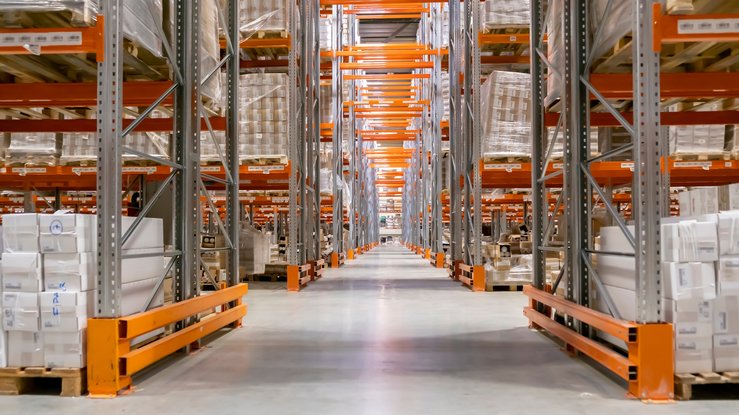

For a great many Vermont distributors, the warehouse is the company. One building, one roof, one season of owned product — and a brand whose customers are scattered across a map far larger than the state.
Which is why the first thing to say about a Vermont program has nothing to do with beverage law or import paperwork. It is this: Vermont’s buildable flat land is in narrow river valleys, and that is exactly where floodwater goes. Downtown Montpelier went under water from the Winooski and its tributaries in a catastrophic July flood, and the remnants of a tropical system flooded the same central Vermont towns again the following summer. If your owned inventory is stacked at floor level in a valley-floor building — and in Vermont it very likely is — then it is the first thing the water reaches and the most valuable thing in the room.
Flood is a separate placement. It is not quietly absorbed by a commercial property form, and no amount of goodwill after the fact changes that. For an owner of inventory in this state, that single sentence is worth more than everything else on this page.
What a private Vermont wholesaler is allowed to own
Vermont is a control state, but only at the top of the glass. The Department of Liquor and Lottery buys and wholesales spirits itself, and a distiller who wants into Vermont registers as a spirits supplier to the state rather than signing a private distributor. Retail spirits then move through the state’s contracted agency stores rather than through state-run shops — the state holds the wholesale tier without owning the storefronts, which is a genuinely unusual arrangement.
Beer, wine, cider, and ready-to-drink spirits beverages are a different world entirely: those move through private wholesale dealers licensed by the Division of Liquor Control, selling to first- and second-class licensees. So the beverage distribution business splits cleanly in two here. The state owns the spirits wholesale tier. A private wholesaler owns everything else — and owns it outright, on its own books, from the supplier to the retailer.
Stock throughput from a Québec supplier to a valley warehouse
Stock throughput is the lead coverage for an owner of inventory, and Vermont’s version of the argument is a border rather than an ocean. Goods come south from a Québec supplier, cross at Highgate Springs or Derby Line, ride I-89 or I-91 down a valley, wait in a Williston or Burlington building, and then travel a long way out to customers who are mostly not in Vermont. The policy is written in the marine family of coverage — which is where the ocean-cargo and inland-marine vocabulary comes from — and it follows your owned product across that entire span rather than only while it sits still.
The alternative is a patchwork. Commercial property insures owned inventory while it is inside a scheduled building, plus the business income lost when that building cannot ship. It stops at the walls. Everything before the walls and after them — the Canadian dock, the crossing, the truck, the long route — is a seam, and Vermont goods spend a great deal of their life in those seams. The question the form forces is when the risk of loss actually passed to you: at the supplier’s dock, at the border, or on arrival. Whichever it is, that is when your exposure begins, and coverage that starts later leaves a stretch of highway where your own goods are traveling uninsured by you.
The first U.S. seller, sitting in Vermont
A distributor who never made anything can still be sued over what it sold. Products liability follows the chain of distribution, and a claim over a product that injures someone or damages property can reach a seller in that chain — not only the manufacturer.
Vermont’s version is a cross-border one rather than a seaport one: goods coming south from Québec make a Vermont company the first U.S. seller, which is precisely the party a claimant reaches when the actual maker sits beyond the practical reach of a U.S. claim. General liability answers that through the products-completed-operations hazard, and it is the exposure a wholesaling business carries because it bought and resold — where a warehouse that merely held the same product for its owner never sold it and is largely outside the chain.
Food storage is a licensed activity here
Vermont regulates food storage from two directions, and a distributor should know both. The Department of Health requires a food processing license and says so plainly: warehouses and distribution centers need one, not just manufacturers. The Agency of Agriculture, Food and Markets separately licenses the public warehouses that store farm commodities for hire — milk, cream, butter, cheese, eggs, dressed meat, poultry, and fruit — along with wholesale meat and poultry distributors and milk handlers, which is a dairy economy still shaping the state’s rules. Prescription-drug wholesale distribution runs through the Board of Pharmacy in the Secretary of State’s Office of Professional Regulation.
Note where the weight lands: on the goods. Vermont does not license general merchandise warehousing, and outside those commodities a warehouse’s duties still run through the bailment and the warehouse receipt. But if you own food inventory, the state has an opinion about your building.
Winter, ice, and the crew
Snow and ice load on a wide roof is the second half of the Vermont peril file, and ice storms take down the power to refrigerated space — which for a cheese, dairy, or specialty-food wholesaler is an owned-inventory loss inside an undamaged building. Workers’ compensation is a private-market line here, and the injuries are the ordinary ones: powered-industrial-truck contact, product falling out of racking, lifting strain on pick and pack work, dock injuries at the trailer — plus a long ice season in the yard and a real cold-storage presence on the dairy and food side, where cold stress and wet floors sit on top of everything else.
Commercial auto answers the route fleet, and in a state of long rural runs the value riding on any single truck is a bigger share of the business than a wholesaler in a dense market would tolerate. A note on language this trade cannot avoid: your insurance carrier is the company that writes your policy — an entirely different thing from a motor carrier that hauls goods for hire. Umbrella liability sits above the primary lines, usually because a national retail customer asked for it. On price, we publish no premiums; what drives the conversation is inventory value and concentration, the flood posture of your building, whether the stock is temperature-dependent, the products behind your liability, cross-border transit, and claims history.
Where Vermont distributors and wholesalers concentrate
Williston
Where most of the state’s modern distribution space actually is, and where a food or specialty-goods wholesaler’s entire owned book is likely to sit under a single roof. For a brand with national reach and one building, concentration is not a portfolio question — it is the whole company in one room.
Burlington and South Burlington
The state’s only real distribution metro, and the anchor of a foreign-trade zone that is a land-border zone rather than a seaport one. A wholesaler staging components or finished goods here holds inventory that arrived across a border, not off a ship — and that is a different transit exposure with the same ownership.
St. Albans and the northern crossings
Close to the Québec border, where cross-border paperwork is a routine part of a distributor’s week rather than an exception. An importer taking title to goods coming south is the first U.S. seller of them, and owns both the products exposure and the freight from the Canadian dock onward.
Montpelier and Barre
Central Vermont on the valley floor, and the plainest illustration of the state’s real catastrophe. Downtown Montpelier went under water from the Winooski and its tributaries one July, and the remnants of a tropical system flooded the same towns again the following summer. Floor-level owned inventory here is the first thing lost.
White River Junction
The I-89 and I-91 hinge, and the natural jumping-off point for a wholesaler serving the Connecticut River valley in both states. Owned stock spends real hours on these roads, which is exactly where a commercial property policy has already stopped covering it.
Rutland
Southwestern Vermont’s supply and building-materials market, serving a dispersed rural retail base from a small metro. The routes are long, the deliveries are small, and the value on any single truck is a bigger share of the business than a wholesaler in a dense state would ever accept.
If you are storing someone else’s food rather than selling your own
An honest signpost, and in Vermont it is a licensed distinction. Store farm commodities for hire — dairy, cheese, eggs, meat, poultry, fruit — and you need a Public Warehouse License from the Agency of Agriculture, Food and Markets, issued for each place of business and inspected for sanitary condition. If that is your operation, the goods in your racking are not owned stock at all: they are a bailment, and none of the above is your lead exposure. Your program starts from warehouse legal liability, the bailee line for goods in your care, custody, and control. That is a different risk with a different policy stack, and it has its own page: warehouse insurance in Vermont.
Some Vermont businesses do both — they own and sell their own brand while holding another producer’s stock in the same cooler. If that is you, we place both, and we draw the line between the two before anything binds.
Vermont distributor and wholesaler insurance FAQs
Can a private Vermont wholesaler distribute spirits?
No. Vermont is a control state at the top of the glass: the Department of Liquor and Lottery buys and wholesales spirits itself, and a distiller who wants into Vermont registers as a spirits supplier to the state rather than signing a private distributor. Retail spirits move through the state’s contracted agency stores rather than through state-run shops, which is an unusual arrangement — the state holds the wholesale tier without owning the storefronts. Beer, wine, cider, and ready-to-drink spirits beverages are a different world: those move through private wholesale dealers licensed by the Division of Liquor Control, selling to first- and second-class licensees. So a Vermont beverage wholesaler’s owned inventory is beer, wine, cider, and RTD — the state has the liquor.
My warehouse is in a river valley. How seriously should I take flood?
As seriously as the state does. Vermont’s catastrophe is water, not wind, and the reason is geographic: the buildable flat land is in narrow river valleys, which is precisely where floodwater goes. Downtown Montpelier went under water from the Winooski and its tributaries during a catastrophic July flood, and the remnants of a tropical system flooded the same central Vermont towns again the following summer. Flood is a separate placement — it is not simply absorbed by a commercial property form — and for an owner of inventory the arithmetic is brutal, because stock stored at floor level is the first thing lost and often the most valuable thing in the building. Snow and ice load on a wide roof is the second peril, and ice storms take down the power to refrigerated space. Coastal perils do not apply here at all.
What is stock throughput, and does a small Vermont wholesaler need it?
Stock throughput is one marine-family policy that follows your owned product across the entire span it travels — from the supplier, through transit, into the warehouse, and out to the customer. Vermont is exactly the size of business that assumes it does not need this and is exactly the size of business that does. A Vermont brand’s goods routinely come south from a Québec supplier through a border crossing, sit in a valley warehouse, and then travel a very long way to reach customers well outside the state. A commercial property policy insures inventory only while it sits in a scheduled building; the rest of that journey is uncovered by it. Stock throughput closes the seam with one form for the whole span, and the marine vocabulary around it is a historical artifact rather than a requirement that your goods see salt water.
Do I need a license to run a food warehouse in Vermont?
Very possibly, and Vermont is more explicit about it than most states. The Department of Health requires a food processing license and says so plainly — warehouses and distribution centers need one, not just manufacturers. The Agency of Agriculture, Food and Markets separately licenses public warehouses that store farm commodities for hire, along with wholesale meat and poultry distributors and milk handlers, reflecting a dairy economy that still shapes the state’s food rules. Prescription-drug wholesale distribution runs through the Board of Pharmacy in the Secretary of State’s Office of Professional Regulation, which licenses wholesale drug outlets. For a distributor, the licensing follows the goods you own — which is exactly the pattern you would expect.
I import from Québec. Does that change my liability?
It seats you at the head of the chain. Products liability follows the chain of distribution, and a claim over a product that injures someone or damages property can reach a seller in that chain — not only the manufacturer. When goods come south from a Canadian supplier and you are the first U.S. seller of them, you are the party a claimant can practically reach if the maker cannot be. General liability answers this through the products-completed-operations hazard. The transit half matters too: owned stock traveling from a Canadian supplier through a border crossing to a valley warehouse is exposed on every leg, and where your risk of loss actually passes — at the supplier’s dock, at the border, or on arrival — decides where your coverage has to begin.
Vermont is a small market. Does that make my exposure smaller?
No — and it is a fair question, because Vermont genuinely has no big-box distribution belt and it would be inventing a corridor to say otherwise. What Vermont has is a food economy with national reach: dairy, cheese, maple, craft beverage, and specialty grocery brands whose products travel much further than the state’s population would suggest. For a business like that, the warehouse is often the brand’s only building — which means the owned inventory concentration is total. One roof, one flood plain, one season of product. The exposure is not small; it is simply undiversified, which is the harder version of the same problem.
Get a Vermont distributor insurance quote
Quotes in 1–2 hours during business hours.