

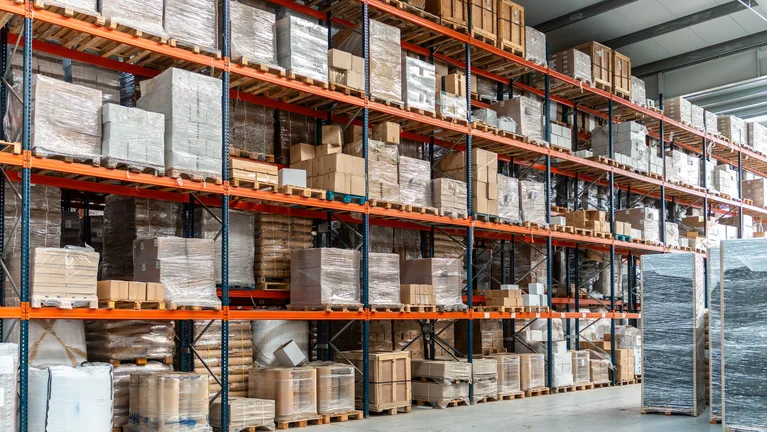
Washington gives an owner of inventory a strange pair of facts to hold at once. The state let go of the liquor business entirely — it stopped buying, selling, and distributing spirits, and handed both the wholesale and the retail tier to private companies — so the whiskey on the rack in a Kent warehouse is now somebody’s owned stock rather than the state’s. And the state kept its workers’ compensation monopoly, so the one coverage every warehouse employer needs is the one coverage a Washington employer cannot go shopping for.
Which means the private insurance program here is built around everything except comp, and the thing it is mostly built around is the inventory. There is no published price for it. An insurer builds the number from your operation — and for a business that owns what it sells, that conversation starts somewhere most owners do not expect. Not with how much stock you carry. With how much you carry on your worst day.
The spirits on your rack are yours now
Start here, because Washington is the state people get wrong most often.
It used to be a control state. It is not one today. Voters ended the monopoly by initiative, the statute directed the board to close every state liquor store and to stop purchasing, selling, and distributing liquor, and the transition finished long ago. The Liquor and Cannabis Board now licenses rather than operates: spirits distributors, beer and wine distributors, importers, and retailers all hold private licenses.
For a beverage distributor the consequence is not abstract. Directly across the Columbia River, a distributor’s spirits belong to the state. Here they belong to you — every case, at every step, from the supplier’s dock to the retailer’s back door. That is a larger owned-inventory value than a distributor in a control state has to insure, and it is a genuine stock-throughput exposure rather than a bailment. The compliance obligations that come with a licensed middle tier are a real operating cost sitting alongside the premium; the inventory itself is a real balance-sheet exposure sitting inside it.
Peak, not average — the number that sizes the limit
This is what sets a stock throughput limit, and getting it wrong is the most expensive routine mistake in this trade.
Owners answer the inventory question with a comfortable annual average. Underwriters are not asking about the average. They are asking: what is the maximum value of owned product concentrated in one place on one day? A loss does not wait for a convenient month. It arrives in the season you built up for, when the building is fullest and the racking is deepest.
Washington sharpens that question in a way few states do, because so much of its owned goods economy is seasonal by nature. Apples, potatoes, hops, seafood: product that comes in on a harvest or a season rather than a smooth curve, and concentrates hard when it does. A limit set to a January average is a limit that has nothing to say in October.
The container that becomes your problem
The Puget Sound gateway — Seattle and Tacoma, marketed jointly through the Northwest Seaport Alliance — is a first-call trans-Pacific entry point, and the importer’s posture is common here because of it. An importer that takes title to a container landing at either terminal is frequently the first U.S. seller of goods made somewhere else, and when the actual maker sits beyond the practical reach of a claim in this country, the importer is the realistic target.
Importing does something else, too: it lengthens the span your inventory is exposed for. Your product is on the water, then on the terminal, then in drayage up to the Kent Valley — owned by you, and a long way from your rack.
Which raises the question importers most often answer by accident:
When does the risk of loss actually pass to you?
Your purchase terms may hand you ownership at the foreign supplier’s dock, at the port of loading, or on arrival. Whichever it is, that is when your exposure begins. If risk passes early and coverage starts late, there is a stretch of ocean and highway where your own inventory is traveling uninsured by you. Stock throughput exists to close exactly that seam — one marine-family form following the goods through ocean transit, the terminal, the drayage leg, the rack, and out to the customer, instead of a property-plus-cargo patchwork with gaps in the stitching. Bonded and duty-deferred space near the terminals is a practical option here rather than a theoretical one, and it lets an importer hold owned stock close to the water without paying duty until withdrawal.
What the product actually is
Here is the driver distributors are most surprised by, because it has nothing to do with the building or the trucks.
You sit in the chain of distribution, and a products-liability claim over something that causes injury can follow that chain to a seller — not only to the manufacturer. You did not design it. You bought it and you sold it, and that is enough to be named.
So an insurance carrier prices what you handle. Aerospace components moving through a Washington supply chain are one conversation. Seafood, dairy, produce, and anything else with an ingestion profile is a very different one, and anything reaching children is different again. General liability answers this through what the standard form calls the products-completed-operations hazard, and sizing that limit against the goods you actually move — rather than against a generic revenue band — is most of the work on a distributor’s submission.
The rack in a shake
Commercial property does a specific, bounded job for a distributor: it covers the building, the racking, and the owned inventory while it sits in a scheduled location, plus the business income lost when that location goes down. It stops at the walls.
What an underwriter weighs in Washington is what happens inside those walls when the ground moves. The Cascadia subduction zone and the shallow faults under the Puget Sound basin put real seismic exposure under the Kent Valley and the port districts, and for a distributor the seismic loss is a racking loss: rack inadequately anchored to the slab, cross-aisle bracing that was never designed for a long shake, and pallets of your product coming off the beams into the aisle. Earthquake is its own placement, separate from the property form, and the Kent Valley — an enormous concentration of distribution buildings on soft, formerly riverine ground — is the specific place that decision has to be made deliberately.
Wildfire matters too, and in a way an owner of goods should think about carefully: smoke and ash can contaminate stored product that never came near a flame. Flood is separately placed and concentrates in the river valleys where the industrial land sits. Snow load on a wide roof is an honest secondary peril. Hurricane and tornado are not part of the story here.
The fleet, the crew, and the one line you cannot shop
A distribution business moves its own product, which puts trucks on the road. Commercial auto prices the fleet on unit count, radius, what is hauled, and above all who drives. A note on language this trade cannot avoid: your insurance carrier is the company that writes your policy, which is an entirely different thing from a motor carrier or a freight carrier that hauls goods for hire.
Workers compensation is where Washington departs from everywhere else. It is a monopolistic state: the statutory line runs through the state fund administered by the Department of Labor and Industries, private comp insurance is not sold here, and an employer either holds a state account or is certified as self-insured. A distributor still carries two separate injury exposures — the warehouse crew lifting and picking, and the route drivers loading, unloading, and working a lift gate all day — and the injury picture is unchanged by the funding structure. What changes is your leverage: because you cannot shop the line, loss control and your claims experience with the state carry more weight here, not less. A poor injury record does not simply cost you comp dollars; it colors how the rest of the program is underwritten.
Claims history and the limits you choose
An underwriter reads a distributor’s losses for shape, not just for count. Cargo losses in transit, shrinkage inside the building, and at-fault fleet accidents are three different stories about three different parts of the operation, and a single large ocean-transit claim reads very differently from a steady drip of driver incidents. The second suggests something structural about hiring or routing; the first may just be a bad day at sea.
Limits and retention are the decision that is genuinely yours. You are choosing how much of the routine stuff to fund yourself in exchange for a better price on the part that could end the business. A distributor that absorbs ordinary shrinkage and handling damage, then buys a serious stock throughput limit sized to the peak and an umbrella that sits above a products limit sized to what it really sells, is buying its insurance in the right order.
Where the property policy stops
<text x="350" y="32" text-anchor="middle" font-family="Inter, sans-serif" font-size="15" font-weight="600" fill="#0F4C5C">Your goods are yours for the whole run</text>

<rect x="24" y="56" width="118" height="52" rx="6" fill="#ffffff" stroke="#C3DEDE"/>
<text x="83" y="80" text-anchor="middle" font-family="Inter, sans-serif" font-size="12" font-weight="600" fill="#0F4C5C">supplier</text>
<text x="83" y="98" text-anchor="middle" font-family="Inter, sans-serif" font-size="11" fill="#3F5B64">title passes</text>

<rect x="156" y="56" width="118" height="52" rx="6" fill="#ffffff" stroke="#C3DEDE"/>
<text x="215" y="80" text-anchor="middle" font-family="Inter, sans-serif" font-size="12" font-weight="600" fill="#0F4C5C">ocean transit</text>
<text x="215" y="98" text-anchor="middle" font-family="Inter, sans-serif" font-size="11" fill="#3F5B64">weeks at sea</text>

<rect x="288" y="56" width="118" height="52" rx="6" fill="#ffffff" stroke="#C3DEDE"/>
<text x="347" y="80" text-anchor="middle" font-family="Inter, sans-serif" font-size="12" font-weight="600" fill="#0F4C5C">the terminal</text>
<text x="347" y="98" text-anchor="middle" font-family="Inter, sans-serif" font-size="11" fill="#3F5B64">Puget Sound</text>

<rect x="420" y="56" width="118" height="52" rx="6" fill="#ffffff" stroke="#C3DEDE"/>
<text x="479" y="80" text-anchor="middle" font-family="Inter, sans-serif" font-size="12" font-weight="600" fill="#0F4C5C">drayage</text>
<text x="479" y="98" text-anchor="middle" font-family="Inter, sans-serif" font-size="11" fill="#3F5B64">to the valley</text>

<rect x="552" y="56" width="124" height="52" rx="6" fill="#E2F4F3" stroke="#C3DEDE"/>
<text x="614" y="80" text-anchor="middle" font-family="Inter, sans-serif" font-size="12" font-weight="600" fill="#0F4C5C">the rack</text>
<text x="614" y="98" text-anchor="middle" font-family="Inter, sans-serif" font-size="11" fill="#3F5B64">and outbound</text>

<path d="M552 130 L676 130" stroke="#0F4C5C" stroke-width="2" fill="none"/>
<text x="614" y="150" text-anchor="middle" font-family="Inter, sans-serif" font-size="11" font-weight="600" fill="#0F4C5C">property answers here</text>
<text x="614" y="167" text-anchor="middle" font-family="Inter, sans-serif" font-size="11" fill="#3F5B64">only, and no further</text>

<path d="M24 196 L676 196" stroke="#0F4C5C" stroke-width="2" fill="none" stroke-dasharray="6 4"/>
<text x="350" y="220" text-anchor="middle" font-family="Inter, sans-serif" font-size="12" font-weight="600" fill="#0F4C5C">a marine-family form follows the goods across every leg</text>
<text x="350" y="240" text-anchor="middle" font-family="Inter, sans-serif" font-size="11" fill="#3F5B64">supplier to customer, one wording, no seams to fall through</text>

<rect x="40" y="266" width="620" height="62" rx="9" fill="#C8935A" stroke="#0F4C5C"/>
<text x="350" y="290" text-anchor="middle" font-family="Inter, sans-serif" font-size="14" font-weight="600" fill="#1A1A1A">Your exposure begins when the risk of loss passes to you —</text>
<text x="350" y="310" text-anchor="middle" font-family="Inter, sans-serif" font-size="14" font-weight="600" fill="#1A1A1A">not when the pallet lands in your building.</text>The honest summary
A Washington distributor is priced on what it owns, where that stuff is, what happens if the thing it sold hurts somebody, and how well the racking is anchored. Comp is a state account, not a quote. Everything else is a real market, and it responds to a real submission.
If you want the coverage mechanics rather than the cost drivers, stock throughput is the line this guide orbits, the Washington distributor and wholesaler insurance page goes deeper on the exposures, and our distribution businesses pillar covers the operating shape. And if the goods in your building belong to your customers rather than to you, none of the above is your program — you want the warehouse cost guide instead.