

In most states a warehouse owner asks two questions and gets one answer: what do I have to carry, and what can I shop? Washington splits them. The workers-compensation line here is not a market at all — it is a state account — and everything else you buy is priced from your building, your racking, and above all from the freight in it that belongs to somebody else. Understanding that split is the beginning of understanding what a Washington warehouse actually pays.
What is on your racking tonight, and whose is it
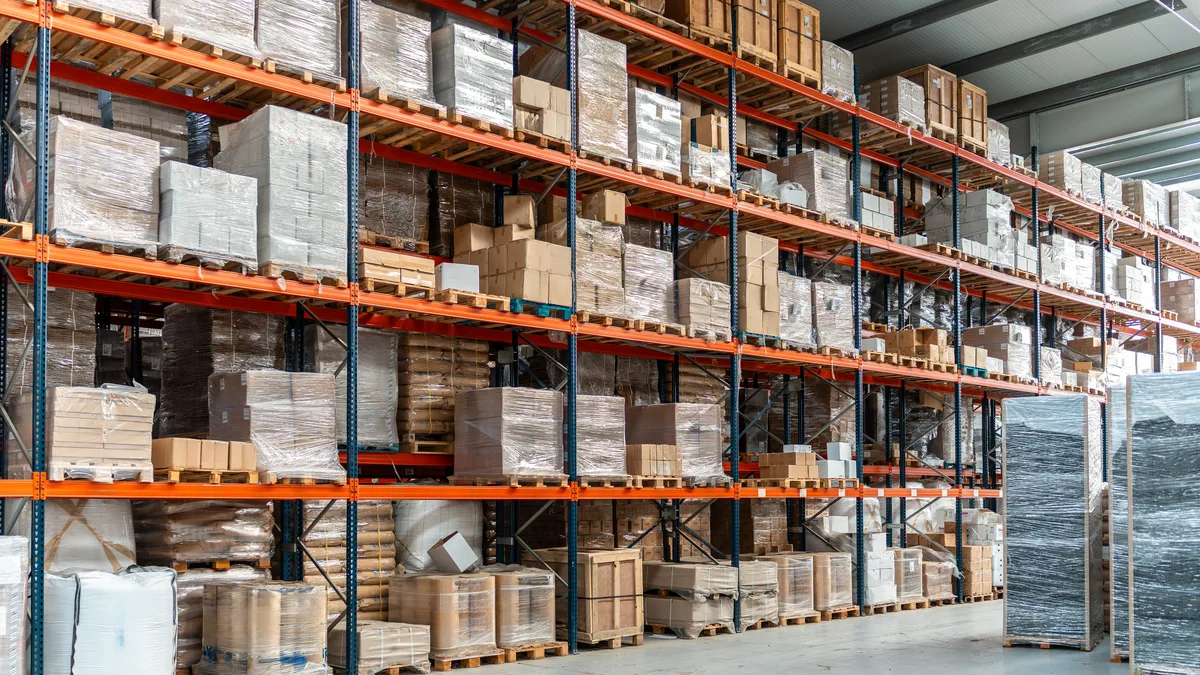
Start where the underwriter starts. The Kent Valley — Kent, Auburn, Renton, Sumner, Fife — is one of the West Coast’s great concentrations of third-party warehousing, and it exists because it sits a short drayage run from the Seattle and Tacoma terminals. The buildings there are full of retail freight, aerospace components, and consumer goods, and almost none of it belongs to the operator holding it.
That is the warehouse legal liability conversation, and it is the biggest single input into a Washington warehouse program. Two things drive the limit and they are separate. Value is the maximum amount of customer-owned freight under your roof on your worst day, not on an average one. Nature is the part that gets missed: a building of aerospace parts and a building of paper stock can be the same square footage, the same rack, the same sprinkler design, and price nothing alike, because the amount at risk in one pallet position differs by an order of magnitude.
The underwriting question is never how big the warehouse is. It is what is in it, whose it is, and what is the most of it that is ever here at once.
The seismic loss is a racking loss, and the racking is holding their goods
Washington is the state where the property peril and the bailee peril are the same event.
The Cascadia subduction zone sits offshore and shallow faults run under the Puget Sound basin, and the Kent Valley is an enormous concentration of distribution buildings on soft, formerly riverine ground. For a warehouse, an earthquake is not primarily a question of whether the walls stand. It is a question of whether the rack is anchored to the slab, whether the cross-aisle bracing was ever designed for a long shake, and what happens when pallets come off the beams into the aisle.
Look at the ownership of the debris. Your steel is a commercial property loss. The goods lying under it are a bailee loss, arriving in the same second. That is why rack anchorage, bracing, and stack height are underwriting facts here in a way they are not in a state with no seismic story — and why earthquake, which is its own placement and not a property-form peril, is a decision a Kent Valley operator makes deliberately rather than by default.
Wildfire belongs in the same paragraph for an unexpected reason: smoke and ash can contaminate a customer’s stored goods without a flame ever touching the property. A total loss to the cargo, with the building intact, is a bailee loss.
Washington licenses the building your customers’ food sits in
This is the one most owners moving in from another state do not see coming.
Washington licenses the food storage warehouse as its own class. A warehouse that stores food needs the license, and a processor that has to store finished product offsite must put it in a licensed food-storage warehouse. Read that again from the bailee’s side: this is a direct state license on a building whose entire purpose is holding food owned by other businesses. Most states regulate the food; Washington also regulates the room.
That makes the food and cold-chain third-party warehouse a genuinely distinct conversation in this state, and a distinct cost. The operator freezing another company’s seafood, berries, potatoes, or apples is holding both the goods and a license tied to how the building runs. And a cold-chain bailment fails differently than a dry one — nothing burns, the temperature simply drifts, and a customer’s load is a total loss with the racking untouched. That is a distinct severity profile with distinct controls, and it is priced as one.
The mirror image is worth knowing, because it is counterintuitive: on prescription drugs, Washington has declined to license a business engaged exclusively in third-party logistics. Wholesale distributors are licensed by the state health authority; a drug third-party logistics operator is not, and reports federally instead. Washington licenses the food bailee and declines to license the drug bailee. Do not assume your neighbor state’s answer.
Duty-deferred freight, and answering to two masters
The Seattle and Tacoma zones sit on the two container ports, and because the marine cargo is marketed jointly through the Northwest Seaport Alliance, an importer can hold a box duty-deferred close to the terminal it landed at. That makes bonded and zone-status storage a practical, mainstream product for a Puget Sound warehouse rather than a specialty.
It also stacks obligations. Admit duty-deferred cargo and you take on customs-bonded duties on top of the ordinary duty of care you already owe the owner of the goods. Over the same pallet you now answer to two masters, and an underwriter prices the accumulation of both.
No warehouse license, so the receipt is the perimeter
For everything that is not food and not an agricultural commodity, there is no general public-warehouse license in Washington. The state does license the commodity storage warehouse — an annual license from the agriculture department, backed by a bond and an audit — but that is a grain-and-commodity regime and it does not reach a merchandise operation. A third-party logistics operator holding retail freight in Kent or Fife is licensed as a warehouse by no one.
That absence is a cost driver, not a footnote. Because the state hands you no standard of care, your storage agreement and your warehouse receipt are the entire perimeter around a claim. Whether your customers accepted a limitation-of-liability or released-value clause, negotiated it away, or signed a contract quietly assuming you carry far more than a bare legal-liability form provides — all of that changes the exposure the policy is being asked to size. An underwriter reads those terms. So should you, before the loss.
The one line you cannot shop
<text x="350" y="30" text-anchor="middle" font-family="Inter, sans-serif" font-size="15" font-weight="600" fill="#0F4C5C">One operation, two entirely different negotiations</text>

<rect x="70" y="46" width="560" height="60" rx="9" fill="#C8935A" stroke="#0F4C5C"/>
<text x="350" y="70" text-anchor="middle" font-family="Inter, sans-serif" font-size="14" font-weight="600" fill="#1A1A1A">The value AND the nature of the customers’ goods in your care</text>
<text x="350" y="92" text-anchor="middle" font-family="Inter, sans-serif" font-size="12" font-weight="600" fill="#1A1A1A">It sizes the warehouse legal liability limit. It is not on your books.</text>

<path d="M250 106 L200 132" stroke="#0F4C5C" stroke-width="1.5" fill="none"/>
<path d="M450 106 L500 132" stroke="#0F4C5C" stroke-width="1.5" fill="none"/>

<rect x="30" y="136" width="310" height="230" rx="10" fill="#ffffff" stroke="#C3DEDE"/>
<text x="185" y="160" text-anchor="middle" font-family="Inter, sans-serif" font-size="14" font-weight="600" fill="#0F4C5C">What you take to market</text>
<text x="185" y="186" text-anchor="middle" font-family="Inter, sans-serif" font-size="12" fill="#3F5B64">Warehouse legal liability — the bailee line</text>
<text x="185" y="208" text-anchor="middle" font-family="Inter, sans-serif" font-size="12" fill="#3F5B64">Property, and earthquake as its own placement</text>
<text x="185" y="230" text-anchor="middle" font-family="Inter, sans-serif" font-size="12" fill="#3F5B64">General liability, auto, umbrella</text>
<text x="185" y="256" text-anchor="middle" font-family="Inter, sans-serif" font-size="12" fill="#3F5B64">Priced from your building, your rack,</text>
<text x="185" y="274" text-anchor="middle" font-family="Inter, sans-serif" font-size="12" fill="#3F5B64">your contracts, and your losses</text>
<text x="185" y="304" text-anchor="middle" font-family="Inter, sans-serif" font-size="12" font-style="italic" fill="#3F5B64">Every lever here is negotiable</text>
<text x="185" y="336" text-anchor="middle" font-family="Inter, sans-serif" font-size="12" fill="#3F5B64">Food storage adds a licensed building</text>

<rect x="360" y="136" width="310" height="230" rx="10" fill="#ffffff" stroke="#C3DEDE"/>
<text x="515" y="160" text-anchor="middle" font-family="Inter, sans-serif" font-size="14" font-weight="600" fill="#0F4C5C">What the state writes</text>
<text x="515" y="186" text-anchor="middle" font-family="Inter, sans-serif" font-size="12" fill="#3F5B64">The statutory workers-compensation line</text>
<text x="515" y="208" text-anchor="middle" font-family="Inter, sans-serif" font-size="12" fill="#3F5B64">A state-fund account, not a marketed policy</text>
<text x="515" y="230" text-anchor="middle" font-family="Inter, sans-serif" font-size="12" fill="#3F5B64">No private insurer competes for it</text>
<text x="515" y="256" text-anchor="middle" font-family="Inter, sans-serif" font-size="12" fill="#3F5B64">The forklift and rack injuries are the same</text>
<text x="515" y="274" text-anchor="middle" font-family="Inter, sans-serif" font-size="12" fill="#3F5B64">as anywhere — only the funding differs</text>
<text x="515" y="304" text-anchor="middle" font-family="Inter, sans-serif" font-size="12" font-style="italic" fill="#3F5B64">Loss control is the only lever left</text>
<text x="515" y="336" text-anchor="middle" font-family="Inter, sans-serif" font-size="12" fill="#3F5B64">Your claims experience follows you</text>

<text x="350" y="388" text-anchor="middle" font-family="Inter, sans-serif" font-size="12" font-style="italic" fill="#3F5B64">Neither door has a price on it. Together they are how one gets built.</text>
Washington is a monopolistic workers-compensation state. The statutory line runs through the state fund administered by the Department of Labor and Industries; private workers-compensation insurance is simply not sold here. An employer either holds a state account or is certified as a self-insured employer, and self-insurance is realistically an option only for very large operations.
Owners sometimes hear that and relax, as though the exposure went away with the marketplace. It did not. Powered-industrial-truck contact on a congested dock, lifting and repetitive strain across a pick shift, falls at rack height, material coming down off elevated storage — that is the same claim set as anywhere. What changes is that you cannot buy your way out of a bad record. Because the line cannot be shopped, loss control and your claims experience carry more weight in Washington than in a private-market state, not less. And the private program — the property, the bailee line, the liability tower — has to be built around that reality.
Claims history, limits, and retention
Two levers, and one is entirely yours.
Claims history moves pricing more than almost anything else on this page — not only whether you have had losses but what they say about how the building runs. Several small handling-damage claims tell an underwriter something different from one large one.
Limits and retention are a genuine choice. You are deciding how much of the routine damage you want to fund yourself in exchange for a better price on the part you cannot afford. A Kent Valley operator who absorbs ordinary handling damage and buys a serious warehouse legal liability limit against the fire, the shake, and the temperature excursion is buying insurance in the right order.
The honest summary
A Washington warehouse is priced on custody, not on square footage. The rack, the roof, the license on the cold room, and the box sitting duty-deferred all matter — but the number that moves the premium most is the value of the freight on your beams that belongs to someone else, and what your storage contract says happens to it when the ground moves.
If you want the coverage itself rather than the cost, start with warehouse legal liability, read the Washington warehouse insurance page, or see how we build a program for warehouse businesses generally. You can also request a quote. And if you own the goods you store rather than holding them for a customer, this is not your program — read the Washington distributor cost guide instead.