

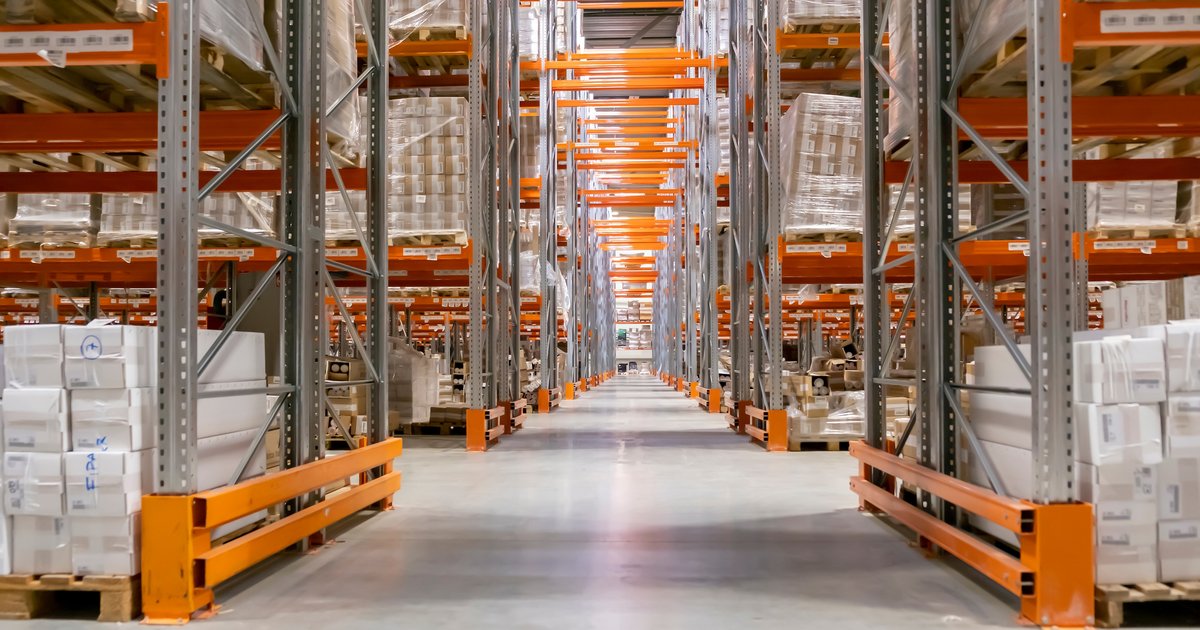
The call always opens the same way, and there is genuine disbelief in it.
“I did not make this thing. I bought it in a container, it sat on my racks for a few weeks, and I sold it to a retailer. How am I named in this?”
It is a completely fair question, and the answer is not comfortable. A products-liability claim does not follow the design; it follows the chain of distribution. And a business that buys a finished product, holds it, and resells it is standing in that chain — which means a claim over an item you never designed and never assembled can arrive with your name on it.
The chain, and why a claim travels it
Here is the idea in plain terms, and it is worth understanding properly rather than as a rumor.
A product moves from the party that made it, through the parties that sold and resold it, to the person who finally uses it. In the United States, the law that governs product claims generally reaches sellers in that path — not only the party that built the item. A distributor who never opened the carton can be named. A wholesaler who moved the goods on a pallet and never looked at them can be named.
The logic is not that you were careless. It is that you put the product into the stream of commerce and took a margin for doing so, and the person who was hurt by it should not have their recovery depend on which link in the chain happens to be reachable.
Two honest notes before we go further, because this is territory where confident-sounding writing does real damage.
First, we are describing a doctrine, not predicting an outcome. Whether a particular claim succeeds against a particular seller depends on facts, on the state, and on law that is not ours to apply. Anyone who tells you flatly what will happen is guessing.
Second, and this is the part owners underweight: being named is the event that costs money, whether or not the claim ultimately lands on you. A defense begins on the day the papers arrive. It does not wait for anyone to sort out who was really at fault, and it is not free.
The importer’s version of the problem, which is sharper
Now take the same chain and remove a link.
A product is made overseas. It is imported, distributed, sold, and eventually it hurts somebody in the United States. In principle the party who designed and built the item is the natural defendant. In practice that party may sit in a different jurisdiction, with no presence here, no assets a judgment could reach, and no particular interest in participating in an American proceeding.
So the claim looks down the chain for someone it can reach — and it finds the importer: the party who brought the goods into the country, and very often the first U.S. seller of that product.
That is the whole importer story, and it is not a technicality. An importing wholesaler ends up carrying a products exposure that behaves far more like the maker’s than like a domestic reseller’s, on goods it did not design, did not spec, and in many cases first saw when the container doors opened. The general liability page names this seam; the point of saying it again here is that it should change how an importer sizes a program, and frequently it has not, because nobody ever explained why.
The uncomfortable version, said once and plainly: if the maker cannot be reached, you are not the backup defendant. You are the defendant.
<text x="360" y="34" text-anchor="middle" font-family="Inter, sans-serif" font-size="15" font-weight="600" fill="#0F4C5C">The chain of distribution</text>

<rect x="18" y="52" width="128" height="84" rx="9" fill="#ffffff" stroke="#C3DEDE"/>
<text x="82" y="80" text-anchor="middle" font-family="Inter, sans-serif" font-size="13" font-weight="600" fill="#0F4C5C">The maker</text>
<text x="82" y="102" text-anchor="middle" font-family="Inter, sans-serif" font-size="11" fill="#3F5B64">Often overseas —</text>
<text x="82" y="118" text-anchor="middle" font-family="Inter, sans-serif" font-size="11" fill="#3F5B64">out of reach</text>

<rect x="162" y="52" width="128" height="84" rx="9" fill="#ffffff" stroke="#C3DEDE"/>
<text x="226" y="80" text-anchor="middle" font-family="Inter, sans-serif" font-size="13" font-weight="600" fill="#0F4C5C">The importer</text>
<text x="226" y="102" text-anchor="middle" font-family="Inter, sans-serif" font-size="11" fill="#3F5B64">The first seller</text>
<text x="226" y="118" text-anchor="middle" font-family="Inter, sans-serif" font-size="11" fill="#3F5B64">in the country</text>

<rect x="306" y="52" width="128" height="84" rx="9" fill="#ffffff" stroke="#C3DEDE"/>
<text x="370" y="80" text-anchor="middle" font-family="Inter, sans-serif" font-size="13" font-weight="600" fill="#0F4C5C">The distributor</text>
<text x="370" y="102" text-anchor="middle" font-family="Inter, sans-serif" font-size="11" fill="#3F5B64">Buys, holds,</text>
<text x="370" y="118" text-anchor="middle" font-family="Inter, sans-serif" font-size="11" fill="#3F5B64">and resells</text>

<rect x="450" y="52" width="128" height="84" rx="9" fill="#ffffff" stroke="#C3DEDE"/>
<text x="514" y="80" text-anchor="middle" font-family="Inter, sans-serif" font-size="13" font-weight="600" fill="#0F4C5C">The retailer</text>
<text x="514" y="102" text-anchor="middle" font-family="Inter, sans-serif" font-size="11" fill="#3F5B64">Sells it to</text>
<text x="514" y="118" text-anchor="middle" font-family="Inter, sans-serif" font-size="11" fill="#3F5B64">the public</text>

<rect x="594" y="52" width="108" height="84" rx="9" fill="#ffffff" stroke="#C3DEDE"/>
<text x="648" y="80" text-anchor="middle" font-family="Inter, sans-serif" font-size="13" font-weight="600" fill="#0F4C5C">The user</text>
<text x="648" y="102" text-anchor="middle" font-family="Inter, sans-serif" font-size="11" fill="#3F5B64">Who is</text>
<text x="648" y="118" text-anchor="middle" font-family="Inter, sans-serif" font-size="11" fill="#3F5B64">harmed</text>

<path d="M146 94 L158 94" stroke="#0F4C5C" stroke-width="2" fill="none" marker-end="url(#cd-arrow)"/>
<path d="M290 94 L302 94" stroke="#0F4C5C" stroke-width="2" fill="none" marker-end="url(#cd-arrow)"/>
<path d="M434 94 L446 94" stroke="#0F4C5C" stroke-width="2" fill="none" marker-end="url(#cd-arrow)"/>
<path d="M578 94 L590 94" stroke="#0F4C5C" stroke-width="2" fill="none" marker-end="url(#cd-arrow)"/>

<path d="M648 136 L648 176 L226 176 L226 208" stroke="#0F4C5C" stroke-width="2" fill="none" marker-end="url(#cd-arrow)"/>
<text x="440" y="168" text-anchor="middle" font-family="Inter, sans-serif" font-size="13" font-weight="600" fill="#0F4C5C">The claim travels back up the chain</text>

<rect x="40" y="214" width="640" height="86" rx="10" fill="#C8935A" stroke="#0F4C5C"/>
<text x="360" y="246" text-anchor="middle" font-family="Inter, sans-serif" font-size="15" font-weight="600" fill="#1A1A1A">It stops at the first seller it can actually reach</text>
<text x="360" y="272" text-anchor="middle" font-family="Inter, sans-serif" font-size="13" font-weight="600" fill="#1A1A1A">For imported goods, that is frequently the importer —</text>
<text x="360" y="290" text-anchor="middle" font-family="Inter, sans-serif" font-size="13" font-weight="600" fill="#1A1A1A">the party who brought the product into the country.</text>

<text x="360" y="342" text-anchor="middle" font-family="Inter, sans-serif" font-size="13" fill="#3F5B64">You did not design it. You did not assemble it.</text>
<text x="360" y="362" text-anchor="middle" font-family="Inter, sans-serif" font-size="13" fill="#3F5B64">You sold it — and a seller sits in the chain.</text>
<text x="360" y="396" text-anchor="middle" font-family="Inter, sans-serif" font-size="13" font-weight="600" fill="#0F4C5C">General liability answers the harm your product causes.</text>
<text x="360" y="416" text-anchor="middle" font-family="Inter, sans-serif" font-size="13" fill="#3F5B64">Damage to the product itself is a different question.</text>
The part of the policy that actually answers this
So what stands behind you when the papers arrive?
Your general liability does, through a defined term the standard form calls the products-completed-operations hazard. In broad terms it reaches bodily injury and property damage arising out of your product after that product has left your possession — which is precisely the distributor’s situation, because by the time an item hurts anyone it has long since left your building and is sitting in somebody’s hands.
Two structural things about it are worth knowing before a loss.
It is generally subject to its own aggregate, separate from the aggregate that answers the ordinary premises-and-operations claims from your dock and your yard. That is the piece a products-heavy business should be watching, because it is the one a busy premises year does not consume.
And the hazard is a defined term — meaning it has boundaries, spelled out in the form. Which form, and which edition, is not a detail you can look up in a blog post; editions vary by insurance carrier, and some programs are written on wording that departs from the standard form entirely. What governs is what is actually attached to your policy.
The tail: why a product sold today is a coverage question years from now
This is the piece that most distinguishes products liability from almost everything else in your program, and it is the reason a distributor should care about a question that sounds like paperwork.
A forklift injury happens on the day it happens. A product sold this quarter can cause an injury long after the container, the invoice, and the salesperson who sold it are gone. So the question of which policy is in the picture when that day comes is not academic.
The commercial general liability coverage form most policies start from is the occurrence-based one the market knows as CG 00 01. An occurrence-based policy generally responds to injury or damage that occurs during the policy period, regardless of when the claim is finally made — so the policy in force when the harm happened is the one in the frame, even if you have long since moved your program elsewhere.
The claims-made version — the form known as CG 00 02 — works from the other end. It responds based on when the claim is reported, and it depends on continuous coverage and retroactive dates being maintained without a gap. Let that chain break, and a claim about a product you sold years ago can arrive with nothing standing behind it.
Editions vary by insurance carrier, and the wording actually attached to your policy is what governs. But for a business with a genuine products tail, this is a question to put to your broker directly and get a specific answer to. If the answer is vague, that is the finding.
What quietly moves you up the chain
Here is the section a coverage page will not give you, and it is the one worth reading twice — because most distributors have done at least one of these without ever thinking of it as a coverage event.
You put your own name on it. Private-label goods are the clearest example. When your brand is on the box, your labeling is in the carton, and your instructions are the ones the buyer reads, you have presented yourself to the public as the party behind that product. In practical terms you have stepped a long way toward the position the maker occupies, and the exposure follows.
You changed it. Repackaging, kitting, light assembly, relabeling, or combining somebody else’s components into a set you sell as one item — all of these move you from handling a product to producing something. The line is not always obvious from inside the operation, where it just looks like value-added services.
You wrote the words. Warnings, instructions, and specifications you supply are part of the product. A distributor who authors the labeling has taken on a piece of the product itself.
You picked the source. Choosing a supplier is a business decision, and the choice looks different in hindsight when the goods turn out to be the problem.
None of that makes you a maker in a technical sense, and none of it predicts an outcome. What it does is change the shape of the exposure — and a program written for a pure pass-through reseller may be sized for a business that no longer exists. If your operation has drifted in any of those directions, the honest step is to say so out loud at the next renewal instead of letting the file carry an old assumption.
One related trap while we are here: an indemnity from your supplier is worth having, and it is not coverage. It is only as good as the party standing behind it — and the entire reason the importer problem exists is that the upstream party is frequently the one nobody can reach. An indemnity from an overseas maker with no U.S. presence may be a piece of paper you cannot collect on, and it does nothing to fund your own defense while the matter is live.
What this is not: two seams worth keeping straight
Products liability is about harm your product causes to somebody else. Two neighboring questions get confused with it constantly, and it is worth separating them cleanly.
Damage to the product itself is not products liability. If your owned inventory is damaged in transit, at a port, in a transload, or sitting in a building, that is a question about the goods, not about the harm they did — and it is answered by stock throughput or by commercial property, depending on where the goods were. One line answers what your product does to others; the other answers what happens to your product.
Somebody else’s goods in your care is a third question entirely. If you also store freight for customers, the goods on your racks that belong to them are not a products question at all — they are a bailee question, answered by warehouse legal liability, for reasons we walked through in an earlier post.
Three questions about the same pallet, and a distribution program is built from more than one line because more than one of them can be true at once.
The short version
You did not design it. You did not build it. You bought it, you held it, and you sold it — and in the eyes of a products claim, that puts you in the chain.
For an importer, it puts you at the front of it, because the party who actually made the thing may be somewhere a claim cannot follow. That is not a reason for alarm; it is a reason to size the program for the position you actually occupy rather than the one that feels fair.
If you import, private-label, kit, or relabel, the products exposure on your file deserves a real conversation — including the occurrence-versus-claims-made question, which most owners have never been asked. The distribution and wholesaling programs are built around it.
Tell us what you actually sell and where it comes from, and we will read the policy against it. Start here.