

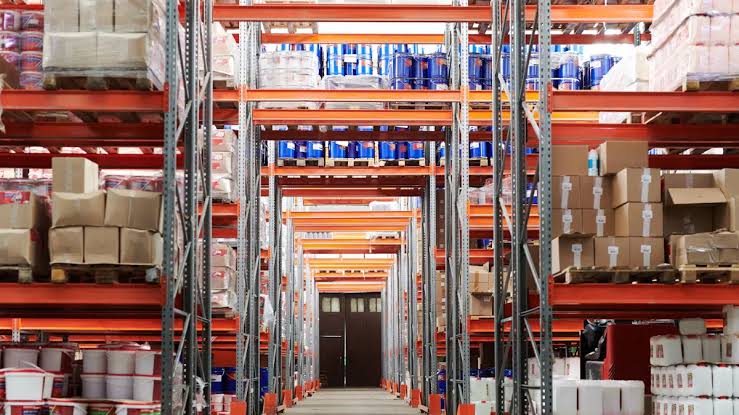
More third-party logistics space sits in Riverside and San Bernardino counties than anywhere else in North America. If you run one of those buildings, almost nothing on your racks is yours. Apparel, housewares, furniture, consumer electronics — the pallets belong to importers and brands who took title at the harbor gate and may never set foot in the building where their goods live.
That fact, and not square footage, is what prices a California warehouse. This guide works through the drivers an underwriter actually stacks, and it starts where the money is.
The freight you do not own
The value and the nature of the customers’ goods in your care is the number that sizes a warehouse legal liability limit, and it is the number California operators most often get wrong — because that inventory never appears in their own accounts.
Value is the maximum amount of customer-owned freight under your roof on the worst day, not the average one. In a market built around a container gateway, that peak arrives with the shipping season and it is nothing like a quiet week.
Nature is the input people skip. A building of paper stock and a building of consumer electronics can be the same size, the same racking, the same sprinkler design — and price nothing alike, because the amount at risk per pallet position differs by an order of magnitude, and because a high-theft commodity brings a theft profile on top of a fire profile. Apparel, electronics, and small high-value goods all change the shape of the exposure long before they change the square footage.
The underwriting question is never how big is your warehouse. It is: what is in it, whose is it, and what is the most of it that is ever here at once?
Two rules that attach to the operator, not to the goods
California is the only state where the act of running a warehouse — not the goods inside it, not the ownership of the property — is itself a regulated subject. Two rules do this, and they are worth understanding, because an operator whose compliance is current and documented reads as a better-run building.
The warehouse quota law. The state forbids a productivity quota that keeps a warehouse worker from taking a rest or meal period, from using the bathroom, or from complying with health-and-safety law, and it requires the employer to disclose any quota in writing. Nowhere else in the country is the pace of work on a pick line a legal subject in its own right.
The air district’s warehouse indirect source rule. In the Los Angeles basin, the South Coast air district’s rule reaches warehouse facilities above a floor-space threshold and requires the operator to earn compliance points each year — through the program’s menu of actions, through a custom plan, or through a mitigation fee — with the facility owner filing operations notifications alongside. Read that sentence again: the obligation is attached to operating the building, to the truck traffic it attracts, and not to the ownership of a single pallet inside it.
Neither rule is an insurance line. Both belong in a cost guide anyway, because they are ongoing operating obligations that an underwriter will notice, and because owners who assume compliance travels with the landlord discover otherwise.
The one place California licenses the pure bailee
California has no general public-warehouse licensing statute. A third-party building storing general merchandise for hire is licensed by nobody, and its duties to its customers’ goods come from the bailment — the warehouse receipt, the storage agreement, and the care standard that rides with a document of title. The Department of Food and Agriculture licenses handlers of farm products, and processed-food and cold-storage activity is registered through the public-health side, but none of those is a general warehouse license and it would be wrong to read them as one.
There is one striking exception, and it is the cleanest statement of this whole trade anywhere in American law. The Board of Pharmacy licenses a third-party logistics provider that warehouses drugs without ever taking ownership of them — as its own class, separate from the wholesaler. California put the pure bailee in a license category of its own. The whose-goods line, written into statute.
For everyone else, the absence of a license is itself a cost driver. The state gives you no standard of care, so your storage contract is the entire perimeter around a claim. An underwriter reads it. Whether the limitation-of-liability clause survived the customer’s legal review, whether the released-value terms are the ones you think they are, whether an account quietly extracted a full-value commitment three renewals ago — all of it changes what the policy is being asked to carry.
The rack is what the earthquake finds
Here is the thing most single-state property programs get wrong. Seismic loss in a warehouse is rarely a building story. It is a racking story.
Selective and drive-in rack that is under-anchored, overloaded, or unbraced for a long-duration shake will fail before the shell does. The anchorage pulls out of the slab, the beams deflect, pallets come off, and the aisle fills with somebody else’s inventory. A tall, narrow-aisle building packed with high-value freight is precisely the geometry a quake punishes hardest — and the loss shows up as two claims at once: your steel, and your customer’s goods underneath it.
Earthquake is its own placement. It is not a peril the standard commercial property form carries, and the decision about whether to place it, and at what retention, is one of the genuine cost levers a California operator actually holds.
Two other perils belong here. Wildfire reaches industrial property at the wildland interface, and it reaches stored goods much further out than that — smoke and ash contamination can total a customer’s inventory that never came near a flame, which is a bailee loss with no fire damage attached to it. Flood is a separate placement again, and it matters on the low ground near the harbor complex and in the levee country of the Central Valley during an atmospheric-river winter.
What you hold: bonded, cold, fulfillment
Three operating postures move the number in ways footprint never explains.
Bonded and foreign-trade-zone space. Behind the San Pedro Bay complex and around Oakland, duty-deferred storage is a working building type, not a theory. Admit that cargo and you take on customs obligations stacked on top of your ordinary duty of care to the owner. One pallet, two masters, and an underwriter prices the accumulation of both.
Cold storage. In the Central Valley and near the ports, the goods in the freezer belong to growers, packers, and food brands. Cold-chain bailment fails differently: the building never burns, the temperature simply drifts, and a customer’s load is a total loss with the racking untouched. That is a distinct severity profile with distinct controls, and it is rated as one.
Fulfillment. Unit-level bailment at high velocity. Thousands of small customer-owned items moving daily produces frequency rather than severity — shrink, mis-ships, handling damage — and it is underwritten as a frequency story.
Payroll, and the floor it comes off
Workers compensation scales with material-handling payroll, and California is an ordinary competitive market for it — the state fund here competes alongside private insurers rather than monopolizing the line, which is a distinction worth being precise about.
The claims come off the floor and they are the familiar ones: powered-industrial-truck strikes and tip-overs on a congested dock, order-pickers and ladder work at rack height, material coming down off elevated storage, and the repetitive lifting a full-shift pick line produces. Rack-inspection discipline and forklift-pedestrian separation do double duty here, because they are seismic controls and injury controls at the same time.
Where an underwriter draws the line
<text x="350" y="30" text-anchor="middle" font-family="Inter, sans-serif" font-size="15" font-weight="600" fill="#0F4C5C">Two sets of obligations meet over the same pallet</text>

<text x="180" y="60" text-anchor="middle" font-family="Inter, sans-serif" font-size="13" font-weight="600" fill="#0F4C5C">Attaches to the GOODS</text>
<text x="520" y="60" text-anchor="middle" font-family="Inter, sans-serif" font-size="13" font-weight="600" fill="#0F4C5C">Attaches to the OPERATOR</text>

<rect x="30" y="74" width="300" height="70" rx="9" fill="#C8935A" stroke="#0F4C5C"/>
<text x="180" y="100" text-anchor="middle" font-family="Inter, sans-serif" font-size="13" font-weight="600" fill="#1A1A1A">Their value AND their nature</text>
<text x="180" y="122" text-anchor="middle" font-family="Inter, sans-serif" font-size="12" font-weight="600" fill="#1A1A1A">This sizes the legal liability limit</text>

<rect x="30" y="156" width="300" height="48" rx="9" fill="#ffffff" stroke="#C3DEDE"/>
<text x="180" y="176" text-anchor="middle" font-family="Inter, sans-serif" font-size="12" font-weight="600" fill="#0F4C5C">Bonded freight: the customs duty</text>
<text x="180" y="194" text-anchor="middle" font-family="Inter, sans-serif" font-size="11" fill="#3F5B64">Two masters over one pallet</text>

<rect x="30" y="216" width="300" height="48" rx="9" fill="#ffffff" stroke="#C3DEDE"/>
<text x="180" y="236" text-anchor="middle" font-family="Inter, sans-serif" font-size="12" font-weight="600" fill="#0F4C5C">Cold freight: the temperature</text>
<text x="180" y="254" text-anchor="middle" font-family="Inter, sans-serif" font-size="11" fill="#3F5B64">A total loss with the racking untouched</text>

<rect x="30" y="276" width="300" height="48" rx="9" fill="#ffffff" stroke="#C3DEDE"/>
<text x="180" y="296" text-anchor="middle" font-family="Inter, sans-serif" font-size="12" font-weight="600" fill="#0F4C5C">The rack, when the ground moves</text>
<text x="180" y="314" text-anchor="middle" font-family="Inter, sans-serif" font-size="11" fill="#3F5B64">Their pallets in your aisle — a separate placement</text>

<line x1="350" y1="70" x2="350" y2="330" stroke="#C3DEDE" stroke-width="2"/>

<rect x="370" y="74" width="300" height="48" rx="9" fill="#ffffff" stroke="#C3DEDE"/>
<text x="520" y="94" text-anchor="middle" font-family="Inter, sans-serif" font-size="12" font-weight="600" fill="#0F4C5C">The warehouse quota law</text>
<text x="520" y="112" text-anchor="middle" font-family="Inter, sans-serif" font-size="11" fill="#3F5B64">The pace of the pick line is a regulated subject</text>

<rect x="370" y="134" width="300" height="48" rx="9" fill="#ffffff" stroke="#C3DEDE"/>
<text x="520" y="154" text-anchor="middle" font-family="Inter, sans-serif" font-size="12" font-weight="600" fill="#0F4C5C">The air district’s indirect source rule</text>
<text x="520" y="172" text-anchor="middle" font-family="Inter, sans-serif" font-size="11" fill="#3F5B64">The operator earns the points, not the owner</text>

<rect x="370" y="194" width="300" height="48" rx="9" fill="#ffffff" stroke="#C3DEDE"/>
<text x="520" y="214" text-anchor="middle" font-family="Inter, sans-serif" font-size="12" font-weight="600" fill="#0F4C5C">The pharmacy board’s logistics license</text>
<text x="520" y="232" text-anchor="middle" font-family="Inter, sans-serif" font-size="11" fill="#3F5B64">Storing drugs you never own is its own class</text>

<rect x="370" y="254" width="300" height="70" rx="9" fill="#ffffff" stroke="#0F4C5C"/>
<text x="520" y="278" text-anchor="middle" font-family="Inter, sans-serif" font-size="12" font-weight="600" fill="#0F4C5C">The storage contract</text>
<text x="520" y="296" text-anchor="middle" font-family="Inter, sans-serif" font-size="11" fill="#3F5B64">No general warehouse license exists here,</text>
<text x="520" y="313" text-anchor="middle" font-family="Inter, sans-serif" font-size="11" fill="#3F5B64">so the receipt is the regulation</text>

<text x="350" y="358" text-anchor="middle" font-family="Inter, sans-serif" font-size="12" font-style="italic" fill="#3F5B64">None of these is a price. Together they are how one gets built.</text>The honest summary
California prices a warehouse on custody, on anchorage, and on compliance. The corridor that carries the boxes inland — I-10 east out of the basin, I-15 north toward the high desert — is not what an underwriter is looking at. Underwriting is looking at the freight on your racks that belongs to someone else, at whether the steel holding it is bolted down like the ground here moves, and at a storage contract doing the work no licensing statute does.
If you want to understand the coverage rather than its cost, begin with warehouse legal liability, see the full program shape on our warehouse business insurance page, or read the California warehouse insurance page. And if you took title to the goods at the harbor gate — if the inventory on those racks is yours — the program you want is a different one, and the distributor cost guide is where it starts.