
States we serve · California
Warehouse business insurance in California
For the Inland Empire third-party and contract operators, the port-adjacent bonded houses, and the Central Valley coolers — the largest concentration of other people’s goods in North America, in the only state that regulates the running of the building itself.

Every state asks what is in your warehouse. California is the one state that also asks how you run it.
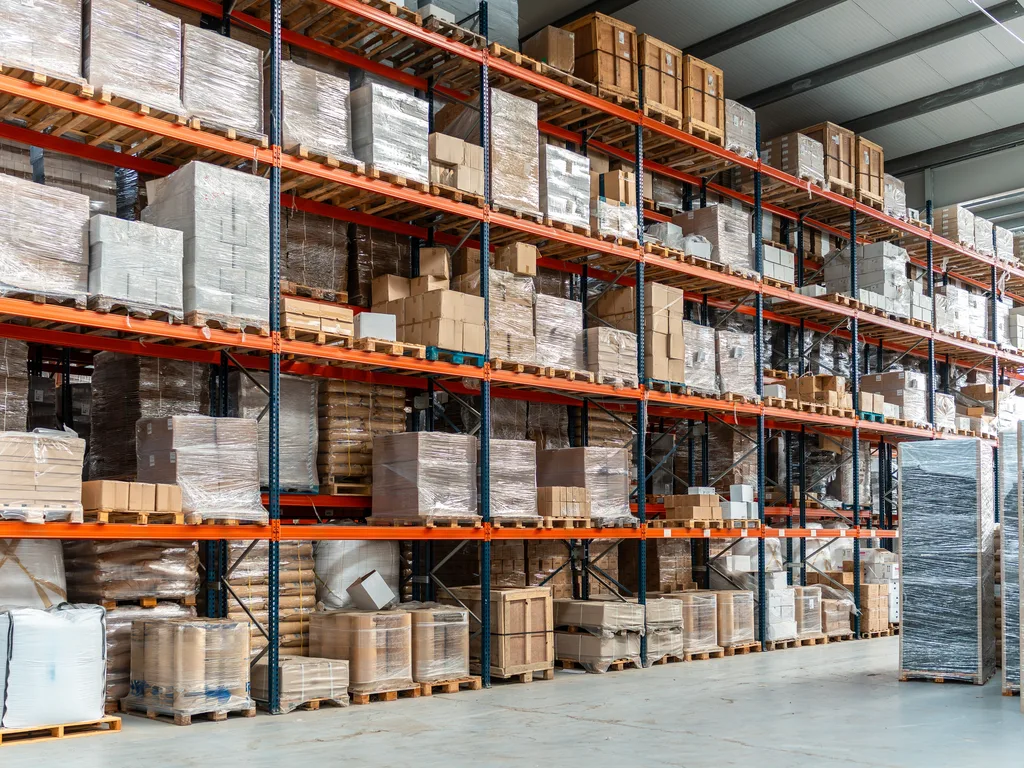
Start with what the building holds, because that is what you are actually being paid for. Riverside and San Bernardino counties — the Inland Empire — carry the largest concentration of big-box distribution and third-party logistics space in North America, and it exists for a single reason: the container that lands at San Pedro Bay has to go into a building. The operators there hold other people’s goods almost exclusively. Apparel, consumer electronics, housewares, furniture, under contract or public-warehouse terms, frequently owned by an importer who has never set foot in the facility. Nothing on those racks belongs to the company that runs them.
Now add the part that is unique to this state. California reaches past the goods and regulates the operator. The warehouse quota law governs the pace of work on your pick line. The South Coast air district’s Warehouse Indirect Source Rule puts an annual compliance obligation on whoever runs a large warehouse in the Los Angeles basin, not on whoever owns the inventory inside it. And the Board of Pharmacy licenses the third-party logistics provider that warehouses drugs without taking ownership of them — the whose-goods line written directly into statute. In California, being a bailee is not just a commercial position. It is a regulated one.
Warehouse legal liability: the country’s largest pile of other people’s inventory
The defining exposure of a California warehouse operator is loss to a customer’s goods while they sit in care, custody, and control. A fire in a rack aisle. A sprinkler head letting go over a pallet of consumer electronics. A theft from a trailer in a yard. A cooler that drifts warm over a grower’s crop. In every one of those the damaged property belongs to your customer, and your general liability policy will not pay for it.
That is the form doing exactly what it says. A standard general liability policy excludes damage to personal property in your care, custody, or control, and the freight you store is precisely that property. The loss you fear most is carved out of your foundation policy by its own terms. Warehouse legal liability answers what that exclusion removes, and on a California program it leads — ahead of the building, ahead of everything.
And because California hands a merchandise warehouse no licensing statute and no statutory standard of care, the shape of your liability is whatever your contracts make it. The warehouse receipt, the storage agreement, and the limitation-of-liability terms inside them are what a claim over a customer’s damaged goods will be argued against. Those terms and the coverage limit you buy are one decision, not two.
The two rules that follow the operator, not the goods
Here is what makes California genuinely different, and it lands hardest on exactly the businesses this page is written for.
The warehouse quota law — Labor Code section 2100 and following, from AB 701 — forbids a productivity quota that keeps a warehouse worker from taking a rest or meal period, using the bathroom, or complying with health-and-safety law, and it requires written disclosure of any quota. Nowhere else in the country is the tempo of a warehouse floor a regulated subject in its own right.
The Warehouse Indirect Source Rule — Rule 2305, the WAIRE Program — reaches warehouse facilities above a floor-space threshold in the Los Angeles basin and requires the operator to earn compliance points each year through the WAIRE menu, a custom plan, or a mitigation fee, while the facility owner files operations notifications. Aimed at the truck traffic a large building attracts, it attaches to running the building rather than to owning what is in it. A 3PL that owns neither the real estate nor a single carton on the racks can still carry the rule.
An underwriter reads both of these the same way you should: as evidence about how the operation is run. A disclosed, compliant quota and a documented WAIRE posture say something about management discipline, and management discipline is what a bailee is actually selling.
The 3PL license that draws the whose-goods line in law
The California State Board of Pharmacy licenses wholesalers — and separately licenses third-party logistics providers, defined as entities that warehouse drugs on behalf of a manufacturer or wholesaler without taking ownership of them. Read that definition again. The state built a license class around the exact distinction this page is organized on: you hold the goods, and you do not own them.
Practically, it means a pharmaceutical account is never just another customer. It is a new license, a new regulator, and a heightened standard of care over inventory that still belongs to somebody else. The same logic runs through food: the Health and Safety Code requires firms that manufacture, repack, label, or warehouse processed food in the state to register with the Department of Public Health’s Food and Drug Branch, and a Processed Food Registration acts as the basic health permit for a food warehouse, with cold-storage and refrigerated activity licensed through the same branch.
Rack anchorage is a bailee question
For a California warehouse the seismic story is racking. Earthquake is its own placement and does not ride the standard property form, and the loss is rarely the building on its own. It is selective and drive-in rack that racks over, anchorage that pulls out of the slab, pallets that come off the beams, stored goods that end up in the aisle. A tall, narrow-aisle building full of somebody else’s freight is precisely the geometry that punishes weak rack anchorage.
Which is why an operator has to hold two ideas at once. The steel is yours — commercial property, alongside the building, the material-handling systems, and the business income that stops when the facility does. The inventory that came down with the steel is theirs, and it is a bailee claim. One event, two policies, two halves of the same pile on the floor.
Wildfire is the second real exposure, and it reaches industrial property through the wildland interface and, more insidiously, through smoke and ash contamination that can total stored goods that never burned. Flood is separately placed again, and matters most in the low ground near the harbor complex and in the Central Valley’s river and levee country through an atmospheric-river winter.
Bonded custody behind the gateway
California’s foreign-trade zone footprint tracks its seaports. The Los Angeles zone is granted to the city’s Board of Harbor Commissioners and the Long Beach zone to the Port of Long Beach’s harbor board, giving the San Pedro Bay complex two adjoining grantees; Oakland holds its own zone with the city as grantee, with further zones in the Bay Area and the Central Valley. Duty-deferred and duty-free storage is a live option for an importer landing containers here, and the bonded, zone-activated warehouse near the port gates is a working building type.
For a bailee, admitting duty-deferred goods layers customs-bonded obligations on top of the duty of care you already owe the owner. You answer to two masters over the same pallet: the customer whose freight it is, and a customs regime that has not been paid. A shortage that is an awkward phone call in an ordinary building is a formal matter when the goods were never entered.
Major California warehouse markets
The Inland Empire
Riverside and San Bernardino counties hold the largest concentration of big-box distribution and third-party logistics space in North America, fed by I-10, I-15, I-215, and SR-60. It is where the 3PL industry actually lives, and the goods on those racks — apparel, consumer electronics, housewares, furniture — are almost never the operator’s. It is also inside the Los Angeles basin, which means the air district’s warehouse rule reaches the operator running the building.
Los Angeles
The city’s Board of Harbor Commissioners is the grantee of the Los Angeles foreign-trade zone, so a bailee near the harbor can hold an importer’s cargo duty-deferred. Duty-deferred custody means answering to the owner of the goods and to a customs regime that has not been paid — over the same pallet.
Long Beach
The adjoining zone is granted to the Port of Long Beach’s harbor board, giving the San Pedro Bay complex two neighboring grantees. Bonded and zone-activated warehousing here is a real, working building type rather than a theoretical one, and it puts customs obligations on top of an ordinary bailment.
Oakland
Northern California’s container gateway, with its own zone held by the city. An operator behind this port is doing import consolidation and deconsolidation — high handling frequency, short dwell, and custody changing hands repeatedly, which is where bailee claims usually start.
Stockton and Tracy
The northern Central Valley distribution nodes on I-5, with a deepwater river port at Stockton handling bulk. Inland warehousing here serves both the gateway and the valley’s growers, and the low-lying river and levee country makes flood a separately placed peril rather than a property-form afterthought.
Fresno
The heart of the valley’s pack-and-cool economy on SR-99. The goods in a Fresno cooler belong to growers, packers, and food brands, and a refrigeration failure destroys a customer’s crop while the operator’s building stands untouched — a bailee total loss with no property damage to point at.
Sacramento
Regional distribution serving Northern California, with the deepwater port at West Sacramento handling bulk. Operators here mix dry consumer freight with agricultural product, which means two different bailee standards of care and two different failure modes inside one storage agreement.
San Diego
The southern metro market, where fulfillment and regional replenishment space serves a dense consumer base. Unit-level fulfillment bailment fails by accumulation rather than by catastrophe: shrink, mis-ships, and handling damage across thousands of a customer’s items.
What underwriters price for a California bailee
We do not publish numbers, and any site that does is guessing. Here is what is actually asked:
- The value of the goods in your care, not your own assets — the figure that sizes the bailee limit and the one most often understated, because the inventory is not on your balance sheet.
- Rack, anchorage, bracing, and product restraint. In this state that is a seismic question and a bailee question at the same time.
- What you store, and at what temperature. Dry consumer freight, high-theft electronics, a licensed food-storage operation, and drugs under a Board of Pharmacy 3PL license are four different risks inside one building shell.
- Your storage contracts and their limitation-of-liability language — the entire perimeter in a state with no warehouse license.
- The comp file, and how quota, throughput, and staffing sit against the loss run. California places workers compensation in a private market with a competitive state fund alongside it, which is not the same thing as a monopolistic fund; you buy comp the ordinary way.
- Fleet and yard exposure — the commercial auto and umbrella layers over drayage, shuttle, and yard moves.
If the goods are yours, you are on the wrong page
One honest signpost before the questions. This page is written for the operator holding other people’s freight. If your business buys, holds, and resells its own product — an importer that takes title at the San Pedro Bay gate and becomes the first U.S. seller, a beverage wholesaler licensed by the Department of Alcoholic Beverage Control, a grocery or produce distributor in the Central Valley, an apparel or electronics wholesaler in Los Angeles or Orange County — then your inventory is not a bailment at all, and your program leads from stock throughput and products liability rather than from warehouse legal liability. That is a different exposure with a different policy stack, and it has its own page: distributor and wholesaler insurance in California.
A great many California businesses run both models. When yours does, we place the warehouse, distribution, and wholesale sides together, and the seam between the goods you hold and the goods you own is the first thing we map.
California warehouse insurance FAQs
Does California license a warehouse that stores other companies’ goods?
Not as a warehouse. California has no general public-warehouse licensing statute — a third-party warehouse storing general merchandise for hire is not licensed as a warehouse by the state, and what governs the relationship is bailment: the warehouse receipt, the storage agreement, and the limitation-of-liability and care standards that ride with a document of title. What California does license is what is in the building or what the building does. Food warehousing and drug warehousing are licensed separately, and the Department of Food and Agriculture’s Market Enforcement Branch licenses handlers of farm products such as processors and produce dealers. None of those is a general public-warehouse license, and it would be a costly mistake to read them as one.
What is the Warehouse Indirect Source Rule, and does it apply to me or to my landlord?
It applies to both, and differently — which is why it belongs on a bailee’s page rather than an owner’s. The South Coast air district’s Warehouse Indirect Source Rule, Rule 2305, known as the WAIRE Program, reaches warehouse facilities above a floor-space threshold in the Los Angeles basin. It requires the OPERATOR to earn compliance points each year — through the WAIRE menu, through a custom plan, or through a mitigation fee — while the facility owner files operations notifications. Read that carefully: the substantive obligation attaches to running the building, not to owning what is inside it. A 3PL that owns none of the goods and none of the real estate can still carry the rule. It is an operator obligation in a state where operators are usually the ones holding other people’s inventory.
How does California regulate the pace of work on a pick line?
Directly, and no other state does. The warehouse quota law — Labor Code section 2100 and following, from AB 701 — forbids a productivity quota that keeps a warehouse worker from taking a rest or meal period, from using the bathroom, or from complying with health-and-safety law, and it requires written disclosure of any quota. There is nowhere else in the country where the tempo of a warehouse floor is itself a regulated subject. The workers compensation exposure sits right underneath it: powered-industrial-truck strikes and tip-overs on a busy dock, pickers and packers working repetitive lifts through a full shift, falls from ladders and order-pickers at rack height, and material coming down off elevated storage. A quota that pushes throughput and a loss run that shows strain injuries are the same conversation, and an underwriter will treat them that way.
If the goods in my Inland Empire warehouse are not mine, what actually covers them?
Warehouse legal liability — the bailee line, and the reason it leads this page. The Inland Empire operator holds other people’s goods almost exclusively, frequently owned by an importer who has never set foot in the building. That is care, custody, and control of freight that will never appear on your balance sheet. Your general liability policy will not answer for it: a standard form excludes damage to personal property in your care, custody, or control, and the customers’ goods on your racks are precisely that. The single loss you fear most is carved out of your foundation policy by its own terms, and warehouse legal liability is written to answer exactly what that exclusion removes.
What does an earthquake do to a California distribution building?
For a warehouse the seismic story is racking, not roofing. Earthquake is its own placement — the standard property form does not carry the peril — and the loss is rarely the building alone. It is selective and drive-in rack that racks over, anchorage that pulls out of the slab, pallets that come off the beams, and stored goods that end up on the floor of an aisle. A tall, narrow-aisle building full of somebody else’s freight is exactly the geometry that punishes weak rack anchorage. So one shake produces two losses on two policies: your steel is commercial property, and the customer’s inventory that came down with it is a warehouse legal liability claim.
Does California license the third-party logistics provider that warehouses drugs?
Yes, and it is one of the cleanest expressions of the whose-goods line anywhere in American law. The California State Board of Pharmacy licenses wholesalers, and it separately licenses third-party logistics providers — an entity that warehouses drugs on behalf of a manufacturer or wholesaler WITHOUT taking ownership of them. The state has put the pure bailee in its own license class, defined precisely by the fact that it does not own what it holds. If your building takes on a pharmaceutical account, that is not a new SKU; it is a new license, a new regulator, and a new standard of care over goods that still belong to somebody else.
Get a California warehouse insurance quote
Quotes in 1–2 hours during business hours.