

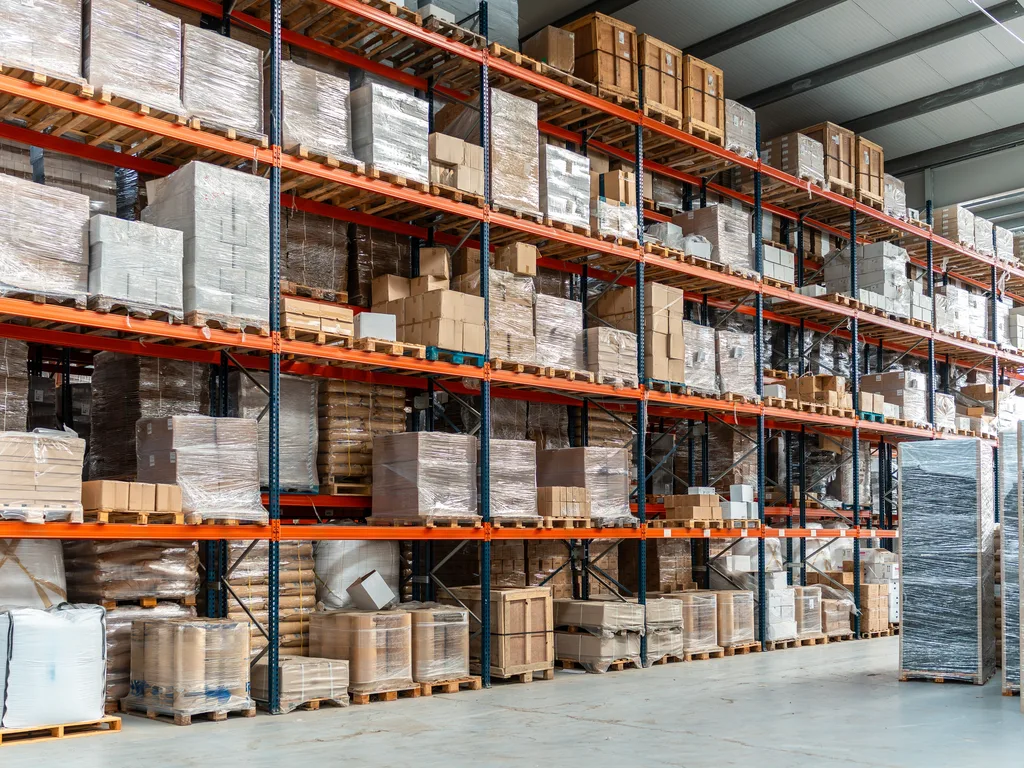
A container comes off the rail in Will County. Inside it are goods belonging to one shipper. Within a week those goods have been broken down, re-palletized, cross-docked, and re-shipped as orders for dozens of different customers — and at every stage of that journey they belonged to somebody who was not you.
That is deconsolidation, it is the core business of the largest inland container gateway on the continent, and it is why the biggest number in an Illinois warehouse program is one that never appears in the operator’s own accounts.
The freight is not yours, and there is a great deal of it
The Chicago intermodal corridor is the country’s densest concentration of goods belonging to somebody else. Transloading, deconsolidation, and contract warehousing are the business of the Joliet–Elwood cluster, and the operator holding those containers almost never owns their contents. The model is care, custody, and control, at enormous throughput.
That makes warehouse legal liability the lead line in every honest Illinois quote, and two separate inputs size it.
Value is the maximum, not the average: what is the most customer-owned freight that has ever been under this roof at once? A building whose volume follows an import calendar has a peak that looks nothing like its ordinary Tuesday, and a limit set to the ordinary Tuesday fails in the month you need it.
Nature is the one that gets skipped. A building of consumer electronics and a building of packaging stock can be identical square footage, identical rack, identical sprinkler design — and price nothing alike, because the amount at risk in a single pallet position differs by an order of magnitude, and because one of them is a theft target and the other is not.
One container in, a hundred custodies out
<text x="350" y="30" text-anchor="middle" font-family="Inter, sans-serif" font-size="15" font-weight="600" fill="#0F4C5C">Every time it splits, your custody splits with it</text>

<rect x="250" y="46" width="200" height="46" rx="9" fill="#ffffff" stroke="#C3DEDE"/>
<text x="350" y="66" text-anchor="middle" font-family="Inter, sans-serif" font-size="13" font-weight="600" fill="#0F4C5C">One inbound container</text>
<text x="350" y="84" text-anchor="middle" font-family="Inter, sans-serif" font-size="11" fill="#3F5B64">railed inland, still sealed</text>

<path d="M350 92 L180 122" stroke="#0F4C5C" stroke-width="1.5" fill="none"/>
<path d="M350 92 L350 122" stroke="#0F4C5C" stroke-width="1.5" fill="none"/>
<path d="M350 92 L520 122" stroke="#0F4C5C" stroke-width="1.5" fill="none"/>

<rect x="100" y="126" width="160" height="40" rx="8" fill="#ffffff" stroke="#C3DEDE"/>
<text x="180" y="151" text-anchor="middle" font-family="Inter, sans-serif" font-size="12" fill="#3F5B64">Broken to pallets</text>

<rect x="270" y="126" width="160" height="40" rx="8" fill="#ffffff" stroke="#C3DEDE"/>
<text x="350" y="151" text-anchor="middle" font-family="Inter, sans-serif" font-size="12" fill="#3F5B64">Racked and staged</text>

<rect x="440" y="126" width="160" height="40" rx="8" fill="#ffffff" stroke="#C3DEDE"/>
<text x="520" y="151" text-anchor="middle" font-family="Inter, sans-serif" font-size="12" fill="#3F5B64">Picked to cartons</text>

<path d="M180 166 L150 196" stroke="#0F4C5C" stroke-width="1.5" fill="none"/>
<path d="M180 166 L260 196" stroke="#0F4C5C" stroke-width="1.5" fill="none"/>
<path d="M350 166 L350 196" stroke="#0F4C5C" stroke-width="1.5" fill="none"/>
<path d="M520 166 L440 196" stroke="#0F4C5C" stroke-width="1.5" fill="none"/>
<path d="M520 166 L550 196" stroke="#0F4C5C" stroke-width="1.5" fill="none"/>

<rect x="60" y="200" width="580" height="34" rx="8" fill="#ffffff" stroke="#C3DEDE"/>
<text x="350" y="223" text-anchor="middle" font-family="Inter, sans-serif" font-size="12" fill="#3F5B64">Outbound orders — each one a customer waiting for goods that are intact</text>

<rect x="60" y="248" width="580" height="76" rx="9" fill="#C8935A" stroke="#0F4C5C"/>
<text x="350" y="274" text-anchor="middle" font-family="Inter, sans-serif" font-size="14" font-weight="600" fill="#1A1A1A">Every branch is a separate custody</text>
<text x="350" y="296" text-anchor="middle" font-family="Inter, sans-serif" font-size="12" font-weight="600" fill="#1A1A1A">A separate chance for handling damage, shortage, or a mis-ship</text>
<text x="350" y="316" text-anchor="middle" font-family="Inter, sans-serif" font-size="12" font-weight="600" fill="#1A1A1A">and none of it was ever yours to own</text>

<text x="350" y="350" text-anchor="middle" font-family="Inter, sans-serif" font-size="12" fill="#3F5B64">The value in the building did not change. The ways to lose it multiplied.</text>
<text x="350" y="372" text-anchor="middle" font-family="Inter, sans-serif" font-size="12" font-style="italic" fill="#3F5B64">This is not a price. It is what a price is answering.</text>That branching is why a transload operator’s losses are so often a frequency story rather than a severity one. The catastrophic fire is real and it must be insured for. But the claims that actually accumulate in a deconsolidation building are handling damage, shortage, and mis-ships, and they are underwritten as their own thing.
The agency with “warehouses” in its name licenses grain
Illinois does not license public warehouses generally. This is worth stating plainly, because the state runs a Bureau of Warehouses and an owner who reads the name will draw the wrong conclusion.
The Illinois Department of Agriculture’s Bureau of Warehouses licenses grain dealers and grain warehouses under the state grain code, and examines their books annually. It is a real program, seriously run, and it does not reach a merchandise warehouse — including every one of the enormous buildings along the intermodal corridor.
So the state hands your building no standard of care, and that absence is a cost driver rather than a footnote. Your warehouse receipt and storage contract are the entire perimeter around a claim, and an underwriter reads them. Whether your customers accepted a limitation-of-liability or released-value clause, negotiated it away, or signed a contract quietly assuming you carry far more than a bare legal-liability form provides — all of that changes the exposure the policy is being asked to size. Where no license exists, the storage contract is the regulation.
One narrower license does bite. Prescription-drug distribution is licensed by the state professional-regulation department, which issues both wholesale drug distributor and third-party logistics provider licenses and requires a separate license for each facility shipping prescription drugs into the state. That is the whose-goods distinction written into a statute: an operator who owns the drugs it sells, and one who only warehouses and ships them for somebody else.
Duty-deferred, in an inland building
The Chicago-area foreign-trade zone’s service area reaches across the counties of the intermodal corridor itself, and that geography is the point. A container coming off a coastal port and railing inland can be held in zone status in a Will County building before duty is paid. Bonded and duty-deferred storage in Illinois is a mainstream warehousing product, not a port-only specialty.
For a bailee it stacks obligations. Admit that freight and you owe customs a set of duties on top of the ordinary duty of care you already owe the owner of the goods. Over the same pallet, two masters. An underwriter prices the accumulation of both.
The roof, the sprinkler, and a sky that hits everything at once
Commercial property covers the structure, the racking and material-handling systems, and the income lost while the building cannot ship.
Fire protection is the headline. Sprinkler design has to match what you actually store and how high you stack it — and in a corridor where buildings change tenants and commodity classes faster than they change sprinkler heads, a system designed around one class in a building now full of another is the most common and most expensive gap in Illinois warehousing.
The peril profile is dominated by severe convective storms: tornadoes across the central and northern corridors, hail on acres of low-slope roof, and the straight-line wind events that periodically run the length of the state and strip membrane and rooftop equipment across an entire park at once. Snow and drift load on long clear-span roofs is a real winter design issue. Deep freezes threaten wet sprinkler systems and cold-chain refrigeration. Riverine flooding is a separately placed peril.
Follow any of them to the end and you arrive at the same place: the roof fails, the water reaches the racking, and the racking is holding goods that belong to your customers.
Beyond the corridor: the airport, the river, and the food economy
The intermodal cluster gets the attention, but it is not the whole state, and an operator outside it should not be underwritten as though they were inside it.
Illinois carries a broad food and beverage manufacturing base, and where there is food manufacturing there is food warehousing — dry and cold, much of it held for somebody else. Cold-chain bailment fails on its own axis, as it does everywhere: nothing burns, the temperature drifts, and a customer’s load is a total loss with the rack untouched. Deep freezes in this state threaten both the wet sprinkler system and the refrigeration plant, which is an unusual double exposure.
Add O’Hare’s air-cargo operation, the Chicago consumer market itself, and barge traffic on the Mississippi and Illinois rivers, and you have warehouse buildings whose custody profile has very little in common with a Will County transload shed — different commodities, different velocity, different limit.
The point is not that one is riskier. It is that a generic Illinois submission describes none of them accurately.
The crew, the clock, and the claim file
Workers compensation is a private-market line in Illinois — and it is a jurisdiction with a well-developed body of comp litigation, which means the discipline around a warehouse claim file matters more here than it does in a quieter state.
The exposures themselves are standard for a high-throughput building: powered-industrial-truck contact on a congested dock, workers struck by product coming out of racking, falls from dock plates and order pickers, and cumulative lifting and reaching injuries in fulfillment work — concentrated in the corridor buildings that run around the clock.
The lever is documentation. Traffic separation, rack inspection, dock procedure, and prompt, well-managed claim reporting are worth more in Illinois than a slogan about safety culture, and they show up in your pricing.
Claims, limits, and retention
Claims history moves pricing more than almost anything else here — not just whether you have had losses, but what they say about how the building runs. A deconsolidation operator with a long tail of small handling claims and one with a single large fire look nothing alike to an underwriter.
Limits and retention are the genuine choice. Given how frequency-shaped the Illinois exposure is, funding the routine handling damage yourself in exchange for a better price on a serious warehouse legal liability limit is often exactly the right trade — but it should be a decision, not a default.
The honest summary
Illinois is where the containers stop, and an Illinois warehouse is priced on custody rather than square footage. The building matters, the sprinkler matters enormously, the crew matters — but the number that moves the premium most is the freight belonging to somebody else that is being broken down on your floor tonight, and the contract you signed about what happens if it burns.
If you want the coverage itself rather than the cost, start with warehouse legal liability, read the Illinois warehouse insurance page, or see how we build a program for warehouse businesses. You can request a quote when you are ready. And if you own the goods you store rather than holding them for a customer, this is the wrong guide — read the Illinois distributor cost guide instead.