

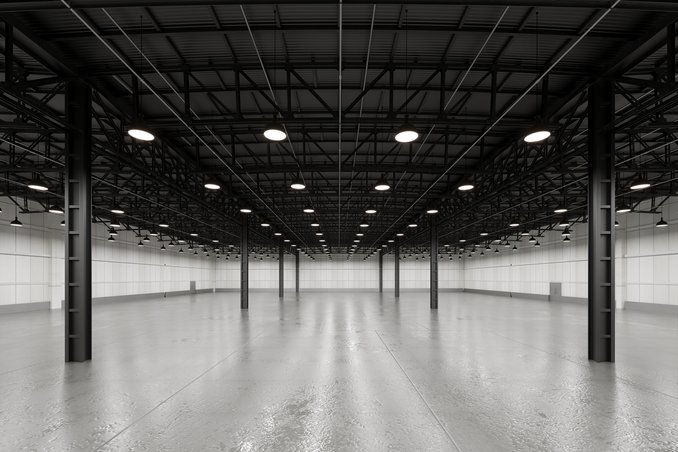
Indiana calls itself the Crossroads of America, and for a warehouse owner that phrase has a very specific financial meaning. A crossroads is a place goods pass through, not a place they are sold. Which means that at any given hour, an unusually large share of everything sitting on Indiana racking belongs to a business somewhere else — and it is that freight, not the building around it, that decides most of what an Indiana warehouse pays.
The number that is not on your balance sheet
Your building and your racking are yours. You know what they cost, you can look it up, and an underwriter can verify it. The pallets on the beams are a different matter entirely: they belong to customers, they are frequently worth more than the structure around them, and they are the loss you are most likely to have.
That is the warehouse legal liability conversation, and it opens every honest Indiana quote. Two separate inputs size it.
Value. Not the average holding — the maximum. What is the most customer-owned freight that has ever been under this roof at once, on the worst possible night in the busiest week of the year?
Nature. A building of orthopedic implants, pharmaceuticals, or automotive electronics and a building of packaging stock can be the same square footage, the same rack, the same sprinkler design, and price nothing alike, because the amount at risk in a single pallet position differs by orders of magnitude. Add theft-attractive goods and the profile changes again.
The accumulation problem a multi-tenant building creates
Here is the Indiana-specific wrinkle, and it is the one that catches operators who grew into contract warehousing rather than planning it.
A public or contract warehouse rarely holds one customer’s goods. It holds several — and each of those customers is looking only at their pallets. Nobody in that building is adding it up except you, and you are the only party with a single limit standing behind all of it.
<text x="350" y="30" text-anchor="middle" font-family="Inter, sans-serif" font-size="15" font-weight="600" fill="#0F4C5C">Every customer sees their pallets. Only you see the building.</text>

<rect x="30" y="48" width="150" height="56" rx="9" fill="#ffffff" stroke="#C3DEDE"/>
<text x="105" y="72" text-anchor="middle" font-family="Inter, sans-serif" font-size="12" font-weight="600" fill="#0F4C5C">Customer one</text>
<text x="105" y="91" text-anchor="middle" font-family="Inter, sans-serif" font-size="11" fill="#3F5B64">sees only their goods</text>

<rect x="192" y="48" width="150" height="56" rx="9" fill="#ffffff" stroke="#C3DEDE"/>
<text x="267" y="72" text-anchor="middle" font-family="Inter, sans-serif" font-size="12" font-weight="600" fill="#0F4C5C">Customer two</text>
<text x="267" y="91" text-anchor="middle" font-family="Inter, sans-serif" font-size="11" fill="#3F5B64">sees only their goods</text>

<rect x="354" y="48" width="150" height="56" rx="9" fill="#ffffff" stroke="#C3DEDE"/>
<text x="429" y="72" text-anchor="middle" font-family="Inter, sans-serif" font-size="12" font-weight="600" fill="#0F4C5C">Customer three</text>
<text x="429" y="91" text-anchor="middle" font-family="Inter, sans-serif" font-size="11" fill="#3F5B64">sees only their goods</text>

<rect x="516" y="48" width="154" height="56" rx="9" fill="#ffffff" stroke="#C3DEDE"/>
<text x="593" y="72" text-anchor="middle" font-family="Inter, sans-serif" font-size="12" font-weight="600" fill="#0F4C5C">Customer four</text>
<text x="593" y="91" text-anchor="middle" font-family="Inter, sans-serif" font-size="11" fill="#3F5B64">sees only their goods</text>

<path d="M105 104 L300 148" stroke="#0F4C5C" stroke-width="1.5" fill="none"/>
<path d="M267 104 L330 148" stroke="#0F4C5C" stroke-width="1.5" fill="none"/>
<path d="M429 104 L370 148" stroke="#0F4C5C" stroke-width="1.5" fill="none"/>
<path d="M593 104 L400 148" stroke="#0F4C5C" stroke-width="1.5" fill="none"/>

<rect x="60" y="152" width="580" height="72" rx="9" fill="#C8935A" stroke="#0F4C5C"/>
<text x="350" y="180" text-anchor="middle" font-family="Inter, sans-serif" font-size="15" font-weight="600" fill="#1A1A1A">Everything under one roof, at once, on your worst night</text>
<text x="350" y="204" text-anchor="middle" font-family="Inter, sans-serif" font-size="12" font-weight="600" fill="#1A1A1A">Not one of them is adding it up. You are the only party who can.</text>

<path d="M350 224 L350 258" stroke="#0F4C5C" stroke-width="1.5" fill="none"/>

<rect x="130" y="262" width="440" height="60" rx="9" fill="#ffffff" stroke="#C3DEDE"/>
<text x="350" y="286" text-anchor="middle" font-family="Inter, sans-serif" font-size="14" font-weight="600" fill="#0F4C5C">One warehouse legal liability limit</text>
<text x="350" y="308" text-anchor="middle" font-family="Inter, sans-serif" font-size="12" fill="#3F5B64">standing behind all of them, together, in a single fire</text>

<text x="350" y="352" text-anchor="middle" font-family="Inter, sans-serif" font-size="12" fill="#3F5B64">A limit set to an average holding is a limit that fails in your busiest month.</text>
<text x="350" y="378" text-anchor="middle" font-family="Inter, sans-serif" font-size="12" font-style="italic" fill="#3F5B64">This is not a price. It is the question a price gets built from.</text>A fire does not respect account boundaries. Neither does a sprinkler discharge, a roof failure, or a theft. So the limit has to be sized to the whole building at its fullest, and a limit set to a comfortable average is a limit that fails you in the month you most need it.
No license, so the storage agreement is the regulation
There is no general public-warehouse licensing statute in Indiana. Grain is the exception, and it is a serious one — the Indiana Grain Buyers and Warehouse Licensing Agency inside the state agriculture department issues warehouse, grain-bank, grain-buyer, and buyer-warehouse licenses, a program born after a large grain operation collapsed and farmers who had stored grain went unpaid. That history explains the program, and the program does not reach your contract warehouse in Plainfield.
Which means the state hands a merchandise warehouse no standard of care at all, and the consequence is a cost driver rather than a footnote: your warehouse receipt and storage agreement are the whole perimeter around a claim. An underwriter reads them. Whether your customers accepted a limitation-of-liability or released-value clause, negotiated it away, or signed an agreement that quietly assumes you carry more than a bare legal-liability form provides, all of that changes the exposure the policy is being asked to size.
There is one place Indiana does license the bailee, and it is precise about why: the state pharmacy board licenses third-party logistics providers alongside wholesale drug distributors. The distinction the statute draws is exactly ours — an operator that owns the drugs it sells, versus one that only warehouses and ships them for somebody else. If you are the second kind, Indiana has a license for you, and it comes with obligations an underwriter will want to see you meeting.
Two zones, two very different second masters
Indiana runs two foreign-trade zone programs with genuinely different characters, and which one you sit near changes the freight you are asked to hold.
The Indianapolis airport authority is grantee of the central-Indiana zone, which pairs naturally with the city’s air-cargo role — high-value, time-sensitive, duty-deferred goods that arrive by air and leave by truck. Ports of Indiana is grantee of the Burns Harbor zone on Lake Michigan, serving the northwest counties and the steel and heavy-industry belt — bulk, heavy, and slow-moving by comparison.
For a bailee the consequence is the same in both, and it is worth being precise about: admit duty-deferred cargo and you take on customs obligations on top of the ordinary duty of care you already owe the owner of the goods. Over the same pallet you now answer to two masters. An underwriter prices the accumulation of both, and clean records are part of the story rather than an afterthought.
The roof, the rack, and a Midwest sky
Your own property is the second conversation, not the first, but it is not small. Commercial property covers the structure, the racking and material-handling systems, and the income you lose while the building cannot ship.
Indiana sits inside the severe-convective corridor, and the practically relevant damage is rarely a direct tornado hit. It is the wide-footprint hail and straight-line wind that arrive with the same systems and land on acres of low-slope roof, rooftop refrigeration and mechanical units, and skylights. Then winter arrives, and the question becomes drift load across a long clear-span roof and freeze risk to wet sprinkler piping in unheated bays. Follow each of those through to its end and you land in the same place: water gets to the racking, and then it gets to the goods, and the goods are not yours.
Fire protection deserves its own line. Sprinkler design has to match what you actually store and how high you stack it, and a system designed around one commodity class in a building now full of another is a real, common, and expensive gap.
Velocity, the clock, and the crew
Indiana’s central position and its overnight air-freight hub let a building here accept an order later and still make next-day delivery — which is exactly why time-definite fulfillment concentrates in the ring around the capital and out the interstate corridors. Cold and controlled-temperature space clusters with it, serving pharmaceutical and life-sciences shippers whose freight fails by temperature rather than by fire.
Velocity changes the loss profile more than square footage does. A high-throughput fulfillment building rarely has one catastrophic cargo event; it accumulates shrink, mis-ships, and handling damage. That is a frequency story, and it is underwritten as one.
It also puts more people moving faster around powered equipment. Workers compensation scales with material-handling payroll and the classifications you actually run, and the Indiana claim set is the familiar one: forklift and pallet-jack strikes and tip-overs, workers struck by product coming out of selective racking, falls from dock edges and order-picker platforms, and the shoulder and back strain that builds up on a fast pick line. Indiana is a private-market comp state, which means the record you build is the record you are quoted on.
Claims, limits, retention
Claims history moves pricing more than almost anything else here — and not only whether you have had losses. Several small handling-damage claims tell an underwriter something quite different about how a building runs than one large one does.
Limits and retention are the lever genuinely in your hands. You are deciding how much routine damage you want to fund yourself in exchange for a better price on the part you cannot afford to fund at all. An operator who absorbs ordinary handling damage and buys a serious warehouse legal liability limit against the fire is buying insurance in the right order.
The honest summary
An Indiana warehouse is priced on custody, not on square footage. Being the place goods pass through is the whole business model — and it is also the whole underwriting problem, because it means the largest number in your program is one that never appears in your own accounts.
If you want the coverage rather than the cost, start with warehouse legal liability, read the Indiana warehouse insurance page, or see how we build a program for warehouse businesses. You can request a quote whenever you are ready. And if you own the inventory you store rather than holding it for a customer, none of the above is your program — read the Indiana distributor cost guide instead.