
States we serve · Indiana
Warehouse business insurance in Indiana
For the public, contract, 3PL, cold-storage, and fulfillment operators in the densest warehouse-for-hire economy in the Midwest — where most of the goods under most of the roofs belong to somebody in another state.
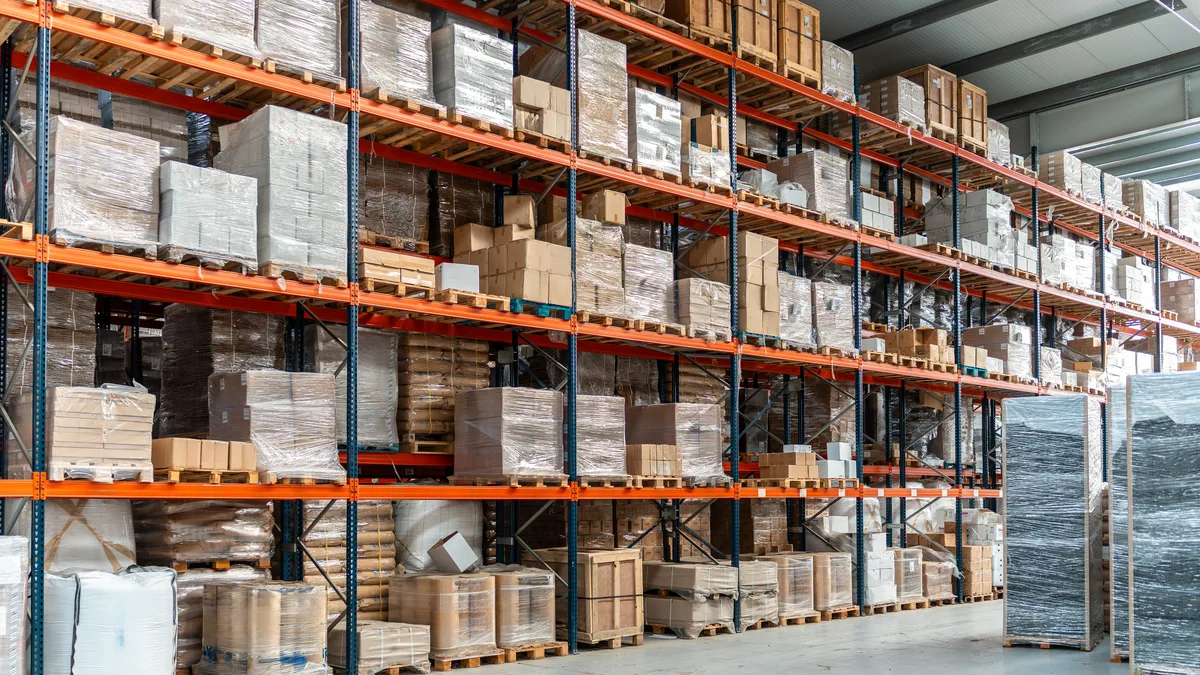

Indiana has one of the densest public-and-contract warehouse economies in the Midwest, and the reason is structural rather than commercial: the state is a place goods pass through rather than a place goods are sold. A distribution center in central Indiana reaches a large share of the eastern half of the country overnight by truck, and pairs that with an air hub for next-day parcel. National retailers, parts distributors, and fulfillment operators went where that arithmetic worked.
The consequence for an Indiana warehouse owner is unusually stark. An enormous share of the inventory sitting under an Indiana roof belongs to somebody in another state. That is the bailee position in its purest form — care, custody, and control over customers’ goods, with no ownership interest, no products-liability exposure, and no claim on the value of what is stacked in your racking. Your building is full, and none of it is yours.
What Indiana learned from a grain collapse — and never applied to your building
Indiana does license warehouses. It licenses exactly one kind. The Indiana Grain Buyers and Warehouse Licensing Agency, established within the Indiana State Department of Agriculture under Indiana Code 26-3-7, issues warehouse, grain-bank, grain-buyer, and buyer-warehouse licenses — and the reason that agency exists is worth knowing, because it is the closest thing this state has to an official opinion about bailment. The program was created after a large grain operation collapsed and farmers who had stored grain went unpaid.
Read that as a warehouse operator rather than as a farmer. Indiana watched a bailee fail, watched the owners of the stored goods lose everything, and built a licensing and bonding regime so it could not happen again — to grain. It never extended that regime to merchandise. So the contract warehouse in Plainfield holding a national retailer’s entire Midwest inventory, the cold-storage house holding a life-sciences shipper’s product, the fulfillment building holding thousands of unit-level customer-owned items: none of them is licensed, bonded, inspected, or indemnified. For all of those, the operator’s duty runs through the bailment and the storage agreement, and that is the whole of it.
The state knows exactly what happens when a warehouse fails the people who trusted it with their property. It simply decided, for everyone but the grain farmer, that the contract could handle it.
So the contract had better handle it
When a customer’s goods come through your door, you hold property that is not yours and you answer for it while it is in your keeping. A fire in a rack aisle. A sprinkler head letting go over a pallet of electronics. A theft from a trailer in the yard. A temperature excursion in a cold room. In every one of those the destroyed property is your customer’s — and your general liability policy will not pay for a dollar of it.
That is the form working as designed. A standard general liability policy excludes damage to personal property in your care, custody, or control, and the freight you store is exactly that. The loss you worry about most is carved out of your foundation policy by its own terms. Warehouse legal liability is written to answer precisely what that exclusion removes, and on an Indiana risk it leads the program ahead of everything.
Sizing it is where owners get into trouble. The limit is not driven by your assets; it is driven by the value of goods you will never own, belonging to customers who chose your building for its drive time. In a multi-tenant contract building that value is also aggregated — several customers, several storage agreements, several sets of limitation-of-liability terms, all under one roof and all exposed to the same fire. We read those agreements against the limit before binding, because in Indiana the storage contract really is the regulation.
The pharmacy board draws the line for us
There is one place where Indiana law writes the bailee role down explicitly, and it is worth pointing at. The Indiana Board of Pharmacy licenses wholesale legend-drug distributors and third-party logistics providers under Indiana Code 25-26-14 — drawing the line between an operator that owns the drugs it sells and one that only warehouses and ships them for someone else.
That is our whole axis, in a statute. Cold storage clusters around the food-processing corridors and the Indianapolis air hub, where pharmaceutical and life-sciences shippers need temperature-controlled handling, and where a temperature excursion ruins a customer’s product while leaving the building in perfect condition. Food distribution and wholesale food operations are licensed through the Indiana State Department of Health, with agricultural commodity handling running through the state agriculture department.
A pick line moving somebody else’s freight
Indiana runs a private workers compensation market — coverage is bought from insurers, not from a state fund. The loss picture is material handling, straight through: forklift and pallet-jack strikes and tip-overs, workers struck by product falling from selective racking, falls from dock edges and order-picker platforms, and the shoulder and back strain that builds up on a high-throughput pick line.
The Indiana wrinkle is that this workforce is handling goods it does not own, at volume. One incident can produce two files at once — an injury claim and a damaged-goods claim from the customer whose pallet came down — and they are answered by two different policies against two different standards. Underwriters ask how you separate them. The honest answer starts with how you document a putaway.
Wide roofs, wide storms, and the water afterwards
The building, the racking and material-handling systems, and the business income that stops when the facility does are the things you actually own. That is commercial property, and it is the smaller half of what is at stake under an Indiana roof.
Indiana sits inside the tornado and severe-convective corridor, but for a distribution building the relevant damage is usually not a direct hit. It is the wide-footprint hail and straight-line wind that arrives with the same systems: a large low-slope roof, its rooftop units, and its skylights take the impact, and then the water finds the racking. Winter adds snow and drift load across long clear-span roofs and freeze risk in unheated bays, where a wet-pipe sprinkler failure soaks stored goods without a fire ever starting. River flooding along the Ohio and the Wabash is separate and separately placed.
Every one of those events yields two losses out of one storm: your steel and roof, and your customer’s inventory on the floor beneath it. They are answered by two lines that do not overlap and do not substitute — which is the operating model the warehouse insurance program is built around, and the reason an operator carrying a generous property limit against a thin bailee limit has insured the cheap half of the building.
What underwriters weigh on an Indiana bailee risk
We do not put figures on a web page; any site that does is guessing. What actually moves the placement:
- The aggregate value of customers’ goods under your roof — the number that sizes the bailee limit, and the one owners most often understate because none of it is on their balance sheet.
- How many customers and how many contracts, because a multi-tenant building concentrates several separate bailments into one fire.
- Temperature — cold-chain and life-sciences custody, its backup power, and its alarm and monitoring discipline.
- Zone and bonded status, at the air hub or on the lake, which adds a customs obligation on top of the duty of care.
- Roof, racking, and throughput — the structure, the rack design, and the pace of the pick line.
- Claims history, which moves pricing harder than nearly anything else here.
Major Indiana warehouse markets
Indianapolis
The center of the knot — I-65, I-70, I-69, I-74 — and a major overnight air-freight hub whose zone is held by the Indianapolis Airport Authority. Time-definite fulfillment concentrates in the DC ring around the city, and time-definite custody is unforgiving: the bailee’s failure is measured against a delivery clock, not against a replacement cost.
Plainfield
The archetypal Indiana contract-warehouse address, out the I-70 corridor from the air hub. A building here typically holds inventory for several customers at once under separate storage agreements with separate limitation-of-liability terms — so one fire produces several different claims arguing several different contracts, which is the shape of a multi-tenant bailee loss.
Fort Wayne
Northeastern distribution off I-69, serving industrial and consumer freight moving toward Michigan and Ohio. The bailee mix skews toward parts and industrial product, which means dense, heavy unit loads and rack configurations that fail differently — and more expensively — than carton storage does.
Gary and northwest Indiana
Where the state connects to Chicago’s rail complex and to Lake Michigan bulk shipping, with the Burns Harbor zone granted to Ports of Indiana. Bulk and breakbulk custody is not pallet custody: goods are difficult to count and difficult to segregate, and the storage agreement’s description of what was received is the sentence that gets litigated.
South Bend
Northern manufacturing and distribution on the I-80/90 toll corridor. A bailee here is frequently holding components for a plant on a schedule, and the customer’s damage from a loss is measured in downtime as much as in the value of what was destroyed.
Evansville and the Ohio River
Barge access in the south and a river-terminal custody business that most inland states do not have. Riverine flooding along the Ohio is a separate, separately placed peril, and a warehouse operator on the floodplain holding a customer’s inventory has a siting question to answer before a coverage one.
Jeffersonville
The southern gateway across from Louisville, positioned for overnight parcel reach. High-velocity, unit-level fulfillment bailment fails by accumulation rather than catastrophe — shrink, mis-ships, and handling damage across thousands of customer-owned items, none of which is a claim on its own and all of which appears in a reconciliation.
If the goods are yours, you are on the wrong page
An honest signpost. This page is written for the operator holding other people’s freight. If your Indiana business buys, holds, and resells its own product — a beer wholesaler or a spirits wholesaler under the state’s product-by-product permits, a steel service center in the northwest, an automotive or orthopedic parts distributor, an importer taking air freight through Indianapolis — then your inventory is not a bailment at all, and your program leads from stock throughput and products liability rather than from warehouse legal liability. That is a genuinely different risk with a genuinely different policy stack, and it has its own page: distributor and wholesaler insurance in Indiana.
A good many Indiana businesses do both. If yours does, we place both sides — the distribution operation running your own product to market and the wholesale operation buying and reselling it — and the seam between what you hold and what you own is the first thing we map.
Indiana warehouse insurance FAQs
Does Indiana license public warehouses?
Not for merchandise. There is no general public-warehouse licensing statute in Indiana. Grain is the exception and it is a serious one: the Indiana Grain Buyers and Warehouse Licensing Agency, established within the Indiana State Department of Agriculture under Indiana Code 26-3-7, issues warehouse, grain-bank, grain-buyer, and buyer-warehouse licenses. That program was created after a large grain operation collapsed and farmers who had stored grain went unpaid — which is to say, the state built a licensing regime in direct response to a bailment failure. It never extended it beyond grain. For every other kind of stored goods, the operator’s duty runs through the bailment and the storage agreement rather than a state license.
What covers a customer’s inventory sitting in my Indiana building?
Warehouse legal liability — the bailee line, and the reason it leads this page. Taking in another company’s freight makes you a bailee: you hold property that is not yours and you answer for it while it is in your care, custody, and control. Your general liability policy will not do that job, because a standard form excludes damage to personal property in your care, custody, or control — an exact description of everything in your racking. The loss you most fear is carved out of your foundation policy by the form’s own terms, and warehouse legal liability is written to answer precisely what that exclusion removes. In an Indiana building, where a very large share of the goods belong to companies in other states, that limit is the most important number in the program.
I warehouse and ship drugs for a manufacturer but never own them. Am I licensed?
Yes, and the license is drawn on exactly that distinction. The Indiana Board of Pharmacy licenses wholesale legend-drug distributors and third-party logistics providers under Indiana Code 25-26-14 — drawing the line between an operator that owns the drugs it sells and one that only warehouses and ships them for someone else. Cold storage around the Indianapolis air hub and the food-processing corridors serves pharmaceutical and life-sciences shippers who need temperature-controlled handling, and the pharmacy board’s 3PL category is a formal recognition of the warehouse-for-hire role. Care, custody, and control is not merely an underwriting phrase in this state. It is a license class.
What are the real workers compensation exposures in an Indiana warehouse?
Indiana runs a private workers compensation market — coverage is bought from insurers, not from a state fund. Inside a warehouse or distribution building the loss picture is driven by material handling: forklift and pallet-jack strikes and tip-overs, workers struck by product falling from selective racking, falls from dock edges and order-picker platforms, and the shoulder and back strain that builds up on a high-throughput pick line. Indiana’s density of contract and public warehouses means a large share of that workforce is handling goods it does not own — which matters for how a claim and a cargo loss get separated afterwards, because the same incident can produce an injury file and a customer’s damaged-goods file at the same moment.
What does the weather actually do to a distribution building here?
Indiana sits inside the tornado and severe-convective corridor, but for a distribution building the relevant damage is usually not a direct tornado hit — it is the wide-footprint hail and straight-line wind that comes with the same systems. A large low-slope roof, the rooftop refrigeration and HVAC units, and the skylights take the impact first, and the water that follows finds the racking and the customer’s goods. Winter brings snow and drift load across long clear-span roofs and freeze risk to wet sprinkler systems in unheated bays — and a wet-pipe failure soaks stored inventory without any fire at all. River flooding along the Ohio and Wabash is a separate peril and a separate placement.
What do the two Indiana foreign-trade zones mean for a bailee?
They mean bonded custody is available in two very different kinds of building. The Indianapolis Airport Authority is grantee of the Indianapolis-area zone, which pairs naturally with the city’s air-cargo role; Ports of Indiana is grantee of the Burns Harbor zone on Lake Michigan, serving the northwest counties and the steel and heavy-industry belt. So zone-status storage is open both to an air-freight importer in central Indiana and to a bulk importer on the lake. When your building admits duty-deferred goods you take on customs-bonded obligations on top of your ordinary duty of care to the owner — two masters over one pallet, and a shortage becomes a formal problem rather than an awkward phone call.
Get an Indiana warehouse insurance quote
Quotes in 1–2 hours during business hours.