

Kansas has a statute called the public warehouse law. It uses the term public warehouseman throughout. It obliges that warehouseman to receive all grain tendered in suitable condition without discrimination, to sample and weigh it, and to file a schedule of storage charges before being licensed. Anyone storing for the public must hold a state or federal license, and licensees are examined every year.
Read that paragraph again and count how many times it says grain.
Once — but that word is doing all of the work, because the subject of the Kansas public warehouse law is grain, from beginning to end. And telling an operator at Edgerton or in Wyandotte County that they need a “public warehouse license” because the statute has that name on it would be flatly, expensively wrong.
Your state has a law named after what you do. It will not help you price this building. Here is what will.
Nothing the state wrote applies to you — and that is a cost driver
A third-party operation storing consumer goods at the Edgerton intermodal park is not a public warehouseman under that law. It is licensed as nothing, and its duties to its customers’ goods arise from the storage contract and the bailment — not from a permit.
That absence is not a footnote. It is an underwriting fact.
Because no statute writes you a standard of care, your warehouse receipt and storage agreement are the entire perimeter around a claim. An underwriter reads them before pricing anything. Whether your customers accepted a limitation-of-liability clause, whether the released-value terms are the ones you believe they are, whether a national account quietly extracted a full-value commitment three renewals ago that a bare legal-liability form was never built to meet — all of that changes the exposure the policy is being asked to carry, and therefore what carrying it costs.
In a state with no license, the storage contract is the regulation.
The freight at Edgerton, and what it is worth
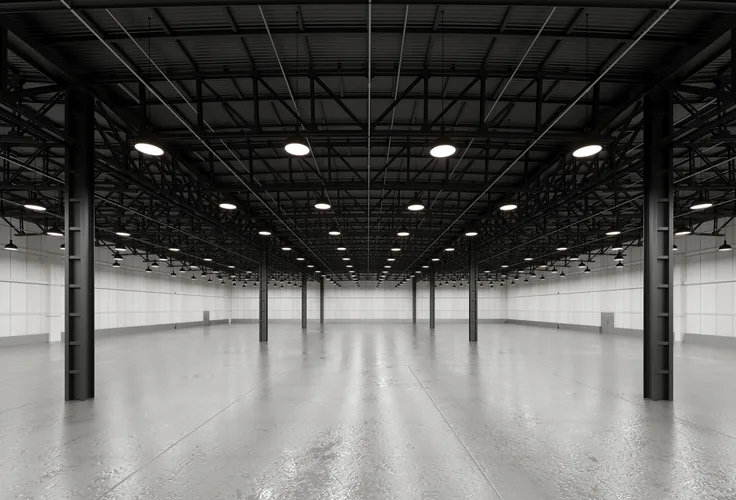
Logistics Park Kansas City turned a stretch of Johnson County farmland into one of the strongest inland-port distribution submarkets in the interior of the country — a rail intermodal terminal with wide-span gantry cranes and direct connection to the transcontinental network, and Class A warehouse development that followed it.
The buildings there hold other people’s goods. Retailers and e-commerce operators who want to touch most of the country in two days by truck put their inventory in a Kansas warehouse they do not own, run by an operator who never takes title to a single pallet.
The value and the nature of that freight is what sizes a warehouse legal liability limit — and it is the number operators most often understate, precisely because it never appears in their own accounts.
Value is the peak: the fullest week, not an average one. Nature is what the goods actually are, and in Kansas the spread is wide — consumer goods off the intermodal terminal, aviation and industrial parts around Wichita, frozen protein out of the southwest packing towns. Identical footprints, entirely different amounts at risk per pallet position, entirely different ways of going to zero.
Except food. Food is licensed.
Two things complicate the clean “licensed as nothing” picture, and both belong in a submission.
The first is food. A Kansas building that only stores food for other companies needs a food-storage license from the Department of Agriculture — the food-safety program treats food wholesalers, food warehouses, and food re-packers as food processors, and splits the application between facilities that process and store and facilities that only store, with the storage-only category fee-rated by facility size. So a food-grade third-party operation here is regulated, in a way a general-merchandise operation across the road is not. Add a food account and you have added a license, an inspection relationship, and a different conversation with an underwriter.
Cold and frozen space also brings the failure mode that dry buildings never think about: a temperature excursion destroys a customer’s product while the building stands entirely undamaged. No fire, nothing to photograph, a total loss on their invoice. Redundancy, monitoring, alarm response, and maintenance records are what price that.
The second is customs. The Kansas side of the metro sits inside a foreign-trade-zone footprint spanning Johnson, Wyandotte, Leavenworth, and neighboring counties, under the same grantee that holds the Missouri-side zone — so the bi-state metro functions as one duty-deferred distribution market. Which means a Kansas bailee can be holding imported, duty-unpaid inventory belonging to a customer: a very high value concentration under one roof, and one where a loss triggers customs consequences on top of the customer’s claim for the goods. One pallet, two masters.
The roof, and what most often cashes a check
Kansas is the state the phrase tornado alley was coined for, and the severe convective season is the defining property exposure for anything with a large roof plane here.
But the peril that most often actually cashes a check is hail, and the reason is geometry: a distribution roof is a horizontal target measured in acres, with rooftop mechanical units, skylights, and membrane seams all vulnerable to a single storm. Straight-line downburst wind can peel roofing off a big-box building without a tornado ever touching down.
And for a bailee, the roof is never only a roof. Once it is open, water reaches the racking, and the racking is holding freight that belongs to somebody else. Commercial property answers for your shell, your steel, and your lost income. It has never covered their pallets.
Winter brings hard freeze, with burst-pipe and sprinkler-freeze exposure in unheated or partially heated space — another way somebody else’s goods get destroyed without a fire. Flash flooding along the Kansas and Arkansas river systems is a siting question in the eastern half of the state, and flood is its own placement, not a property peril.
Custody documentation, at intermodal speed
An intermodal building runs fast, and speed is where custody documentation quietly fails.
Freight comes off a train, gets stripped, gets staged, gets picked, and leaves — often within a day, often for owners who are not in the room. Every one of those handoffs is a moment where the answer to who had the goods, and in what condition has to be recorded, because the answer will be needed later by someone who is not friendly.
The questions an underwriter asks about this are unglamorous and completely decisive. How is condition documented at receipt, before your custody attaches? Who is authorized to release freight, and what does a driver have to present? What happens when a container arrives with damage that occurred somewhere else entirely — is that captured in writing, or does it become your loss by default because nobody wrote it down? Where does a short-count get investigated, and by whom?
Short-interval accuracy is part of the service in a market like this one, not an afterthought. An operator that can show the record reads as a controlled risk. One that cannot is asking an insurance carrier to price an unbounded frequency of small bailee claims, and unbounded is always the expensive answer.
Payroll, and what comes off the racking
Workers compensation is a private-market line here — insurers compete for it, and there is no state fund standing between the employer and coverage. It scales with material-handling payroll, and the exposures that actually generate the claims are specific: forklift and pallet-jack contact injuries, workers struck by product falling out of a rack bay, dock and trailer falls, and lifting strain in high-throughput picking.
In the beef-belt towns of the southwest, cold-room work and the physical intensity of a protein warehouse add their own layer, and refrigerated space brings slip exposure on wet or frozen floors that a dry building simply does not have.
The question the statute actually asks
<text x="350" y="30" text-anchor="middle" font-family="Inter, sans-serif" font-size="15" font-weight="600" fill="#0F4C5C">The statute has your name on it. Read what it asks.</text>

<rect x="200" y="48" width="300" height="46" rx="9" fill="#ffffff" stroke="#0F4C5C"/>
<text x="350" y="68" text-anchor="middle" font-family="Inter, sans-serif" font-size="13" font-weight="600" fill="#0F4C5C">Is what you store for others GRAIN?</text>
<text x="350" y="86" text-anchor="middle" font-family="Inter, sans-serif" font-size="11" fill="#3F5B64">That is the whole test</text>

<line x1="350" y1="94" x2="350" y2="112" stroke="#0F4C5C" stroke-width="2"/>
<line x1="160" y1="112" x2="540" y2="112" stroke="#0F4C5C" stroke-width="2"/>
<line x1="160" y1="112" x2="160" y2="134" stroke="#0F4C5C" stroke-width="2"/>
<line x1="540" y1="112" x2="540" y2="134" stroke="#0F4C5C" stroke-width="2"/>

<text x="160" y="130" text-anchor="middle" font-family="Inter, sans-serif" font-size="12" font-weight="600" fill="#0F4C5C">YES</text>
<text x="540" y="130" text-anchor="middle" font-family="Inter, sans-serif" font-size="12" font-weight="600" fill="#0F4C5C">NO</text>

<rect x="30" y="140" width="260" height="150" rx="9" fill="#ffffff" stroke="#C3DEDE"/>
<text x="160" y="164" text-anchor="middle" font-family="Inter, sans-serif" font-size="12" font-weight="600" fill="#0F4C5C">You are a public warehouseman</text>
<text x="160" y="190" text-anchor="middle" font-family="Inter, sans-serif" font-size="11" fill="#3F5B64">Licensed by the state, or federally</text>
<text x="160" y="210" text-anchor="middle" font-family="Inter, sans-serif" font-size="11" fill="#3F5B64">Examined every year</text>
<text x="160" y="230" text-anchor="middle" font-family="Inter, sans-serif" font-size="11" fill="#3F5B64">You must take all grain tendered</text>
<text x="160" y="250" text-anchor="middle" font-family="Inter, sans-serif" font-size="11" fill="#3F5B64">Sample it, weigh it, file your charges</text>
<text x="160" y="274" text-anchor="middle" font-family="Inter, sans-serif" font-size="11" font-style="italic" fill="#3F5B64">The elevator down the road</text>

<rect x="410" y="134" width="260" height="162" rx="9" fill="#C8935A" stroke="#0F4C5C"/>
<text x="540" y="160" text-anchor="middle" font-family="Inter, sans-serif" font-size="12" font-weight="600" fill="#1A1A1A">The statute reaches nothing</text>
<text x="540" y="186" text-anchor="middle" font-family="Inter, sans-serif" font-size="11" font-weight="600" fill="#1A1A1A">No state warehouse license</text>
<text x="540" y="206" text-anchor="middle" font-family="Inter, sans-serif" font-size="11" font-weight="600" fill="#1A1A1A">No standard of care written for you</text>
<text x="540" y="226" text-anchor="middle" font-family="Inter, sans-serif" font-size="11" font-weight="600" fill="#1A1A1A">Your contract IS the regulation</text>
<text x="540" y="252" text-anchor="middle" font-family="Inter, sans-serif" font-size="11" font-weight="600" fill="#1A1A1A">The receipt is the whole perimeter</text>
<text x="540" y="278" text-anchor="middle" font-family="Inter, sans-serif" font-size="11" font-weight="600" font-style="italic" fill="#1A1A1A">The building at Edgerton</text>

<text x="350" y="322" text-anchor="middle" font-family="Inter, sans-serif" font-size="12" fill="#3F5B64">Most of the state’s warehouse floor space stands on the right-hand side.</text>
<text x="350" y="340" text-anchor="middle" font-family="Inter, sans-serif" font-size="12" font-style="italic" fill="#3F5B64">Neither branch is a price. One of them is a contract.</text>
The honest summary
Kansas is a serious freight state — I-70 across it, I-35 carrying the Texas lane through Wichita and Emporia, and an intermodal park at Edgerton that competes nationally. What it is not is a licensed warehouse state, whatever the name on its grain statute suggests. Your price is built from the goods you are holding for other people, from whether the state licenses them because they are food, from whether customs has an interest in them, from a roof exposed to some of the most punishing hail in the country, and from the storage agreement you wrote yourself.
If you want the coverage rather than the cost, start with warehouse legal liability, see how the pieces come together on our warehouse business insurance page, or read the Kansas warehouse insurance page. And if the pallets are yours — a beverage, food, aviation-supply, or equipment wholesaler holding owned stock — the distributor cost guide is the one written for you.