

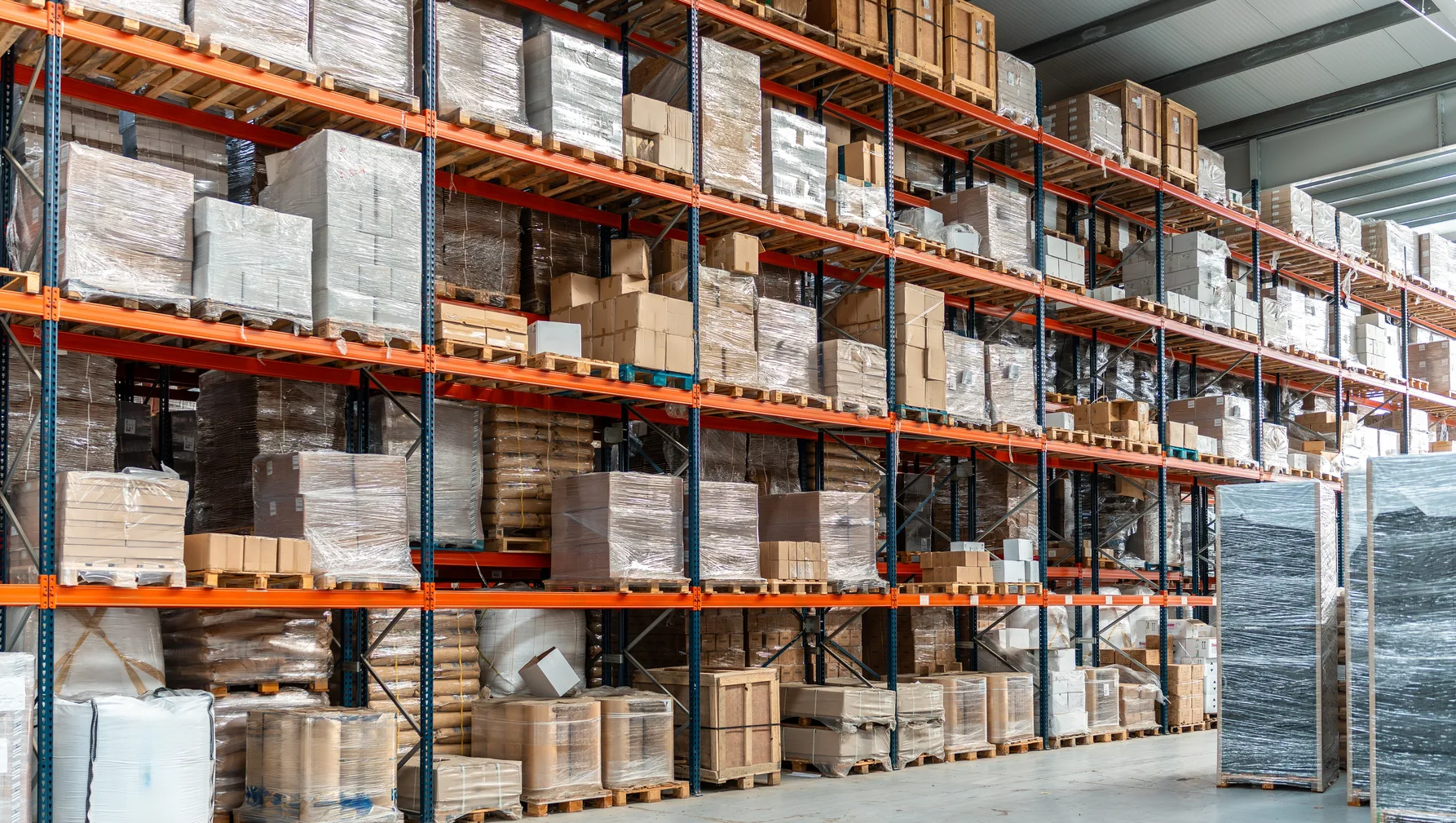
There is a reason a retailer in Southern California, or a brand in Seattle, or an importer whose goods landed at a coastal terminal, would choose to keep its inventory in a building in Sparks or North Las Vegas rather than near its own head office. The reasons are good ones, and they have nothing to do with you.
But they have everything to do with what your building costs to insure. Because the same arithmetic that persuades those companies to stage their goods in Nevada is the arithmetic that fills your racking with their property — densely, at speed, and in a volume that has no relationship whatsoever to the size of your own balance sheet.
That is the Nevada cost story in one sentence, and everything below is a consequence of it.
Accumulation is the word an underwriter is thinking
The Reno–Sparks and North Las Vegas clusters exist to hold other people’s goods. Third-party logistics providers, public and contract warehouses, and fulfillment operators run buildings stacked with inventory owned by companies somewhere else entirely, staged here purely because the delivery clock works. That is care, custody, and control at scale and at speed — high-velocity, high-value, densely racked, with an owner watching every unit.
Which is why the value and the nature of the goods in your care is the input that sizes your warehouse legal liability limit, and why Nevada operators understate it more dramatically than operators in slower states. That inventory never appears in their accounts, and there is a great deal of it.
Value means the maximum amount of customer-owned freight under your roof on the worst possible day — and for a building whose entire purpose is to absorb a national retailer’s forward stock before a season, the worst day is a date somebody else circled on a calendar. A limit set to an average holding is a limit that fails you at peak, which is precisely when the building is fullest.
Nature is the input that gets skipped. Densely racked consumer electronics and bulky low-value goods can occupy the same footprint with the same racking and price nothing alike, because the amount at risk per pallet position differs by an order of magnitude — and so does the theft profile. In a state where the goods are high-value by design, that distinction is not academic.
<text x="350" y="32" text-anchor="middle" font-family="Inter, sans-serif" font-size="15" font-weight="600" fill="#0F4C5C">The same fact, seen from two directions</text>

<path d="M350 62 L350 96" stroke="#0F4C5C" fill="none"/>
<path d="M150 96 L550 96" stroke="#0F4C5C" fill="none"/>
<path d="M150 96 L150 118" stroke="#3F5B64" fill="none"/>
<path d="M550 96 L550 118" stroke="#3F5B64" fill="none"/>

<rect x="34" y="118" width="232" height="152" rx="9" fill="#ffffff" stroke="#C3DEDE"/>
<text x="150" y="144" text-anchor="middle" font-family="Inter, sans-serif" font-size="12" font-weight="600" fill="#0F4C5C">Why they put it here</text>
<text x="150" y="172" text-anchor="middle" font-family="Inter, sans-serif" font-size="11" fill="#3F5B64">A day’s reach to every major</text>
<text x="150" y="189" text-anchor="middle" font-family="Inter, sans-serif" font-size="11" fill="#3F5B64">West Coast market.</text>
<text x="150" y="217" text-anchor="middle" font-family="Inter, sans-serif" font-size="11" fill="#3F5B64">A cost structure that rewards</text>
<text x="150" y="234" text-anchor="middle" font-family="Inter, sans-serif" font-size="11" fill="#3F5B64">holding stock in this state.</text>
<text x="150" y="258" text-anchor="middle" font-family="Inter, sans-serif" font-size="11" font-style="italic" fill="#3F5B64">Their decision. Not yours.</text>

<rect x="434" y="112" width="232" height="164" rx="9" fill="#C8935A" stroke="#0F4C5C"/>
<text x="550" y="138" text-anchor="middle" font-family="Inter, sans-serif" font-size="12" font-weight="600" fill="#1A1A1A">What it does to your roof</text>
<text x="550" y="166" text-anchor="middle" font-family="Inter, sans-serif" font-size="11" font-weight="600" fill="#1A1A1A">More of somebody else’s goods</text>
<text x="550" y="183" text-anchor="middle" font-family="Inter, sans-serif" font-size="11" font-weight="600" fill="#1A1A1A">under one roof. Racked higher.</text>
<text x="550" y="200" text-anchor="middle" font-family="Inter, sans-serif" font-size="11" font-weight="600" fill="#1A1A1A">Moving faster. Worth more.</text>
<text x="550" y="228" text-anchor="middle" font-family="Inter, sans-serif" font-size="11" font-weight="600" fill="#1A1A1A">Accumulating to a figure your</text>
<text x="550" y="245" text-anchor="middle" font-family="Inter, sans-serif" font-size="11" font-weight="600" fill="#1A1A1A">own books never mention.</text>
<text x="550" y="266" text-anchor="middle" font-family="Inter, sans-serif" font-size="11" font-weight="600" font-style="italic" fill="#1A1A1A">Your problem. Every night.</text>

<text x="350" y="310" text-anchor="middle" font-family="Inter, sans-serif" font-size="12" font-weight="600" fill="#0F4C5C">The reason they store it here is the reason your limit has to be bigger.</text>
<text x="350" y="350" text-anchor="middle" font-family="Inter, sans-serif" font-size="12" font-style="italic" fill="#3F5B64">Nobody sends you an invoice for the accumulation. An underwriter still sees it.</text>The one warehouse permit Nevada issues is not yours
This trips people, and it is worth being blunt. Nevada does have a state warehouse permit. It comes from the Nevada Transportation Authority under the household goods and effects storage law, and it applies to a warehouse holding itself out to the public to store household goods — a moving-and-storage regime.
It does not reach general merchandise, distribution, or fulfillment warehousing. So for the operator running a contract building in Fernley or a fulfillment building in North Las Vegas, there is no state license at all, and therefore no statutory standard of care.
Which leaves the storage contract doing every bit of the work. An underwriter reads it as such, and Nevada raises the stakes: the customers here are sophisticated national companies, and sophisticated national companies write demanding contracts. Whether you accepted their limitation-of-liability terms, negotiated your own released-value language, or signed something that quietly assumed you carry a far broader form than a bare legal-liability policy provides, changes the exposure the policy is being asked to size — and therefore the price. Where there is no license, the contract is the regulation.
Dry perils: smoke on the range, heat on the roof, and racking that moves
Commercial property answers for what is yours and stays put — the structure, the racking and material-handling systems, and the income you lose while the site is down. Nevada gives it four separate jobs, and one of them is unusual.
Wildfire is serious in the north, where the Reno–Sparks industrial base sits close to open range and foothill fuel. The point a bailee should sit up for: the fire does not have to reach your property to cost you. Smoke and ash can contaminate stored goods while the flames stay miles away — and a contaminated consignment belonging to a customer is a bailee claim, not a property claim.
Heat in the south is sustained and structural: it stresses roofing, it stresses refrigeration, and it stresses the people on a dock.
Wind in the high desert loads a large roof plane and the equipment sitting on it.
And seismic is the one nobody expects. Nevada carries real seismic activity in the west of the state, and for a warehouse the earthquake story is the racking, not the shell. Tall, heavily loaded selective racking is what fails — and when it fails, it comes down on the goods below, which belong to your customers. Rack design, loading discipline, and anchorage become underwriting subjects rather than housekeeping ones. Earthquake, like flash flood, is a separate placement and does not ride the property form.
The busiest buildings get the newest hands
Workers compensation here is a private-market line, and Nevada has more warehouse comp exposure than its population suggests, for the obvious reason: the DC clusters are where the jobs are.
The claim set is the high-velocity one — forklift and powered-industrial-truck traffic in high-throughput buildings, order-picker and mezzanine falls, product coming off racks, conveyor and automation pinch points, and the repetitive lifting and reaching of a fast pick line. The aggravator is timing: peak-season hiring surges put inexperienced people into the busiest buildings at the busiest moment. That is not a rare event. It is an annual one, and it shows up in a loss run with total predictability, which is why onboarding discipline is a genuine underwriting variable.
The two ends of the state produce slightly different versions of the same problem, and it is worth telling an insurance carrier which one you are. In the north — Sparks, Fernley, and the industrial build-out east of them — the buildings tend to be newer, taller, and more heavily automated, which shifts the injury mix toward conveyor and machine-interface events and toward falls at height. In the south, around North Las Vegas and Henderson, the hospitality supply chain adds a relentless, unforgiving demand base: the resort economy has to be restocked on a schedule that never eases, and food, beverage and supply distribution into it runs at a tempo that a seasonal retail building never sustains. Cold space is a real and growing part of that, which brings its own slip and cold-stress exposure onto the floor.
Both patterns are manageable. Neither is invisible in a loss run, and neither is priced by square footage.
Bonded, inland
Nevada has zone coverage at both ends of the state, and neither is attached to a port. Bonded and duty-deferred storage here is the storage side of an inland consolidation play — goods that landed at a coastal terminal, moved inland, and are held in Nevada.
When you admit that cargo, it sits under customs control while it is on your floor, so you answer to the customs obligation and to the owner of the goods over the same pallet. Two duties, one pallet, and an underwriter prices the accumulation of both — which is, once again, the Nevada word.
Claims, limits, and the retention you choose
Loss history moves pricing more than nearly anything on this list, and what an insurance carrier is reading is what those losses say about how the building runs. A run of small handling-damage claims in a fast building says something different from one rack collapse.
Limits and retention are a genuine choice: how much routine damage do you fund yourself, in exchange for a better price on the loss you could never absorb? In a state where the accumulation under one roof is this high, the operator who buys a serious warehouse legal liability limit and puts an umbrella above it is buying insurance in the right order.
The honest summary
Nevada is warehousing by design, and the design puts other companies’ goods under your roof in quantity. The building is yours. The racking is yours. The exposure is theirs, and it is sitting on your floor tonight in a volume your own balance sheet will never tell you about.
If you want the coverage rather than the cost, start with warehouse legal liability, see how we work with warehouse businesses, or read the full Nevada warehouse insurance page. And if you own the inventory you store rather than holding it for other companies, this is not your program: you want the Nevada distributor cost guide.