

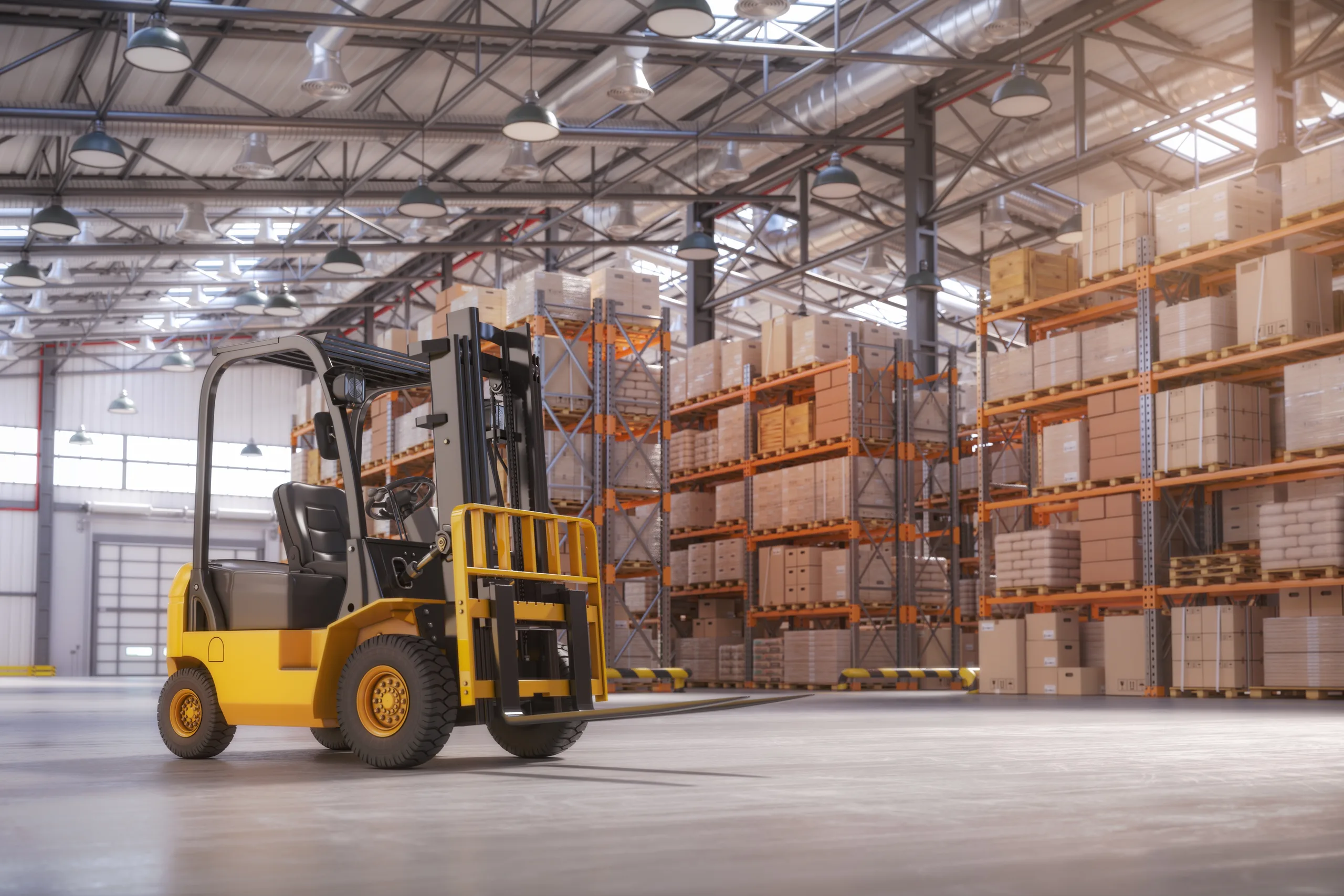
The most instructive warehouse in New Mexico is not in a city. It is at a border crossing in the desert west of El Paso, and the goods on its dock are there for one reason: they are between owners’ hands.
That is the purest description of a bailee’s position anyone is likely to give you, and it explains most of what a New Mexico warehouse pays.
Goods that are on your property because they are in motion
Santa Teresa is the state’s real distribution economy — a port of entry with a large rail intermodal facility and an industrial park built around it, deliberately routing traffic around the congestion of the older crossings. Operators there hold, transload, consolidate, and stage goods belonging to Mexican manufacturers and U.S. importers. Freight arrives by truck across the line and leaves by rail, or the reverse.
The operator never owns any of it. That is not an accident of the business model — it is the business model, and it is why the warehouse legal liability limit is the single largest input into a New Mexico warehouse program.
Two inputs size it and they are separate.
Value is the maximum, not the average. What is the most customer-owned freight that has ever been on this property at once? A border building whose volume swings with a production schedule two hundred miles south has a peak that looks nothing like its ordinary week.
Nature is the input operators skip. A trailer of automotive components and a trailer of consumer electronics can occupy the same dock door and represent wildly different money — and wildly different theft attractiveness.
Neither number is on your balance sheet. Which is exactly why they are the ones that get understated.
Dwell time and touch count: two very different buildings
<text x="350" y="30" text-anchor="middle" font-family="Inter, sans-serif" font-size="15" font-weight="600" fill="#0F4C5C">Same square footage. Entirely different claim.</text>

<rect x="24" y="50" width="316" height="212" rx="10" fill="#ffffff" stroke="#C3DEDE"/>
<text x="182" y="76" text-anchor="middle" font-family="Inter, sans-serif" font-size="14" font-weight="600" fill="#0F4C5C">The storage building</text>
<text x="182" y="106" text-anchor="middle" font-family="Inter, sans-serif" font-size="12" fill="#3F5B64">Holds a great deal of customer value</text>
<text x="182" y="128" text-anchor="middle" font-family="Inter, sans-serif" font-size="12" fill="#3F5B64">Holds it for a long time</text>
<text x="182" y="150" text-anchor="middle" font-family="Inter, sans-serif" font-size="12" fill="#3F5B64">Touches each pallet rarely</text>
<text x="182" y="180" text-anchor="middle" font-family="Inter, sans-serif" font-size="13" font-weight="600" fill="#0F4C5C">Exposure: severity</text>
<text x="182" y="204" text-anchor="middle" font-family="Inter, sans-serif" font-size="12" fill="#3F5B64">The fire that takes everything at once</text>
<text x="182" y="234" text-anchor="middle" font-family="Inter, sans-serif" font-size="12" font-style="italic" fill="#3F5B64">Sized by what is in it on the worst night</text>

<rect x="360" y="50" width="316" height="212" rx="10" fill="#C8935A" stroke="#0F4C5C"/>
<text x="518" y="76" text-anchor="middle" font-family="Inter, sans-serif" font-size="14" font-weight="600" fill="#1A1A1A">The border cross-dock</text>
<text x="518" y="106" text-anchor="middle" font-family="Inter, sans-serif" font-size="12" font-weight="600" fill="#1A1A1A">Holds less at any single instant</text>
<text x="518" y="128" text-anchor="middle" font-family="Inter, sans-serif" font-size="12" font-weight="600" fill="#1A1A1A">Holds it for a day, not a season</text>
<text x="518" y="150" text-anchor="middle" font-family="Inter, sans-serif" font-size="12" font-weight="600" fill="#1A1A1A">Touches every pallet several times</text>
<text x="518" y="180" text-anchor="middle" font-family="Inter, sans-serif" font-size="13" font-weight="600" fill="#1A1A1A">Exposure: frequency</text>
<text x="518" y="204" text-anchor="middle" font-family="Inter, sans-serif" font-size="12" font-weight="600" fill="#1A1A1A">Handling damage · shortage · mis-loads</text>
<text x="518" y="234" text-anchor="middle" font-family="Inter, sans-serif" font-size="12" font-weight="600" fill="#1A1A1A">People on foot beside moving equipment</text>

<text x="350" y="292" text-anchor="middle" font-family="Inter, sans-serif" font-size="12" fill="#3F5B64">Neither posture is safer. They simply break in different places.</text>
<text x="350" y="316" text-anchor="middle" font-family="Inter, sans-serif" font-size="12" fill="#3F5B64">An underwriter needs to know which building you actually run.</text>
<text x="350" y="342" text-anchor="middle" font-family="Inter, sans-serif" font-size="12" font-style="italic" fill="#3F5B64">This is not a price. It is the question that shapes one.</text>The distinction matters because operators describe themselves by their building and underwriters price them by their behavior. A pallet that sits untouched in a rack for a season has one exposure. A pallet that comes off a Mexican trailer, gets broken down, gets restacked, gets scanned, gets loaded to a railcar, and leaves the same week has been handled four or five times — and every handling is a chance for damage, shortage, or a mis-load.
Frequency-shaped exposures are underwritten differently from severity-shaped ones, and a cross-dock that presents itself as a storage warehouse gets priced for the wrong risk.
Two masters over one pallet
New Mexico’s foreign-trade zone footprint is small in count but pointed in placement. The zone that matters sits in the county where Santa Teresa is, which makes bonded and duty-deferred storage in this state a land-border function rather than a seaport one — goods crossing from Mexico and warehoused on the U.S. side before duty is paid.
For a bailee that is a second layer of obligation on the same freight. You already owe the owner of the goods a duty of care. Admit them into bonded or zone status and you now owe customs a set of obligations as well, over the same pallet, at the same time. An underwriter prices the accumulation of both, and an operator who has not thought carefully about the recordkeeping side of that is carrying an exposure they cannot describe.
The license New Mexico does not issue
There is no general public-warehouse license in New Mexico for merchandise or fulfillment warehousing. The state’s warehouse licensing is agricultural and — unusually — county-administered: a bonded warehouse license covering warehouses that store agricultural products grown from the ground, filed with a surety bond, displayed on the building, and expiring when the bond expires. It does not reach a distribution or border warehouse.
That absence is a cost driver, not a footnote. Because the state hands you no standard of care, your storage agreement and your warehouse receipt are the whole perimeter around a claim. Whether your customers accepted a limitation-of-liability or released-value clause, negotiated it out, or signed something that quietly assumes you carry far more than a bare legal-liability form provides, all of that changes the exposure the policy is being asked to size. An underwriter reads those terms before binding.
Two narrower licenses do reach real buildings here. Food permitting sits with the environment department rather than an agriculture or health agency — which trips up distributors moving in from neighboring states — and the department’s manufactured-food application lists warehouse as a food-processing-plant type outright. And the pharmacy board licenses drug wholesalers per location, non-transferable, with facility inspection.
Away from the border: Albuquerque, and the yard in the southeast
Not every New Mexico warehouse is a border warehouse, and the other two are worth naming because they price differently.
Albuquerque carries the state’s regional public and contract space — the ordinary bailee problem, serving a territory where towns are far apart and a wholesaler’s route is enormous. The distances matter to a bailee more than owners expect: when a building cannot ship, the customers it serves have no nearby alternative, and how long you are down becomes part of the conversation.
The southeast is an energy economy, and oilfield-supply distribution is its own kind of warehousing. Much of that inventory sits in remote yards rather than in racking under a roof — heavy, high-value, and a long way from a fire department. Open-yard custody of somebody else’s equipment is a real exposure with a real theft profile, and it does not look like anything on a conventional warehouse submission.
An underwriter who prices all three of these buildings the same way is not paying attention, and neither is a broker who submits them the same way.
Dry-country perils, and a loss without a flame
Commercial property covers your structure, your racking, and the income lost while the building cannot ship. New Mexico’s perils are dry-country perils, and one of them behaves in a way that catches bailees off guard.
Wildfire is the headline. The state carries real wildland-urban interface exposure, and the important part for a warehouse owner is this: smoke and ash can contaminate stored goods even when the building never burns. A customer’s cargo destroyed, a building untouched, a property adjuster with nothing to look at. That is a warehouse legal liability loss, and filtration, building tightness, and the ability to shut down intake during a smoke event are genuine underwriting conversations.
Around it: high spring winds drive both the fire risk and direct damage to a large roof plane and its rooftop equipment. Hail turns up on the eastern plains. Monsoon-season flash flooding is localized and violent, and flood is its own placement, not a property-form peril. Winter freeze reaches sprinkler systems in the north, where the elevation is high enough to matter.
The crew, on a floor full of moving equipment
Workers compensation is a private-market line here, bought from private insurers, and it scales with material-handling payroll.
The claim set is the standard one — powered-industrial-truck contact, dock and trailer falls, product falling from racks, lifting and repetitive-motion strain — with a specific wrinkle in the border logistics zone. Cross-dock and transload work puts people on foot in the same space as moving equipment far more often than a slow-turn storage building does. That is the injury that costs money here, and separation of people and equipment is the control an underwriter wants documented. Heat on an open dock in the southern part of the state is a real factor on top of it.
Claims, limits, retention
Claims history moves pricing more than almost anything else on this page — and for a border operator, some of the most expensive claims are documentation claims: a shortage nobody can account for, a custody record that does not reconcile. What your losses say about how the building runs is the thing being read.
Limits and retention are the choice genuinely in your hands. Fund the routine handling damage yourself, buy a serious warehouse legal liability limit for the fire and the total loss, and you are buying insurance in the right order.
The honest summary
New Mexico’s distinctive warehousing asset is not a city; it is a crossing. And the freight sitting on a Santa Teresa dock is a bailee’s exposure in its clearest form — high value, short dwell, many hands, customs attached, and an owner who is not in the building and may never be.
Price that and you have priced the warehouse.
If you want the coverage rather than the cost, start with warehouse legal liability, read the New Mexico warehouse insurance page, or see how we build a program for warehouse businesses. You can request a quote when you are ready. And if you own the goods you store rather than holding them for a customer, this is not your program — read the New Mexico distributor cost guide instead.