

The bond form is the tell.
South Dakota does license warehousemen — the Public Utilities Commission licenses and inspects them, and the state’s bond form is written for public grain warehousemen and grain buyers, by name. A utilities regulator running a warehouse license is odd enough to make an operator look twice, and the words public warehouseman are exactly the words a third-party operator hopes to find.
They will not help you. That is a grain law wearing a warehouse title, and it exists to make sure the obligations owed to grain producers are met. It does not reach a contract warehouse in the Sioux Falls industrial parks, and it will not price your building. Getting that straight is the beginning of an honest cost conversation here, because the moment you accept that no license reaches you, the real driver comes into focus.
What actually stands between you and a claim
Nothing the state wrote. Your storage agreement and your warehouse receipt are the entire perimeter, and an underwriter reads them the way a regulator would read a statute — because in this state, they are doing the same job.
Whether your customers accepted the limitation-of-liability or released-value language, negotiated it out, or handed you their own contract that quietly assumed you carry a far broader form than a bare legal-liability policy provides, changes the exposure the policy is being asked to size. That is not a legal footnote. It is a cost driver, and it is the one most South Dakota operators have never had priced back to them.
It is worth saying plainly what else is not here. The bonded and duty-deferred layer is thin — there is no seaport, no border gateway of consequence, and an importer operating in this state is far more likely to clear at a coastal or Midwestern gateway and truck goods in duty-paid than to hold them in zone status in South Dakota. A cost guide that built a story on bonded warehousing here would be inventing one.
The value on the racking, and the freezer that is not yours
Here is the driver that leads everywhere and leads here too: the biggest input is not the thing you own.
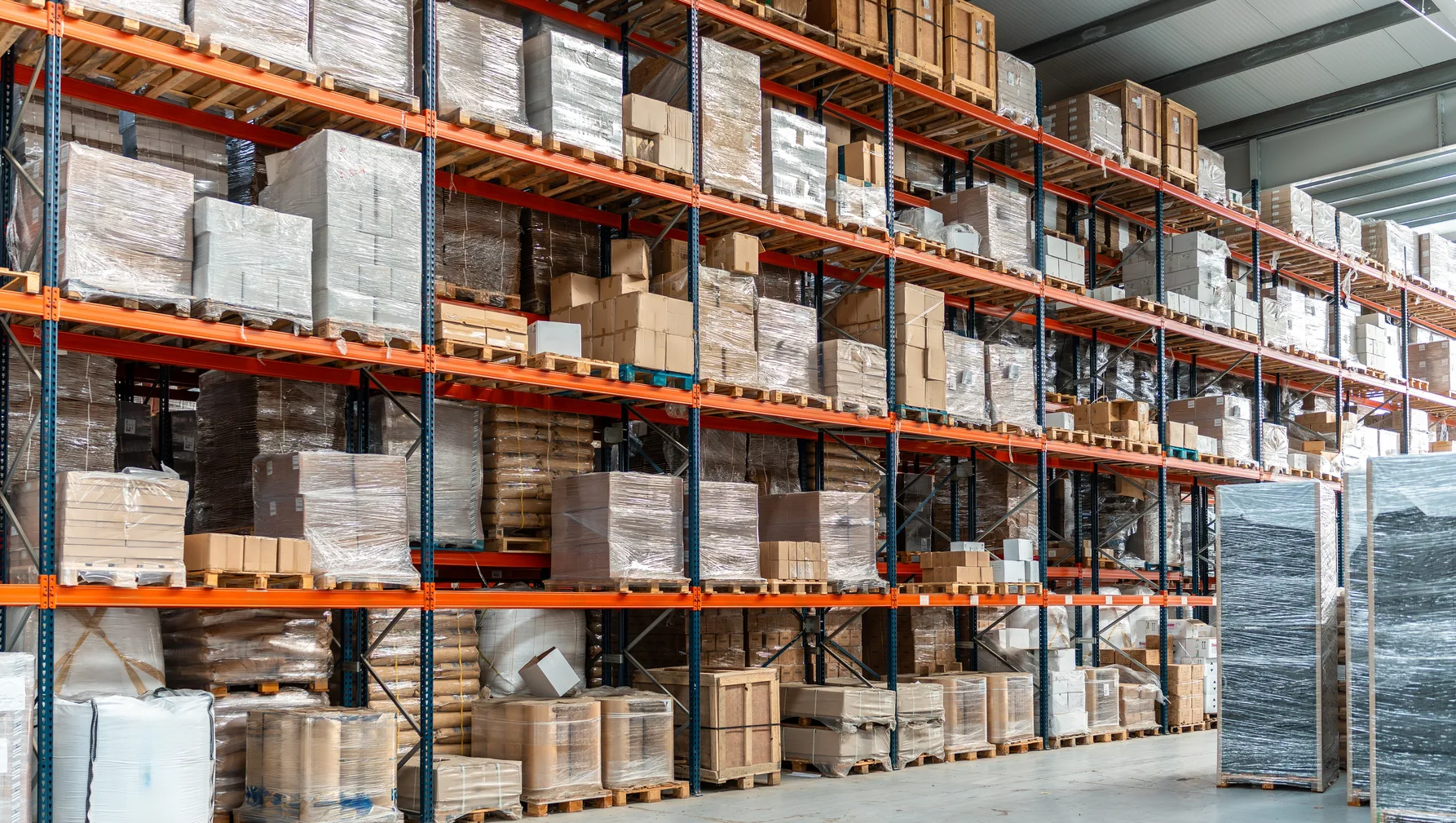
The building and the racking are on your balance sheet. The product stacked on that racking belongs to your customers, it is routinely worth more than the steel holding it up, and it is the loss you are most likely to have. That is what sizes your warehouse legal liability limit, and it is the number operators here understate — because that inventory never appears in their accounts.
South Dakota gives the point a particular edge. The region’s meat and food processing base supports a cold-chain warehousing layer that is disproportionate to the population, which means an unremarkable-looking building outside Sioux Falls can be holding a great deal of somebody else’s frozen protein. And a cold building fails in a way a dry one never does: the temperature drifts or the power goes, and the customer’s stock is a total loss with your roof, your walls, and your racking untouched. Nothing burned. Nothing collapsed. The consignment is worthless.
That is why an underwriter looking at cold space is not really looking at the building. They are looking at redundancy, at alarm and monitoring discipline, at how fast a failure gets noticed, and at whether the generator has been run under load or merely bolted down.
The crew belongs in this section too, because they are working in the same rooms. Workers compensation scales with material-handling payroll, and the exposures track the state’s economy: forklift and powered-industrial-truck injury, workers struck by product falling from a rack, dock and trailer-separation falls, and lifting strain on the pick line — plus, in the food and protein houses, cold stress, slips on freezer floors, and the handling of heavy, wet, awkward product. That last set is a South Dakota specialty and it is priced as one.
<text x="350" y="32" text-anchor="middle" font-family="Inter, sans-serif" font-size="15" font-weight="600" fill="#0F4C5C">One state license. It reaches one side of this line.</text>

<path d="M350 54 L350 288" stroke="#0F4C5C" fill="none" stroke-dasharray="6 5"/>

<rect x="30" y="66" width="290" height="150" rx="9" fill="#ffffff" stroke="#C3DEDE"/>
<text x="175" y="92" text-anchor="middle" font-family="Inter, sans-serif" font-size="13" font-weight="600" fill="#0F4C5C">Grain</text>
<text x="175" y="118" text-anchor="middle" font-family="Inter, sans-serif" font-size="11" fill="#3F5B64">Licensed and inspected by the</text>
<text x="175" y="136" text-anchor="middle" font-family="Inter, sans-serif" font-size="11" fill="#3F5B64">Public Utilities Commission.</text>
<text x="175" y="162" text-anchor="middle" font-family="Inter, sans-serif" font-size="11" fill="#3F5B64">Bonded. Held under a receipt.</text>
<text x="175" y="188" text-anchor="middle" font-family="Inter, sans-serif" font-size="11" font-style="italic" fill="#3F5B64">The bond form names the role.</text>

<rect x="380" y="66" width="290" height="150" rx="9" fill="#C8935A" stroke="#0F4C5C"/>
<text x="525" y="92" text-anchor="middle" font-family="Inter, sans-serif" font-size="13" font-weight="600" fill="#1A1A1A">Everything else you hold</text>
<text x="525" y="118" text-anchor="middle" font-family="Inter, sans-serif" font-size="11" font-weight="600" fill="#1A1A1A">Pallets. Frozen product. Medical</text>
<text x="525" y="136" text-anchor="middle" font-family="Inter, sans-serif" font-size="11" font-weight="600" fill="#1A1A1A">supply. Other companies’ goods.</text>
<text x="525" y="162" text-anchor="middle" font-family="Inter, sans-serif" font-size="11" font-weight="600" fill="#1A1A1A">No state warehouse license exists.</text>
<text x="525" y="188" text-anchor="middle" font-family="Inter, sans-serif" font-size="11" font-weight="600" fill="#1A1A1A">Your contract is the whole of it.</text>

<text x="350" y="248" text-anchor="middle" font-family="Inter, sans-serif" font-size="12" font-weight="600" fill="#0F4C5C">The state paper says public warehouseman.</text>
<text x="350" y="270" text-anchor="middle" font-family="Inter, sans-serif" font-size="12" font-weight="600" fill="#0F4C5C">It means grain, and it stops at the line.</text>

<text x="350" y="316" text-anchor="middle" font-family="Inter, sans-serif" font-size="12" font-style="italic" fill="#3F5B64">Almost everything you are actually holding sits on the right.</text>Hail, and a roof that carries winter for a long time
Commercial property answers for what is yours and stays put — the structure, the racking, the material-handling systems, and the income lost while the site is down. Two perils shape the placement.
Hail is the recurring one. The eastern half of the state sits in an active large-hail corridor, and a distribution roof is a wide, flat target with mechanical units and membrane seams exposed to it. The expensive version of this loss is the quiet version: a storm bruises the membrane across an entire roof plane, nothing is visible from the dock, and the water finds the racking months later — and then the goods, which are not yours.
Snow load is the structural one. Accumulation and drifting against parapets and roof steps put real weight on a big low-slope span through a long winter, and hard, sustained freeze threatens sprinkler systems, unheated bays, and any building holding temperature-sensitive stock when heat is lost. Tornado exposure is real in the east during the convective season, and flood risk is localized along the rivers rather than statewide — and where it exists, it is a separate placement.
The honest summary
South Dakota is a single-metro, regional distribution market, and it is more useful to say that than to dress it up. But the cost logic is not smaller for being local. The grain license will not price your building. The storage contract will. And the money genuinely at risk on your floor tonight belongs to your customers, not to you — which is why the limit goes where the value is, and why the retention you choose should be a deliberate decision about how much routine handling damage you would rather fund yourself.
If you want the coverage rather than the cost, start with warehouse legal liability, see how we work with warehouse businesses, or read the full South Dakota warehouse insurance page. And if you own the inventory you store rather than holding it for other companies, this is not your program: you want the South Dakota distributor cost guide.