

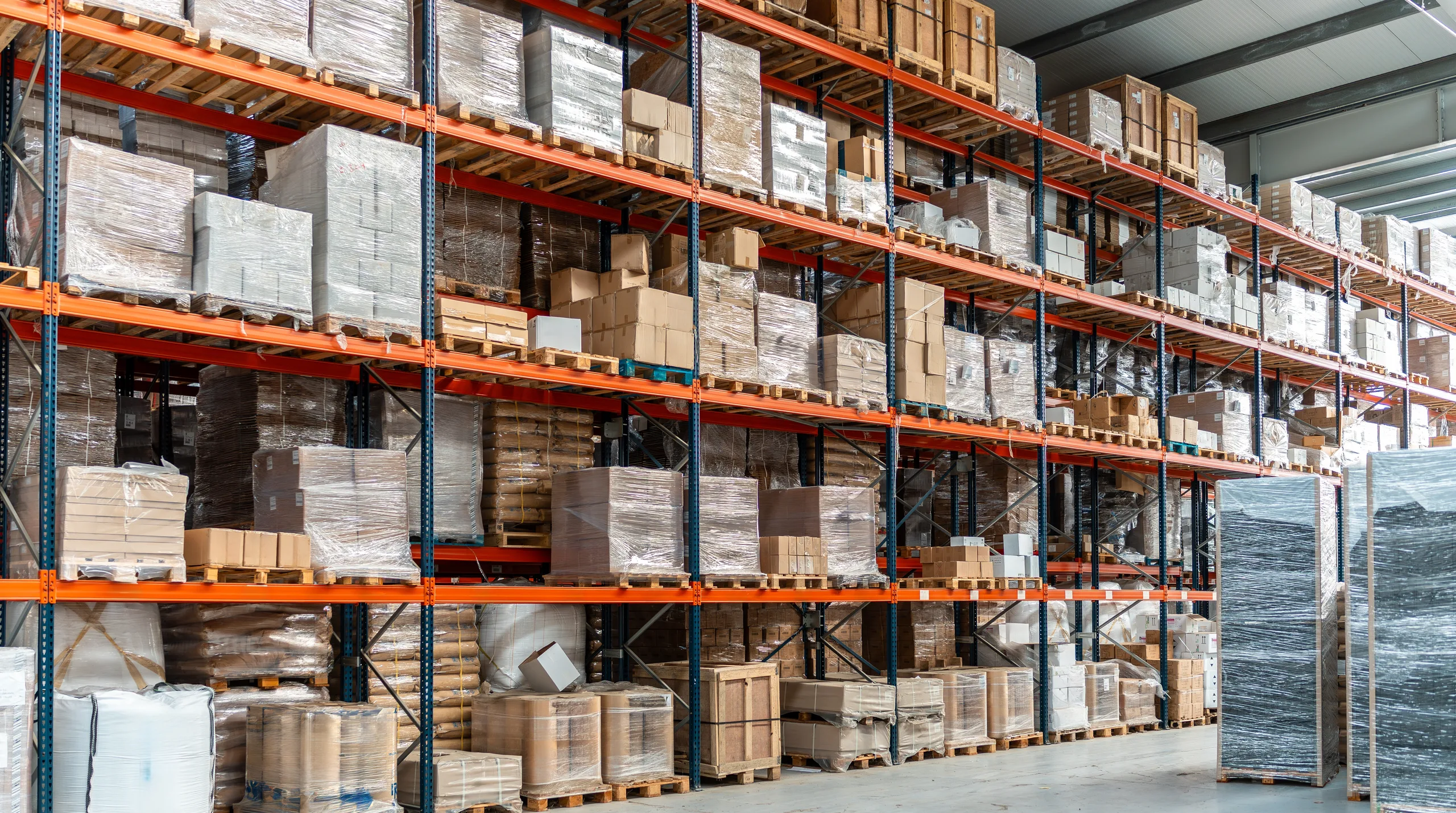
There is no published price for warehouse insurance in Texas, and any number you see quoted before an underwriter has looked at your building is a guess. What an insurance carrier actually does is build the cost from your specific operation — and for a warehouse, the single biggest input is not the thing you own. It is the thing you do not.
That is the part owners find counterintuitive, so it is worth saying plainly before anything else. Your building and your racking are on your balance sheet. You know what they cost. The pallets stacked on that racking belong to your customers, they are frequently worth far more than the structure around them, and they are the loss you are most likely to have. This guide walks the drivers that decide what a Texas warehouse actually pays, in roughly the order they matter.
The value and the nature of the goods in your care
This is the number that sizes your warehouse legal liability limit, and it is the one operators most often understate — precisely because that inventory never appears in their own accounts.
Two things matter here, and they are separate. Value is the obvious one: what is the maximum amount of customer-owned freight under your roof on the worst possible day, not on an average Tuesday. Nature is the one that gets missed. A building holding paper goods and a building holding consumer electronics can be identical square footage, identical racking, identical sprinkler design — and price nothing alike, because the amount at risk per pallet position differs by an order of magnitude. Add pharmaceuticals, spirits, or high-theft electronics and the theft profile changes as well as the fire severity.
So the underwriting conversation is never “how big is your warehouse.” It is: what is in it, whose is it, and what is the most of it that is ever here at once? Seasonal peaks matter for exactly that reason — a limit set to your average holding is a limit that fails you in your busiest month.
The Texas twist: no license, so the contract is the regulation
Most states hand a warehouse no statutory standard of care, and Texas is emphatically one of them. There is no statewide public-warehouse license in Texas for a general-merchandise, fulfillment, or third-party logistics operation. The Texas Department of Agriculture licenses public grain warehouses, and that program is explicitly grain-only; a separate chapter reaches operators storing cotton, wheat, rye, oats, grapes, rice, or produce and routes them to the county clerk. Neither one touches a contract warehouse in Grand Prairie.
That absence is a cost driver, not a footnote. Because the state writes you no standard of care, your warehouse receipt and storage agreement are the entire perimeter around a claim. An underwriter reads them. Whether your customers accepted a limitation-of-liability or released-value clause, negotiated it away, or signed a contract that quietly assumed you carry more than a bare legal-liability form provides — all of that changes the exposure the policy is being asked to size, and therefore the price.
There is one place Texas does license the building, and it is worth knowing which side of the line you are on: the state health department licenses food manufacturers, food wholesalers, and warehouse operators, so a food-grade warehouse is a licensed premises even though a dry-goods warehouse across the street is not.
The building, the racking, and the fire protection over it
Your own property is the second conversation, not the first — but it is not a small one. Commercial property covers what is yours and stays put: the structure, the racking and material-handling systems, and the business income you lose while the site is down.
What an underwriter weighs:
- Construction and roof, and where the building sits. On the Gulf coast a big-box roof is a very large uplift surface with almost nothing to break a named storm. Inland, through the hail belt along the Dallas–Fort Worth corridor, the quieter and more expensive story is hail bruising an entire membrane roof plane — after which the water finds the racking, and then the goods.
- Fire protection. Sprinkler design, and whether it actually matches what you store and how high you stack it. A system designed for one commodity class and a building now full of another is a real and common gap.
- Rack height, aisle layout, and storage arrangement — because a rack collapse is a property loss and a bailee loss arriving in the same instant: your steel, and someone else’s inventory on the floor underneath it.
- Flood. Near the ship channel and the bayous this belongs in its own placement, not in the property policy, and in practice it is not optional.
What you hold changes what you pay: bonded, refrigerated, fulfillment
Three operating postures move the number in ways square footage never explains.
Bonded and foreign-trade-zone freight. Texas is a double gateway — the Houston zone anchors seaborne cargo, the Laredo zone anchors the land border with Mexico — and duty-deferred goods sit in Texas warehouses on both sides. If you admit them, you take on customs-bonded obligations on top of your ordinary duty of care to the owner. Over the same pallet you now answer to two masters, and an underwriter prices the accumulation of both.
Refrigerated and food-grade. Cold-chain bailment fails differently from dry. The building never burns; the temperature simply drifts, and a customer’s perishable load is a total loss with the racking untouched. That is a distinct severity profile with distinct controls — alarms, redundancy, monitoring — and it is priced as one.
Fulfillment. High-velocity, unit-level bailment. Thousands of small customer-owned items moving daily means the loss is rarely one catastrophic event and much more often an accumulation of shrink, mis-ships, and handling damage. That is a frequency story rather than a severity story, and it is underwritten as one.
Your crew, and the decision Texas lets you make
Workers compensation scales with material-handling payroll, and the classifications you actually run matter as much as the figure.
Texas then adds a wrinkle no other state has. Comp is elective here for most private employers. A warehouse can legally decline it and become a non-subscriber — and owners hear “optional” and think “savings.” The trade-off is severe. A non-subscriber gives up the common-law defenses that would otherwise blunt an injury suit: contributory negligence, assumption of risk, and the fellow-employee defense.
Now look at what actually happens on your floor. A powered industrial truck strikes a picker. Someone falls from racking. A load shifts on a dock plate. A picker tears a shoulder in a pick module. Inside the comp system those are claims in a no-fault channel. Outside it, they are negligence lawsuits against your business, argued to a jury, with your defenses stripped away before you begin. Many 3PL customers require comp regardless of what the state permits. The comp decision is part of an accurate quote, not a surcharge.
Claims history, limits, and the retention you choose
Two levers, and one of them is entirely in your hands.
Claims history moves pricing more than almost anything else on this list — not just whether you have had losses, but what they say about how the building runs. Three small handling-damage claims tell an underwriter something different from one large one.
Limits and retention are a genuine choice, and the honest framing is: you are deciding how much of the small stuff you want to fund yourself in exchange for a better price on the part you cannot afford. A warehouse that can comfortably absorb routine handling damage and buys a serious warehouse legal liability limit for the fire is usually buying its insurance in the right order.
What an underwriter is actually stacking
<text x="350" y="32" text-anchor="middle" font-family="Inter, sans-serif" font-size="15" font-weight="600" fill="#0F4C5C">Heaviest first — and the heaviest thing is not yours</text>

<rect x="40" y="48" width="620" height="66" rx="9" fill="#C8935A" stroke="#0F4C5C"/>
<text x="350" y="74" text-anchor="middle" font-family="Inter, sans-serif" font-size="15" font-weight="600" fill="#1A1A1A">The value AND the nature of the customers’ goods in your care</text>
<text x="350" y="98" text-anchor="middle" font-family="Inter, sans-serif" font-size="13" font-weight="600" fill="#1A1A1A">It sizes the warehouse legal liability limit. It is not on your books.</text>

<rect x="40" y="126" width="620" height="46" rx="9" fill="#ffffff" stroke="#C3DEDE"/>
<text x="350" y="146" text-anchor="middle" font-family="Inter, sans-serif" font-size="14" font-weight="600" fill="#0F4C5C">The building, the racking, and the fire protection over it</text>
<text x="350" y="164" text-anchor="middle" font-family="Inter, sans-serif" font-size="12" fill="#3F5B64">Coastal wind, the hail belt, and whether the sprinkler suits what you stack</text>

<rect x="40" y="182" width="620" height="46" rx="9" fill="#ffffff" stroke="#C3DEDE"/>
<text x="350" y="202" text-anchor="middle" font-family="Inter, sans-serif" font-size="14" font-weight="600" fill="#0F4C5C">What you hold: bonded, refrigerated, or fulfillment</text>
<text x="350" y="220" text-anchor="middle" font-family="Inter, sans-serif" font-size="12" fill="#3F5B64">Customs duty, a drifting temperature, or an accumulation of handling</text>

<rect x="40" y="238" width="620" height="46" rx="9" fill="#ffffff" stroke="#C3DEDE"/>
<text x="350" y="258" text-anchor="middle" font-family="Inter, sans-serif" font-size="14" font-weight="600" fill="#0F4C5C">The storage contract — the only standard of care Texas gives you</text>
<text x="350" y="276" text-anchor="middle" font-family="Inter, sans-serif" font-size="12" fill="#3F5B64">No state warehouse license exists, so the receipt is the regulation</text>

<rect x="40" y="294" width="620" height="46" rx="9" fill="#ffffff" stroke="#C3DEDE"/>
<text x="350" y="314" text-anchor="middle" font-family="Inter, sans-serif" font-size="14" font-weight="600" fill="#0F4C5C">Material-handling payroll, and the non-subscriber decision</text>
<text x="350" y="332" text-anchor="middle" font-family="Inter, sans-serif" font-size="12" fill="#3F5B64">Opt out and the forklift claim becomes a lawsuit, not a claim</text>

<rect x="40" y="350" width="620" height="46" rx="9" fill="#ffffff" stroke="#C3DEDE"/>
<text x="350" y="370" text-anchor="middle" font-family="Inter, sans-serif" font-size="14" font-weight="600" fill="#0F4C5C">Claims history, and the limits and retention you choose</text>
<text x="350" y="388" text-anchor="middle" font-family="Inter, sans-serif" font-size="12" fill="#3F5B64">What your losses say about how the building actually runs</text>

<text x="350" y="416" text-anchor="middle" font-family="Inter, sans-serif" font-size="12" font-style="italic" fill="#3F5B64">None of these is a price. Together they are how one gets built.</text>
The honest summary
A Texas warehouse is priced on custody, not on square footage. The building matters, the crew matters, the perils matter — but the thing that moves the number most is the freight belonging to somebody else that is sitting on your racking tonight, and the contract you signed about what happens if it burns.
If you want to see how the coverage itself works rather than what it costs, start with warehouse legal liability — the bailee line this whole conversation is really about — or read the full Texas warehouse insurance page. And if you own the goods you store rather than holding them for someone else, none of the above is your program: you want the distributor cost guide instead.