

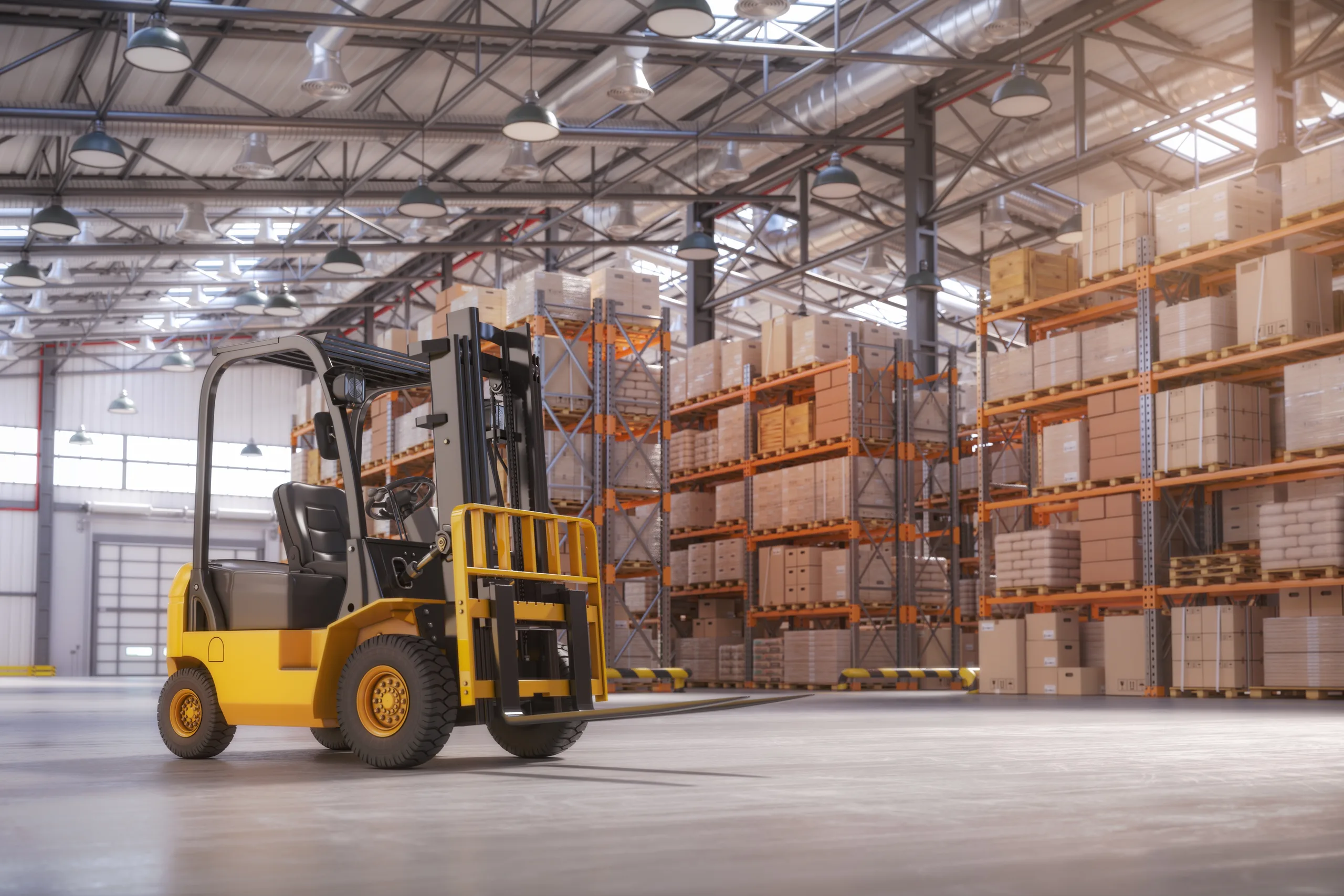
Every rack in every distribution building on the Wasatch Front is sitting over an active fault zone. That is not a dramatic way to open a cost guide. It is the single most important underwriting fact about a Utah warehouse, and most owners have never had it explained to them properly.
Here is the part that gets missed. For a warehouse, the seismic story is not really the building. It is the racking.
The racks move first
The Wasatch fault zone runs directly beneath the Wasatch Front — which is where essentially all of Utah’s distribution real estate sits — and the Utah Geological Survey treats a strong Wasatch Front earthquake as a realistic planning scenario rather than a thought experiment.
Now picture what that actually does inside a big-box building. The structure is engineered, and in many cases it will stand. The racking is a different problem entirely: tall, loaded, top-heavy steel bolted to a slab, holding pallets that were never designed to stay put.
Rack anchorage. Rack capacity and configuration. Seismic bracing. Whether stored product is restrained or free to walk off a beam. Those four things decide what happens next, because collapsed racking destroys the goods, blocks the egress, and injures the people long before the roof is ever in question.
And the goods it destroys are not yours.
Three losses, one event, and the biggest is the one you do not own
A Utah rack collapse arrives as three claims at the same instant.
Your steel, your slab, and the building around it are a commercial property loss — yours, on your balance sheet, and the one you can size accurately because you bought it.
The customers’ inventory that came down with the racking is a warehouse legal liability loss — freight belonging to an owner who is somewhere else entirely, frequently worth more than the structure around it, and the loss you are least likely to have sized correctly precisely because it never appears in your accounts.
And the people who were working in that aisle are a workers compensation loss.
Earthquake is its own placement. It does not ride the property form. A program that has bought earthquake coverage for the building and never sized the bailee limit against a rack collapse has insured the cheapest third of the event.
Value and nature, on a fault line
The bailee limit is sized by the value and the nature of the customers’ goods in your care.
Value is the maximum amount of customer-owned freight under your roof on the worst possible day, not on an average one — and an inland staging point concentrates value by design, because the entire commercial logic of the building is holding inventory a day or two closer to the interior than a coastal one could.
Nature matters as much. Outdoor and recreation products, medical devices, electronics and components for the tech corridor, food and grocery — the mix in a Salt Lake building varies enormously, and a rack of electronics and a rack of bulky consumer goods do not price alike on identical steel. Seismic sharpens this: goods that survive a fall and goods that do not are a genuinely different exposure on the same beam.
Inland-port bailment: freight that never saw a dock
The Utah third-party warehouse is a classic inland-port bailee. It takes in goods that a West Coast port unloaded, holds them for an owner who is somewhere else entirely, and releases them into the interior on demand. Public, contract, and fulfillment warehousing clusters in the Northwest Quadrant, in Tooele Valley, and up around Ogden.
The bonded posture here is real, and it is unusual. Salt Lake City Corporation is the state’s foreign-trade zone grantee, and the Utah Inland Port Authority is a state entity chartered to build logistics infrastructure, with project areas fanning out from the Northwest Quadrant to Tooele Valley, West Weber, the Golden Spike area, and points south. Bonded and duty-deferred storage in Utah is an inland-port function — goods arriving by rail from a seaport and warehoused here before clearing — rather than a dockside one. That is genuinely different from how most states work, and it is the basis of the state’s pitch as a distribution location.
The pricing consequence is direct. When you admit duty-deferred goods, you take on customs obligations on top of your ordinary duty of care to the owner. Two masters, one pallet — and an underwriter prices the accumulation, not just the invoice value.
No warehouse license. One registration. And a contract that has to survive a shake
Utah has no state public-warehouse licensing statute. A Utah warehouse’s obligations to the goods it holds run through the bailment relationship and through the documents-of-title provisions of the state’s commercial code — the warehouse receipt — rather than through any license.
The one place the state does reach into a warehouse is food. The Utah Department of Agriculture and Food’s food-establishment registration expressly names cold and dry warehouse storage as a registrable establishment, so a food-grade warehouse is registered as a food establishment, not licensed as a warehouse. The distinction is not pedantic: it means the state cares what is in the building, and does not care that you are warehousing it.
Which puts the whole weight on your paperwork. Your exposure for other people’s goods is defined entirely by your bailment obligations and by the receipt and contract terms you issue — and in Utah that contract has to survive a seismic event. A rack collapse in a Wasatch Front building is a care, custody, and control loss of somebody else’s inventory, not a building loss, and what you owe for it is decided by a document you wrote yourself.
That absence of a license is a cost driver, not a footnote. Whether your customer accepted a limitation-of-liability or released-value clause, negotiated it away, or signed an agreement that quietly assumed you carry more than a bare legal-liability form provides, changes the exposure the policy is being asked to size. An underwriter reads it. So should you, before the ground does.
The comp exposure nobody prices
Utah workers’ compensation is a private-market line — the state has a competitive fund operating alongside private insurers, which is emphatically not the same thing as a monopolistic state fund, and a Utah warehouse employer buys its comp on the open market. It scales with your material-handling payroll and the classifications you actually run.
The everyday exposures in a Salt Lake distribution building are the ordinary ones: forklift and powered-industrial-truck contact, falls from dock edges and order-picker platforms, being struck by stored material, and the lifting-and-twisting strain a high-throughput pick operation produces.
But seismic adds a second-order comp exposure most warehouse owners never price. In a strong shake, the danger to the people on the floor is the racking and what is on it — not the walls, not the roof. Which is a quietly remarkable fact: the same control that protects your customers’ goods protects your crew, and an underwriter on either line is looking at the same steel.
Three questions about your racks, and one answer that decides the loss
<text x="350" y="30" text-anchor="middle" font-family="Inter, sans-serif" font-size="15" font-weight="600" fill="#0F4C5C">The building may stand. The question is whether the racks do.</text>

<rect x="24" y="52" width="208" height="80" rx="9" fill="#ffffff" stroke="#0F4C5C"/>
<text x="128" y="80" text-anchor="middle" font-family="Inter, sans-serif" font-size="13" font-weight="600" fill="#0F4C5C">Anchorage</text>
<text x="128" y="102" text-anchor="middle" font-family="Inter, sans-serif" font-size="12" fill="#3F5B64">Bolted and braced for the</text>
<text x="128" y="120" text-anchor="middle" font-family="Inter, sans-serif" font-size="12" fill="#3F5B64">Wasatch Front — or for nothing?</text>

<rect x="246" y="52" width="208" height="80" rx="9" fill="#ffffff" stroke="#0F4C5C"/>
<text x="350" y="80" text-anchor="middle" font-family="Inter, sans-serif" font-size="13" font-weight="600" fill="#0F4C5C">Capacity and layout</text>
<text x="350" y="102" text-anchor="middle" font-family="Inter, sans-serif" font-size="12" fill="#3F5B64">Does the configuration match</text>
<text x="350" y="120" text-anchor="middle" font-family="Inter, sans-serif" font-size="12" fill="#3F5B64">what you actually store on it?</text>

<rect x="468" y="52" width="208" height="80" rx="9" fill="#ffffff" stroke="#0F4C5C"/>
<text x="572" y="80" text-anchor="middle" font-family="Inter, sans-serif" font-size="13" font-weight="600" fill="#0F4C5C">Product restraint</text>
<text x="572" y="102" text-anchor="middle" font-family="Inter, sans-serif" font-size="12" fill="#3F5B64">Is the load held, or free to</text>
<text x="572" y="120" text-anchor="middle" font-family="Inter, sans-serif" font-size="12" fill="#3F5B64">walk off the beam?</text>

<path d="M128 134 L128 156 L350 156 L350 178" stroke="#0F4C5C" stroke-width="2" fill="none"/>
<path d="M350 134 L350 178" stroke="#0F4C5C" stroke-width="2" fill="none"/>
<path d="M572 134 L572 156 L350 156" stroke="#0F4C5C" stroke-width="2" fill="none"/>

<rect x="80" y="180" width="540" height="76" rx="10" fill="#C8935A" stroke="#0F4C5C"/>
<text x="350" y="210" text-anchor="middle" font-family="Inter, sans-serif" font-size="15" font-weight="600" fill="#1A1A1A">Whether a rack bay comes down in a shake</text>
<text x="350" y="234" text-anchor="middle" font-family="Inter, sans-serif" font-size="13" font-weight="600" fill="#1A1A1A">Onto the customers’ goods, the egress, and the aisle crew</text>

<rect x="80" y="270" width="170" height="44" rx="9" fill="#ffffff" stroke="#C3DEDE"/>
<text x="165" y="297" text-anchor="middle" font-family="Inter, sans-serif" font-size="12" fill="#0F4C5C">Your steel: property</text>

<rect x="265" y="270" width="170" height="44" rx="9" fill="#ffffff" stroke="#C3DEDE"/>
<text x="350" y="297" text-anchor="middle" font-family="Inter, sans-serif" font-size="12" fill="#0F4C5C">Their goods: bailee</text>

<rect x="450" y="270" width="170" height="44" rx="9" fill="#ffffff" stroke="#C3DEDE"/>
<text x="535" y="297" text-anchor="middle" font-family="Inter, sans-serif" font-size="12" fill="#0F4C5C">Your crew: comp</text>

<text x="350" y="348" text-anchor="middle" font-family="Inter, sans-serif" font-size="12" font-style="italic" fill="#3F5B64">One event, three claims — and the middle one is the one nobody sized.</text>
The honest summary
Utah’s warehousing demand comes from position rather than population. I-15 runs the length of the state and I-80 crosses it, the rail hub is genuine, and a distributor in Salt Lake can serve the Intermountain West and reach into the coastal markets on a short haul — which is why national companies place regional DCs here and why Ogden and Tooele Valley absorbed the big-box growth the valley floor could not hold.
All of that is real, and all of it is built on top of a fault. So a Utah warehouse gets priced on custody, on racking, and on a storage contract that has to survive an earthquake — because when the shaking stops, the most valuable thing on your floor will still belong to somebody else.
To see how the coverage itself works rather than what it costs, start with warehouse legal liability, or read the full Utah warehouse insurance page. Our warehouse businesses practice explains how we approach the class. And if you own the goods you hold — an outdoor-products wholesaler, an electronics or medical-device distributor, a grocery supplier — none of the above is your program: read the distributor cost guide instead.