
States we serve · Utah
Warehouse business insurance in Utah
For the Salt Lake and Tooele Valley third-party operators who hold the interior’s inventory for owners on the coast — in buildings whose racking sits directly over an active fault zone.
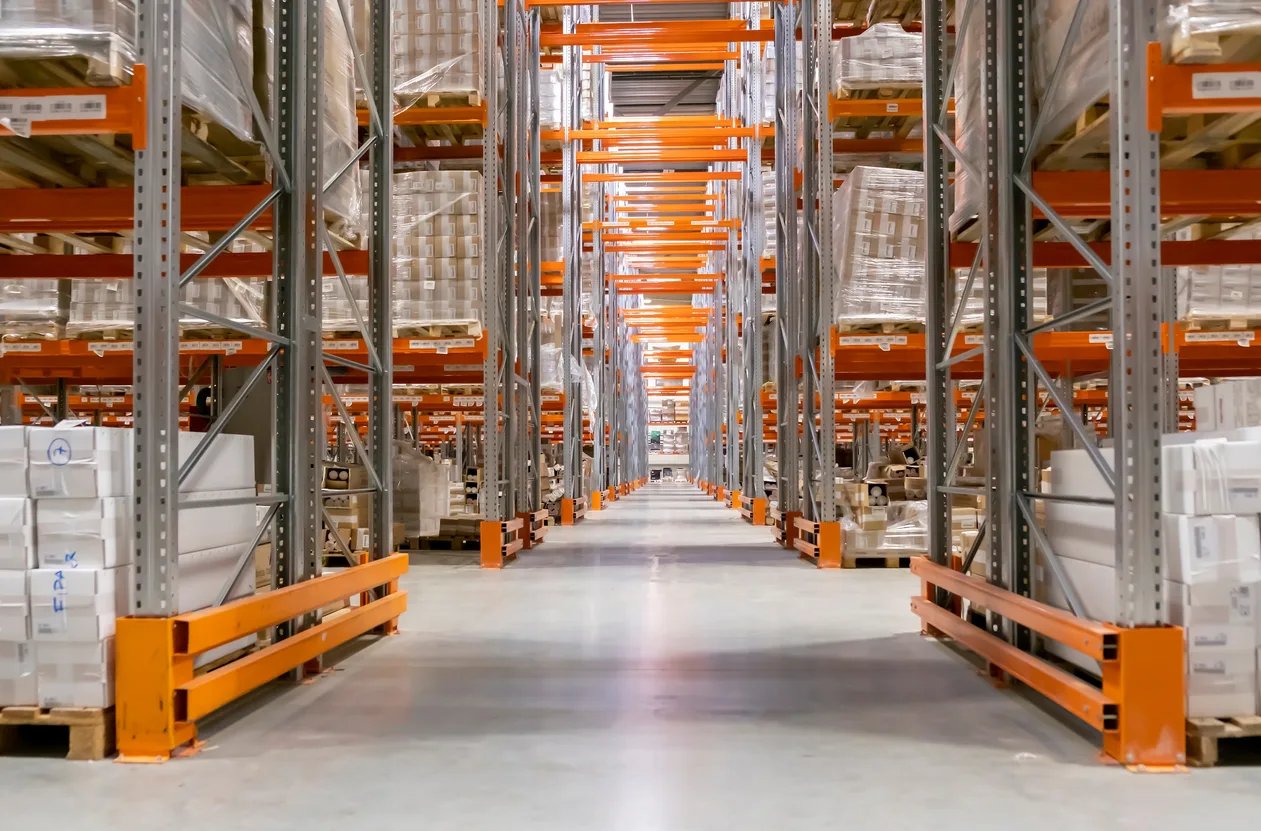

A Utah warehouse operator holds the interior’s inventory for people who live on the coast.
That is the whole commercial logic of the state. A container is unloaded at a West Coast port, railed inland, and put into a building in the Northwest Quadrant or out in Tooele Valley, where it waits for an owner who is somewhere else entirely to call it forward into the Intermountain West. National companies place regional distribution centers here to hold inventory a day or two closer to the interior than a California building would be. The Utah Inland Port Authority — a state entity chartered to build logistics infrastructure, with project areas from the Northwest Quadrant to Tooele Valley, West Weber, and the Golden Spike area — exists to make more of exactly that happen.
Which means the classic Utah bailee is holding goods that were never his, that arrived from a place he has never been, on behalf of an owner he may never meet. And he is holding them on racks that sit directly over an active fault zone.
Warehouse legal liability: goods that pass through and never belong to you
You take the freight in, you answer for it while it is in your care, custody, and control, and you release it on demand. In that whole span you never own a carton of it. When a loss happens — a fire in an aisle, a sprinkler discharge, a theft, a temperature failure in a cold room — the damaged property belongs to your customer, and your general liability policy will not pay for it.
That is not a hole in your program; it is the form working exactly as drafted. A standard general liability policy excludes damage to personal property in your care, custody, or control, and the customers’ goods on your racks are precisely that property. The loss you are most exposed to is carved out of your foundation policy by its own terms, and warehouse legal liability is the line written to answer what the exclusion removes. In a state with no warehouse license, the limit you buy and the limitation-of-liability terms in your storage contract are a single decision — we read them together, not separately.
Under the Wasatch: rack anchorage is a custody question
Ask an owner what an earthquake does to a warehouse and he will describe a roof. That is not what happens.
The Wasatch fault zone runs directly beneath the Wasatch Front, which is where essentially all of Utah’s distribution real estate sits, and the Utah Geological Survey treats a strong Wasatch Front earthquake as a realistic planning scenario. In a warehouse, a strong shake is a racking event: rack anchorage, rack capacity and configuration, seismic bracing, and whether stored product is restrained or free to walk off a beam. Collapsed racking destroys the goods, blocks the egress, and injures the people long before the roof is in question.
Follow that through and the insurance consequence is unavoidable. The steel is yours — commercial property, alongside the building and the business income that stops when the facility does. The inventory that came down off the beams is your customer’s, and it is a bailee claim. One shake, two policies, two halves of the same pile in the aisle. And earthquake itself is its own placement, which does not ride the property form and therefore has to be bought on purpose rather than assumed. On the Wasatch Front, that is not a technicality. It is the decision.
The comp exposure nobody prices
Utah workers compensation is a private-market line — the state has a competitive fund operating alongside private insurers, which is emphatically not the same thing as a monopolistic state fund, and a Utah warehouse employer buys comp on the open market like everything else.
The ordinary exposures are the ordinary ones: forklift and powered-industrial-truck contact, falls from dock edges and order-picker platforms, being struck by stored material, and the lifting-and-twisting strain a high-throughput pick operation produces. But there is a second-order exposure here that almost nobody prices, and it follows directly from the section above: in a strong shake, the danger to the people on your floor is the racking and what is on it. The engineering that protects your customer’s goods is the same engineering that protects your pickers, and an underwriter who understands this state will ask about both in the same breath. The umbrella sits over all of it.
Bonded custody without a dock
Salt Lake City Corporation is the state’s foreign-trade zone grantee, and the zone sits inside the inland-port structure rather than beside a marine terminal. Duty-deferred storage in Utah therefore means goods arriving by rail from a West Coast seaport and held here before clearing — an inland function, and unusual enough that it is the basis of the state’s entire pitch as a distribution location.
For a bailee the mechanics are what matter. Admit duty-deferred goods and you carry customs-bonded obligations on top of the duty of care you already owe the owner of the freight: two masters over the same pallet, one of whom has not yet been paid. A shortage in an ordinary building is an awkward conversation. A shortage in bonded stock is a formal one.
Where the state does reach into the building
Once, and only for food. The Utah Department of Agriculture and Food registers food establishments, and its definition explicitly includes cold or dry warehouse storage — so a food-grade or refrigerated warehouse is inside the state food regime whether or not it processes anything. Pharmaceutical distribution runs a different track: the Division of Professional Licensing licenses a pharmaceutical wholesaler or distributor as a class of pharmacy, per location, with a designated representative who has real prior experience in prescription-drug distribution and recordkeeping. A drug distributor with two Utah buildings needs two licenses.
Everything else — the consumer-goods 3PL, the contract warehouse, the fulfillment operator — holds no state warehouse license at all, and its perimeter is the storage agreement it wrote. That is the operating model we build the warehouse insurance program on here.
Major Utah warehouse markets
Salt Lake City
Where I-15 and I-80 cross, which is the reason the region’s freight funnels through here at all — and the city is the state’s foreign-trade zone grantee. An operator here can hold duty-deferred goods for an importer who cleared nothing at a dock, which layers customs obligations onto an ordinary bailment.
The Northwest Quadrant
The core project area of the Utah Inland Port Authority, a state entity chartered to build logistics infrastructure. Public, contract, and fulfillment warehousing clusters here — and the buildings sit on the Wasatch Front, where rack anchorage is not a code footnote but the central bailee question.
Tooele Valley
An inland-port project area that has absorbed big-box development the Salt Lake valley floor could not hold. Long-dwell storage for owners in other states means high stored value per building, and a bailee limit sized to the racking rather than to the goods on it will be short.
Ogden and West Weber
Northern Wasatch Front distribution, with its own inland-port project area. Union Pacific service and the rail-served buildings here mean custody transferring between rail and truck, and a transfer is where a bailee claim usually begins rather than where it ends.
West Valley City
Dense industrial and third-party space serving the metro. Multi-tenant buildings holding several customers’ inventory at once create an aggregation exposure: modest values per account, a great many accounts, one roof, one fire.
Provo and Orem
Warehousing tied to the tech and electronics corridor, where the goods held for others are high-value components rather than bulk consumer freight. Value per pallet here bears no relationship to pallet count, which is exactly the calculation that leaves a bailee limit short after one aisle burns.
Logan
Northern Utah food and manufacturing country, where cold and dry storage for others falls inside the state’s food-establishment registration. A refrigeration failure destroys a customer’s product outright, with no visible damage to the operator’s building at all.
St. George
The far southwest on I-15, positioned to serve the Southwest on a short haul. Desert heat and high wind on a large roof plane are the working perils here, and both attack a building full of somebody else’s goods rather than the goods themselves — until the water gets in.
What underwriters price for a Utah bailee
No figures on a web page. What is actually asked, though, is consistent:
- The stored value of goods you do not own — the number that sizes the bailee limit, and the one that appears nowhere in your accounts.
- The rack. Anchorage, capacity, configuration, bracing, and product restraint, asked as an engineering question with a seismic answer.
- Whether earthquake is placed, separately and deliberately, rather than assumed into the property form.
- Temperature, and whether any part of the building is registered cold or dry food storage with the state.
- Bonded and zone activity under the inland-port structure, which adds customs obligations to custody.
- The comp file and the fleet — pick and dock payroll, plus the commercial auto exposure of yard and delivery vehicles.
If the goods are yours, you are on the wrong page
An honest signpost. This page is for the operator holding other people’s inventory. If your business buys, holds, and resells its own product — a beer wholesaler serving grocery and convenience retail, which is what a private Utah beverage distributor actually is; an outdoor and recreation-goods wholesaler; a medical-device, supplement, or electronics distributor serving the tech corridor; a food and grocery wholesaler registered as a food establishment; a drug wholesaler licensed per location — then your stock is not a bailment at all, and your program leads from stock throughput and products liability instead. That is a different exposure entirely, and it has its own page: distributor and wholesaler insurance in Utah.
Where a Utah business runs both models, we place the distribution and wholesale sides alongside the bailee side, and we map the seam between the goods you hold and the goods you own before anything is bound.
Utah warehouse insurance FAQs
Does Utah license a warehouse that stores goods for other companies?
No. Utah has no state public-warehouse licensing statute. A Utah warehouse’s obligations to the goods it holds run through the bailment relationship and through the documents-of-title provisions of the state’s commercial code — the warehouse receipt — rather than through any license. The one place the state does reach into the building is food: the Utah Department of Agriculture and Food’s food-establishment registration expressly names cold and dry warehouse storage as a registrable establishment. So a food-grade warehouse here is registered as a food establishment, not licensed as a warehouse. The distinction matters, because it means the state is regulating what is inside the building rather than the act of storing it for hire.
What happens to my liability when a rack comes down in an earthquake?
It becomes a claim about somebody else’s inventory, which is the part owners miss. The Wasatch fault zone runs directly beneath the Wasatch Front, and that is where essentially all of Utah’s distribution real estate sits — the Utah Geological Survey treats a strong Wasatch Front earthquake as a realistic planning scenario. In a warehouse, a strong shake is a racking event: rack anchorage, rack capacity and configuration, seismic bracing, and whether stored product is restrained or free to walk off a beam. Collapsed racking destroys the goods, blocks the egress, and injures the people long before the roof is in question. Your steel is a property loss. The customer’s inventory that came down with it is a warehouse legal liability loss. Earthquake is its own placement and does not ride the property form — that decision has to be made deliberately here.
If the goods on my racks are not mine, what actually covers them?
Warehouse legal liability — the bailee line. A Utah third-party warehouse takes in goods that a West Coast port unloaded, holds them for an owner who is somewhere else entirely, and releases them into the interior on demand. Throughout that, the inventory is in your care, custody, and control and belongs to somebody else. Your general liability policy will not answer for it, because a standard form excludes damage to personal property in your care, custody, or control — an exact description of every pallet in the building. Warehouse legal liability exists to answer what that exclusion removes, and with no state warehouse license behind you, its limit and your storage-contract terms are a single decision.
Is Utah a monopolistic workers compensation state?
No, and the confusion is common enough to be worth clearing up. Utah has a competitive state fund operating alongside private insurers, which is emphatically not the same thing as a monopolistic state fund — a Utah warehouse employer buys its comp on the open market like any other line. The exposures in a Salt Lake distribution building are forklift and powered-industrial-truck contact, falls from dock edges and order-picker platforms, being struck by stored material, and the lifting-and-twisting strain that a high-throughput pick operation produces. Seismic adds a second-order comp exposure most owners never price: in a strong shake, the danger to the people on the floor is the racking and what is on it.
How does bonded storage work in a state with no seaport?
It becomes an inland-port function, and Utah has built deliberately around that. Salt Lake City Corporation is the state’s foreign-trade zone grantee, and the zone sits inside a genuine inland-port story: the Utah Inland Port Authority is a state entity chartered to build logistics infrastructure, with project areas fanning out from the Northwest Quadrant to Tooele Valley, West Weber, the Golden Spike area, and points south. So duty-deferred storage here means goods arriving by rail from a West Coast seaport and warehoused before clearing, rather than goods coming off a ship at a dock. For a bailee the consequence is the same either way: admit duty-deferred goods and customs-bonded obligations land on top of the duty of care you already owe the owner.
What perils besides earthquake should a Utah operator plan for?
Wildfire and wildland-urban interface exposure in the canyons and foothills, where smoke and ash can contaminate a customer’s stored goods that never came near a flame. High desert wind loading a large roof plane and the equipment on it. Hail on that same roof, which does not level a building but bruises an entire membrane plane at once and lets water into the racking afterward. And hard winter freeze on sprinkler systems, which produces a property event that turns immediately into a bailee claim when the water reaches somebody else’s cartons. None of these knock a warehouse down. All of them can destroy the goods inside it, which is the recurring theme of insuring a building whose contents belong to other people.
Get a Utah warehouse insurance quote
Quotes in 1–2 hours during business hours.