
States we serve · Arizona
Distributor and wholesaler business insurance in Arizona
For the produce importers crossing at Nogales, the beverage wholesalers on a Series 4 license, and the electronics, grocery, and industrial distributors filling the Phoenix corridor — the businesses whose inventory is their own, and whose clock is running.
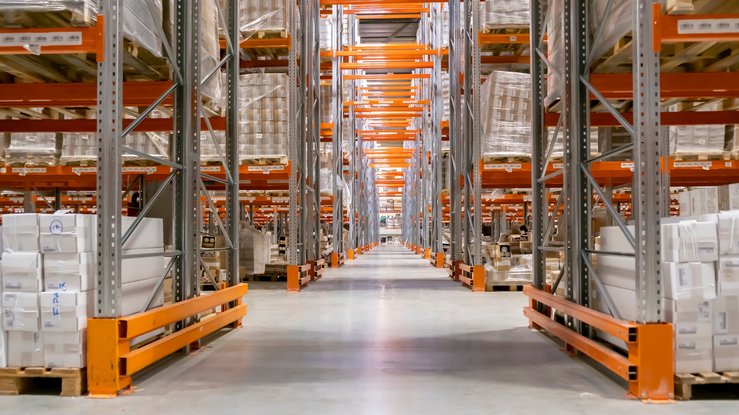

Somewhere on the road north out of Nogales there is a trailer full of produce that belongs to an Arizona distributor, and it is losing value by the hour whether anything goes wrong or not.
That is the type of business this page is written for. The Mariposa land port at Nogales is one of the country’s major inbound produce gateways — the customs infrastructure there includes temperature-controlled inspection space, because the goods crossing cannot wait — and the distributor bringing that product north owns it. From the grower, through the port, through the cold storage, through the repack, and out to a customer three states away, it sits on one balance sheet: yours. Nobody is holding it for you. Cold-chain and bonded storage in Arizona are the same conversation for exactly this reason.
And the state runs a second distribution economy that looks nothing like the first: the Phoenix big-box build-out, selling itself as the lower-cost, one-day-truck way to serve Southern California without warehousing in it, absorbing regional distribution for national retailers and for the semiconductor, electronics, and aerospace suppliers now clustering in the metro. Two economies, one insurance principle. In both of them the goods are yours, everywhere they go.
Stock throughput: the grower’s field to the customer’s dock
Stock throughput is one marine-family policy that follows your owned product across the entire span rather than splitting the job in two. It is worth being precise about why that matters here.
Commercial property insures inventory while it sits in a scheduled building. It stops at the walls. A cargo policy insures it while it moves. Between the two are seams — at the crossing, in the inspection facility, on the repack floor, in a third party’s cold room, in a reefer trailer heading north on I-19 — and imported perishable stock spends nearly all of its short life in those seams. Stock throughput closes them on one form: supplier, transit, border, warehouse, customer. The marine name is a historical artifact of where the coverage came from; the goods cross a land border on a truck and never see salt water, and the form works just as well.
Arizona has the deepest foreign-trade zone bench of any state on this side of the country and it is border-shaped: grantees include the City of Phoenix and a separate Greater Maricopa zone, the City of Mesa, Sun Corridor in Tucson, Nogales–Santa Cruz County on the Mexico line, Naco, and the Yuma-area San Luis zone. Bonded and duty-deferred storage here is a working, everyday thing rather than a theoretical program. And duty-deferred goods are still your goods: a loss on them reaches the customs position as well as the value.
Heat is the peril, and it does not need a fire
Arizona’s catastrophe profile is the inverse of the northern states’, and the loss it produces is one an owner of goods has to think about differently.
Extreme and sustained heat is the baseline. It stresses roofing membranes, it stresses the people on the dock, and — the part that matters most — it stresses the refrigeration equipment that is the only thing standing between your owned produce and a total loss. A refrigeration failure in a Phoenix or Nogales summer destroys the contents fast. The pallet is not burned. It is simply no longer sellable, and the building is completely undamaged.
The monsoon brings violent seasonal thunderstorms, damaging outflow winds, and dust storms that scour a large roof plane, along with flash flooding in washes and low ground — and flood is its own placement, off the property form entirely. Hail is a real if less frequent problem on the big flat roofs of the Phoenix corridor. Wildfire matters in the higher and brushier country away from the valley floors, where smoke and ash can contaminate stored goods that never came near a flame. Earthquake is not the Arizona story.
Line those up and a pattern appears: in this state, the peril usually takes the inventory and leaves the shell. Which is exactly the loss a four-walls property limit was not designed around.
Series 4: the license that does not travel
The Department of Liquor Licenses and Control runs a numbered license series, and the wholesaler sits at Series 4. That license lets the holder buy all spirituous liquor — the state’s term reaches beer, wine, and distilled spirits alike — from licensed in-state and out-of-state producers, and sell it on to licensed Arizona retailers and to other licensed wholesalers. It expressly authorises maintaining facilities for the storage and distribution of that product.
Here is the detail an insurance program has to account for: the license attaches to a specific person at a specific location and does not travel. A wholesaler that moves its warehouse is dealing with the department, not merely with a landlord. So a property loss that forces a relocation is a licensing event as well as a claim, and the business-income conversation for an Arizona beverage distributor has to be built with that in mind rather than around a simple rebuild timeline.
What does not change is whose goods they are. Under a Series 4 license the inventory is bought, held, and resold by the distributor. It is owned stock, and it belongs on a throughput form.
First U.S. seller of a food product you did not grow
Products liability follows the chain of distribution. A claim over a product that injures somebody can reach a seller in that chain — not only the party that made or grew it — and a distributor who never produced anything is squarely a link.
For the Arizona produce importer the position is unusually exposed. You are the first U.S. seller of a food product you did not grow, and when the foreign grower or packer sits beyond the practical reach of a U.S. claim, you are the party a claim can actually reach. Food is an ingestion exposure, which places it in a different underwriting category from industrial goods entirely. General liability answers this through what the standard form calls the products-completed-operations hazard, and sizing those limits against what you genuinely handle is most of the work. Around the produce houses sit the rest of an Arizona owned-goods economy with the same structural exposure — grocery and food distributors under the state agriculture food-safety program, electronics and semiconductor-supply distributors serving the Phoenix cluster, and drug wholesalers permitted by the state pharmacy board.
The crew, the heat, and the fleet
Arizona workers compensation is a private-market line — the state has a competitive fund alongside private insurers, which is not a monopolistic arrangement. The exposures follow the work: forklift and powered-industrial-truck strikes in a crowded cross-dock, dock-plate and trailer-edge falls, product coming off high racks, and lifting strain on a pick line. Then Arizona adds the one most of the country never thinks about — heat illness, on a metal-roofed building and especially on an open dock.
A distribution business carries two injury populations, not one: the crew inside, and the route drivers loading, unloading, and working a lift gate in that same heat. Commercial auto answers the fleet — and a word this niche uses two ways: your insurance carrier is the company that writes your policy; a motor carrier hauls freight for hire. They are not interchangeable in a contract. Umbrella liability is where a national grocery or retail customer’s contract limits usually land.
Where Arizona distributors and wholesalers concentrate
Nogales and the Mariposa land port
One of the country’s major inbound produce gateways, with temperature-controlled inspection space built into the customs infrastructure. A distributor whose owned produce crosses here is the first U.S. seller of a food product it did not grow — which puts it at the head of the domestic products-liability chain — and the inventory is perishable from the moment it comes north, so the exposure is a clock as much as a value.
Phoenix
Where I-10 meets I-17, and the natural place to break a coastal load for the interior Southwest. Owned inventory concentrates here in very large single-site holdings for national retailers and for the semiconductor, electronics, and aerospace suppliers clustering in the metro — an accumulation question, because hail on an acres-wide roof plane is a real property loss even when nothing else is touched.
Tucson
The I-10 and I-19 hinge between Phoenix and the border, and the natural staging point for goods heading north from Nogales. A distributor holding product mid-journey here has it in exactly the place a four-walls property policy is weakest — not at the origin, not at the destination, and not in the scheduled building the policy was written around.
Mesa and Chandler
The electronics and semiconductor-supply belt on the east side of the valley, where imported components are held for a manufacturing cluster that cannot tolerate a gap. High value per pallet and long replacement lead times mean the business-income conversation turns on re-sourcing time rather than rebuild time — and a Series 4 beverage license, by contrast, attaches to a specific building and does not travel with the company.
Glendale
The west-valley distribution build-out selling itself as the affordable way to serve Southern California without warehousing in it. Concentrated owned stock under a metal roof in a Phoenix summer is a refrigeration and heat-stress question before it is anything else, because the equipment that protects the goods is under the same load as the goods.
Yuma and San Luis
The far-southwest corner on I-8, with foreign-trade zone reach and an agricultural economy of its own. Owned perishable product crossing here faces the same border-and-clock exposure as at Nogales with a different road behind it, and duty-deferred goods held in a zone are still the distributor’s goods — a loss on them touches the customs position as well as the value.
Flagstaff
The northern high country on I-17 and I-40, where the wildfire and brush exposure sits rather than on the valley floors. Smoke and ash can contaminate stored goods without a flame ever reaching the property, which is a total loss of owned inventory that no fire report will describe.
If the goods are not yours, you are on the wrong page
An honest signpost. Everything above assumes the inventory is yours. If your Nogales cold room is holding, inspecting, repacking, and consolidating produce that belongs to a grower or an importer somewhere else — or if your Phoenix building is cross-docking freight for owners whose goods are simply moving through — then it is not owned stock at all. It is a bailment, and your lead line is warehouse legal liability, the bailee coverage for goods in your care, custody, and control. Arizona licenses no public warehouse, so the bailment terms and the warehouse receipt are the whole of your defense — a different risk with a different policy stack, and it has its own page: warehouse insurance in Arizona.
Plenty of Arizona businesses do both — they import and sell their own produce and hold somebody else’s in the same cold room. If that is you, we place both, and we draw the line between them before anything binds.
Arizona distributor and wholesaler insurance FAQs
What is a Series 4 license and what does it let me do?
Arizona is a license state with an unusually legible structure: the Department of Liquor Licenses and Control runs a numbered license series, and the wholesaler sits at Series 4. That license lets the holder buy all spirituous liquor — the state’s term covers beer, wine, and distilled spirits alike — from licensed in-state and out-of-state producers, and sell it to licensed Arizona retailers and to other licensed wholesalers. It expressly authorises maintaining facilities for the storage and distribution of that product. The detail that matters for an insurance program is this: the license attaches to a specific person at a specific location and it does not travel. A wholesaler that moves its warehouse is dealing with the department, not just with a landlord — so a property loss that forces a relocation is a licensing event as well as an insurance one, and the business-income conversation has to account for that.
Why is stock throughput the right form for imported produce?
Because the exposure starts in another country and ends at a customer, and nothing in a four-walls policy covers that arc. Stock throughput is one marine-family policy that follows your owned product across the whole span — at the grower, in transit, through the Mariposa crossing at Nogales and its temperature-controlled inspection space, into cold storage, through the repack, and out to the customer. That is precisely the supplier-to-customer span an importing produce distributor lives on. The alternative is a patchwork: a commercial property policy that covers inventory only while it sits in a scheduled building, plus a cargo policy that covers it only while it moves, with seams between them where a loss falls. Perishable owned stock spends most of its short life in exactly those seams — and unlike a pallet of hardware, it does not wait for the argument to be settled.
How does heat cause a total loss without a fire?
Extreme and sustained heat is the Arizona baseline, and it works on three things at once: the roofing membrane, the refrigeration equipment, and the people on the dock. In a cold-storage or produce building, a refrigeration failure in that heat destroys the contents fast — the product is not burned, it is simply no longer sellable, and for an owner of goods that is a total loss with the building entirely undamaged. The monsoon adds violent seasonal thunderstorms, damaging outflow winds, and dust storms that scour a large roof plane, plus flash flooding in washes and low ground; flood is its own placement and stays off the property form. Hail is a real if less frequent problem on the big flat roofs of the Phoenix distribution corridor. What every one of these has in common for a distributor is that the loss lands on the inventory, not on the shell.
Am I in the products-liability chain for produce I only imported?
Yes — and it is the sharpest version of the exposure. Products liability follows the chain of distribution, and a claim over a product that injures somebody can reach a seller in that chain, not only the party that produced it. A produce importer crossing owned inventory at Nogales is the first U.S. seller of a food product it did not grow, and when the foreign grower or packer sits beyond the practical reach of a U.S. claim, the importer becomes the realistic target for it. Food is an ingestion exposure, which puts it in a different underwriting category from industrial goods entirely. Standard general liability answers this through the products-completed-operations hazard, and sizing those limits against what you actually handle — rather than against a generic revenue band — is most of the work.
Which agency regulates an Arizona food distributor?
Agriculture, not the restaurant regulator — and the split has real weight in Nogales, where the produce-import trade lives. The Arizona Department of Agriculture carries the food-safety program on the production, processing, and warehousing side, while the Department of Health Services and the counties handle retail food establishments. So a food distributor or a food-grade warehouse deals with the agriculture department. Prescription drugs run through the Arizona State Board of Pharmacy, which issues a wholesaler permit and requires a designated representative with genuine drug-distribution qualifications behind it. A distributor of both groceries and pharmaceuticals is therefore answering to two different agencies about two different parts of the same building.
Is Arizona a monopolistic workers compensation state?
No. Arizona workers’ compensation is a private-market line — the state has a competitive fund in the market alongside private insurers, which is not a monopolistic arrangement, and an Arizona employer buys comp in the open market. The exposures follow the work: forklift and powered-industrial-truck strikes in a crowded cross-dock, dock-plate and trailer-edge falls, product coming off high racks, and lifting strain on a pick line. Arizona adds one exposure most of the country does not have to think about — heat. A metal-roofed warehouse in a Phoenix summer, and especially an open dock, is a genuine heat-illness risk for the people working it. And a distribution business has two injury populations rather than one, because the route drivers loading and unloading in that heat are exposed differently from the crew inside.
Get an Arizona distributor insurance quote
Quotes in 1–2 hours during business hours.