
States we serve · Arkansas
Distributor and wholesaler business insurance in Arkansas
For the consumer-goods suppliers, food and poultry wholesalers, and licensed beverage distributors who own their inventory — in the state where a vendor parks its own product a short drive from the buyer that will sell it.
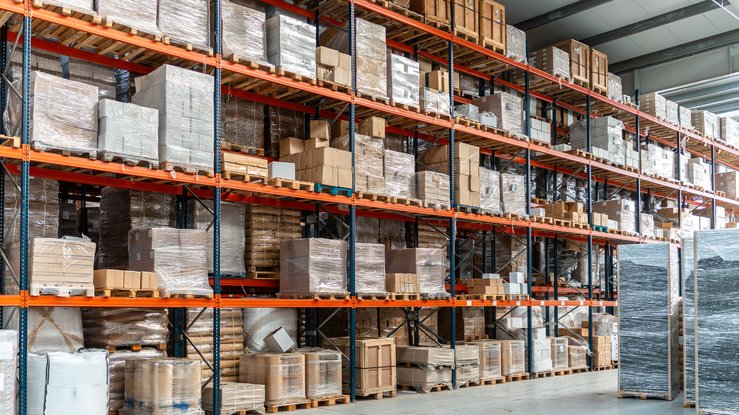

Arkansas is the supplier’s state. A great deal of its warehouse space exists not to serve the people who live here but to put a vendor’s owned inventory within a short drive of a national retail buyer in the north-west corner — Bentonville, Rogers, Springdale, Fayetteville — and that vendor cluster has no real equivalent anywhere else in the country.
Which produces a distinctive risk shape. The distributor in that building is not a regional wholesaler serving a territory. It is a consumer-goods supplier holding its own product, concentrated and high in value, sized against one buyer’s replenishment demand rather than against a region’s consumption. The inventory is unambiguously the supplier’s — on its balance sheet, in a leased building, hundreds of miles from the factory that made it and a fifteen-minute drive from the customer that will sell it.
Everything else about an Arkansas distribution business follows from where that product came from. It came a long way. Through a Gulf or coastal port, or by air through the hub across the river at West Memphis, then down I-40 or up I-49 — and it belonged to the distributor for every mile of it. That is the part no property policy has ever seen.
The journey before the building
Stock throughput is a single marine-family policy that follows your owned goods across the whole span: the supplier, the ocean or air transit, the port, the rail or truck leg inland, the warehouse, and the customer. It exists because the ordinary alternative leaves holes. A commercial property policy covers owned inventory while it sits in a scheduled building. A cargo policy covers it while it moves. In between are seams — the terminal, the transload, the third-party facility where a container waited — and Arkansas freight spends an unusual amount of time in them, because Arkansas is not where the goods enter the country.
The marine in marine-family is a historical name and nothing more. The same form follows a pallet that crossed no ocean at all and rode I-40 the entire way. What matters is that the coverage travels with the goods rather than with the address. And because it is a largely manuscript, non-standard market, the wording is negotiated — an advantage when someone reads it, a liability when nobody does.
The one question worth settling before anything binds: when did the risk of loss pass to you? If your purchase terms hand you title at a foreign supplier’s dock and your coverage starts at an Arkansas warehouse door, then your own product spent an ocean and half a continent uninsured by you.
The local-option map that plans your routes
Arkansas is a license state: the Alcoholic Beverage Control Division, housed inside the Department of Finance and Administration, licenses the private businesses that make up each tier, including the wholesalers in the middle. The state owns nothing. The beverage inventory belongs to the distributor.
The wrinkle that shapes a beverage distributor’s life here is not the license, though — it is the map. Arkansas retains local option, and a distributor’s delivery territory is cut by which counties and municipalities permit which sales. Route planning, and the warehouse inventory behind it, follow those lines rather than the highways.
That has a very practical insurance consequence. A route network shaped by a legal map rather than a road map runs more miles and more stops than the geography alone would predict, which means more owned product sitting in a trailer at any given moment and a heavier commercial auto exposure than the revenue would suggest. And a word this trade cannot skip: your insurance carrier writes your policy; a motor carrier or freight carrier hauls goods for hire. Two different words that sound like one.
Time and temperature
Poultry and protein are an enormous part of what Arkansas owns. Food and poultry distributors hold perishable stock whose value is destroyed by time and temperature rather than by impact — and that is a different animal from the loss a property policy was built around.
The load is never burned. It simply stops being sellable. So the questions have to be asked one at a time: does the policy respond to spoilage; does it respond when the cause is a refrigeration breakdown rather than a peril at the building; and does it respond while the product is in transit? Three questions, three separate answers, and most owners have only ever been given one. The cold floors carry their own workers’ compensation profile too — cold exposure and slip claims on top of the usual powered-industrial-truck incidents, falls from racking, struck-by injuries during putaway, and the lifting strain that carries the lost time in every high-velocity building in the state.
Hail bruises the roof. The water finds your stock.
Arkansas takes tornado and hail from the same spring systems that work Oklahoma and the mid-South, and a warehouse roof is the largest surface either can find. Hail is the recurring loss; tornado is the severe one.
What matters to an owner of inventory is the mechanism. Hail does not level a warehouse. It bruises an entire membrane roof plane, and the water that follows comes down through it into the racking, where a distributor’s season is standing. The building repair is frequently the cheaper half of the claim. Winter ice loading and hard freezes stress roofs and sprinkler systems in the same way, from the other direction.
And the state carries a real flood exposure along the Arkansas, White, and Mississippi river bottoms — which is worth saying plainly, because a great deal of warehouse space sits on flat, river-adjacent ground for the simple reason that that is where the flat ground is. Flood belongs in its own placement rather than in the property policy. Seismic deserves an honest mention rather than an alarm: the New Madrid zone reaches the state’s north-east corner, and in a warehouse it is the racking that shakes first.
You are regulated on what you own
The pattern repeats across the state’s licensing. The Arkansas State Board of Pharmacy licenses wholesale distributors of legend and controlled substances, and separately licenses wholesalers of medical devices, home medical equipment, and medical gases — so a distributor here can need more than one wholesale license depending on what is on the pallet. Food establishments and food distribution answer to the Arkansas Department of Health. Grain and agricultural commodities stay with the Department of Agriculture.
Read across those and the logic is consistent: the state regulates a distributor on the goods it owns. That is the same fact the insurance program has to answer to — which is why a wholesale operating model carries a products exposure that a pure storage business simply does not. Products liability follows the chain of distribution to a seller. General liability answers it through the products-completed-operations hazard, and for an importer at the head of that chain, it is not a theoretical line item.
Above the primary lines, umbrella liability is usually what a national retail customer’s contract actually requires — and in a state where the customer may be the largest buyer in the country, the contract is not a negotiation.
What underwriters ask an Arkansas distributor
We do not print premiums, and any site that does is guessing. The genuine drivers:
- Peak single-site concentration — how much owned inventory sits in one building on the worst possible day, not on an average one.
- Roof age and hail history on the buildings your stock is standing under.
- Flood siting on river-adjacent ground, which is most of the flat ground.
- Temperature dependence, and whether spoilage was actually written or merely hoped for.
- Where the risk of loss passes on inbound freight, and how much of the inland journey you own.
- Route miles under local option, and the payroll split between the warehouse crew and the drivers.
Where Arkansas’s owned inventory concentrates
Bentonville
The center of the vendor cluster. A consumer-goods supplier holds its own product here to be replenished into a national retail network on short notice — which means the owned inventory is concentrated, high in value, and sized against one buyer’s demand rather than a region’s. That is a single-site accumulation question before it is anything else.
Rogers
The same corridor, a different exposure emphasis: supplier distribution buildings sized for speed rather than for storage. Fast turnover flatters the schedule — the value on hand at any moment understates the annual product volume that passed through the chain of distribution, and the products liability trails the volume, not the snapshot.
Springdale
Poultry and protein country, where a wholesaler’s owned stock is destroyed by time and temperature rather than by impact. A cold-chain interruption spoils product that is never physically damaged, and whether a policy answers for spoilage — at the building and in transit — is a wording question worth settling before the summer.
Fayetteville
The southern end of the I-49 corridor, where regional food-service and consumer wholesalers hold owned inventory for a growing market. This is also the corridor’s hail and severe-storm alley, and hail is the recurring loss for a building with a large horizontal roof plane and a distributor’s season stacked underneath it.
Little Rock
The state capital and the site of the foreign-trade zone grant, at the river port on the Arkansas with an extension at the airport. This is inland, river-and-rail bonded storage rather than a seaport trade — and duty-deferred status changes the customs bill, not the ownership: the goods in a zone-status building are still the distributor’s own.
Fort Smith
Western Arkansas on the river and the Oklahoma line, with barge access through the McClellan–Kerr system to the Mississippi. Owned stock that moves by barge and rail as well as truck is the pattern that property-plus-cargo arrangements handle least consistently, because each mode tends to sit under a different instrument with a seam between them.
West Memphis
Directly across the river from a national air-cargo hub, and the eastern gateway into the state. A distributor whose imported goods arrive by air and are staged here is very often the first U.S. seller of them — the head of the domestic products chain for a product it did not design and never touched until it was already in a container.
Jonesboro
Delta distribution on flat, river-adjacent ground — which is where the flat ground is. That is exactly the siting that carries real flood exposure along the river bottoms, and flood belongs in its own placement rather than in the property policy, because the water arrives at the floor where an owner’s pallets are standing.
If the goods are not yours, you are on the wrong page
An honest signpost. This page is for the business that owns what it stores. If your operation holds other companies’ goods for a fee — the contract warehouses in the north-west corner holding a vendor’s product for short-notice replenishment, the cold houses storing a poultry company’s inventory, the state-licensed and bonded grain warehouses — then that stock is not yours at all. It is a bailment, your duty runs through the warehouse receipt and the limitation of liability inside the storage agreement, and your lead line is warehouse legal liability. It has its own page: warehouse insurance in Arkansas.
Plenty of businesses in this state do both — they distribute their own product and warehouse someone else’s alongside it. If that is you, we place both, and we draw the line between them before anything binds.
Arkansas distributor and wholesaler insurance FAQs
What is stock throughput, and does an Arkansas distributor really need it?
Stock throughput is one marine-family policy that follows your owned product across its whole life — from the supplier, through ocean or land transit, across a port or an air hub, into your warehouse, and out to the customer. Arkansas needs it for an unglamorous reason: the goods here have usually traveled a very long way before they arrive. Importers bringing product in through Gulf or coastal ports and staging it in Arkansas own that stock across a long inland journey, and consumer-goods suppliers hold product that came from an overseas factory to a distant port to a rail head to a north-west Arkansas building. A property policy covers owned inventory only while it sits in a scheduled building. Everything before that — the ocean leg, the drayage, the transload, the rail move — is uninsured by you unless something was written to follow the goods. That is the seam, and stock throughput closes it.
How does local option affect a beverage distributor here?
It shapes the business more than the license does. Arkansas is a license state: the Alcoholic Beverage Control Division, housed inside the Department of Finance and Administration, licenses the private businesses that make up each tier, including the wholesalers in the middle. But Arkansas retains local option, so a distributor’s delivery territory is cut by which counties and municipalities permit which sales. Route planning, and the warehouse inventory behind it, follow those lines rather than the highways — which means an Arkansas beverage wholesaler runs a route network shaped by a legal map rather than by a road map, with more miles and more stops than the geography alone would predict. For insurance that shows up in the commercial auto exposure and in the amount of owned product sitting in a trailer at any given moment.
My product is poultry. What is the actual loss I should be worried about?
Temperature, not fire. Food and poultry distributors own perishable stock whose value is destroyed by time and temperature rather than by impact — the load is never burned, it simply stops being sellable. That is a different kind of loss from the one a commercial property policy was designed around, which is physical damage at a scheduled location. Three separate questions are worth asking at placement, and most owners have only ever asked the first: does the policy answer for spoilage, does it answer when the cause is a refrigeration breakdown rather than a peril at the building, and does it answer while the product is in transit? Cold-storage floors also carry their own workers compensation profile — cold exposure and slip claims that a dry-goods building does not have.
I did not manufacture the product. Am I in the products chain anyway?
Yes. Products liability follows the chain of distribution to a seller, not only to the manufacturer who made the thing — and an Arkansas consumer-goods supplier is squarely in it as the party that put the goods into the stream. The exposure sharpens for the importer: a distributor whose goods came in through a Gulf or coastal port, or by air through the hub across the river, is frequently the first U.S. seller of a foreign-made product, and when the maker is beyond the practical reach of a U.S. claim, the importer becomes the realistic target. General liability answers this through the products-completed-operations hazard, and the limits should be sized against the product you actually handle rather than against a revenue band.
Why does hail keep coming up in Arkansas warehouse conversations?
Because a warehouse roof is the largest flat surface a hailstorm will find, and Arkansas takes tornado and hail from the same spring systems that work Oklahoma and the mid-South. Hail is the recurring loss; tornado is the severe one. The mechanism is what matters for an owner of inventory: hail does not level a building, it bruises an entire membrane roof plane, and the water that follows comes down into the racking with a distributor’s stock underneath it. The building repair is often the cheap half of that claim. Add winter ice loading and hard freezes that stress roofs and sprinkler systems, and a real flood exposure along the Arkansas, White, and Mississippi river bottoms — where a great deal of warehouse space sits, because that is where the flat ground is. Flood is its own placement.
Do I need more than one wholesale license?
Possibly, and it depends on what is on the pallet. The Arkansas State Board of Pharmacy licenses wholesale distributors of legend and controlled substances, and separately licenses wholesalers of medical devices, home medical equipment, and medical gases — so a distributor here can need more than one wholesale license depending on the mix it carries. Food establishments and food distribution answer to the Arkansas Department of Health, while grain and agricultural commodities remain with the Department of Agriculture. For a state whose distribution economy runs so heavily on food and consumer goods, the food side is the one that touches the most buildings. The insurance point underneath all of it is the same: you are regulated on the goods you own.
Get an Arkansas distributor insurance quote
Quotes in 1–2 hours during business hours.