
States we serve · Arkansas
Warehouse business insurance in Arkansas
For the contract, third-party, and cold-storage operators in Bentonville, Rogers, Springdale, Little Rock, and West Memphis — holding a supplier’s goods a short drive from the buyer who will sell them, and answering for every case in between.
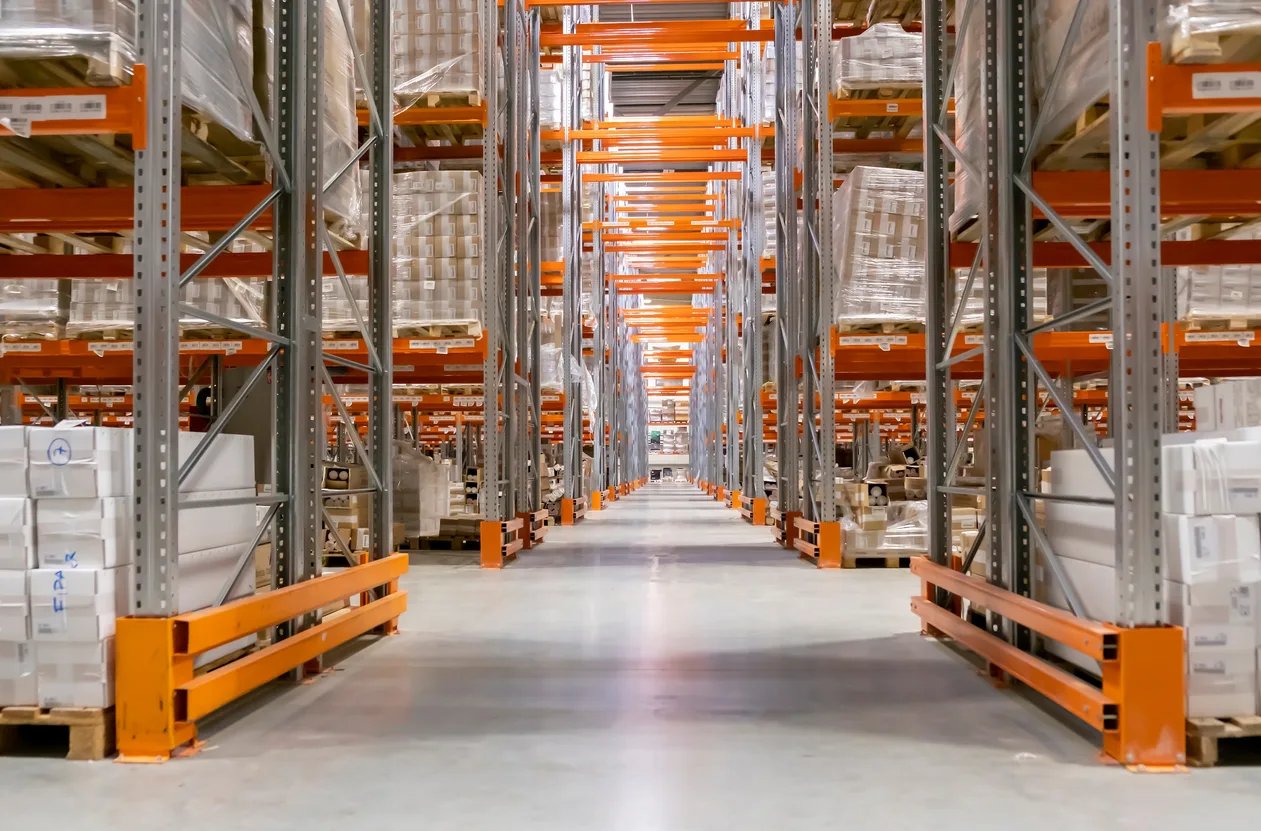

Arkansas has far more distribution space than its population could ever justify, and the reason is not the people who live here. A very large share of this state’s warehouse floor exists so that a supplier can sit close to a buyer. Consumer-goods companies put distribution capacity in the north-west corner specifically to be a short drive from a national general-merchandise buyer, and the vendor cluster that grew up around it has no real equivalent anywhere else in the country.
That inverts the usual warehousing logic, and it changes what a bailee here is actually selling. You are not renting square footage to somebody who needs storage. You are holding a vendor’s goods so they can be replenished into a retail network on short notice — which means short-interval accuracy and custody documentation are the service, not the paperwork that supports it. And it means the loss that hurts most is not always dramatic.
When custody itself is the product
Think about what a shortage means in this model. In an ordinary warehouse, a missing pallet is an unhappy phone call. In a vendor replenishment building, a missing pallet is a failure of the exact thing your customer paid you for — the ability to produce their goods, accurately, on demand, within a short window. It is argued as a bailee matter, against your storage agreement, by a customer with a great deal of leverage.
You took in property that belongs to someone else and you hold it in your care, custody, and control. Every case in the building is theirs. And your general liability policy will not pay for a single one of them, because a standard general liability form excludes damage to personal property in your care, custody, or control. The largest exposure in an Arkansas warehouse is carved out of the foundation policy by that policy’s own terms.
Warehouse legal liability exists to answer exactly what that exclusion removes — fire, sprinkler discharge, theft, handling damage, a cold-chain failure. It leads the program here, and because the state licenses nothing you do, the limitation-of-liability language inside your storage agreement is what a claim will actually be argued against. We read the contract and the limit together, which is the discipline the warehouse insurance program is built on.
Arkansas licenses grain, and it licenses nothing else you do
The state does run a real warehouse program — for grain. It sits with the Arkansas Department of Agriculture, in the quality control and compliance section of the plant industries division, and it requires a license, financial security, recordkeeping, and inspection from anyone storing grain for others. That is a supervised bailment regime and it works.
There is no equivalent for the general merchandise, retail-supplier, or contract warehouse. Which means the large majority of Arkansas warehouse floor space is unlicensed by the state — the buildings holding the highest-value consumer goods in the state answer to no warehouse regulator at all. Their operators answer to the bailment and to whatever they signed, and that is the honest starting point for any conversation about coverage here.
Cold storage: the total loss that leaves no mark
Poultry and protein cold storage is a substantial Arkansas specialism, and it produces the cleanest bailee claim in the trade. There is no fire. There is no water. Nothing is struck and nothing collapses. The temperature drifts, and a customer’s load is destroyed while the building stands in perfect condition — nothing for an adjuster to photograph but a full rack of worthless product.
Every element of a property claim is absent and the operator is liable for the whole value of the goods. That is why refrigeration reliability, alarming, and backup power are underwriting facts on an Arkansas submission rather than operational preferences, and why a cold building and a dry building should never be presented as the same risk.
Hail, tornado, and the flat ground by the river
Arkansas takes tornado and hail from the same spring systems that work Oklahoma and the mid-South, and a warehouse roof is the largest surface either one can find. Hail is the recurring loss; tornado is the severe one. Neither of them stops at the roof: once the envelope is opened, water reaches the racking, and the racking is holding somebody else’s cases.
Flood deserves plain speech here. A great deal of Arkansas warehouse space sits on flat, river-adjacent ground along the Arkansas, White, and Mississippi bottoms — for the simple reason that is where the flat ground is. Flood belongs in its own placement rather than in the property policy, and an operator on river bottom land who has not made that decision deliberately has made it by accident. Winter ice loading and hard freezes stress roofs and sprinkler systems. And seismic gets an honest mention rather than an alarm: the New Madrid zone reaches the north-east corner, and in a warehouse the racking shakes first.
What is yours in all of it — the roof, the racking, the refrigeration plant, the income lost while you cannot ship — is commercial property. What is on the racking is not, and the two lines answer separately for the two halves of a single storm.
More than one wholesale license, depending on the pallet
The Arkansas State Board of Pharmacy licenses wholesale distributors of legend and controlled substances, and separately licenses distributors of medical devices, home medical equipment, and medical gases — so an operation can need several wholesale licenses depending on the mix it handles. Food establishments and food distribution answer to the Arkansas Department of Health, and grain and agricultural commodities stay with the Department of Agriculture. For a state whose distribution economy runs so heavily on food and consumer goods, the food side is the one that touches the most buildings, and it is the one most often overlooked when a dry operator adds a cold room.
Comp on a floor that moves cases fast
Arkansas runs a private workers’ compensation market administered by the state’s workers’ compensation commission — no state fund, and no election out. The exposure profile follows the freight: high-velocity retail replenishment and food distribution mean enormous case volumes moving quickly through pick modules and across dock doors.
The injuries are the classic distribution-center set — powered-industrial-truck incidents, falls from racking, struck-by during putaway, dock and trailer injuries — with lifting and repetitive strain carrying the lost time. Poultry and protein cold-storage floors add cold exposure and slip claims on wet or frozen surfaces. Velocity is itself a hazard here, and an underwriter who sees case throughput without seeing the safety discipline behind it will price for the worse assumption.
What an underwriter reads on an Arkansas submission
- The value of the goods in your care — not your own assets. It sizes the bailee limit and owners understate it constantly, because a vendor’s inventory never appears on their books.
- Your custody documentation — how a shortage is detected, reconstructed, and proven, because in the replenishment model this is what you were actually hired to do.
- The storage agreement — the limitation of liability, the standard of care, and whether a large customer negotiated the cap away.
- Cold-chain integrity — refrigeration redundancy, alarming, and backup power for anything holding protein.
- Roof and siting — hail history across a low-slope plane, and whether flood was placed rather than assumed on river-bottom ground.
- Throughput and headcount on the pick floor, which is where the comp exposure actually lives.
- Claims history, which moves pricing more than most of this list combined.
Major Arkansas warehouse markets
Bentonville and Rogers
The heart of a vendor cluster with no real equivalent anywhere in the country — consumer-goods suppliers place distribution space here specifically to sit close to a national general-merchandise buyer. A contract warehouse in this corner is holding a supplier’s goods for replenishment on short notice, which makes accuracy and custody documentation part of what you are selling rather than back-office housekeeping.
Springdale and the poultry belt
Poultry and food processing at scale, with the cold and frozen storage that goes with it. A refrigerated bailee here fails without a mark on the building: the temperature drifts, and a customer’s protein load is a total loss while the racking, the roof, and the walls are all in perfect condition.
Fayetteville and the I-49 corridor
The southern anchor of the north-west corner, drawing supplier and regional distribution space along the interstate. Multi-tenant contract buildings raise a specific bailee question when something goes wrong: whose care, custody, and control were the goods actually in at the moment the sprinkler discharged?
Little Rock and the river port
The state’s foreign-trade zone grant is held by the Arkansas Economic Development Commission and the zone operates at the Port of Little Rock on the Arkansas River, with an extension at the city’s airport. This is inland, river-and-rail bonded storage rather than a seaport trade — modest, but real enough that an operator can be holding duty-unpaid goods belonging to a customer.
The I-40 crossroads
One of the most heavily used freight corridors in the country runs the width of the state, and warehouses along it take custody of goods mid-journey rather than at either end. Freight held mid-route is freight whose owner is far away and whose claim, when one comes, will be argued on paper — the warehouse receipt and the storage agreement, not a state license.
West Memphis
Sitting directly across the river from a national air-cargo hub, it functions as the eastern gateway into the state. Warehousing here works to air-freight timing, which means a loss inside the building is not only damaged goods but a missed connection for the customer who owns them.
Fort Smith and the Arkansas River
Barge traffic on the McClellan–Kerr navigation system connects the state’s river ports to the Mississippi, and warehousing here serves industrial and forest-products freight. Heavy and awkward units do not behave like cartons when a rack bay is struck, and the severity of a customer’s loss rises with the unit weight.
Jonesboro and the north-east corner
Delta agricultural and distribution country — and the corner of the state the New Madrid seismic zone reaches. It deserves an honest mention rather than an alarm: in a warehouse, racking is what shakes first, and what comes off the racking belongs to a customer.
If the cases are yours, you are on the wrong page
An honest signpost before the questions. This page speaks to the operator holding other people’s goods. If your Arkansas business buys, holds, and resells its own product — a consumer-goods supplier holding its own inventory a short drive from the buyer that will sell it, a food or poultry distributor owning perishable stock, an importer staging owned goods brought in through a Gulf or coastal port, or a beverage wholesaler working a licensed private territory cut by the state’s local-option map — then your inventory is not a bailment at all. Your program leads from stock throughput and products liability rather than from warehouse legal liability, and it has its own page: distributor and wholesaler insurance in Arkansas.
In the north-west corner especially, the two models sit side by side and sometimes inside the same building. If yours does, we place both — the distribution operation and the wholesale operation — and the seam between them is the first thing we map, because after a loss the seam is what decides whose inventory just burned.
Arkansas warehouse insurance FAQs
Does Arkansas license public warehouses?
It licenses public grain warehouses and nothing broader. The program sits with the Arkansas Department of Agriculture, in the quality control and compliance section of its plant industries division, and it requires a license, financial security, recordkeeping, and inspection from anyone storing grain for others. There is no equivalent license for the general merchandise, retail-supplier, or contract warehouse — which means the large majority of the state’s warehouse floor space is unlicensed by the state. For those operators, responsibility for a customer’s goods rests on the bailment and the storage contract rather than on any permit.
What does a supplier actually buy when it hires a warehouse in north-west Arkansas?
Custody, and proof of it. The contract warehouse in this corner of the state frequently exists because a supplier needs to be near the buyer rather than near the consumer — its goods sit close to a national retail network so they can be replenished on short notice. That makes short-interval accuracy and custody documentation part of the service being sold, not an afterthought. And it changes the shape of a loss: a shortage or a mis-ship is not an internal shrink line, it is a failure of the thing your customer paid you for, and it is argued as a bailee matter against your storage agreement.
Why will my general liability policy not pay for a customer’s damaged goods?
Because a standard general liability form excludes damage to personal property in your care, custody, or control — and a vendor’s cases sitting in your building are exactly that property. The largest exposure in the operation is carved out of the foundation policy by that policy’s own terms. Warehouse legal liability is the bailee line written to answer precisely what the exclusion removes: fire, sprinkler discharge, theft, handling damage, or a cold-chain failure in goods that were never yours. It leads an Arkansas warehouse program ahead of the building coverage.
How does cold storage change the exposure?
It removes the evidence. Cold storage for poultry and protein is a substantial Arkansas specialism, and a temperature excursion there destroys a customer’s goods without marking the building at all — no fire, no water, no impact, nothing for an adjuster to photograph except a full rack of product that is now worthless. That is a warehouse legal liability claim in its purest form, and it also means refrigeration reliability, alarming, and backup power are underwriting facts rather than operational preferences.
Which perils should an Arkansas warehouse owner plan for?
Arkansas takes tornado and hail from the same spring systems that work Oklahoma and the mid-South, and a warehouse roof is the largest surface either can find. Hail is the recurring loss; tornado is the severe one. The state also carries a real flood exposure along the Arkansas, White, and Mississippi river bottoms, and that peril belongs in its own placement rather than in the property policy — worth saying plainly in a state where a great deal of warehouse space sits on flat, river-adjacent ground because that is where the flat ground is. Winter ice loading and hard freezes stress roofs and sprinkler systems. Seismic deserves an honest mention rather than an alarm: the New Madrid zone reaches the state’s north-east corner, and racking is what shakes first in a warehouse.
How many licenses does a wholesale distribution operation need here?
Potentially more than one, and it depends on what is on the pallet. The Arkansas State Board of Pharmacy licenses wholesale distributors of legend and controlled substances, and separately licenses distributors of medical devices, home medical equipment, and medical gases — so a single operation can need several wholesale licenses depending on the mix it handles. Food establishments and food distribution answer to the Arkansas Department of Health, while grain and agricultural commodities remain with the Department of Agriculture. For a state whose distribution economy runs so heavily on food and consumer goods, the food side is the one that touches the most buildings.
Get an Arkansas warehouse insurance quote
Quotes in 1–2 hours during business hours.