
States we serve · California
Distributor and wholesaler business insurance in California
For the importers, merchant wholesalers, beverage and grocery distributors, and Central Valley food houses who own what they sell — the businesses whose stock lands at San Pedro Bay or Oakland and becomes theirs the moment it does.
California is where imported goods become somebody’s owned inventory. The San Pedro Bay complex — the adjoining ports of Los Angeles and Long Beach — is where the largest volume of containerized import cargo enters the United States, and the importer who takes title at that gate is the first U.S. seller of the product inside the box. That is not a shipping fact. It is a liability position: the head of the domestic products chain, for goods designed and built by a company that may have no meaningful presence in this country at all.
And the ownership starts long before the gate. Whether it started at the foreign supplier’s dock, at the port of loading, or on arrival is decided by your purchase terms — and whichever it is, that is the moment your exposure begins. The stock-throughput arc for a California distributor is not the warehouse. It is the whole run: the container on the water, the box on the terminal, the drayage move inland to the Inland Empire, the pallet on the rack, and the outbound shipment to the retailer. One owned-goods exposure, several custody changes, and only one of those steps is a location a property policy has ever heard of.
Layer on the rest of the state and the picture stays the same shape. A beverage tier licensed by the Department of Alcoholic Beverage Control that owns what it moves. A grocery, produce, and food-service economy anchored in the Central Valley. A wholesale drug tier licensed by the Board of Pharmacy. Apparel, electronics, and consumer-goods wholesalers clustered around Los Angeles and Orange County. Owned inventory in California is concentrated, high-value, and constantly in motion.
Stock throughput: one form for a journey with many owners of the moment
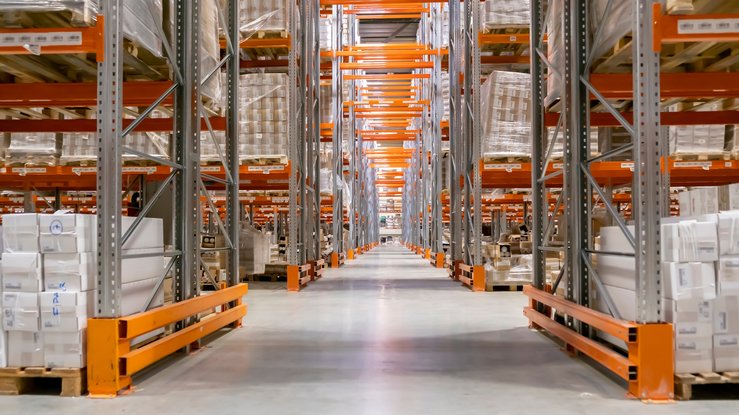
Stock throughput is a single marine-family policy covering your owned product across the entire span, from the supplier to the customer. The alternative is the patchwork: a commercial property policy that reaches inventory only while it sits in a scheduled building, plus a cargo policy that reaches it only while it moves. In between are seams, and California is the state that manufactures seams — the terminal, the chassis, the transload building, the third-party facility where a container waits for an appointment.
Two honest notes. This is largely a manuscript, non-standard market rather than an off-the-shelf form, which means the wording is negotiated — a genuine advantage if somebody reads it and a serious liability if nobody does. And the marine in marine-family is a historical name: the same form follows a pallet that spent its entire life on I-15 and never saw salt water. The vocabulary borrows from ocean cargo and inland marine because that is where the coverage came from, not because it is where it stops.
The whose-goods line, drawn in a California statute
The state has done something for us here that no argument could do better: it wrote our distinction into a licensing scheme. The California State Board of Pharmacy licenses wholesalers and, separately, licenses third-party logistics providers — an entity that warehouses drugs on behalf of a manufacturer or a wholesaler without taking ownership of them.
Read that definition again, because it is the whole architecture of this trade in one line. The 3PL is a bailee: it holds, it does not own, and its exposure is care, custody, and control. You — the distributor reading this page — bought the goods. They are on your balance sheet in the warehouse, on the truck, and on the water. That is why your lead coverage is stock throughput and not warehouse legal liability, and why products liability reaches you at all. California licenses the two roles apart because they are apart.
The food side works the same way, on the goods rather than the building: the Health and Safety Code requires firms that manufacture, repack, label, or warehouse processed food in the state to register with the Department of Public Health’s Food and Drug Branch, and cold-storage and refrigerated-facility activity is licensed through the same branch. A distributor of food is regulated on what it owns.
Earthquake is a racking problem, and racking is where your stock lives
For a California warehouse the seismic story is racking. Earthquake is its own placement — the standard property form does not carry it — and the loss is rarely the building alone. It is selective and drive-in rack that racks over, anchorage that pulls out of the slab, pallets that come off the beams, and stored goods that end up on the floor of an aisle.
For an owner of inventory that is the whole loss. The structure can be perfectly repairable while a distributor’s season is lying in the aisle, unsellable. A tall, narrow-aisle building loaded to height is precisely the geometry that punishes weak rack anchorage, and the questions at placement are unglamorous and specific: what is the racking anchored to, how high is it loaded, and was earthquake actually placed or merely assumed?
Fire that never touches the goods, and water that arrives at the floor
Wildfire is the second real exposure, and it reaches industrial property in the wildland interface directly — but it also reaches inventory through smoke and ash contamination, which can total goods that never burned. For a distributor of food, apparel, or anything with a consumer-facing finish, contaminated product is a complete loss on stock that looks perfectly intact.
Flood is separately placed again, and it matters most in the low-lying ground near the harbor complex and in the Central Valley’s river and levee country during an atmospheric-river winter. The pattern to notice: in this state the perils that hurt an owner of goods are the ones that destroy value without destroying the building. Commercial property remains the right instrument for the structure, the racking, the stock that stays put, and the business income lost while a site is down. It is simply not the whole answer.
The Valley cold chain: temperature is the peril
The Central Valley grows and packs produce, nuts, dairy, and wine, and all of it needs cold storage, cross-dock, and export consolidation before it moves. A wholesaler who owns perishable stock in Fresno or Stockton is holding something whose failure mode is temperature rather than impact.
That is worth saying plainly because it changes the policy conversation. The load is never burned. It simply stops being sellable — and whether the placement responds to spoilage, to a refrigeration breakdown, and to a temperature excursion in transit is a wording question with three separate answers. Most owners have never asked the third one.
Two crews, and a pick line the state regulates
California is a private-market workers’ compensation state. It operates a state fund, but that fund competes in the open market alongside private insurers — a competitive fund is not a monopolistic one, and a distribution employer here buys comp the ordinary way.
The exposure is the warehouse exposure, twice over: powered-industrial-truck strikes and tip-overs on a busy dock, pickers and packers working repetitive lifts through a full shift, falls from ladders and order-pickers at rack height, material coming down off elevated storage — and then the route drivers, loading and unloading all day, who are a different injury population entirely. California layers on a warehouse-specific labor rule as well: the state’s warehouse quota law forbids a productivity quota that keeps a warehouse worker from taking a rest or meal period, using the bathroom, or complying with health-and-safety law, and requires written disclosure of any quota. There is no other state where the pace of work on a pick line is itself a regulated subject.
The fleet needs commercial auto — and a note this trade cannot skip: your insurance carrier is the company that writes your policy, which is a different thing entirely from a motor carrier or freight carrier hauling goods for hire. Above it all, umbrella liability is what a national customer or a landlord demands once the contract limits climb past the primary lines, and a route-based distribution operation carries a fleet severity that a warehouse-only business never sees.
What underwriters actually ask a California distributor
We do not print premiums, and any site that does is guessing. What genuinely drives the conversation for an owner of inventory:
- Whether you import, and where the risk of loss passes — the first-U.S.-seller posture changes both the products exposure and the stock throughput span.
- How much of the journey you own — ocean transit, terminal dwell, drayage, transload, third-party storage, and your own final-mile miles.
- What the product is, and what it does in the hands of the person who ends up with it.
- Peak accumulation in a single Inland Empire building on the worst possible day — not the annual average.
- Rack height, rack anchorage, and whether earthquake was placed as its own line.
- Temperature dependence, wildfire and smoke exposure, and flood siting near the harbor or the levees.
Where California’s owned inventory concentrates
Los Angeles and Long Beach
The San Pedro Bay complex, where the largest volume of containerized import cargo enters the United States, and where two adjoining foreign-trade zone grantees make duty-deferred storage a live option. An importer who takes title at the gate is the first U.S. seller of that product — the head of the domestic products chain for goods it never designed — and the exposure began weeks earlier, on the water.
The Inland Empire
Riverside and San Bernardino counties absorb the boxes that come off the ports, and the owned inventory a distributor stages here reaches a scale that turns accumulation into the first underwriting question. The drayage move up I-10 or I-15 is short in miles and long in exposure: the goods are yours on the terminal, on the chassis, and on the rack, and only the last of those is a scheduled location.
Oakland
Northern California’s container gateway, with its own zone grant. A wholesaler importing here carries the identical first-U.S.-seller posture as at San Pedro Bay with a completely different inland geography behind it — I-880 and the Central Valley rather than the Inland Empire — which changes the transit legs the stock throughput span has to cover.
Stockton and Tracy
Where the Central Valley distribution corridor meets deepwater river ports handling bulk. Owned agricultural and consumer stock consolidates here for export or for national replenishment, and product moving by barge and rail as well as truck is exactly the pattern that property-plus-cargo arrangements handle inconsistently.
Fresno
The heart of the growing and packing economy — produce, nuts, dairy, and wine, all of which need cold storage and cross-dock before they move. For an owner of perishable stock the failure mode is temperature, not fire: the load is never burned, it simply stops being sellable, and whether a policy answers for spoilage in transit is a wording question that deserves an answer before the harvest.
Sacramento
A Valley distribution node on I-5 with a deepwater river port at West Sacramento. Food, beverage, and consumer wholesalers serving Northern California run owned inventory out of here on long inland routes, and the atmospheric-river winters that flood the levee country are a separately placed peril that reaches the floor a distributor’s pallets are standing on.
San Diego
The southern gateway and border-adjacent wholesale market. A distributor importing here is a first U.S. seller with a supply line running south rather than west, and the cross-border staging pattern means owned stock spends time in facilities the distributor does not control — a custody change that a scheduled-location property policy simply does not travel through.
Orange County and the apparel and electronics cluster
Apparel, electronics, and consumer-goods wholesalers concentrated around Los Angeles and Orange County hold high-value owned stock that turns quickly. Fast turnover understates the exposure rather than reducing it: the on-hand value at any moment says nothing about the annual product volume passing through the chain of distribution, and the products liability trails the volume, not the snapshot.
If the goods are not yours, you are on the wrong page
An honest signpost, and in this state it points at an enormous industry. The Inland Empire is where third-party logistics actually lives, and the operators there hold other people’s goods almost exclusively — apparel, electronics, housewares, furniture, often owned by an importer who has never set foot in the building. If that is your operation, the inventory on your racks is not owned stock. It is a bailment, your defining line is warehouse legal liability, and your exposure turns on the storage agreement and the warehouse receipt rather than on your purchase terms. It has its own page: warehouse insurance in California.
A good many California businesses do both — they buy and resell their own product and warehouse someone else’s alongside it, and the wholesale half carries a products exposure the storage half does not. If that is you, we place both, and we draw the line between them before anything binds.
California distributor and wholesaler insurance FAQs
I import through the ports. Am I really at the head of the products-liability chain?
Yes, and California is where that posture is at its strongest. Products liability follows the chain of distribution to a seller, not only to the manufacturer who made the thing. The importer who takes title at the San Pedro Bay gate is the first U.S. seller of that product — answering for goods it did not make, often from an overseas supplier with no meaningful U.S. presence to fall back on. When the actual manufacturer sits beyond the practical reach of a U.S. claim, the importer becomes the realistic target for it, which means you inherit a products exposure for a design you had no part in. Standard general liability answers this through the products-completed-operations hazard, and the work worth doing is sizing those limits against the products you actually handle — a consumable, a child’s product, an electronic device, and a pallet of fasteners are not the same conversation — rather than against a revenue band.
What does stock throughput actually cover that my property policy does not?
The journey. Stock throughput is one marine-family policy that follows your owned product across the whole span: the foreign supplier, the container on the water, the box on the terminal, the drayage move inland to the Inland Empire, the pallet on the rack, and the outbound shipment to the retailer. That is one owned-goods exposure across several custody changes. A commercial property policy insures owned inventory while it sits in a scheduled building and stops at the walls; a cargo policy insures it while it moves. Between them are seams — the terminal, the chassis, the transload, the third-party facility — and in California an imported inventory spends a great deal of its life in exactly those seams. Stock throughput closes them on one form, and because it is largely a manuscript, non-standard market rather than an off-the-shelf product, the wording is negotiated, which is the point of having somebody read it.
California licenses a 3PL that stores drugs. Does that apply to me?
Only if you do not own the goods — and that distinction is the reason to bring it up. The California State Board of Pharmacy licenses wholesalers and, separately, licenses third-party logistics providers: an entity that warehouses drugs on behalf of a manufacturer or wholesaler WITHOUT taking ownership of them. It is one of the cleanest expressions anywhere of the line this trade turns on, because the state put the pure bailee in its own license class. If you buy the product, hold it on your balance sheet, and sell it, you are on the other side of that line: you are the owner, your risk is your inventory rather than your custody of someone else’s, and your lead coverage is stock throughput rather than warehouse legal liability. Separately, if you warehouse processed food in California, the Health and Safety Code requires registration with the Department of Public Health’s Food and Drug Branch — a food warehouse is regulated on what is in it.
Why does everyone say earthquake is about the racking?
Because for a warehouse it is. Earthquake is its own placement — it is not a peril the standard property form carries — and the loss is rarely the building alone. It is selective and drive-in rack that racks over, anchorage that pulls out of the slab, pallets that come off the beams, and stored goods that end up on the floor of an aisle. A tall, narrow-aisle building full of inventory is exactly the geometry that punishes weak rack anchorage. For a distributor that is a direct hit on owned stock: the structure can be perfectly repairable while the season is unsellable on the floor. The questions worth asking at placement are what the racking is anchored to, how high it is loaded, and whether earthquake was actually placed or merely assumed.
Is California a control state for alcohol?
No — it is a license state, and the distinction matters. The state does not own or warehouse beverage inventory at any tier. The Department of Alcoholic Beverage Control licenses the private businesses in the chain: importers, beer and wine wholesalers, distilled-spirits wholesalers, and the retailers they sell to. A beverage distributor here holds the license class that matches what it moves. The practical consequence for insurance is direct: the goods on the rack are the distributor’s own inventory, and the state’s role is licensure and trade-practice enforcement rather than ownership of the product. That is why a California beverage distributor is a stock-throughput and products risk rather than a storage one.
Can smoke really total inventory that never burned?
It can, and it is one of the underrated exposures for an owner of goods in this state. Wildfire reaches industrial property in the wildland interface directly, but it also reaches inventory through smoke and ash contamination — which can render stored goods unsellable without a flame ever touching them. For a distributor of food, apparel, or anything with a consumer-facing finish, contamination is a total loss on product that looks intact. The same logic runs through the state’s other perils: flood is separately placed and matters most in the low-lying ground near the harbor complex and in the Central Valley’s levee country during an atmospheric-river winter, and there again the water arrives at the floor, where the pallets are.
Get a California distributor insurance quote
Quotes in 1–2 hours during business hours.