
States we serve · Florida
Distributor and wholesaler business insurance in Florida
For the importers, beverage and grocery distributors, and merchant wholesalers who own what they sell on the country’s re-export shelf — where a great deal of the inventory under a Florida roof was never bound for a Florida customer at all.
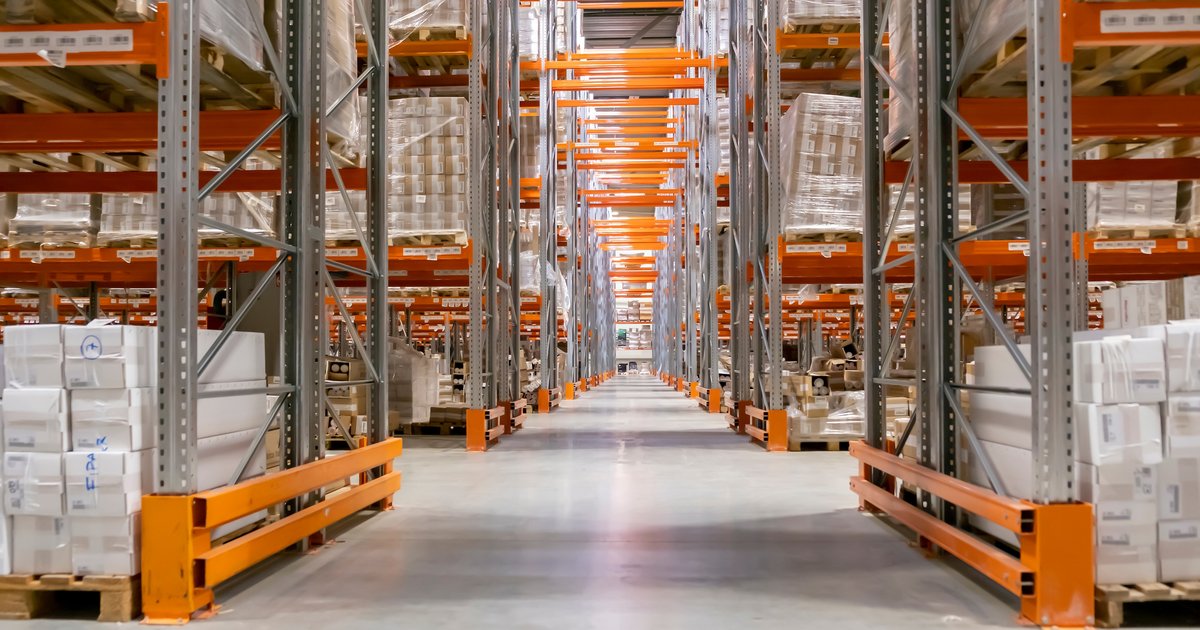

Walk a Miami-area distribution building and ask where the goods are going. A surprising share of the answer is: not here. Florida is the country’s re-export shelf — the U.S. staging ground for Latin America and the Caribbean — and a great deal of what sits on those racks is never destined for a Florida customer, or an American one. It came in through a port, it will go back out through a port, and in between it is held duty-deferred on the strength of the fact that it never formally enters U.S. commerce at all.
And yet it is yours the entire time. You bought it. It is on your balance sheet at the supplier, on the water, at the terminal, on the drayage, on the rack, and on the way back out. The legal status of the cargo is exotic; the ownership of it is not. That gap — between how sophisticated the customs position is and how ordinary the ownership is — is where a Florida distributor’s insurance program either works or does not.
Florida is where the importer takes title
Start with the liability, because it is the thing most Florida wholesalers are carrying without having decided to.
Products liability follows the chain of distribution, and a claim over a product that injures somebody or damages property can reach a seller in that chain — not only the manufacturer who made it. A distributor bringing product in through Miami or Jacksonville is very often the first U.S. seller of it. And when the actual maker sits overseas, beyond the practical reach of a U.S. claim, the importer is the party who is realistically standing there to answer for a design it had no hand in.
General liability answers this through what the standard form calls the products-completed-operations hazard. The work is in the sizing: a consumable, a child’s product, a building product that gets installed into somebody’s structure, and an industrial fastener are four genuinely different exposures, and a limit set against a revenue band rather than against the actual product line is a limit set by guesswork. This is also the cleanest line between the two halves of this trade — a warehouse merely storing a defective product for its owner is largely outside the chain, while a wholesaler who bought it and resold it is squarely inside it.
From the supplier’s dock forward
Stock throughput is one marine-family policy covering your owned product across the entire journey: the foreign supplier, the ocean cargo leg, the port, the drayage, the warehouse, and the customer. It exists because the alternative is a patchwork — a commercial property policy that insures inventory while it sits in a scheduled building and stops at the walls, plus cargo coverage that only responds while goods are moving, with seams between them.
In Florida those seams are most of the trip. Your product spends weeks on the water. It sits in duty-deferred storage before entry. It is drayed across a port complex. Air cargo through Miami International moves the perishables and the pharmaceuticals that cannot wait for a vessel, and that lane has its own handoffs. A single form written across the whole span is not a luxury here; it is the only instrument that matches the shape of the business.
Two honest notes. This is largely a manuscript, non-standard market rather than an off-the-shelf form, so the wording is negotiated — which is an advantage if somebody reads it and a liability if nobody does. And the question it forces is the one importers most often answer by accident: when does risk of loss actually pass to you? Your purchase terms may hand you ownership at the foreign supplier’s dock, at the port of loading, or on arrival. If your coverage starts later than your ownership does, there is a stretch of ocean on which your own inventory is traveling uninsured by you.
Wind is the cause. Water is the loss.
Hurricane is the defining peril, and the mechanism is worth being precise about, because most owners insure it as if it were a structural event.
The storm hits a distribution building exactly where it is weakest: the wide, low-slope roof plane. Uplift peels the membrane and lifts the deck. And the moment the roof opens, the event stops being a wind loss on a structure and becomes a water loss on stacked inventory — your inventory, on your books, soaked under a hole the wind made. The steel is often fine. The product is not.
That is why concentration matters so much in this state. Owned stock in Florida gathers into very large single-site holdings along the I-4 corridor and behind the ports, and the question an underwriter is really asking is not how much product you move in a year but how much of it is standing in one building on the worst possible afternoon. Business income belongs in the same conversation: an Orlando hospitality-supply distributor whose site goes down is not simply out of stock, it is out of a market that does not pause.
Flood is a different policy — and Florida knows it
Storm surge near the ports, and rainfall flooding along the coastal industrial strips, are their own placement. A flood policy, not the property policy. And Florida sharpens the point unhelpfully: warehouses here are frequently sited exactly where the flood zone runs, because that is where the cheap flat industrial land near the water is.
So the peril most likely to reach the goods on your slab is the one your commercial property policy will not answer for. It is a placement decision, and it deserves to be made on purpose.
A license state, and a drug permit from an unexpected door
Florida is a license state, not a control state. The Division of Alcoholic Beverages and Tobacco, inside the Department of Business and Professional Regulation, licenses private distributors, and the state itself never takes title to the product. The division sorts the trade into manufacturers, distributors, and vendors, and a company generally may not stand in more than one tier at once — so a beverage distributor here holds the middle rung on its own account. The consequence is exactly the theme of this page: a Florida wine, spirits, or beer wholesaler owns a deep inventory it must warehouse and insure itself, rather than moving somebody else’s state-owned stock.
Beyond alcohol, Florida regulates the distributor on the goods. The Department of Agriculture and Consumer Services permits food establishments, and its dealer licensing and bonding program sits over the produce trade — real weight in a state that grows and re-ships perishables year round. And the drug side is genuinely unusual: the prescription drug wholesale distributor permit is issued not by a pharmacy board but by the Division of Drugs, Devices and Cosmetics inside the same department, under Chapter 499 of the Florida Statutes, with each permitted establishment naming a certified designated representative. If you have operated in another state, that is the door you will not expect.
The crew, the heat, and the route
Florida workers compensation runs through the private market, with the Division of Workers’ Compensation inside the Department of Financial Services administering the system. The warehouse claim picture is the familiar one — powered-industrial-truck strikes and tip-overs, falls from dock edges and ladders, product coming down off high racking, and the slow lifting and repetitive-motion injuries of a pick line — with one Florida aggravator that is not decorative: heat, in buildings that are not conditioned, is a live contributor to incidents rather than a comfort issue.
The route fleet is the second and separate injury exposure, and commercial auto is where it lands. A necessary note on the word this trade cannot avoid: your insurance carrier is the company that writes your policy, and a motor carrier or freight carrier is a company that hauls goods for hire. Both meanings appear in the same sentence here routinely. Above the primary lines, umbrella liability is what a national customer or a landlord demands once the contract limits climb, and a route-based distribution operation is where that severity usually shows up first.
What underwriters actually look at for a Florida distributor
We do not print premiums, and any site that does is guessing. What genuinely drives the conversation for an owner of inventory here:
- Concentration of owned stock — how much of it stands in one building when a storm makes landfall.
- Roof age, deck, and membrane attachment — the single detail that decides whether wind becomes water.
- Whether flood has been placed, and precisely where the building sits relative to the zone.
- What the product is, and how the products-liability limit was sized against it.
- Where risk of loss passes on imports, and how much ocean sits between there and the dock.
- Re-export and duty-deferred volume, and what a loss on customs-controlled goods triggers beyond the stock.
- Fleet size and route profile, and the split between warehouse and driver payroll.
Where Florida distributors and wholesalers concentrate
Miami and PortMiami
The country’s staging ground for Latin America and the Caribbean, and the place a distributor most often takes title to goods that will never be sold to an American. Duty deferral on cargo that never formally enters U.S. commerce is the entire economic point of the arrangement — and the goods are still, at every moment of it, on your balance sheet.
Port Everglades and Fort Lauderdale
Container and breakbulk import volume behind a dense industrial strip. The concentration here is severe: high-value owned inventory in large single-site holdings, close to the water, in a wind zone — which makes accumulation a catastrophe question rather than a warehousing one.
Jacksonville and JAXPORT
The northeast gateway, with strong Puerto Rico and Caribbean trades. An importing wholesaler taking title here owns the goods from the foreign supplier’s dock forward, across the ocean leg and the drayage — a span that begins long before the four walls a property policy is written around.
The I-4 corridor and Lakeland
The state’s distribution middle, where I-4 stitches the Atlantic and Gulf spines together and grocery and fulfillment inventory concentrates. Owned stock here is deep, fast-turning, and under an enormous roof plane, and high turnover flatters the balance sheet while understating the annual product volume moving through the chain of distribution.
Orlando
A restocking market driven by a permanent visitor economy that does not pause. Food, beverage, and hospitality-supply distributors hold owned inventory against demand that cannot be deferred — which makes business income, not just the stock value, the number to read closely when a site goes down.
Tampa and Port Tampa Bay
The Gulf-side gateway, serving building products, industrial supply, and the west-coast consumer market. A distributor of building products carries a products exposure with a long tail: what you sold gets installed into somebody else’s structure, and the claim is sized to the structure.
Miami International Airport
The air-cargo lane for perishables and pharmaceuticals — goods too time-sensitive to wait for a vessel. Owned cold-chain and drug inventory fails on temperature rather than fire: the product is never burned, it simply becomes unsellable, and whether the policy answers for a temperature excursion in transit is worth settling in advance.
Ocala
Inland distribution on the I-75 spine, far enough from the coast to change the peril mix but not the wind exposure. Distributors consolidating here are trading surge risk for interior severe-weather risk, which is a genuine siting decision rather than an escape from catastrophe.
If the goods are not yours, you are on the wrong page
An honest signpost. This page is for the business that owns what it stores. If your operation holds other companies’ freight for a fee — a public, contract, third-party, bonded, or cold-storage warehouse staging an importer’s containers — then the goods on your floor are not owned stock, they are a bailment, and none of the above is your lead exposure. Your program starts at warehouse legal liability, the bailee line for goods in your care, custody, and control, and it turns on your storage contract rather than on your purchase terms. That is a different risk with a different stack, and it has its own page: warehouse insurance in Florida.
A great many Florida businesses do both — they import and resell their own product and warehouse someone else’s alongside it, often in the same building near the same port. If that is you, we place both, and we draw the line between them before anything binds.
Florida distributor and wholesaler insurance FAQs
What is stock throughput, and why does a Florida importer need it?
Stock throughput is one marine-family policy that follows your owned product across the whole span — from the foreign supplier, through the ocean leg, into the port, across the drayage, into your warehouse, and out to the customer. A Florida importer needs it because Florida is where the importer takes title. Your inventory has been at risk from the supplier’s dock forward, and a commercial property policy does not wake up until the goods are sitting inside a scheduled building. The alternative to stock throughput is a patchwork — property for goods at rest, cargo for goods in motion — with seams in between where a loss can land. For a wholesaler bringing product in through Miami or Jacksonville, those seams cover most of the product’s life.
Am I exposed to products liability on goods I imported but did not manufacture?
Yes, and Florida is the state where this bites hardest. Products liability follows the chain of distribution to a seller, not only to the manufacturer — and a distributor bringing product in through PortMiami or JAXPORT is very often the first U.S. seller of it. When the maker sits overseas, beyond the practical reach of a U.S. claim, the importer is the party who is realistically there to answer for the product. You inherit an exposure for a design you had no part in. General liability responds through the products-completed-operations hazard, and those limits belong sized against the products you actually handle — a consumable, a child’s product, a building product, and an industrial fastener are not one conversation.
How does a hurricane actually damage my inventory?
Through the roof, and then with water. Hurricane is the defining peril in Florida and it hits a distribution building exactly where it is weakest: the wide, low-slope roof plane. Uplift peels the membrane and the deck — and the moment the roof opens, the event stops being a wind loss on a structure and becomes a water loss on stacked inventory. That is the sequence worth internalising, because it changes what you insure and how you value it. Your owned stock is the thing that gets ruined, not the steel. Tornadoes spun up by landfalling systems and severe-thunderstorm wind are the secondary story, and hail is a lesser factor here than in the interior South.
Does my property policy cover flood at my Florida warehouse?
No. Flood is its own placement — a separate policy, not a property peril you can assume is included — and in Florida that distinction is unusually consequential because warehouses here are frequently sited exactly where the flood zone runs. Storm surge near the ports and rainfall flooding along the coastal industrial strips are both real and both routine. If your owned inventory is stacked on a slab in a low-lying industrial park near the water, the peril most likely to reach it is the one your commercial property policy will not answer for. That is not a reason for alarm; it is a reason to place flood deliberately and to know where the goods actually sit.
Who issues a wholesale drug distributor permit in Florida?
Not a pharmacy board, which surprises most distributors who have operated elsewhere. Florida issues the prescription drug wholesale distributor permit through the Division of Drugs, Devices and Cosmetics inside the Department of Business and Professional Regulation, under Chapter 499 of the Florida Statutes, and each permitted establishment must name a certified designated representative. Food runs a different track: the Department of Agriculture and Consumer Services permits food establishments, and its dealer licensing and bonding program sits over the produce trade — real weight in a state that grows and re-ships perishables year round. In both cases you are permitted because of what you own, not because of the building you own it in.
Is a Florida beverage distributor holding its own inventory?
Yes, outright, and that is the whole point of the regime here. Florida is a license state, not a control state — the Division of Alcoholic Beverages and Tobacco licenses private distributors and the state itself never takes title to the product. The division sorts the trade into manufacturers, distributors, and vendors, and a company generally may not stand in more than one tier at once, so a beverage distributor holds the middle rung on its own account. The consequence for the insurance program is direct: a Florida wine, spirits, or beer wholesaler owns a deep inventory that it must warehouse and insure itself, rather than moving somebody else’s state-owned stock. That inventory is a stock-throughput and property exposure, not a bailment.
Get a Florida distributor insurance quote
Quotes in 1–2 hours during business hours.