
States we serve · Florida
Warehouse business insurance in Florida
For the public, 3PL, bonded, and cold-storage operators from PortMiami and Port Everglades up the I-4 corridor to Lakeland and Jacksonville — holding freight that often is not bound for a Florida customer at all, under a roof that has to survive a hurricane.
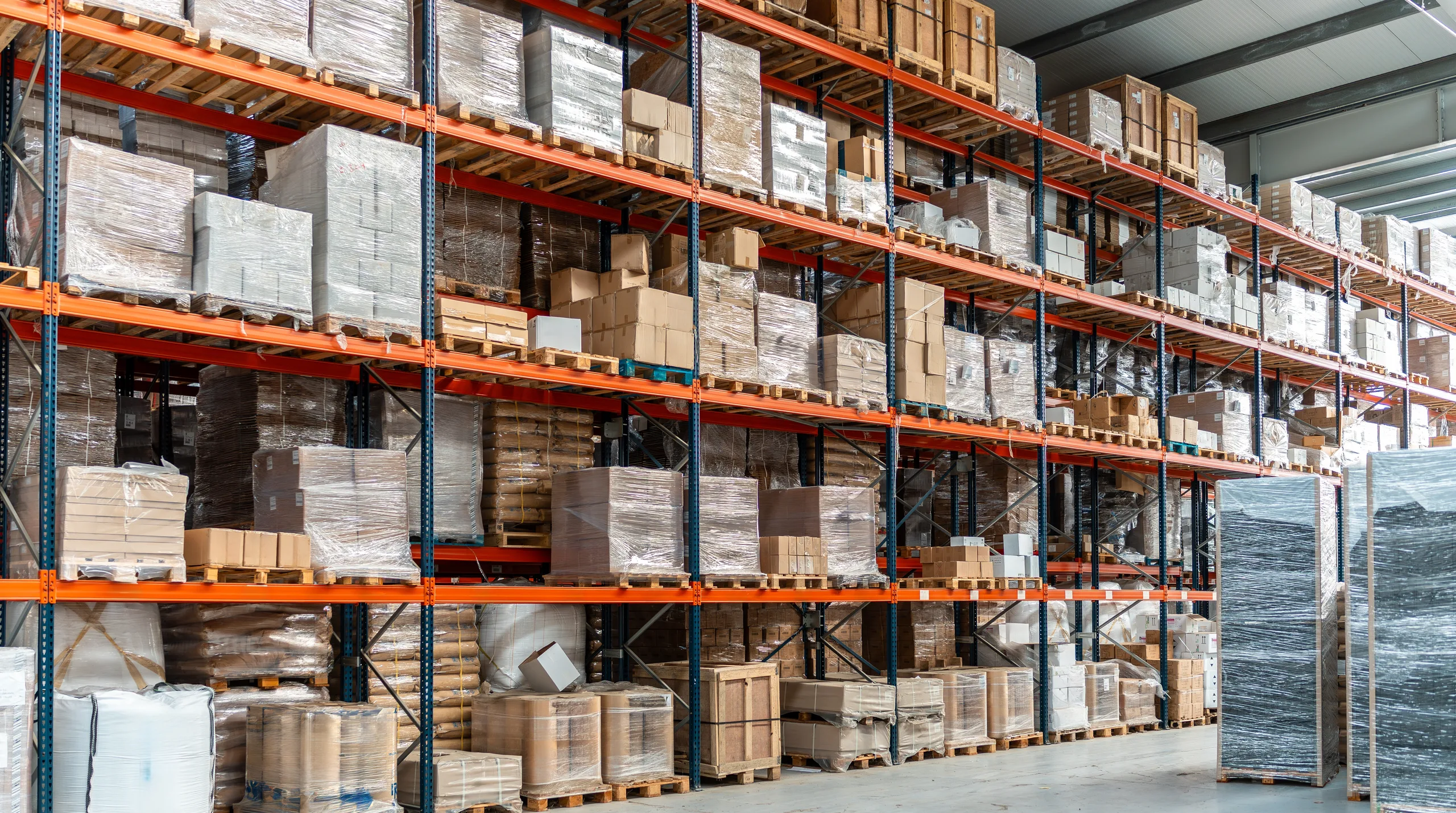

Walk a warehouse floor in Medley or Doral and ask a simple question — where is this going? A surprising amount of it is not going to a Florida customer at all. It is going to Bogotá, or San Juan, or Santo Domingo. Florida is the country’s re-export shelf, and a great deal of what sits on a Florida rack is an importer’s or a consolidator’s freight, staged and waiting, still under customs control, on its way to somewhere that is not here.
Which means a Florida warehouse operator is holding other people’s goods, frequently other people’s duty-unpaid goods, under a wide low-slope roof, in the path of hurricanes. That is the risk in one sentence, and every coverage decision on this page follows from it.
The roof opens, and the loss becomes somebody else’s inventory
Hurricane is the defining Florida peril, and it attacks a distribution building exactly where the building is weakest: the wide, low-slope roof plane. Uplift peels membrane and then deck. And here is the part owners consistently underestimate — once the roof opens, the event stops being a wind loss on a structure and becomes a water loss on stacked inventory. The building can be repaired. The customer’s goods on the top three levels of racking cannot.
Two policies answer that one storm, and they answer separately. Commercial property covers what is yours and stays put: the roof, the deck, the racking, the material-handling systems, and the business income lost while the building cannot ship. Warehouse legal liability covers what is theirs and sits in your care. They are not substitutes, they do not overlap, and a Florida operator carrying a healthy property limit against a thin bailee limit has insured the cheaper half of the hurricane.
Flood is a third conversation and it is genuinely separate. Storm surge and rainfall flooding near the ports and along the coastal industrial strips are their own placement — a flood policy, not the property policy — and Florida warehouses are frequently sited precisely where the flood zone runs, because that is where the port-adjacent industrial land is. Floodwater takes the bottom of the rack first, and the bottom of the rack is where the customer’s pallets are. Assuming that peril rather than placing it is the most common uninsured loss in this state.
Warehouse legal liability: what your general liability form takes away
Take in a customer’s freight and you are a bailee — you hold property that is not yours, in your care, custody, and control, and you answer for it. That relationship is the whole business.
Now read your foundation policy. A standard general liability form excludes damage to personal property in your care, custody, or control. The customers’ freight in your building is the textbook example of that property. So the single loss a Florida warehouse operator most fears — fire, sprinkler discharge, theft, a refrigeration failure in an importer’s consignment — is carved out of general liability by general liability’s own terms. This is not a defect. It is the reason the bailee line exists.
Warehouse legal liability answers exactly what that exclusion removes. And because Florida hands you no warehouse license and no statutory standard of care, the shape of that liability is whatever your paperwork says it is: the warehouse receipt, the storage agreement, and the limitation-of-liability language inside it — the released-value or per-package cap that limits what you owe unless the customer declares a higher value. Whether a large importer accepted that limit or negotiated it away changes the exposure your policy is being asked to size, which is why we read the contract and the coverage as one decision. That is the operating model behind the warehouse insurance program.
Florida licenses the product, not the building
There is no general state public-warehouse licensing statute in Florida. A warehouse storing goods for hire is not licensed as a warehouse. What the state licenses sits closer to the product: the Department of Agriculture and Consumer Services licenses and bonds dealers in agricultural products so growers get paid, and it permits food establishments — including storage facilities. So a food or produce warehouse here is a permitted premises while the dry-goods 3PL across the street holds no warehouse license at all.
The drug side is genuinely unusual and worth knowing if you touch it. Florida issues the prescription drug wholesale distributor permit not through a pharmacy board but through the Division of Drugs, Devices and Cosmetics inside the Department of Business and Professional Regulation, under Chapter 499 of the Florida Statutes — and each permitted establishment must name a certified designated representative. If your building handles pharmaceuticals for other companies, that named individual is a compliance position and a risk-management position at once.
Cold storage: the loss that leaves the building untouched
Florida’s cold chain is specific and it is real. Perishable produce moves year round, and imported flowers and fish come through refrigerated facilities near Miami on aircraft rather than vessels. A refrigerated bailee fails differently from a dry one: nothing burns, nothing collapses, the roof stays on — the temperature simply drifts, and a customer’s consignment becomes worthless while the racking stands empty of any damage at all.
That is a warehouse legal liability claim in its purest form, and it is a claim for goods that were never on your balance sheet. It also compounds the hurricane story, because the peril that most reliably breaks a cold chain in Florida is not water — it is the loss of power that follows the storm.
Bonded custody on the re-export shelf
Bonded and zone storage is ordinary business here, not an exotic option. Port Everglades, PortMiami, JAXPORT, and Port Tampa Bay all sit inside zone programs, and Miami International Airport carries the perishable and high-value air freight that moves alongside them. For goods entering for re-export to Latin America and the Caribbean, duty deferral on cargo that never formally enters U.S. commerce is the entire economic point of the arrangement.
For the operator holding that cargo, the point is different. You are answering to two masters over the same pallet: the customer whose freight it is, and a customs regime that has not been paid. A shortage that would be an awkward phone call in an ordinary building becomes something considerably more formal when the goods were never entered. Custody, in a Florida bonded warehouse, has a federal dimension on top of the contractual one.
Forklifts, docks, and the heat
Workers’ compensation in Florida runs through the private market, with the Division of Workers’ Compensation inside the Department of Financial Services administering the system. The mechanisms are the ones every distribution building knows: powered-industrial-truck strikes and tip-overs, falls from dock edges and ladders, product coming down off high racking, and the slow lifting and repetitive-motion injuries of a pick line.
Heat is the Florida multiplier. In a building that is not conditioned — and many are not — heat drives fatigue, and fatigue is upstream of nearly every other injury on that list. Underwriters read hydration and rotation practice on a Florida submission the way they read rack-inspection discipline elsewhere, and they are right to.
What actually drives a Florida warehouse premium
We do not publish figures, and any site that does is guessing. What we can tell you is what an underwriter reads, in rough order:
- The value of the goods in your care — not your own assets. This sizes the bailee limit, and it is the number owners understate most, because the inventory is not theirs and never appears on their books.
- The roof. Age, deck, membrane, attachment, and rooftop equipment — because in Florida the roof is the difference between a wind claim and a total loss of somebody else’s inventory.
- Where the building sits. Wind zone, distance to the water, and flood zone are three separate questions, and the flood one has to be answered with a placement rather than an assumption.
- What you store, and at what temperature. Dry consumer freight, high-theft electronics, produce and flowers under refrigeration, and duty-deferred re-export cargo are four different risks in one shell.
- Your contracts — the limitation of liability in your warehouse receipt, and whether your larger customers have negotiated it away.
- The floor — forklift traffic, dock protocol, rack inspection, and heat management on the material-handling payroll.
- Claims history, which moves pricing more than most of this list combined.
Major Florida warehouse markets
Miami and PortMiami
The staging shelf for Latin America and the Caribbean. A great deal of what sits in a Miami-area warehouse was never destined for a Florida customer — it is an importer’s or a consolidator’s freight, waiting to move on, held in a bailee’s building under zone or bonded status. The goods are under customs control while they sit on your floor, so a loss here is a claim from the owner and a problem with the government at the same time.
Miami International Airport and the cold chain
Perishables and high-value air freight — imported flowers, fish, and pharmaceuticals that cannot wait for a vessel. Refrigerated bailment fails in its own quiet way: the building is never touched, the temperature simply drifts, and a customer’s consignment is a total loss with the racking untouched and the roof intact.
Fort Lauderdale and Port Everglades
A second deep-water gateway inside a zone program, with warehousing packed onto coastal industrial ground. That ground is exactly where surge and rainfall flooding run, which is why flood belongs in a separate placement here rather than in the property policy — and why the flood decision is really a decision about somebody else’s pallets sitting at floor level.
Jacksonville and JAXPORT
The northeastern gateway with strong Puerto Rico and Caribbean trades. Warehouses here take custody of containerised freight mid-journey rather than at either end, which puts the storage agreement and its limitation-of-liability language — not any state license — at the center of any argument about a damaged customer consignment.
The I-4 corridor and Lakeland
Florida’s distribution middle, stitched between I-95 and I-75, where fulfillment and grocery space serves a large resident population and a tourism economy that must be restocked constantly. High-velocity fulfillment bailment is unit-level: thousands of small customer-owned items moving daily, where the loss is rarely one catastrophe and often an accumulation of shrink, mis-ships, and handling damage.
Orlando
Consumer replenishment at scale on the eastern half of the I-4 corridor. Inland siting takes surge off the table but not wind: hurricanes that make landfall on either coast are still hurricanes over Orange County, and a wide low-slope roof does not care which shoreline the storm crossed.
Tampa and Port Tampa Bay
The Gulf-side port inside a zone program, handling both consumer and industrial freight. A bailee holding project and industrial cargo here is holding units that do not behave like cartons — awkward, heavy, hard to re-source — so the customer’s downtime after a loss is often worth more than the goods themselves.
Ocala
The inland distribution node on I-75 north of the I-4 belt, drawing regional space on cheaper ground. Distance from the coast improves the wind conversation and does nothing for the convective one: landfalling systems spin up tornadoes well inland, and severe-thunderstorm wind is a year-round fact of the peninsula.
If the goods are yours, you are on the wrong page
One honest signpost. This page is for the operator holding other people’s freight. If your Florida business buys, holds, and resells its own product — an importer taking title at PortMiami or Jacksonville and becoming the first U.S. seller of it, a beverage wholesaler licensed by the Division of Alcoholic Beverages and Tobacco, or a grocery, produce, marine, or building-products distributor — then your inventory is not a bailment at all. Your exposure begins at a foreign supplier’s dock and runs through the ocean leg, the port, the drayage, and the warehouse, which is the stock throughput picture and a products-liability picture, not a warehouse legal liability one. That is a different risk with a different policy stack and it has its own page: distributor and wholesaler insurance in Florida.
A great many Florida companies do both, because the same building that stages an importer’s freight often holds the operator’s own line as well. If yours does, we place both sides — the distribution operation and the wholesale operation — and the seam between them is the first thing we map, because after a hurricane it is the seam that decides which policy answers.
Florida warehouse insurance FAQs
Does Florida require a license to run a public warehouse?
No. Florida has no general state public-warehouse licensing statute. A warehouse that stores goods for hire is not licensed as a warehouse, and its obligations run through the bailment relationship, its contract, and the warehouse receipt rather than through a state permit. What Florida licenses is closer to the product than the building: the Department of Agriculture and Consumer Services licenses and bonds dealers in agricultural products so growers get paid, and it permits food establishments — including storage facilities. So a food or produce warehouse here is a permitted premises, while the dry-goods 3PL next door is not licensed at all.
A hurricane opens my roof and a customer’s inventory is ruined. Which policy pays for what?
Two policies, one event, and it is worth being clear which is which. Commercial property answers what is yours and stays put — the roof, the deck, the racking, the material-handling systems, and the income you lose while the building cannot ship. Warehouse legal liability answers what is theirs and sits in your care: the stacked inventory that belonged to your customer. Hurricane hits a distribution building exactly where it is weakest, which is the wide low-slope roof plane; uplift peels membrane and deck, and once the roof opens the loss stops being a wind loss on a structure and becomes a water loss on somebody else’s goods. A Florida operator with a generous property limit and a thin bailee limit has insured the cheaper half of the storm.
Is flood included in my Florida warehouse property policy?
No — flood is its own placement, and in Florida that distinction is not academic. Storm surge and rainfall flooding near the ports and along the coastal industrial strips are a separate exposure from wind, and Florida warehouses are frequently sited exactly where the flood zone runs, because that is where the port-adjacent industrial ground is. The bailee angle sharpens it further: floodwater takes the bottom of the rack first, and the bottom of the rack is where a customer’s pallets sit. A property policy that answers a hurricane will not answer that water, and the placement has to be made deliberately.
Why does my general liability policy exclude the goods I am storing?
Because that is what the form says, and it is the defining fact of this trade. A standard general liability policy excludes damage to personal property in your care, custody, or control — and the customers’ freight in a Florida warehouse is precisely that property. The loss you fear most is carved out of your foundation policy by the policy’s own terms. Warehouse legal liability exists to answer exactly what that exclusion removes, which is why it leads a bailee program here rather than trailing behind the building coverage.
What does bonded or foreign-trade-zone storage add for a Florida warehouse?
A second master over the same pallet. Florida is dense with zone coverage because it is dense with ports — Port Everglades, PortMiami, JAXPORT, and Port Tampa Bay all sit inside zone programs, and Miami International Airport carries the perishable and high-value air freight that moves with them. Bonded and zone storage is ordinary business here rather than an exotic option, especially for goods entering for re-export to Latin America and the Caribbean, where duty deferral on cargo that never formally enters U.S. commerce is the entire economic point. When you admit those goods you take on customs obligations on top of your ordinary duty of care to the owner. The freight is under customs control while it is under your roof.
What are the real workers’ compensation exposures in a Florida warehouse?
Workers’ compensation runs through the private market here, with the Division of Workers’ Compensation inside the Department of Financial Services administering the system. The loss picture is the familiar distribution one — powered-industrial-truck strikes and tip-overs, falls from dock edges and ladders, product coming down off high racking, and the slow lifting and repetitive-motion injuries of a pick line. Florida adds one aggravator that underwriters take seriously: heat. In buildings that are not conditioned, heat drives fatigue, and fatigue drives every other mechanism on that list.
Get a Florida warehouse insurance quote
Quotes in 1–2 hours during business hours.