
States we serve · Georgia
Distributor and wholesaler business insurance in Georgia
For the importers, beverage and food wholesalers, and flooring and building-products distributors whose containers clear Garden City Terminal — and whose inventory is theirs from the overseas factory to the last customer in the Southeast.
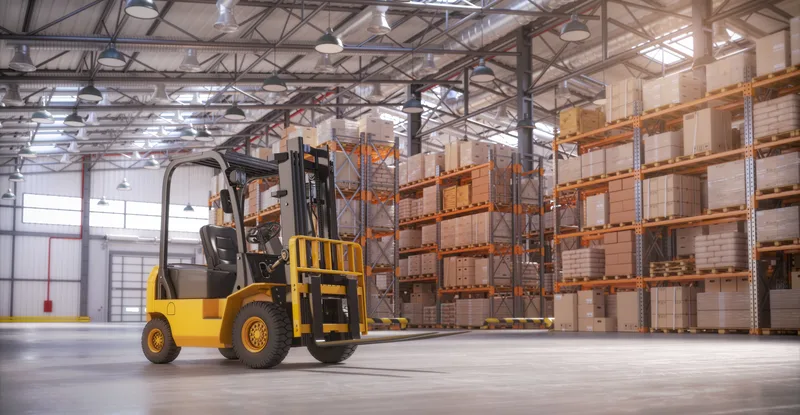

In Georgia a container can clear Garden City Terminal and be on a rack in a metro Atlanta warehouse the same day. That is unusual, it is the reason the state’s distribution economy exists in the shape it does, and it changes what an insurance program has to cover.
Because the goods do not become yours in Atlanta. They became yours at an overseas factory, or on the water, or at the moment your terms of sale said risk of loss passed — and everything after that is a journey you own outright. Georgia simply compresses the journey. The Port of Savannah is the import gateway; the Mason Mega Rail facility on the terminal lets a box go from vessel straight to rail without a truck move; and metro Atlanta became one of the country’s great distribution build-outs because it is where the interstates cross and close enough to the water for a next-day drayage turn. Demand here is fed by the port and consumed by the Southeast: Georgia stores goods that are going to other states.
So the owner of that inventory is exposed across a short, dense, fast arc — and the standard instinct, which is to insure the building and assume the stock came along with it, misses almost all of it.
Stock throughput versus the four walls
Stock throughput is one marine-family policy that covers your owned product across the entire span: the overseas factory, the ocean leg, Garden City Terminal, the rail or drayage move inland, the Atlanta warehouse, and the outbound delivery to a customer three states away.
The alternative is a patchwork with a seam in the middle. Commercial property insures inventory while it sits in a scheduled building — the racking, the stock that stays put, and the business income lost while the site is down — and it stops at the walls. A cargo policy insures the goods while they move. Between them lie the terminal, the transload, the yard, and the third party’s facility, and that is where losses land. Georgia’s speed does not remove the seam; it just means the goods cross it in hours rather than weeks. The exposure is no smaller for being brief.
Two honest notes. The line is largely a manuscript, non-standard market, so the wording is negotiated rather than pulled off a shelf — an advantage if somebody reads it. And the marine family name is a historical artifact, which is why the vocabulary borrows from ocean and inland marine language even for a pallet that goes from a rail car to a truck and never sees water again.
Duty-deferred at the water, or duty-deferred inland
Georgia carries foreign-trade zone coverage on both ends of the state, and the pairing is the point. World Trade Center Savannah is the grantee for the zone serving the port area; Georgia Foreign-Trade Zone, Inc. is the grantee for the Atlanta-centered zone, whose sites are scattered across the metro and beyond. The Appalachian Regional Port at Chatsworth extends that bonded reach north on rail.
An importer can therefore hold goods in a duty-deferred posture at the water or inland in the distribution belt — a genuine strategic choice most states do not offer. What does not change either way is ownership. Duty-deferred inventory is still your inventory, and a loss on it reaches the customs position as well as the value, which is a wrinkle a straightforward property limit was never built to handle.
The seller in the chain
A distributor who never made anything can still be sued over what it sold. Products liability follows the chain of distribution, and a claim over a product that injures a person or damages property reaches a seller in that chain, not only the maker.
A company that brings product through Savannah and sells it into the Southeast is frequently the first U.S. seller of a foreign-made good — merchandise it never touched in the making and often cannot fully inspect. When the actual manufacturer sits beyond the practical reach of a U.S. claim, that importer becomes the realistic target. General liability answers this through what the standard form calls the products-completed-operations hazard, and the work is sizing those limits against what you genuinely handle — imported flooring out of Dalton, a food product, an electronics component — rather than against a generic revenue band.
It is also the cleanest way this trade divides. A wholesale business bought the goods and resold them, so it is inside the chain. A warehouse that merely stored the same product for its owner largely is not — the goods were never theirs to sell. Same pallet, same building, entirely different liability.
Two catastrophe states in one
Where your building sits decides which Georgia you are insuring.
On the coast around Savannah and Brunswick the exposure is tropical: wind uplift on port-adjacent warehouse roofs, and surge and rain flooding on low ground near the terminals. That flooding is its own placement, not a property endorsement, and it matters enormously when the goods on the floor are on your balance sheet.
Inland, the peril turns convective. Tornadoes and severe-thunderstorm downbursts run the corridors north and west of Atlanta, and hail on an acres-wide roof plane is a real property loss even when nothing else is touched. Winter ice is an occasional, largely logistical disruption in the north of the state.
For an owner of goods the common thread is the way in: the roof. Wind opens the envelope, water follows it down onto racked inventory, and the building is repairable while the stock underneath it very often is not. Concentration makes it worse — the metro Atlanta belt holds some of the largest single-tenant inventories in the Southeast, and a single storm can reach a distributor’s entire book at once.
A licensed middle tier, run out of the revenue department
Georgia licenses rather than controls. The Alcohol and Tobacco Division of the Department of Revenue issues the wholesaler and distributor licenses and enforces the law, but the state never owns the product. The tiers are kept apart: a licensed distributor may not manufacture and may not sell to the public.
Because the licensing sits inside the revenue department rather than a standalone commission, the compliance relationship a Georgia distributor has with the state is largely a tax-and-reporting relationship — a difference in texture that anyone who has held a license in a commission state notices immediately. What the arrangement does not change is whose goods they are: a Georgia beverage wholesaler makes its money owning inventory and moving it to licensed retailers, so the stock on the rack is owned stock, full stop.
Elsewhere in the regulated economy: the Department of Agriculture regulates food manufacturing and warehouse distribution facilities directly, running unannounced inspections and licensing food sales establishments broadly enough to reach wholesale grocery. Prescription drug wholesalers are licensed by the State Board of Pharmacy, with background investigations and facility inspections carried out by the Georgia Drugs and Narcotics Agency — an enforcement body distinct from the licensing board. And the state’s actual warehouse license applies to cotton, grain, and tobacco, not to a distribution building.
Peak season, and new hands on the floor
Georgia runs a private workers compensation market administered by the State Board of Workers’ Compensation. The injuries are the ones a high-throughput building produces: forklift and pallet-jack contact in congested aisles, falls from dock plates and from the back of a trailer, cases and pallets coming out of racking, and the shoulder and back strain of a fast pick rate.
The variable that moves the conversation most here is peak-season staffing. The swings put a lot of new, undertrained hands on the floor at exactly the time the building is running hardest — a frequency problem before it is anything else, and one that loss control can genuinely move.
A distribution business also carries two injury populations, not one: the crew inside and the route drivers on commercial auto exposure all day. A note on a word this trade uses two ways — your insurance carrier writes your policy; a motor carrier hauls freight for hire. Umbrella liability is where a national retail customer’s contract limits usually land.
Where Georgia distributors and wholesalers concentrate
Savannah and Garden City Terminal
The state’s import gateway, and the moment a container’s contents become somebody’s owned stock. The Mason Mega Rail facility on the terminal lets boxes go from vessel straight to rail without a truck move — which shortens the journey without shortening the exposure, because the goods are the importer’s from the overseas factory onward regardless of how many wheels touch them.
The metro Atlanta distribution belt
The space built along I-75 and I-85 south and west of the city, close enough to Savannah for a next-day drayage move. This is where owned inventory concentrates into some of the largest single-tenant holdings in the Southeast — an accumulation question, because a tornado or a downburst on an acres-wide roof plane reaches a distributor’s entire book at once.
Dalton
Flooring and building-products distribution, an inventory that is heavy, bulky, and slow to replace. A distributor of imported flooring is squarely in the products-liability chain as the seller of a good it did not manufacture, and its business-income exposure runs on re-sourcing time from an overseas mill rather than on how quickly a roof can be repaired.
Chatsworth and the Appalachian Regional Port
A rail terminal that extends the port’s bonded reach into north Georgia. An importer holding duty-deferred goods inland here owns product on which duty has not yet been paid, so a loss touches the customs position as well as the value — and the goods spent their whole journey traveling, which is precisely where a four-walls property policy stops looking.
Brunswick
Roll-on, roll-off and bulk trades on the coast, where the imported unit is a vehicle or a piece of equipment rather than a carton. High value per item and coastal wind and surge in the same place — and for an owner of goods, surge and rain flooding near a terminal is a separate flood placement, not a property endorsement.
Macon
Where I-75 meets I-16, the natural inland break point between the port and the metro. Owned stock passing through here is in transit rather than at rest, which is exactly the part of the journey that falls into the seam between a property policy and a cargo policy.
Augusta and Columbus
Regional wholesaling on the eastern and western edges, serving trade areas that reach into neighbouring states. Beverage wholesalers here own their inventory outright under the licensed three-tier system, and route trucks put a meaningful share of that owned product on the road rather than on a rack at any given moment.
If the goods are not yours, you are on the wrong page
A signpost, honestly meant. Everything above assumes the inventory is yours. If your building along I-75 or out toward the port instead holds import cargo for retailers and consumer-goods companies — a contract or public warehouse storing somebody else’s freight for weeks at a stretch, or a refrigerated house holding north Georgia poultry that belongs to a customer — then it is not owned stock. It is a bailment, and your lead line is warehouse legal liability, the bailee coverage for goods in your care, custody, and control. That turns on your storage contract rather than on your purchase terms, and it has its own page: warehouse insurance in Georgia.
A good many Georgia businesses do both — they import and distribute their own product and warehouse someone else’s beside it. If that is you, we place both, and we draw the line between them before anything binds.
Georgia distributor and wholesaler insurance FAQs
How does the Georgia three-tier system work for a beverage wholesaler?
Georgia licenses rather than controls: the Alcohol and Tobacco Division of the Department of Revenue issues the wholesaler and distributor licenses and enforces the law, but the state never owns the product. The tiers are kept apart — a licensed distributor may not manufacture and may not sell to the public — so a Georgia beverage wholesaler makes its money owning inventory and moving it to licensed retailers. One consequence of where the licensing sits is worth planning around: because it lives inside the revenue department rather than a standalone commission, the compliance relationship a distributor has with the state is largely a tax-and-reporting relationship. For the insurance program the point is simpler still — the inventory is genuinely yours at every step, which makes it a stock-throughput exposure rather than a bailment.
What is stock throughput, and why does it fit a Savannah importer?
Stock throughput is one marine-family policy that follows your owned product across the whole span — from the overseas factory, through the ocean leg, across Garden City Terminal, on the drayage or rail move inland, into the Atlanta warehouse, and out to the customer. A Georgia importer needs it because the alternative is a patchwork: a commercial property policy that covers inventory only while it sits in a scheduled building, plus a cargo policy that covers it only while it moves, with seams between them where a loss falls. Georgia’s particular geography makes the seams unusually visible — a container can clear the terminal and be on a rack in metro Atlanta the same day, which means the goods spend a compressed but very exposed period in transit under nobody’s four-walls policy. Stock throughput closes that on one form, and it is largely a manuscript, non-standard market, so the wording is negotiated rather than assumed.
Does a Georgia warehouse license apply to my distribution building?
Almost certainly not, and it is worth being precise. Georgia does have a genuine warehouse licensing program, but it is scoped to agriculture rather than to warehousing generally: the Department of Agriculture’s warehouse and bonding program licenses, bonds, and inspects warehouses storing cotton, grain, and tobacco, and inspects them for the quantity and quality of what is inside. A general-merchandise or e-commerce distribution building in Georgia is not licensed by anyone as a warehouse. On the food side the picture is different again — the Department of Agriculture regulates food manufacturing and warehouse distribution facilities directly, runs unannounced inspections of processing plants and distribution warehouses, and licenses food sales establishments, a category broad enough to reach wholesale grocery operations. Prescription drug wholesale distributors are licensed by the Georgia State Board of Pharmacy, with background investigations and facility inspections carried out by the Georgia Drugs and Narcotics Agency.
Am I liable for a product I imported but did not manufacture?
Yes. Products liability follows the chain of distribution, and a claim over a product that injures somebody or damages property can reach a seller in that chain — not only the manufacturer who made it. A company that brings product through Savannah and sells it into the Southeast is frequently the first U.S. seller of a foreign-made good, which puts it in the chain for merchandise it never touched in the making and often could not fully inspect. When the actual manufacturer sits beyond the practical reach of a U.S. claim, the importer becomes the realistic target for it. Standard general liability answers this through the products-completed-operations hazard, and sizing those limits against the products you actually handle — imported flooring, a food product, an electronics component — rather than against a generic revenue band is most of the work.
What catastrophe exposure should a Georgia distributor plan around?
Georgia is two catastrophe states at once, and where your building sits decides which one you are in. On the coast around Savannah and Brunswick the exposure is tropical — wind uplift on port-adjacent warehouse roofs, and surge and rain flooding on low ground near the terminals, which is a separate flood placement rather than a property endorsement. Inland, the peril turns convective: tornadoes and severe-thunderstorm downbursts run the corridors north and west of Atlanta, and hail on an acres-wide roof plane is a real property loss even when nothing else is touched. Winter ice is an occasional, mostly logistical disruption in the north of the state. For an owner of goods the common thread is that the roof is the way in — wind opens the envelope, water comes down on top of racked inventory, and the building is repairable while the stock underneath it very often is not.
What drives the workers compensation conversation for a Georgia distribution business?
Georgia runs a private workers’ compensation market administered by the State Board of Workers’ Compensation. In a Georgia distribution center the injuries are the ones a high-throughput building produces: forklift and pallet-jack contact in congested aisles, falls from dock plates and from the back of a trailer, cases and pallets coming down out of racking, and the shoulder and back strain of a fast pick rate. The variable that moves the conversation most is peak-season staffing — the swings mean a lot of new, undertrained hands on the floor at exactly the time the building is running hardest, which is a frequency problem before it is anything else. And a distribution business carries two injury populations rather than one, because the route drivers loading, unloading, and working a lift gate are exposed differently from the crew inside.
Get a Georgia distributor insurance quote
Quotes in 1–2 hours during business hours.