
States we serve · Georgia
Warehouse business insurance in Georgia
Georgia stores goods that are going somewhere else. From Garden City Terminal to the racks south and west of Atlanta, the freight in your building belongs to retailers and importers — and the night the floor is fullest is the night your crew is newest.
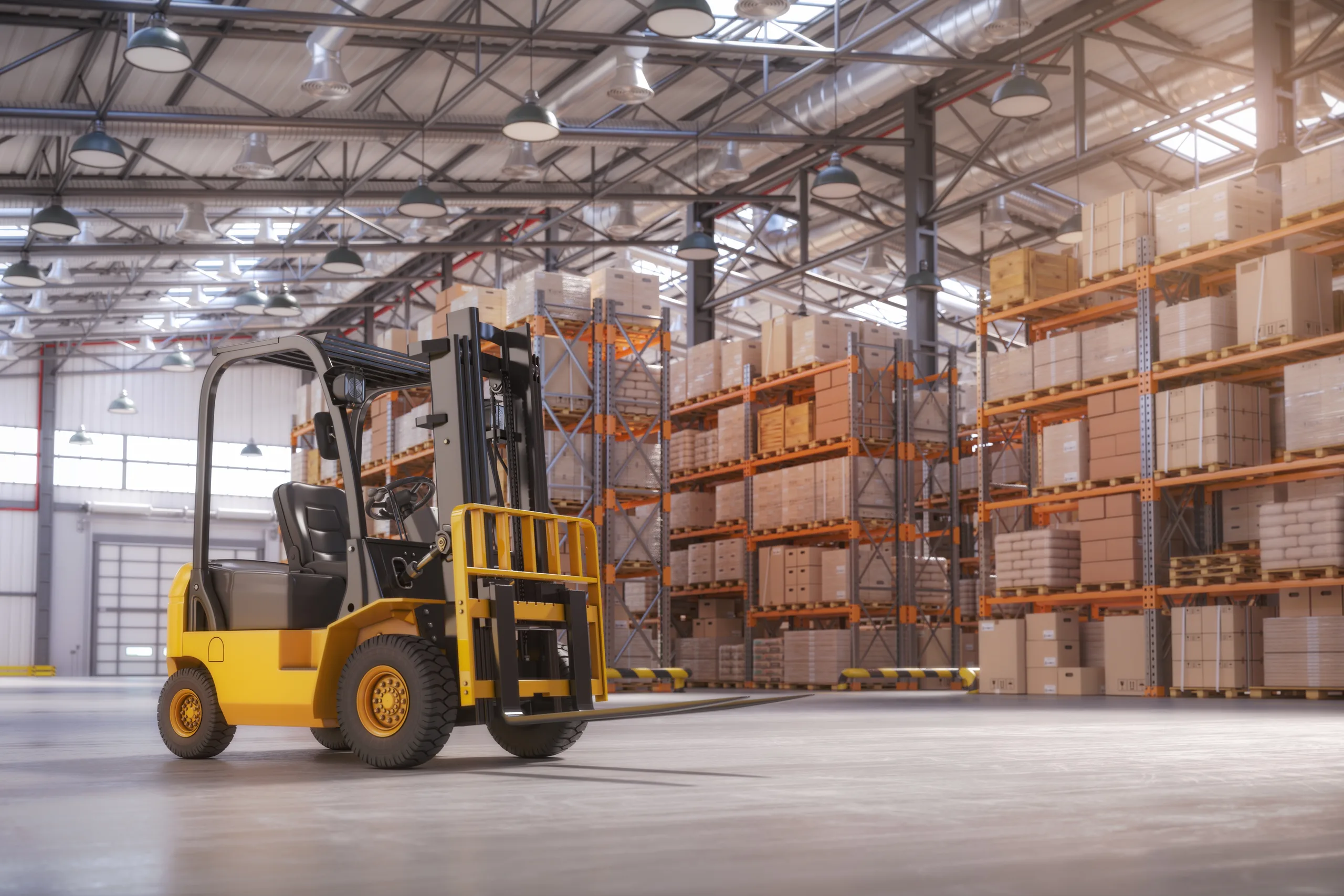

Georgia stores goods that are going to other states. That is the honest description of the whole economy: demand here is fed by the port and consumed by the Southeast. A container clears Garden City Terminal and can be on a rack in a metro Atlanta warehouse the same day — and the company holding it on that rack does not own a carton of it.
Which makes Georgia a third-party warehousing state in the strongest sense. The space that got built along I-75 and I-85 south and west of Atlanta, and out along I-16 toward the port, is largely space that holds somebody else’s freight. Contract and public warehouses here store import cargo for retailers and consumer-goods companies, keeping customers’ goods in care, custody, and control for weeks at a stretch. Cold storage sits alongside it, because north Georgia poultry and the food economy behind it keep refrigerated third-party space busy year-round.
The warehouse Georgia licenses — and the one it does not
Georgia is one of the minority of states that runs a genuine warehouse licensing program. It is worth understanding exactly what it covers, because the name invites the wrong conclusion.
The Department of Agriculture’s warehouse and bonding program licenses, bonds, and inspects warehouses storing cotton, grain, and tobacco — and it inspects them for the quantity and quality of what is inside. That is a real regime with real teeth, and it is scoped to agriculture. It does not reach an e-commerce fulfillment building in Henry County or a contract warehouse on I-16.
So the general-merchandise warehouse in Georgia is licensed by nobody. No permit. No inspector. No statutory standard of care. What governs you instead is the contract and the warehouse receipt — including the limitation-of-liability language inside them, a released-value or per-package cap limiting what you owe unless the customer declares a higher value. In a state with no license, those documents are not paperwork behind the business. They are the business’s entire legal perimeter, and we read them before binding the coverage that stands behind them.
What the general liability form quietly removes
Here is the fact that decides how a Georgia program is ordered. A standard general liability policy excludes damage to personal property in your care, custody, or control. The import cargo on your racks, the retail inventory staged for a Southeast rollout, the frozen protein in your cold rooms — all of it is precisely that.
The loss you fear most is therefore carved out of your foundation policy by the form’s own terms, and no general liability limit will ever reach it. Warehouse legal liability answers exactly what that exclusion removes, which is why it leads the warehouse program here — ahead of the building, ahead of everything.
Peak season: the fullest floor and the newest hands
This is the Georgia risk nobody writes down, and it is the one worth planning around. Peak-season staffing swings put a lot of new, undertrained people on the floor at exactly the time the building is running hardest. And the building is running hardest at exactly the time it holds more of your customers’ goods than at any other point in the year.
Two exposures peak on the same night. The workers compensation exposure peaks, because Georgia runs a private comp market administered by the State Board of Workers’ Compensation and a distribution center produces exactly the injuries a fast floor produces — forklift and pallet-jack contact in congested aisles, falls from dock plates and from the back of a trailer, cases and pallets coming down out of racking, and the shoulder and back strain of a rapid pick rate. And the bailee exposure peaks, because the value of other people’s property under your roof is at its annual maximum.
Both of those limits were set months earlier, against an average. That is the mismatch. We size a Georgia bailee limit against the peak, and we expect an underwriter to ask how temporary staff are trained before they ask almost anything else.
Cold storage: the total loss with no damage
In a refrigerated third-party building, the goods belong to the customer and the equipment belongs to you. When the refrigeration fails, the customer’s protein is gone and the building is completely undamaged. There is no fire, no collapse, no water — nothing that a commercial property policy was written to respond to, because property answers for what is yours and stays put: the shell, the racking, the refrigeration plant, the income that stops.
The bailee line carries the entire loss. Which means the warehouse legal liability limit in a Georgia cold house has to be sized against the value of what is frozen, not against the value of the box around it — and in a poultry state, the contents routinely outvalue the building.
Two zones, one supply chain
Georgia carries zone coverage on both ends of the state, and the pairing is the point. World Trade Center Savannah is the grantee for the zone serving the port area, and Georgia Foreign-Trade Zone, Inc. is the grantee for the Atlanta-centered zone whose sites are scattered across the metro and beyond — and the Appalachian Regional Port at Chatsworth extends the bonded reach north on rail.
An importer can hold goods in a duty-deferred posture at the water or inland in the Atlanta distribution belt. For the bailee holding them, that adds a customs obligation on top of the duty of care owed to the owner — two masters over one pallet, and a shortage that becomes a formal event rather than an awkward call.
Two catastrophe states at once
Georgia is genuinely two peril states. On the coast around Savannah and Brunswick the exposure is tropical: wind uplift on port-adjacent warehouse roofs, and surge and rain flooding on low ground near the terminals — a separate flood placement, written on purpose. Inland, the peril turns convective: tornadoes and severe-thunderstorm downbursts run the corridors north and west of Atlanta, and hail on an acres-wide roof plane is a real property loss even when nothing else is touched, with the water finding the racking afterwards. Winter ice is an occasional, mostly logistical disruption in the north.
An umbrella sits over the liability stack, and commercial auto attaches the moment your own equipment carries a customer’s freight off the property.
What drives cost for a Georgia bailee
- The value of the goods in your care at peak — the annual average is the wrong number and it is the one most operators quote.
- Temperature, and what a single failed compressor can destroy in a poultry account.
- Seasonal staffing — how many new hands arrive at peak, and how they are trained before they touch equipment.
- Where the building sits. Coastal tropical at Savannah and inland convective near Atlanta are two different underwriting conversations.
- The storage agreement and its liability cap, which is your entire legal position in an unlicensed state.
- Claims history, which moves pricing more than almost anything else on this list.
Major Georgia warehouse markets
Savannah and Garden City Terminal
The state’s import gateway, with the Mason Mega Rail facility on the terminal letting containers go from vessel straight to rail without a truck move. Port-adjacent warehouses hold import cargo for retailers and consumer-goods companies — and the coastal exposure is tropical, so wind uplift on a port-adjacent roof and surge and rain flooding on low ground near the terminals are underwriting facts rather than abstractions.
Metro Atlanta
Where I-75 and I-85 cross and I-20 runs east-west, and one of the country’s great distribution build-outs. Contract and public warehouses south and west of the city hold retailers’ import inventory for weeks at a stretch under long storage agreements — which puts the limitation-of-liability language inside those agreements, not any state rule, at the center of a claim.
The I-16 corridor
The line connecting Savannah to Macon, along which a great deal of the state’s newer third-party space was built. Warehouses here take custody of freight mid-journey — inbound from the terminal, outbound across the Southeast — which is bailment in its purest form: the operator holds goods it never owned and will never sell.
Macon
A central-Georgia distribution point serving the interior. Buildings here frequently hold mixed-customer freight under separate storage agreements, so a single fire or roof failure reaches many bailors at once — and a warehouse legal liability limit sized against the largest single account is sized against the wrong number.
North Georgia and the poultry cold chain
Poultry and the food economy behind it keep refrigerated third-party space busy. A refrigeration failure in a bailee’s freezer is a loss of the customer’s protein — not the operator’s — and it happens without the building being touched, which means the property policy has nothing to answer for and the bailee line carries the whole loss.
Dalton
Building-products and flooring distribution, where a third-party warehouse holds heavy, bulky, high-unit-value product for manufacturers and distributors elsewhere. Damaged goods here are rarely a total loss and frequently a total write-off anyway — a scuffed or water-marked product is unsaleable long before it is unusable, which is a claim shape that surprises operators new to the class.
Chatsworth and the Appalachian Regional Port
A rail terminal that puts the port’s reach into north Georgia and beyond, extending bonded reach inland. A bailee holding duty-deferred cargo here answers to a customs regime as well as to the owner of the goods — two masters over the same pallet, and a shortage that becomes a formal event rather than a phone call.
Brunswick
Roll-on and roll-off and bulk trades on the coast, which puts a different kind of customer property into a bailee’s custody — vehicles and equipment rather than cases and cartons, frequently held outdoors, where tropical wind and water reach many owners’ property in a single event.
If the goods are yours, you are on the wrong page
One signpost. This page is written for the operator holding other people’s freight. If your Georgia business buys, holds, and resells its own product — a company bringing goods through Savannah and selling them into the Southeast as the first U.S. seller of a foreign-made good, a beverage wholesaler owning its inventory outright under the licensed three-tier system, or a flooring, building-products, food, or industrial distributor — then nothing on your floor is a bailment. You sit in the products-liability chain for merchandise you never touched in the making, and your stock is at risk across the whole arc from the overseas factory to the Atlanta rack. That is stock throughput, not four-walls property, and it lives on its own page: distributor and wholesaler insurance in Georgia.
Plenty of Georgia companies run both. If yours does, we place both sides — the distribution operation and the wholesale operation — and the seam between them is the first thing we map.
Georgia warehouse insurance FAQs
Georgia licenses warehouses — does that include mine?
Only if you store cotton, grain, or tobacco. Georgia is one of the minority of states with a genuine warehouse licensing program, but it is scoped to agriculture rather than to warehousing generally: the Department of Agriculture’s warehouse and bonding program licenses, bonds, and inspects warehouses storing cotton, grain, and tobacco — and it inspects them for the quantity and quality of what is inside. A general-merchandise, e-commerce, or contract warehouse in Georgia is not licensed by anyone. It is governed by its contract and its warehouse receipt, and by nothing else. Reading the agricultural program as a general warehouse license is the mistake this page exists to prevent.
So what stands between me and a customer’s claim?
Warehouse legal liability, and the storage agreement it sits behind. A standard general liability policy excludes damage to personal property in your care, custody, or control — and the import cargo, the retail inventory, and the frozen protein on your racks are exactly that. So the loss you fear most is carved out of your foundation policy by the form’s own terms. The bailee line is written to answer precisely what the exclusion removes, and in a state that hands a merchandise warehouse no license and no statutory standard of care, it is the coverage the entire program is built around.
Why does peak season matter so much to my program?
Because it moves two numbers in the wrong direction at once. Peak-season staffing swings mean a lot of new, undertrained hands on the floor at exactly the time the building is running hardest — and at exactly the time the building holds more of your customers’ goods than at any other point in the year. Your workers compensation exposure and your bailee exposure both peak on the same night, and they peak long after the limits were set. That is why we size a Georgia warehouse legal liability limit against the peak floor rather than the annual average, and why an underwriter asks how you onboard temporary staff before asking almost anything else about the crew.
What does a refrigeration failure cost a Georgia bailee?
Everything on the racks, and nothing on the building. North Georgia poultry and the food economy behind it keep refrigerated third-party space busy, and in a bailee’s freezer the goods belong to the customer. When the refrigeration fails, the customer’s protein is a total loss and the building is entirely undamaged — no fire, no collapse, no water. The commercial property policy sees nothing to respond to, because property answers for what is yours and stays put. Warehouse legal liability is the only line facing that loss, and the limit has to be sized against the value of what is frozen rather than the value of the shell around it.
How different are the coastal and inland perils?
Different enough that they are two conversations. On the coast around Savannah and Brunswick, the exposure is tropical: wind uplift on port-adjacent warehouse roofs, and surge and rain flooding on low ground near the terminals — and flood is a separate placement, never a property-policy afterthought. Inland, the peril turns convective: tornadoes and severe-thunderstorm downbursts run the corridors north and west of Atlanta, and hail on an acres-wide roof plane is a real property loss even when nothing else is touched, with the water afterwards reaching the racking and the goods below. Winter ice is an occasional, mostly logistical disruption in the north of the state.
Who regulates the food and pharmaceutical goods I store?
The Georgia Department of Agriculture regulates food manufacturing and warehouse distribution facilities directly, running unannounced inspections of processing plants and distribution warehouses, and it licenses food sales establishments — a category broad enough to reach wholesale grocery operations. So a third-party operator with a food account is in an inspected building whether or not it thinks of itself as a food business. Prescription drug wholesale distributors are licensed by the Georgia State Board of Pharmacy, with background investigations and facility inspections carried out by the Georgia Drugs and Narcotics Agency — an enforcement body distinct from the licensing board itself, which is a structure operators moving in from other states do not expect.
Get a Georgia warehouse insurance quote
Quotes in 1–2 hours during business hours.