
States we serve · Indiana
Distributor and wholesaler business insurance in Indiana
For the merchant wholesalers, beverage and food distributors, parts and steel houses, and air-freight importers who own their inventory in the state most of America’s freight passes through.
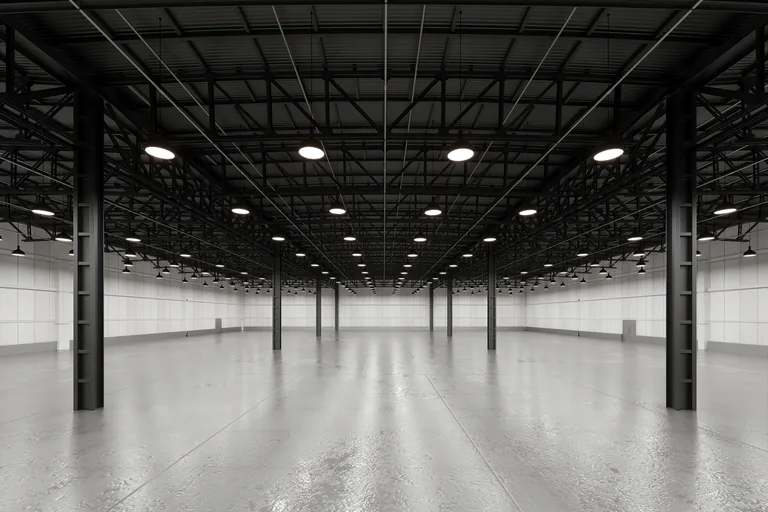

Indiana decides, by law, what a beverage distributor is allowed to own — and then builds a wall between the categories.
The Alcohol and Tobacco Commission licenses private wholesalers, which makes Indiana a license state in the ordinary sense. But it does something most license states do not: it splits the middle tier by product. Separate beer, wine, and liquor wholesaler permits are issued, and a beer wholesaler may not hold an interest in a liquor permit of any kind. The warehouse, the fleet, and the ownership structure of a beer house and a spirits house are legally kept apart. A distribution building in Indiana is often a single-product-class building by law rather than by choice.
That is a useful way into this page, because it makes the central fact of an owner’s program impossible to ignore: your book of inventory is a defined, bounded thing, and it is yours. You bought it. It sits on your balance sheet in a building on I-70 while it waits, and it is still yours on the truck that takes it to a retailer. The whole program should be built around the goods — not around the building they happen to be standing in.
Three permits, three businesses
Take the beverage structure at face value, because the underwriting follows it. A beer wholesaler’s owned book, warehouse, and route fleet are one business. A wine wholesaler’s are another. A spirits house is a third, and it cannot be commingled with the beer permit through an ownership interest. Each has its own inventory value, its own concentration, its own product mix, and its own fleet exposure — and an insurance program that treats them as one generic “beverage distributor” risk is describing a company Indiana law does not allow to exist.
Beyond beverages, the state’s owned-goods economy is industrial: automotive and truck parts, steel service centers in the northwest, pharmaceutical and orthopedic products, and agricultural inputs, plus the consumer-goods wholesalers feeding the Midwest from central Indiana. Different products, same principle. The pallet is yours until somebody buys it.
The Crossroads, and what it does to an owner’s inventory
Indiana calls itself the Crossroads of America and the interstate map earns it: I-65, I-70, I-69, I-74, I-80/90, and I-64 all cross the state, with Indianapolis at the center of the knot. Indianapolis International is a major overnight air-freight hub, which pulls time-definite fulfillment into the DC ring around the city and out along I-70 to Plainfield and Greenfield. Northwest Indiana connects to Chicago’s rail complex and to Lake Michigan bulk shipping at Burns Harbor; the Ohio River gives the south barge access.
Demand here is built on position rather than population — a distribution center in central Indiana reaches a large share of the eastern half of the country overnight by truck. Which means the goods in an Indiana wholesaler’s building are, almost by definition, in the middle of a journey rather than at the end of one. That is a coverage fact before it is a logistics one.
Stock throughput: the form that follows product through the knot
Stock throughput is the lead line for an owner of inventory, and it exists precisely because inventory that is in motion is uninsurable by a policy that was written for a building. It is one marine-family policy covering your owned product across the entire span: at the supplier, in ocean or air transit, on the rail move inland, in the warehouse, and out to the customer.
Commercial property is the right instrument for the building, the racking, and the owned stock that stays put — plus the business income lost while a site cannot ship. It stops at the walls. A cargo policy picks the goods up only while they move. Between the two are seams, and Indiana goods spend a remarkable amount of their life in them: on a rail car from a coastal port, in a yard, in a third party’s building, on your own truck.
Indiana also runs two distinct foreign-trade zone programs with different characters — the Indianapolis Airport Authority is grantee of the Indianapolis-area zone, which pairs naturally with the city’s air-cargo role, and Ports of Indiana is grantee of the Burns Harbor zone serving the northwest counties and the steel and heavy-industry belt. Zone status defers the duty on goods a distributor already owns; it does not insure them. The customs posture and the coverage posture are different pieces of paper, and it is worth saying so plainly.
The state itself draws the whose-goods line
Indiana writes this site’s central distinction into its own statute. The Board of Pharmacy licenses wholesale legend-drug distributors and, separately, third-party logistics providers under Indiana Code 25-26-14 — drawing the line between an operator that owns the drugs it sells and one that only warehouses and ships them for someone else. Food distribution and wholesale food operations are licensed through the Indiana State Department of Health, with agricultural commodity handling running through the state agriculture department.
That statutory line is a good test to run on your own operation. If you buy the product, carry it, and resell it, you are the owner — and this page is your page. If you hold it for a fee and never take title, you are the other class entirely, and your lead coverage is somewhere else. Indiana, notably, has no general public-warehouse licensing statute; grain is the exception, licensed through the Indiana Grain Buyers and Warehouse Licensing Agency under Indiana Code 26-3-7 — a program created after a large grain operation collapsed and farmers who had stored grain went unpaid.
The chain of distribution, and the importer at the air hub
A distributor who never made anything can still be sued over what it sold, because products liability follows the chain of distribution to a seller — not only to the manufacturer. In Indiana the sharpest version arrives by air: goods landing overnight at Indianapolis frequently make an Indiana business the first U.S. seller, and when the foreign manufacturer sits beyond the practical reach of a U.S. claim, that first U.S. seller is who a claimant can actually reach.
General liability carries the exposure through the products-completed-operations hazard. It is the clearest divergence between the two halves of this trade: a warehouse operator storing a defective product for its owner is largely outside the chain, because the goods were never theirs to sell, while a wholesaler who bought and resold that same pallet is squarely inside it.
Hail on a wide roof, and the crew underneath it
Indiana sits inside the tornado and severe-convective corridor, but for a distribution building the relevant damage is usually the wide-footprint hail and straight-line wind that travels with the same systems: a large low-slope roof, the rooftop refrigeration and HVAC units, and the skylights take the impact first, and the water arrives afterward on top of the racking. Winter brings snow and drift load across long clear-span roofs and freeze risk to wet sprinklers in unheated bays. River flooding along the Ohio and Wabash is a separate, separately placed peril.
Indiana runs a private workers’ compensation market — coverage is bought from insurers, not a state fund. In a distribution building the loss picture is material handling: forklift and pallet-jack strikes and tip-overs, workers struck by product falling from selective racking, falls from dock edges and order-picker platforms, and the shoulder and back strain that builds on a high-throughput pick line. A distributor carries a second injury exposure the pure warehouse does not — route drivers loading, unloading, and working a lift gate all day. And a note on language this trade cannot avoid: your insurance carrier is the company that writes your policy, which is an entirely different thing from a motor carrier or freight carrier that hauls goods for hire.
Umbrella liability sits above the primary lines, and a route-based distribution operation reaches the limits a national customer demands faster than a static one does. On pricing we publish no premiums; what genuinely drives the conversation is the value and concentration of owned inventory in a single building, the product mix behind the products exposure, whether you import and where risk of loss passes, how many of the miles are yours, and claims history.
Where Indiana distributors and wholesalers concentrate
Indianapolis
The center of the knot, and a major overnight air-freight hub. A wholesaler whose imported stock arrives by air is often the first U.S. seller of it — which seats the business at the head of the domestic products-liability chain for goods it never designed, and starts the owned-inventory clock at a foreign airport rather than at an Indiana dock.
Plainfield
The DC ring west of the city along I-70, where time-definite fulfillment concentrates around the air hub. This is owned-inventory concentration in its purest form: a distributor’s entire national replenishment book can sit in one building whose only real defense against a hailstorm is a membrane roof.
Gary and the northwest
Steel service centers and heavy-industry distribution, tied to Chicago’s rail complex and to Lake Michigan bulk shipping at Burns Harbor — where Ports of Indiana holds the foreign-trade zone. A bulk importer here owns high-tonnage stock whose value per pallet position is easy to underestimate and expensive to replace.
Fort Wayne
Northeastern Indiana’s industrial and consumer-goods wholesaling market, working I-69 in both directions. Route-based distribution out of here puts a meaningful share of owned inventory on a truck rather than a rack — which is exactly the stretch a commercial property policy has stopped covering.
Evansville
The Ohio River corner, with barge access and a genuine pharmaceutical and consumer-products distribution presence. A drug wholesaler here is licensed by the Board of Pharmacy on what it owns — and the state licenses the third-party logistics provider separately, which is the whose-goods line drawn in statute.
South Bend
Northern Indiana manufacturing supply and the parts distribution that trails it. An owner holding automotive, truck, and orthopedic product carries a products exposure with an unusually specific claim profile, because the customer is a maker rather than a consumer and the loss shows up as somebody else’s recall of a finished good.
Jeffersonville
The southern gateway across the river, serving the Louisville logistics footprint from the Indiana side. Owned stock staged here is inside an air-and-truck hub’s reach without being in its state — a good deal on land, and a concentration question nobody looks at until the roof fails.
If the goods in your racking are not yours
An honest signpost, and in Indiana it is the more common case. The state has one of the densest public-and-contract warehouse economies in the Midwest precisely because it is a crossing point — a very large share of the goods sitting in an Indiana building belong to someone in another state. If that is your operation, those goods are not owned stock. They are a bailment, and none of the above is your lead exposure: your program starts from warehouse legal liability, the bailee line for goods in your care, custody, and control, which turns on your storage contract and your warehouse receipt rather than on your purchase terms. That is a different risk with a different policy stack, and it has its own page: warehouse insurance in Indiana.
Plenty of Indiana businesses do both — distribute their own product and warehouse someone else’s alongside it. If that is you, we place both, and we draw the line between the two before anything binds.
Indiana distributor and wholesaler insurance FAQs
Why does Indiana issue separate beer, wine, and liquor wholesale permits?
Because Indiana splits the middle tier by product in a way most license states do not. The Alcohol and Tobacco Commission licenses private wholesalers, but it issues separate beer, wine, and liquor wholesaler permits — and a beer wholesaler may not hold an interest in a liquor permit of any kind. The practical consequence is structural rather than clerical: the warehouse, the fleet, and the ownership structure of a beer house and a spirits house are legally kept apart, and a distributor building in Indiana is often a single-product-class building by law rather than by choice. For an owner, that means the book of inventory in your racking is a bounded thing defined by the permit you hold, and the insurance program should be built around that book rather than around a generic beverage-distribution template.
What is stock throughput and why does an Indiana distributor need it?
Stock throughput is one marine-family policy that follows your owned product across the whole span it travels — supplier, ocean or air transit, the inland rail or road move, the warehouse, and out to your customer. An Indiana distributor needs it because Indiana is a crossing point: goods often arrive as air freight through Indianapolis or as containers railed inland from the coasts, then move again by truck out along I-65 and I-70. A commercial property policy insures inventory only while it sits in a scheduled building; a cargo policy only while it moves; and between them are seams where a loss falls. Indiana inventory lives in those seams. The form is written in the marine family of coverage, which is where the ocean-cargo and inland-marine vocabulary comes from — the name is a historical artifact and the coverage is the point.
Indiana licenses third-party logistics providers separately. Does that apply to me?
Only if you do not own the goods — and that is exactly why it is worth explaining. The Indiana Board of Pharmacy licenses wholesale legend-drug distributors and third-party logistics providers under Indiana Code 25-26-14, drawing the line between an operator that owns the drugs it sells and one that only warehouses and ships them for someone else. If you buy product, carry it on your balance sheet, and resell it, you are the wholesale distributor — the owner — and the third-party logistics class is the other side of that line. It is a useful test to apply to your own operation, because the coverage that leads your program depends entirely on which side of it you sit. Owners lead with stock throughput and products liability. Bailees lead with warehouse legal liability.
I never manufactured the product. How can I be sued over it?
Because products liability follows the chain of distribution, and a claim over a product that injures someone or damages property can reach a seller in that chain — not only the manufacturer. As the party that buys and resells, an Indiana wholesaler is squarely inside it. The exposure is sharpest for the importer: goods arriving as air freight through Indianapolis frequently make an Indiana business the first U.S. seller, and when the actual manufacturer sits beyond the practical reach of a U.S. claim, the first U.S. seller becomes the realistic target. General liability answers this through what the standard form calls the products-completed-operations hazard, and sizing those limits against the products you genuinely handle — automotive parts, steel, pharmaceuticals, orthopedics, consumer goods — is most of the work.
Does my commercial property policy cover the inventory once it leaves the building?
No, and that is the whole seam. Commercial property answers for the building, the racking, and the owned goods inside a scheduled location, plus the business income you lose when that location cannot ship. It does not follow the goods. The moment your product is on a rail car coming inland, in a third party’s facility, in a yard, or on one of your own trucks running out to a customer, an ordinary property policy is no longer the right instrument. In a state whose whole economic argument is that things move through it, that gap is not theoretical. Most Indiana distributors need both instruments, and the honest work is drawing the line between them before a loss draws it for you.
What does severe weather actually do to a distribution building here?
Rarely what people picture. Indiana sits inside the tornado and severe-convective corridor, but for a distribution building the relevant damage is usually not a direct tornado hit — it is the wide-footprint hail and straight-line wind that comes with the same systems. A large low-slope roof, the rooftop refrigeration and HVAC units, and the skylights all take the impact first, and the water arrives afterward, on top of your racking. Winter brings snow and drift load across long clear-span roofs and freeze risk to wet sprinkler systems in unheated bays. River flooding along the Ohio and the Wabash is a separate, separately placed peril. For an owner, all of it is one story: the building is replaceable and the season of goods underneath it is what you actually lose.
Get an Indiana distributor insurance quote
Quotes in 1–2 hours during business hours.