
States we serve · Iowa
Distributor and wholesaler business insurance in Iowa
For the grocery and foodservice distributors, protein and egg wholesalers, beer and wine houses, and agricultural input dealers who own what they sell — in a state where the government is the spirits wholesaler and the wind arrives without a tornado.

An Iowa distributor cannot sell spirits at wholesale. Not because of a licensing hurdle, but because the job is taken: the state itself is the liquor wholesaler, and it has been since Prohibition ended.
Every bottle of distilled spirits sold in Iowa passes through the state’s distribution center at Ankeny before it reaches a licensed retailer. The Alcoholic Beverages Division was recently folded into the Department of Revenue in a government realignment, but the control posture did not move an inch. Retail is private. Beer and wine run through private licensed wholesalers in the ordinary way. So an Iowa beverage distribution business is a beer-and-wine business, and the practical consequence for an insurance program is immediate — what a distributor in a license state carries on its balance sheet as spirits inventory, an Iowa distributor simply does not carry at all.
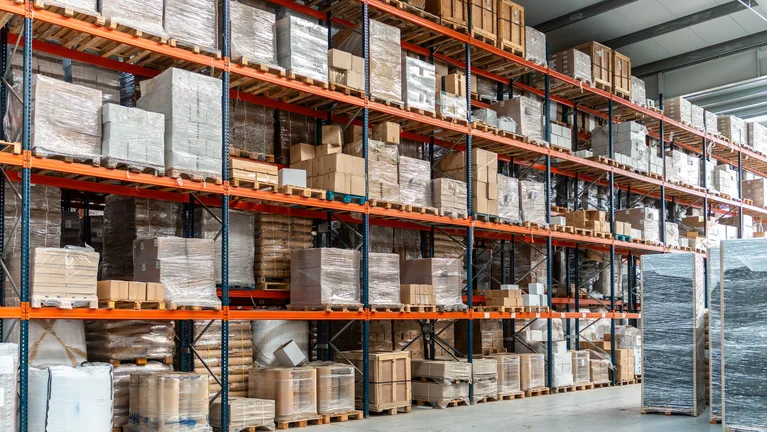
What an Iowa owner does carry is everything else, and there is a great deal of it: grocery and foodservice inventory, frozen protein and eggs, agricultural chemical and seed, equipment and parts, industrial supply. All bought. All owned. All sitting under one roof in the middle of a state that produces the most instructive wind loss in the country.
The wind that arrives without a tornado
Start with the peril, because in Iowa it is the thing that will actually take your inventory.
A derecho is a long-track, straight-line windstorm — sustained high wind, no funnel. The event that drove across the state and through Cedar Rapids is the reference loss for anyone underwriting a big-box building here, and it taught the market something specific: sustained wind acting on acres of low-slope membrane and on rooftop mechanical units opens the envelope, and what comes down through the opening is water, onto racked goods. The building can be repaired. The owned stock beneath it is the loss, and it is a loss that arrives with no fire and no flood.
Hail and tornado run the same spring-to-summer convective season. Flooding is a recurring siting question along the Mississippi, the Missouri, the Cedar, and the Des Moines — and it is its own placement, not a property endorsement, which matters enormously when the goods on the floor are on your balance sheet. Deep winter freeze puts sprinkler systems and unheated space at risk. Commercial property is the right instrument for the building, the racking, and the stock that stays put, together with the business income lost while the site is down. It is not the right instrument for goods that have left.
The seasonal peak nobody insures for
Here is the Iowa exposure that gets mispriced more than any other, and it has nothing to do with weather until it does.
Agricultural chemical, seed, and equipment distribution builds an enormous owned inventory inside a narrow window and then draws it down to almost nothing. Grocery, protein, and foodservice books swing too. A property limit set against an average-day value is the wrong limit on the day the building is fullest — and the day the building is fullest is, with grim regularity, the same season the convective weather shows up.
Underwriters can work with a peak value if you tell them what it is. They cannot guess it, and you cannot argue it after the fact. So the honest question for an Iowa owner is not “what is my inventory worth?” but “what is it worth on the worst possible day, and is that the number on the schedule?”
Stock throughput: the inland version
Stock throughput is one marine-family policy that follows your owned product across its whole journey rather than splitting the job between two forms with a seam in the middle. It is easy to dismiss in a state with no coastline. That dismissal is a mistake, and Iowa demonstrates why: the state carries an unusually large number of foreign-trade zones for an interior state, spread rather than concentrated — Des Moines, the Quad Cities under a Davenport-based grantee straddling the Mississippi, Cedar Rapids under the airport commission, and a northwest zone under a Sheldon-based development corporation. None of that is seaport bonded warehousing. All of it is inland duty deferral, serving distributors who import components and finished goods and want to hold them in the middle of the country without paying duty until withdrawal.
That importer owns the product from the foreign supplier, through the ocean leg, across a coastal gateway, onto a rail car, and into an Iowa building — and is exposed the entire way. The marine name on the form is a historical artifact of where the coverage came from; it follows goods across land transit and rail exactly as well as across water. What it removes is the seam between the property policy and the cargo policy, which is where a surprising number of losses quietly land.
You did not make it, and you can still be sued for it
Products liability follows the chain of distribution. A claim over a product that injures a person or damages property can reach a seller in that chain, not only the manufacturer, and a wholesaler who never made anything is squarely a link in it.
The importer sits at the head. An Iowa distributor that is the first U.S. seller of imported equipment or components inherits a products exposure for a design it had no part in, and when the actual maker is beyond the practical reach of a U.S. claim, that distributor is the party the claim can reach. General liability answers this through the products-completed-operations hazard, and sizing those limits against what you genuinely handle — a food product, an agricultural chemical, a machine part — is most of the work. It is also the cleanest line between the two halves of this trade: a wholesale business bought the goods and resold them, so it is inside the chain; a business that merely stored somebody else’s goods largely is not.
Two crews under one payroll
Iowa is a private-market workers compensation state, with insurers competing for the business. The claim profile is the standard warehouse one, sharpened by the food and protein economy: powered-industrial-truck injuries, workers struck by product coming out of a rack, dock and trailer-separation falls, and lifting and repetitive strain in high-volume picking. The state’s substantial refrigerated and frozen space adds cold-stress and freezer-floor slip exposure, and the ammonia refrigeration common in large cold-storage buildings introduces a release exposure that is a life-safety, a property, and an environmental problem in the same instant.
A distribution business carries two injury populations, not one — the warehouse crew and the route drivers loading, unloading, and working a lift gate. Commercial auto answers the fleet, and one point of vocabulary that this niche makes unavoidable: your insurance carrier writes your policy; a motor carrier hauls freight. They are not the same word in a contract. Umbrella liability is where a national grocery customer’s contract limits usually land.
Where Iowa distributors and wholesalers concentrate
Des Moines
Where I-80 and I-35 cross, which is the entire reason a regional distribution market grew here. Owned inventory concentrates into large single-site holdings serving a multi-state trade area, and the foreign-trade zone tied to the Greater Des Moines Partnership means an importer can hold duty-deferred goods in the middle of the country — dutiable value sitting on a rack a thousand miles from any coast.
Ankeny
The state’s spirits distribution center. Every bottle of distilled liquor sold in Iowa passes through it, because the state itself is the wholesaler — so a private beverage distributor’s owned book here is beer and wine, and the spirits inventory a distributor in a license state would carry on its balance sheet simply is not on the balance sheet at all.
Cedar Rapids
The reference point for what sustained straight-line wind does to acres of low-slope membrane and to the rooftop mechanical units on it. For an owner of goods that matters more than the roof itself: wind opens the envelope and water comes in on top of racked inventory, which is a total loss of stock in a building that is still standing.
The Quad Cities
Barge terminals on the Mississippi, a foreign-trade zone straddling the river under a Davenport-based grantee, and a floodplain running through the middle of it. A distributor’s owned stock here is exposed to water as a siting question rather than a weather one — and flood is its own placement, not an endorsement on the property policy.
Council Bluffs and Sioux City
The western corridor along I-29 and the Missouri River, anchored in protein, eggs, and agricultural processing. Owned inventory here is frozen or refrigerated and its value is entirely contingent on the cold chain holding — an ammonia refrigeration failure or a power interruption destroys product that was never touched by fire.
Waterloo and Dubuque
Agricultural equipment and parts distribution, plus food processing feeding into Mississippi river terminals. Parts inventory is deep, slow-moving, and expensive to replace, which produces an underwriting question most owners answer badly: the annual sales figure understates what is actually on the shelf on any given day.
Iowa City and the I-380 corridor
The link between the Cedar Rapids industrial belt and the I-80 spine, carrying regional wholesaling and consumer-goods distribution. Owned product spends a meaningful share of its life on that road rather than on a rack, which is a transit exposure — and a property policy that stops at the building walls does not follow it there.
If the goods are not yours, you are on the wrong page
An honest signpost. Everything above assumes the inventory is yours. If your building holds other companies’ goods for a fee — a fulfillment operator outside Des Moines, a food warehouse, a grain warehouse taking in a producer’s crop — then it is not owned stock. It is a bailment, and the lead line is warehouse legal liability, not stock throughput. Iowa makes that split unusually visible: grain held for others triggers a Grain Warehouse Bureau license, food held for others a food warehouse license, and prescription drugs a Board of Pharmacy wholesale license — while the general-merchandise operator is licensed by nobody and lives entirely on its storage agreement. That is a different risk with a different policy stack, and it has its own page: warehouse insurance in Iowa.
Many Iowa businesses do both — they distribute their own product and warehouse someone else’s beside it. If that is you, we place both, and we draw the line between them before anything binds.
Iowa distributor and wholesaler insurance FAQs
Can I become a spirits wholesaler in Iowa?
No — the state is already the spirits wholesaler, and it has held that monopoly on wholesaling since the end of Prohibition. Iowa is a genuine control state, and the tier it controls is the wholesale tier for distilled spirits: every bottle sold in Iowa passes through the state’s distribution center at Ankeny before it reaches a licensed retailer. The Alcoholic Beverages Division was recently folded into the Department of Revenue in a state government realignment, but the control posture did not change. Retail is private, and beer and wine move through private licensed wholesalers in the ordinary three-tier way. So the practical answer for a would-be distributor is stark: there is no private middle tier to occupy for liquor, and a private beverage book in Iowa is built in beer and wine — inventory that is genuinely yours, on your balance sheet, which is exactly why it is a stock-throughput exposure rather than a bailment.
What is stock throughput, and does it apply to an inland distributor?
It does, and the inland version is the one owners overlook. Stock throughput is a single marine-family policy that follows your owned product across the whole span — supplier, transit, port or crossing, warehouse, customer — instead of splitting the job between a property policy that covers goods only while they sit in a scheduled building and a cargo policy that covers them only while they move. Iowa has no seaport, but it has a lot of movement: an importer who brings equipment or components in through a coastal gateway and rails them into an Iowa foreign-trade zone site owns that product the entire way, and it is exposed the entire way. The marine name is a historical artifact; the form follows goods across land transit and rail just as readily as across water. What it eliminates is the seam between two policies, which is where a surprising share of losses land.
What does a derecho do to a distribution building, and is it covered?
A derecho is a long-track, straight-line windstorm — sustained high wind with no tornado involved — and Iowa is the state that taught the property market what it does to a large roof. The event that ran across the state and through Cedar Rapids remains the reference loss for anyone underwriting a big-box building here. The mechanism matters to an owner of goods: wind acts on acres of low-slope membrane and on the rooftop mechanical units, the envelope opens, and water follows it down onto racked inventory. The building is repairable; the stock underneath it very often is not. Wind is generally a property peril rather than a separate placement, but the questions worth asking before a storm are whether your limit reflects the actual value of inventory on hand at peak rather than on an average day, and whether business income is sized for the time it takes to re-source product, not just to repair a building.
My inventory peaks hard in one season. How should that be handled?
Deliberately, and in advance — it is one of the most commonly mispriced facts in an Iowa program. Agricultural chemical, seed, and equipment distribution builds enormous owned inventory in a narrow window and then draws it down, and grocery, protein, and foodservice books swing too. A property limit that was set against an average-day value is simply the wrong limit on the day the building is fullest, which is also, statistically, the season the convective weather arrives. Underwriters can work with a peak-season value if you tell them what it is. What they cannot do is guess it, and what you cannot do afterwards is argue it. The right conversation is about the value on hand on the worst possible day, and about whether stock throughput is carrying the portion of that inventory that is in transit rather than on the rack.
Am I liable for a product I only distributed?
Yes — products liability follows the chain of distribution, and a claim over a product that injures somebody or damages property can reach a seller in that chain, not only the manufacturer who made it. A wholesaler who never made anything is still a link. The exposure is at its sharpest for the importer: an Iowa distributor bringing equipment or components in through a coastal gateway and holding them in a foreign-trade zone site is the first U.S. seller of that product, and when the actual maker sits beyond the practical reach of a U.S. claim, the importer becomes the realistic target for it. Standard general liability answers this through the products-completed-operations hazard, and the work is sizing those limits against the products you actually handle — a food product, a chemical input, and a machine part are three very different conversations.
What licenses does an Iowa food or drug distributor need?
Iowa licenses food warehousing explicitly and by name, which is unusual. The Department of Inspections, Appeals, and Licensing is the regulatory authority for manufactured food processing and warehouse facilities, and a license is required to operate a commercial operation that manufactures, packages, labels, or stores food for human consumption without selling directly to a consumer — the department maintains a distinct food warehouse license and renews it separately from the food processing plant license. Drug wholesaling runs through the same department’s Board of Pharmacy: any wholesaler distributing prescription drugs into, out of, or within Iowa must be licensed before it does so, with each physical location licensed separately and facility security requirements attached. Grain held for others is a separate regime again, under the Department of Agriculture and Land Stewardship’s Grain Warehouse Bureau.
Get an Iowa distributor insurance quote
Quotes in 1–2 hours during business hours.