
States we serve · Iowa
Warehouse business insurance in Iowa
For the Des Moines fulfillment operators, the licensed grain and food warehouses, and the refrigerated houses that hold a packer’s protein — where the regulator you answer to depends entirely on what came off the truck.
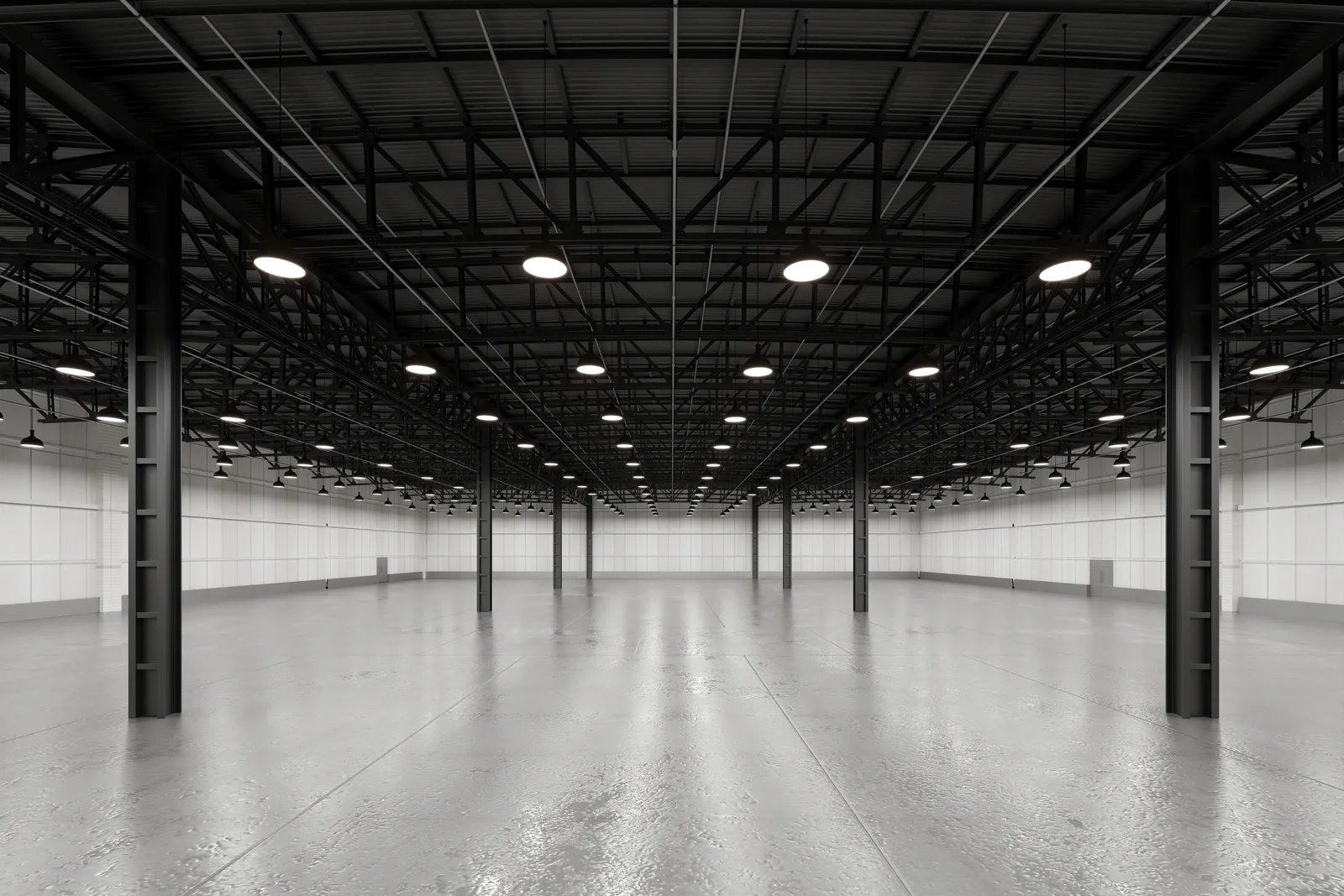

An Iowa warehouse operator can be one of the most heavily regulated bailees in the United States, or one of the least, and the difference is decided by whatever came off the truck this morning.
Hold grain for somebody else and you fall under the Department of Agriculture and Land Stewardship’s Grain Warehouse Bureau: a warehouse operator license, a tariff of storage rates on file, a certificate of insurance on the product stored, an audited or reviewed financial statement, and financial examination — with a state grain indemnity fund standing behind the whole system. Hold food for somebody else and you need a food warehouse license from the Department of Inspections, Appeals, and Licensing, which is unusual in that it licenses food warehousing explicitly and by name. Hold prescription drugs for somebody else and the Board of Pharmacy licenses you, per physical location, with facility security requirements attached.
Hold pallets of consumer goods for somebody else — the e-commerce fulfillment operator outside Des Moines, the contract warehouse working a national retailer’s account — and nobody licenses you at all. Three regulators and one unregulated line, and a diversified operator can be carrying all four under a single roof.
The warehouse that answers to nobody
Start with that last one, because it is the largest and the least protected. The general-merchandise operator has no state license, no filed tariff, no statutory standard of care, and no indemnity fund. What it has is a storage agreement and a warehouse receipt, and those two documents are the entire perimeter of every claim a customer will ever bring.
Which is why warehouse legal liability leads an Iowa program. You hold property that belongs to somebody else and you answer for it while it sits in your care, custody, and control — and your general liability policy will not pay when it goes wrong. A standard form excludes damage to personal property in your care, custody, or control, which is an exact description of every pallet you hold. The exclusion removes precisely the loss you exist to prevent, and the bailee line is what answers in its place. The limitation-of-liability terms in your contract and the limit you buy are one decision, not two, and we read them together.
What the grain license tells you about the duty you already owe
The grain regime is worth understanding even if you never touch a bushel, because of what it reveals. No one may issue a warehouse receipt for bulk grain in Iowa without a license, and licensure means an audited financial statement, a filed tariff, and a certificate of insurance on the product stored. The state has decided that when you hold somebody else’s grain, your financial condition and your insurance on their goods are a matter of public concern.
Every other Iowa bailee owes a version of that duty. The difference is that a grain operator has it spelled out by statute and examined by a bureau, while a consumer-goods operator has it written into a storage contract that nobody audits. The obligation is the same shape. Only the enforcement differs — and that should make an unlicensed operator more careful about its contract terms, not less.
The wind event that is not a tornado
Iowa is the state that taught the property market what a derecho does to a large roof. The event that did it drove a long-track, straight-line windstorm across the state and through Cedar Rapids, and it remains the reference loss for anyone underwriting a big-box building here: sustained high wind acting on acres of low-slope membrane and on rooftop mechanical units, with no tornado anywhere in the story.
For a bailee the loss arrives in two stages. The wind takes the membrane and the rooftop units — that is your commercial property claim, along with the business income that stops when the building does. Then the water comes in, and it finds the racking and the cartons and a customer’s inventory underneath. That second stage is a bailee claim, on a different policy, from the same storm. Hail and tornado run through the same spring-to-summer convective season, deep winter freeze puts sprinkler systems and unheated space at risk, and flooding along the Mississippi, the Missouri, the Cedar, and the Des Moines rivers is a serious siting question and its own placement — not a property endorsement.
Ammonia, cold floors, and the comp file
Iowa is a private-market workers compensation state — insurers compete for the business and there is no state fund — so the loss run genuinely moves the price. The warehouse claim profile is the standard one, sharpened by the food and protein economy: powered-industrial-truck injuries, workers struck by product coming out of a rack, dock and trailer-separation falls, and lifting and repetitive-strain injury in high-volume picking.
The refrigerated and frozen third-party space adds cold-stress and freezer-floor slip exposure. And the ammonia refrigeration common in large cold-storage buildings introduces a release exposure that is a life-safety problem, a property problem, and an environmental problem at once — and, for a bailee, a contamination problem, because a release ruins the customer’s food stock outright. Around that we build the umbrella and the commercial auto layers a yard and delivery operation needs.
Major Iowa warehouse markets
Des Moines
Where I-80 and I-35 cross, which is the entire reason this became a distribution market rather than a state capital with a warehouse or two. The e-commerce and retail fulfillment operators here hold pallets of consumer goods for owners in other states — and they are the one class of warehouse in Iowa that holds no state license at all.
Cedar Rapids
Linked to the I-80 spine by I-380 and holding its own foreign-trade zone under the airport commission. It is also the city the derecho went through, which is why any underwriter looking at a big-box roof in this corridor is thinking about sustained straight-line wind rather than about a tornado.
The Quad Cities
Davenport and the Mississippi barge terminals, with a zone that straddles the river under a Davenport-based grantee. Barge and rail transfer means custody changing hands between modes, and a bailee claim in a transfer operation usually starts at a handoff rather than in a rack.
Council Bluffs
The I-29 corridor on the Missouri River edge of the state, serving the Omaha metro from the Iowa side. Flat river-valley ground makes for good building sites and for a flood placement that has to be made deliberately, because flood does not ride the property form.
Waterloo
Agricultural equipment and protein country, where third-party storage runs to heavy parts inventories and refrigerated product. Frozen and refrigerated bailment fails on temperature rather than on impact, and a customer’s protein load can be a total loss in a building with no visible damage.
Sioux City
The northwest anchor on I-29, tied to the protein and food-processing economy. Large cold-storage buildings here commonly run ammonia refrigeration, which is simultaneously a life-safety exposure, a property exposure, and an environmental one — and a release contaminates a customer’s food stock outright.
Iowa City and Dubuque
The eastern corridor, with barge terminals at Dubuque on the Mississippi. Smaller multi-tenant operators here hold inventory for a number of accounts at once, which creates an aggregation problem: many customers’ goods, modest values apiece, one roof, one fire.
Sheldon and the northwest
A development-corporation zone out in the northwest of the state — inland duty deferral serving manufacturers and distributors who import components and want to hold them mid-continent without paying duty until withdrawal. Zone custody stacks a customs obligation on top of the duty of care owed to the goods’ owner.
What underwriters actually ask an Iowa bailee
We do not publish figures — anyone who does is guessing. The questions, though, are consistent:
- What is on the rack, because it decides which regulators you carry and which standard of care applies to the goods.
- The stored value of goods you do not own — the number that sizes the bailee limit, and the one that is nowhere on your balance sheet.
- The roof, in a corridor where sustained straight-line wind is the reference loss rather than a hypothetical.
- Refrigeration and ammonia — the systems, the alarms, and what happens to a customer’s consignment when they fail.
- The storage contract and its limitation of liability, which for the unlicensed operator is the whole perimeter.
- Claims history, which moves pricing further than anything else on this list.
If the goods are yours, you are on the wrong page
An honest signpost. This page is for the operator holding other people’s goods. If your business buys, holds, and resells its own inventory — a beer or wine wholesaler working the private middle tier, a grocery or foodservice distributor, a protein or egg wholesaler holding frozen stock whose value depends entirely on the cold chain, an agricultural chemical, seed, or equipment distributor with a hard seasonal peak — then your inventory is not a bailment, and your program leads from stock throughput and products liability. That has its own page: distributor and wholesaler insurance in Iowa.
Plenty of Iowa businesses do both, sometimes in the same building. When yours does, we place the warehouse, distribution, and wholesale sides together, and the seam between the goods you hold and the goods you own is the first thing we map.
Iowa warehouse insurance FAQs
Iowa licenses warehouses. Does that mean my Des Moines fulfillment center needs a license?
No — and the distinction is the most important one on this page. Iowa’s warehouse license is agricultural, and it is one of the more developed ones in the country: the Department of Agriculture and Land Stewardship runs a Grain Warehouse Bureau that licenses warehouse operators and grain dealers and examines their financial solvency, and most persons accepting bulk grain for storage must hold a warehouse operator license. But nothing comparable licenses general merchandise warehousing. An e-commerce fulfillment center outside Des Moines holds no state warehouse license, and its duty to its customers’ goods is a matter of bailment and contract. The regulator you answer to in Iowa depends entirely on what came off the truck.
What does the grain warehouse license actually require?
Considerably more than a form. No one may issue a warehouse receipt for bulk grain in Iowa without the license. Licensure requires an audited or reviewed financial statement, a tariff of storage rates on file, and a certificate of insurance on the product stored — and the state backs the whole system with a grain indemnity fund. Read that as a bailee and it is striking: the state has decided that when you hold somebody else’s grain, your financial condition and your insurance on their goods are the public’s business. It is an explicit, statutory version of the duty that every other Iowa warehouse owes its customers by contract alone.
If the goods in my warehouse are not mine, what pays for them?
Warehouse legal liability — the bailee line, and the reason it leads an Iowa program. You hold property that belongs to somebody else and you answer for it while it sits in your care, custody, and control. Your general liability policy will not respond: a standard form excludes damage to personal property in your care, custody, or control, and the customers’ goods on your racks are exactly that property. The exclusion removes the very loss you are most exposed to. Warehouse legal liability answers what the exclusion takes out, and for the unlicensed consumer-goods operator it does so with nothing but the storage contract standing behind it.
What is the derecho, and why does an underwriter keep asking about it?
Because Iowa is the state that taught the property market what a derecho does to a large roof. The event that did it drove a long-track, straight-line windstorm across the state and through Cedar Rapids, and it remains the reference loss for anyone underwriting a big-box building here: sustained high wind acting on acres of low-slope membrane and on rooftop mechanical units, with no tornado involved at all. For a bailee the consequence arrives afterward, as water — into the racking, into the cartons, into a customer’s inventory. One storm, two claims: the roof is your property loss, and the soaked freight underneath it is a bailee loss.
Does refrigerated storage change my exposure in Iowa?
It adds two things a dry building never has. First, the loss mode: a temperature excursion or a refrigeration failure destroys a customer’s protein or food consignment while leaving your building untouched — a total loss with nothing to photograph. Second, the ammonia. The ammonia refrigeration common in large cold-storage buildings introduces a release exposure that is simultaneously a life-safety, a property, and an environmental problem, and a release contaminates the customer’s food stock outright. Iowa’s substantial refrigerated and frozen third-party space also puts cold-stress and freezer-floor slip claims on the workers compensation side of the file.
Can one Iowa operator really carry three different regulators?
Yes, and it is common. Grain held for others triggers a Grain Warehouse Bureau license, a filed storage tariff, a certificate of insurance on the stored product, and financial examination. Food held for others triggers a food warehouse license from the Department of Inspections, Appeals, and Licensing — Iowa is unusual in licensing food warehousing explicitly and by name, and it renews that license separately from the food processing plant license. Prescription drugs held and distributed for others trigger a Board of Pharmacy wholesale license, with each physical location licensed separately and facility security requirements attached. Only the general-merchandise operator is licensed by nobody. An Iowa operator that has diversified across commodities can therefore be carrying three different regulators and one unregulated line, all under one roof — and the insurance program has to be built to the same map.
Get an Iowa warehouse insurance quote
Quotes in 1–2 hours during business hours.